The best walking pads make it easier to stay active at home without committing an entire room to a traditional treadmill. This roundup focuses on compact models suited to home offices, apartments, and everyday walking routines.
We compare options with different features, including incline settings, support handles, folding designs, quiet operation, and under-desk portability, so you can choose a walking pad that fits your space and fitness goals.
Best 10 Walking Pads Picks for 2026
Best Incline Control
THERUN 9-Level Incline Walking Pad

- Nine automatic incline levels
- Quiet 2.5 HP brushless motor
- 265-pound capacity with LED tracking
Best For: Incline walking and home-office workouts
Best Compact Bosch-Powered Pick
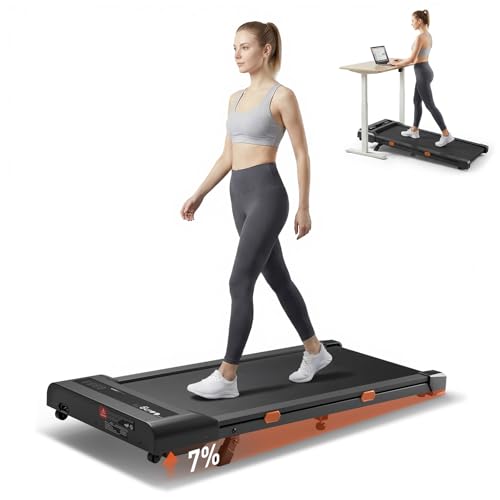
- Bosch motor and 300-pound capacity
- Fixed 7% manual incline
- App and remote speed control
Best For: Compact daily walking and desk use
Best Speed and Capacity Range
Wildroot Handlebar Walking Pad

- Detachable handlebar for two modes
- 0.6–7.6 mph speed range
- 350-pound stated capacity
Best For: Walking, faster workouts, and small-space setups
Best Manual Incline Variety
LONTEK 15% Incline Walking Pad
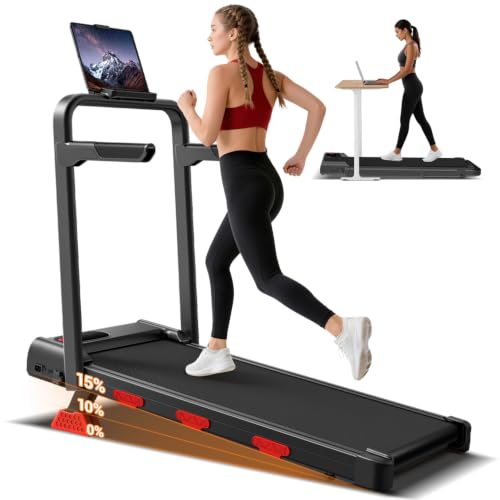
- Flat, 10%, and 15% manual incline
- 350-pound capacity and 3.0 HP motor
- Cushioned belt with side impact strips
Best For: Incline walking and light jogging at home
Best Incline Walking Pad

- Manual incline up to 10%
- Four control methods, including handlebar buttons
- Folds, rolls, and supports up to 350 pounds
Best For: Home users wanting incline training and handlebar controls
Best Compact Walking Pad

- Slim profile for under-bed or under-desk storage
- Remote control and LED workout display
- Quiet 1-to-4-mph walking range
Best For: Small apartments, home offices, and light indoor walking
Best Walking Pad With Handrails

- Manual incline adds uphill-style training
- Handrails provide balance support
- Compact frame with remote and LED display
Best For: Beginners and seniors seeking supported home walking
Best with Extra Features

- Manual 5% incline adds workout intensity
- No assembly and lightweight 17 kg design
- Non-slip shock-absorbing belt with side rails
Best For: Walking-focused home or office workouts with added incline
Best Walking Pad With Handles

- Supportive foldable handles and 4-degree incline
- 45 dB claimed operation for shared spaces
- LED metrics and compact folding storage
Best For: Small-space walking with extra support and quiet operation
Best Folding Walking Pad
Handle Bar and Under-Bed Design

- Removable handle bar enables under-desk use
- Three modes for walking, jogging, and running
- Folds compactly and includes built-in transport wheels
Best For: Flexible home workouts in small spaces
Best Incline Control – THERUN 9-Level Incline Walking Pad
The THERUN TJ02 is a walking pad for users who want adjustable incline without giving up a relatively compact under-desk format. Its nine automatic incline levels, 0.6–3.8 mph speed range, and remote control make it suited to walking-focused home workouts.
Best For: Incline walking, home offices, and users who want automated hill-style training.
Pros:
- Nine levels of one-button automatic incline adjustment
- Quiet 2.5 HP brushless motor rated below 20 dB
- 265-pound capacity and a 47.8-by-20.3-inch footprint
- LED display tracks speed, time, distance, calories, and incline
Cons:
- 3.8 mph maximum speed is geared more toward walking than running
- At 50 pounds, it may require some effort to reposition
The THERUN stands out among walking pads for its automatic incline range and generous stated capacity. It is a practical choice for users prioritizing varied walking workouts, though faster runners may need a higher-speed treadmill.
Best Compact Bosch-Powered Pick – Cybergoing T10 Walking Pad
The Cybergoing T10 is a compact walking pad designed for everyday steps, desk use, and brisk walking. Its Bosch motor, fixed 7% manual incline, app and remote controls, and slim no-handrail design make it a straightforward option for small spaces.
Best For: Daily walking, under-desk use, and shoppers who want a compact model with a fixed incline.
Pros:
- Bosch motor with a stated 300-pound weight capacity
- Fixed 7% manual incline adds challenge without a bulky frame
- App and remote control speed adjustments
- Lightweight 36.4-pound design with a 0.6–4 mph range
Cons:
- Incline is fixed and must be set manually before use
- 15-by-36-inch belt offers less stride room than wider models
- Maximum speed is intended for walking and brisk walking
The T10 is a sensible walking pad for apartments, offices, and regular low-impact activity. Its fixed incline is less flexible than automatic systems, but the lighter build and app connectivity make it convenient for routine use.
Best Speed and Capacity Range – Wildroot Handlebar Walking Pad
This Wildroot walking pad combines a detachable handlebar with a 0.6–7.6 mph speed range, giving it more versatility than walking-only models. It can switch between a supported treadmill setup and an under-desk walking pad, making it useful in small home gyms or offices.
Best For: Users who want a handlebar, higher top speed, and a 350-pound stated capacity in a compact treadmill.
Pros:
- Detachable handlebar supports both treadmill and under-desk use
- 0.6–7.6 mph speed range accommodates walking and faster workouts
- 350-pound stated weight capacity
- Multi-layer cushioned, anti-slip belt and under-45 dB operation
Cons:
- Incline details indicate support up to 5%, but the supplied notes do not specify adjustment steps
- The supplied details do not provide the belt dimensions
- Its wider speed range may be more capability than a desk-walking user needs
For shoppers comparing walking pads with handles, this model offers an unusually broad speed range and a flexible two-mode design. It is especially appealing when maximum stated capacity and occasional faster exercise matter more than the simplest under-desk setup.
Best Manual Incline Variety – LONTEK 15% Incline Walking Pad
The LONTEK U20F-1 is a walking pad with handles and three manually configured walking levels: flat, 10%, and 15% incline. Its 6.2 mph maximum speed, cushioned belt, and 350-pound capacity make it a versatile option for home walking, light jogging, and incline-focused sessions.
Best For: Users who want steep manual incline options, a handlebar, and a higher-capacity compact treadmill.
Pros:
- Three incline configurations: flat, 10%, and 15%
- 350-pound capacity with a quiet 3.0 HP brushless motor
- 0.6–6.2 mph speed range supports walking and light jogging
- Multi-layer cushioned belt with side impact strips
Cons:
- Incline changes are manual rather than electronically controlled
- 37.4-by-15-inch belt is relatively compact
- Included phone/tablet holder is detachable, not an integrated console
The LONTEK is a strong fit for incline enthusiasts who prefer simple mechanical adjustments. Its three-level setup is less convenient to change during a workout, but it provides more incline variety than many compact walking pads while retaining a portable profile.
Best Incline Walking Pad – Folding WELLFIT Treadmill
The WELLFIT folding treadmill is a versatile option for shoppers seeking walking pads with a handlebar, incline, and multiple control methods. Its 36-by-16-inch cushioned belt, folding design, and speeds up to 6.2 mph make it suitable for walking or light jogging at home.
Best For: Home users who want incline training, handlebar controls, and a higher top speed.
Pros:
- Manual incline reaches up to 10% for more challenging walks.
- Handlebar buttons, remote, app, and voice controls provide flexible operation.
- Five-layer cushioning and a 350-pound maximum weight recommendation support comfortable daily use.
- Folds and rolls on built-in wheels for easier storage.
Cons:
- The 36-inch deck may feel short for longer-stride jogging.
- It is heavier than some compact flat walking pads at 41.7 pounds.
Choose this model if you want more than a basic under-desk walking pad. The incline, handlebar controls, app connectivity, and foldable frame add versatility, though its larger feature set may be unnecessary for simple low-speed office walking.
Best Compact Walking Pad – XM-A1 Mini Treadmill
The XM-A1 is a straightforward walking pad for small rooms, offices, and apartments. Its slim 4.33-inch profile, transport wheels, remote control, and 1-to-4-mph speed range make it practical for light walking while working or relaxing.
Best For: Shoppers prioritizing a slim, portable walking pad for low-speed indoor use.
Pros:
- Compact design can slide under a bed, sofa, desk, or cabinet.
- At approximately 36.4 pounds, it is relatively easy to move between rooms.
- Five-layer belt, silicone shock absorbers, and rubber cushioning help soften walking impact.
- Remote control and LED display simplify speed and workout tracking.
Cons:
- The 4-mph maximum speed is intended more for walking than jogging.
- The 38.5-by-94-centimeter walking area is narrower and shorter than some treadmill decks.
- Its maximum recommended user weight is 264 pounds.
This model is best viewed as a simple, space-conscious walking pad rather than a full-featured treadmill. It offers the essential controls and tracking information without taking up much storage space.
Best Walking Pad With Handrails – Elseluck Incline Treadmill
The Elseluck walking pad combines a manually adjustable incline with stability handrails in a compact frame. Its 0.6-to-3.8-mph speed range supports slow under-desk walking or moderate home workouts, while the remote and LED display keep operation simple.
Best For: Beginners and seniors who want balance support, light incline work, and compact storage.
Pros:
- Manual incline can increase workout intensity without requiring a faster pace.
- Stability handrails provide added balance support during sessions.
- Five-layer non-slip belt and shock absorption are designed for more comfortable walking.
- Built-in wheels and a slim profile make it easier to move and store.
Cons:
- The 3.8-mph top speed is better suited to walking than running.
- The listed maximum weight recommendation is 220 pounds.
- Incline adjustment is manual rather than powered.
This is a sensible choice when stability features matter more than speed. The handrails and manual incline distinguish it from basic flat walking pads, while the compact design keeps it practical for apartments and home offices.
Best with Extra Features – Compact 5% Incline Model
This walking pad adds a manual 5% incline to a compact, under-desk design, making it a practical choice for adding more challenge to home-office walks. Its 1–6 km/h speed range supports light walking through brisk walking, while the no-assembly setup is convenient for immediate use.
Best For: Users who want a lightweight walking pad with a manual incline and easy storage.
Pros:
- Manual 5% incline provides an added workout challenge.
- Five-layer non-slip, shock-absorbing belt and widened side rails support secure footing.
- Lightweight, no-assembly design fits under furniture for storage.
Cons:
- Its 38 x 90 cm deck is more compact than a full-size treadmill.
- The incline is manually adjusted rather than electronically controlled.
- Its listed top speed is 6 km/h, limiting suitability for faster running.
This model stands out for combining a useful incline with a lightweight, ready-to-use format. It is best suited to walking-focused routines rather than high-speed training.
Best Walking Pad With Handles – Quiet Incline Model
This walking pad combines a supportive handle bar, adjustable 4-degree incline, and a compact folding design. With speeds from 0.6 to 3.8 mph, an LED display, and claimed 45 dB operation, it is designed for steady exercise in small homes or shared spaces.
Best For: Users who prioritize handles, quiet operation, and upright or under-bed storage.
Pros:
- Sturdy handles provide additional support and safety during exercise.
- Adjustable 4-degree manual incline can increase workout intensity.
- Folding design stores upright or beneath furniture and occupies less than 0.5 square meters.
- LED display tracks time, distance, speed, and calories.
Cons:
- The 3.8 mph maximum speed is intended more for walking than fast running.
- Handles may make the unit less convenient to use under a desk unless the configuration permits it.
- The listed frame material is plastic.
Choose this model if stability aids and quiet, space-conscious storage matter more than running speed. Its one-year motor warranty and local customer service add useful ownership support.
Best Folding Walking Pad – Handle Bar and Under-Bed Design
This walking pad is built for flexible use: keep the handle bar attached for treadmill-style workouts, or remove it to create a flatter under-desk setup. Three speed modes cover walking, jogging, and running, while the folding frame, wheels, and compact folded dimensions simplify storage.
Best For: Users who want one compact treadmill for walking, jogging, and occasional running.
Pros:
- Removable handle bar supports both traditional treadmill and under-desk use.
- Three modes cover walking at 0.6–1.2 mph, jogging at 1.9–2.5 mph, and running at 3.1–4 mph.
- LED display and remote control track and adjust workout settings.
- Five-layer non-slip belt, built-in wheels, and folding storage improve convenience.
Cons:
- Removing or folding the handle bar requires unscrewing the fixed bolts.
- The 90 x 38 cm running area remains compact for running.
- It does not list connectivity technology.
This is the most versatile option of the three for households that want a walking pad that can also support light jogging or running. Its removable bar and storage-focused design make it adaptable, though switching configurations takes a little hands-on effort.
How We Picked These Walking Pads
We selected these Walking Pads by comparing the features that matter most in real home use: footprint, portability, speed range, incline capability, handlebar design, folding convenience, stated weight capacity, controls, and noise considerations. We also looked for models that suit distinct use cases rather than treating every compact treadmill as interchangeable.
Because specifications can vary by configuration and seller, confirm the current dimensions, maximum user weight, incline settings, warranty, and return policy before ordering. A model advertised for walking may not be intended for sustained running or high-intensity training.
Quick Comparison
| Best For | Features to Prioritize | Recommended Style |
|---|---|---|
| Under-desk movement | Low profile, quiet motor, remote control | Flat walking pad |
| Incline walking | Motorized or fixed incline, stable deck | Incline walking pad |
| Extra balance support | Rigid handlebar, wide base, emergency stop | Walking pad with handles |
| Small apartments | Compact footprint, wheels, folding frame | Portable or foldable model |
| More demanding workouts | Higher capacity, stronger motor, larger belt | Fuller-frame compact treadmill |
Key Buying Factors for Walking Pads
Size, Storage, and Portability
Measure both your available floor area and storage location. Check the machine’s height under furniture, belt length, folded dimensions, and transport wheels. A lighter model is easier to move, but a heavier base may feel more stable during use.
Incline and Handlebar Design
Incline can increase workout intensity without requiring a faster pace, but it also raises stability and motor demands. Handles are helpful for new users, balance support, and more deliberate workouts; they may make the unit less suitable for sliding under a desk.
Motor, Speed, and Capacity
Choose a stated user capacity comfortably above your body weight. For regular walking, prioritize smooth operation and dependable cooling over a headline top speed. If you plan to jog, verify that the belt length, motor rating, and manufacturer guidance support that use.
Noise and Safety
For shared spaces or work calls, look for quiet operation, a shock-absorbing belt, and a suitable floor mat. Safety features such as an emergency stop, non-slip walking surface, stable side rails, and clear controls are especially important in compact designs.
Who Should Buy Which Walking Pads?
Choose a flat under-desk model if your priority is light movement while working or watching television. Select an incline model if you want short, more challenging walking sessions. A handle-equipped treadmill is the better choice for users who value balance and confidence, while a folding model suits rooms that must serve multiple purposes. If you want to combine walking with faster training, choose the largest, most stable model that fits your space rather than the smallest option available.