Finding a compact treadmill that feels comfortable for a taller stride can be difficult. The best walking pads for tall people combine a longer walking belt with dependable stability, useful incline settings, and controls that are easy to reach.
We compared 10 models across deck length, user capacity, incline performance, portability, and support features to help you choose a walking pad that fits both your body and your home workout routine.
Best 10 Walking Pads for Tall People Picks for 2026
Best Heavy-Duty Incline Pick
450 lb Auto-Incline Walking Pad

- 450 lb capacity with reinforced steel frame
- Nine incline levels up to 12%
- Bluetooth app tracking and 3-year warranty
Best For: High-capacity incline workouts in compact spaces
Best Handlebar Versatility
Incline Walking Pad with Detachable Handle

- Detachable handlebar switches between modes
- 0.6–7.6 MPH speed range
- 350 lb capacity with quiet, cushioned belt
Best For: Home offices needing supported and under-desk workouts
Best Longer-Belt Budget Option

- 40-inch-long by 15-inch-wide belt
- Walking and jogging speeds up to 3.8 MPH
- Compact, no-assembly design with shock absorption
Best For: Walking-focused users who want extra belt length
Best Overall Incline Setup

- 40 x 16-inch belt with shock absorption
- 0–12% auto incline and up to 7.6 MPH
- 375 lb capacity with stable handlebar
Best For: Versatile walking, jogging, and incline training at home
Best Compact Incline Option
LONTEK 15% Incline Walking Pad
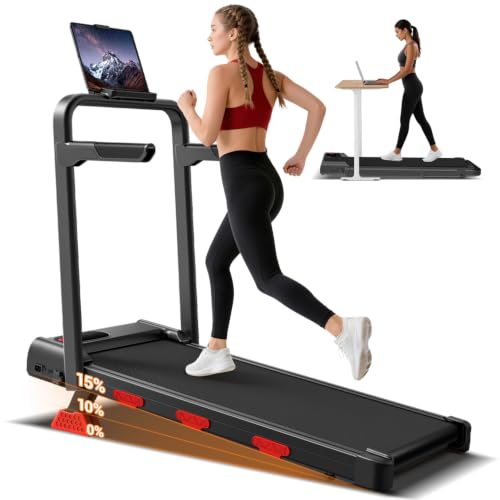
- Manual flat, 10%, and 15% incline positions
- 350-pound capacity with a quiet 3.0HP brushless motor
- Compact frame with handrail and device holder
Best For: Compact home incline workouts and light jogging
Best Heavy-Duty Smart Pick
450 lb Auto-Incline Walking Pad

- 450-pound capacity and 16.5-inch-wide belt
- Nine automatic incline levels up to 12%
- FitYo app, health-data syncing, and Bluetooth speaker
Best For: Connected walking workouts and higher-capacity users
Best for Taller Users
LONTEK 40% Incline Walking Pad

- 51-inch dual handrails for users 5 feet 7 inches and taller
- Five manual incline levels up to a steep 40%
- 350-pound capacity with reinforced stability supports
Best For: Tall users focused on hill training and incline walking
Best Heavy-Duty Pick
MERACH UltraWalk W60 Incline Walking Pad
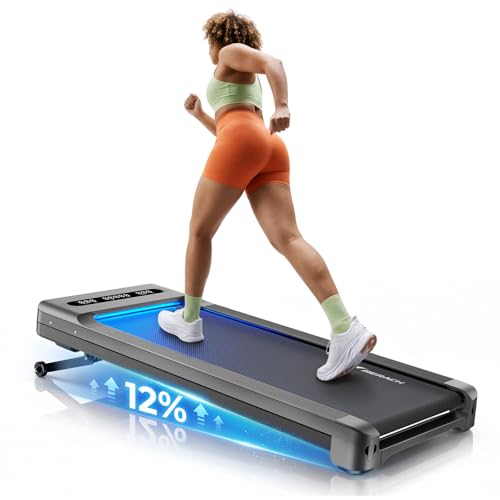
- Wide 16.5-by-41.3-inch walking deck
- 12-level automatic incline
- 400-pound maximum weight recommendation
Best For: Taller users wanting a stable, feature-rich walking pad
Best Folding Option
WELLFIT Folding Incline Treadmill

- Folding design with transport wheels
- Handlebar speed controls reduce bending
- 350-pound capacity with cushioned belt
Best For: Users prioritizing folding storage and supported walking
Best Compact Budget Choice
Elseluck Walking Pad with Handlebar

- Manual incline for hill-style walking
- Compact foldable design with transport wheels
- Handrails and shock-absorbing belt
Best For: Beginners needing a portable, supported walking pad
Best Heavy-Duty Incline Pick – 450 lb Auto-Incline Walking Pad
For shoppers comparing walking pads for tall people, this model stands out for its sturdy 450-pound capacity and incline capability. Its 38.6-inch deck is worth measuring against your stride, while the compact frame, wheels, and under-furniture storage help it fit home or office spaces.
Best For: Users who prioritize high weight capacity, incline training, and app-connected workouts.
Pros:
- Supports up to 450 pounds with a reinforced steel frame.
- Offers nine auto-incline levels up to 12% and speeds through 5.0 MPH.
- Includes Bluetooth, FitYo app tracking, built-in speakers, wheels, and a three-year warranty.
Cons:
- The 38.6-inch deck may still feel short for some taller users, especially at faster speeds.
- At 43 pounds, it may be less convenient to move than lighter walking pads.
This is a strong option when capacity and incline matter more than having the longest deck. Taller buyers should confirm the available walking length before ordering.
Best Handlebar Versatility – Incline Walking Pad with Detachable Handle
This walking pad for tall people offers a useful balance of walking and light running modes, with a detachable handlebar that changes its setup for under-desk use. Its 0.6–7.6 MPH range and 350-pound capacity make it more versatile than a basic flat walking pad, though taller users should verify the deck dimensions before buying.
Best For: Users who want a handlebar, incline support, and a treadmill that can switch between work and exercise.
Pros:
- Detachable handlebar supports both supported workouts and under-desk use.
- Runs from 0.6 to 7.6 MPH and supports up to 350 pounds.
- Features a claimed under-45 dB motor, cushioned anti-slip belt, countdown goals, and transport wheels.
Cons:
- The supplied details list a maximum incline of 5%, less than some competing incline models.
- Available notes do not specify the belt length or width, important measurements for taller users.
This model is appealing if you need one machine for desk walking, jogging, and handle-supported exercise. Check the full deck specifications and available clearance before relying on it for a longer stride.
Best Longer-Belt Budget Option – THERUN 40-Inch Walking Pad
Among walking pads for tall people, the THERUN is notable for its 40-inch belt, which provides more front-to-back room than many compact models. It is designed primarily for walking and jogging at up to 3.8 MPH, making it a practical choice for steady low-impact activity rather than faster running.
Best For: Taller users seeking a compact walking pad with a longer belt for walking or light jogging.
Pros:
- Uses a 40-inch-long, 15-inch-wide belt for more walking room.
- Six silicone shock absorbers and a five-layer anti-slip belt support comfort.
- Arrives without assembly, includes transport wheels, and stores at about 4.96 inches high.
Cons:
- The 3.8 MPH maximum speed is limiting for users who want to run.
- Its 300-pound capacity is lower than several heavier-duty options.
- The warranty is listed as one year.
The longer belt makes this one of the more stride-conscious compact options in the group. However, taller users wanting brisk running or a higher capacity should consider a larger, faster model.
Best Overall Incline Setup – WELLFIT Foldable Walking Pad
This WELLFIT model is a strong choice for walking pads for tall people who want more belt width and a stable handlebar. Its 40-by-16-inch running surface, 375-pound capacity, and 0.6–7.6 MPH range support walking through running, while the foldable frame helps with storage.
Best For: Users wanting a wider, longer belt, auto incline, handlebar support, and multiple control options.
Pros:
- Provides a 40-inch-long by 16-inch-wide belt with eight silicone shock absorbers.
- Offers automatic incline from 0% to 12% and speeds up to 7.6 MPH.
- Includes a stable handlebar, Bluetooth, app and voice controls, wheels, and a 5.5-inch folded height.
Cons:
- At 57 pounds, it is heavier than simpler walking pads.
- The 40-inch belt may still be restrictive for some taller users running at higher speeds.
- The supplied notes do not state a warranty length.
With its comparatively wide 40-inch belt, incline range, and handlebar, this is the most versatile fit in the lineup. Taller runners should still compare the deck length with their natural stride before purchase.
Best Compact Incline Option – LONTEK 15% Incline Walking Pad
For shoppers comparing walking pads for tall people, this LONTEK model stands out for its supportive handrail, 350-pound capacity, and flexible incline setup. It offers flat, 10%, and 15% incline positions, plus speeds up to 6.2 MPH for walking, light jogging, or interval pacing.
Best For: Home users who want a compact walking pad with manual incline choices, a handlebar, and room for varied workout intensities.
Pros:
- Three manually adjustable incline options: flat, 10%, and 15%.
- 51? No—this model includes a non-slip handrail and supports up to 350 pounds.
- Quiet 3.0HP brushless motor operates below 45 dB.
- Low-profile, portable design stores under furniture or upright against a wall.
Cons:
- The 37.4-inch belt may provide less stride room than longer treadmills.
- Incline adjustments are manual rather than automatic.
- The product listing specifies a one-year warranty.
This is a practical choice when storage space matters and you want incline training without a bulky treadmill. Taller users should compare the 37.4-inch belt with their natural stride before purchasing.
Best Heavy-Duty Smart Pick – 450 lb Auto-Incline Walking Pad
Among walking pads for tall people, this heavy-duty model is notable for its 450-pound capacity, 16.5-inch belt width, and nine-level automatic incline. Its 41-inch deck, app connectivity, and cushioned belt make it suited to structured walking workouts at home or in an office.
Best For: Users who prioritize high weight capacity, automatic incline adjustments, connected workout tracking, and a wider walking surface.
Pros:
- Supports up to 450 pounds with a reinforced alloy-steel frame.
- Offers nine automatic incline levels up to 12%.
- Includes FitYo app connectivity, Apple Health and Google Fit syncing, and Bluetooth audio.
- Triple cushioning features silicone absorbers and a five-layer anti-slip belt.
Cons:
- Maximum speed is 4 MPH, limiting faster jogging or running.
- At 48 inches long and 6 inches high, it is less low-profile than some walking pads.
- The 41-inch deck may still feel short for users with especially long strides.
Its combination of capacity, automatic incline, and smart features makes it a strong everyday walking option. However, taller shoppers seeking a running stride should carefully assess the deck length and 4-MPH speed ceiling.
Best for Taller Users – LONTEK 40% Incline Walking Pad
For people specifically seeking walking pads for tall people, this LONTEK model provides 51-inch dual handrails and a 38.6-inch belt, with the manufacturer positioning it for users 5 feet 7 inches and taller. It also delivers five manual incline levels, reaching up to a steep 40% grade.
Best For: Taller users who want supportive handrails, steep hill training, and a stable platform for walking, jogging, or incline workouts.
Pros:
- Designed for users 5 feet 7 inches and taller with elevated 51-inch handrails.
- Five manual incline levels range from 0% to 40%.
- Reinforced support feet and eight silicone pads improve stability on steep inclines.
- Quiet 3HP brushless motor supports speeds from 0.6 to 6.2 MPH.
Cons:
- The 38.6-inch belt may not suit users who need a long running deck.
- Incline levels are adjusted manually.
- Its highest incline and approximately 15-inch deck elevation may be more than casual walkers need.
This is the most purpose-built option in the group for taller users and demanding incline training. Its handrail height and stability features are helpful, but the relatively compact belt remains an important stride-length consideration.
Best Heavy-Duty Pick – MERACH UltraWalk W60 Incline Walking Pad
For shoppers comparing walking pads for tall people, the MERACH UltraWalk W60 stands out with a 16.5-by-41.3-inch deck, 12-level auto incline, and a stated 400-pound maximum capacity. It is designed for users who want more stride room and a more substantial home-walking platform than a basic under-desk pad.
Best For: Taller users seeking a wide, heavy-duty walking pad with automatic incline.
Pros:
- 16.5-by-41.3-inch deck provides additional stride space for taller walkers.
- 12 auto-incline levels support uphill walking and varied workouts.
- 400-pound maximum weight recommendation and reinforced steel frame promote stability.
- App control, Bluetooth speaker, RGB lighting, and Apple Health/Google Fit syncing add convenience.
Cons:
- Maximum speed is limited to 4 MPH, so it is better suited to walking than running.
- At 67.7 pounds, it is less lightweight than many compact walking pads.
The W60 is the strongest match here for tall users who prioritize deck width, incline training, and weight capacity. Its heavier construction and added features make it a practical choice when stability matters more than ultra-portable storage.
Best Folding Option – WELLFIT Folding Incline Treadmill
The WELLFIT is a versatile option for shoppers looking at walking pads for tall people who also want a handlebar and folding storage. Its 36-by-16-inch belt is more compact than the MERACH deck, but the frame supports walking or light jogging at speeds up to 6.2 MPH.
Best For: Users who want a foldable treadmill with handlebar controls, cushioning, and convenient storage.
Pros:
- Folds for storage and includes built-in transport wheels.
- Handlebar controls allow speed adjustments without bending down.
- Five-layer cushioned belt is designed to reduce impact on knees and ankles.
- Supports up to 350 pounds and offers app connectivity with fitness tracking.
Cons:
- The 36-inch belt length provides less stride room than the MERACH model.
- Its incline is manual rather than automatic.
This WELLFIT model makes the most sense when folding convenience and accessible controls are priorities. Taller users should compare the 36-inch deck length with their natural stride, but the handlebar, cushioning, and 350-pound capacity add useful everyday support.
Best Compact Budget Choice – Elseluck Walking Pad with Handlebar
The Elseluck walking pad is a compact choice for shoppers considering walking pads for tall people on a smaller-space budget. It includes stability handrails, a manually adjustable incline, and a 0.6-to-3.8-MPH speed range, though its shorter deck and lower stated weight limit make it better suited to lighter users.
Best For: Beginners and apartment dwellers who want a portable walking pad with handrails and manual incline.
Pros:
- Manual incline can increase workout intensity without requiring faster speeds.
- Compact 43.91-by-21.81-by-4.28-inch folded profile stores under furniture.
- Handlebars, a five-layer belt, and shock absorption provide added support.
- Remote control and LED display make speed and workout tracking straightforward.
Cons:
- The supplied specifications list a 220-pound maximum weight recommendation.
- Its compact deck may provide less stride room for taller users.
- Incline adjustment is manual, not automatic.
This model is easiest to recommend for users who value portability, handrail support, and simple incline walking. Taller or heavier shoppers should pay particular attention to the shorter compact design and 220-pound stated capacity before buying.
How We Picked the Best Walking Pads for Tall People
We focused on the features that matter most when a compact treadmill needs to accommodate a longer stride. Belt length was a primary consideration, since a short deck can make normal walking feel constrained. We also considered published weight capacity, motor power, incline range, handlebar availability, folding design, and whether each model appears suited to steady walking rather than occasional light use.
Because product specifications can vary by seller and configuration, confirm the current dimensions, maximum speed, warranty, and assembly requirements before ordering. A model marketed as “compact” may still require substantial clearance around the belt for safe use.
Quick Comparison
| Feature | Why It Matters | What to Look For |
|---|---|---|
| Belt length | Supports a more natural stride | Choose the longest deck that fits your space |
| Weight capacity | Provides a stability and durability margin | Look for capacity comfortably above your body weight |
| Incline | Increases workout intensity without running faster | Manual or automatic incline based on your routine |
| Handlebars | Add support and confidence during incline walking | Prefer sturdy, well-positioned rails |
| Folding design | Makes storage easier | Check folded dimensions and lifting weight |
Key Buying Factors for Walking Pads for Tall People
Prioritize Belt Length and Usable Space
Height alone does not determine the ideal belt size; walking speed and stride length matter too. Taller users should generally favor a longer walking surface, especially if they plan to walk briskly or use incline settings. Measure the available floor area and leave clearance behind the treadmill so you are not forced to walk close to a wall or furniture.
Check Capacity, Frame Stability, and Motor Expectations
A higher stated capacity can indicate a sturdier frame, but it does not guarantee a quiet or powerful motor. If you are near the listed maximum, choose a model with additional capacity rather than operating at the limit. For frequent use, look for a stable frame, a reliable belt, and a motor designed for sustained walking.
Choose Incline and Handles for Your Training Style
Incline can make low-speed walking more demanding and may be useful for short, structured workouts. Automatic incline is convenient, while manual incline can reduce complexity and cost. Handlebar models are usually the better choice for balance, incline training, or anyone who wants more security than a flat under-desk pad provides.
Consider Noise, Storage, and Desk Compatibility
For office use, confirm that the treadmill fits beneath your desk and that its console or handlebar does not interfere with legroom. Check reported noise, remote-control functionality, transport wheels, and whether the unit can be stored upright or under furniture.
Who Should Buy Which Walking Pads for Tall People?
- For the longest stride: Start with models advertising extended belts, such as the THERUN option with a 40-inch longer belt, then verify its full running-surface dimensions.
- For heavier users: Consider higher-capacity designs such as the 400- or 450-pound models, while leaving a meaningful margin below the stated limit.
- For incline workouts: Choose a model with automatic incline and a handlebar if you want controlled intensity and extra support.
- For compact storage: Look for a foldable design, but compare folded dimensions and machine weight before assuming it will be easy to move.
- For under-desk walking: Favor a low-profile model without a permanent handlebar, provided the belt is long enough for your stride and the desk offers adequate clearance.
The right walking pad is the one that gives you enough stride room, stability, and workout flexibility without overwhelming your available space. For taller users, belt dimensions should be the first filter, followed by capacity, support features, and storage needs.