The best hybrid bikes with rim brakes combine the efficient feel of a road bike with the upright comfort and everyday practicality many city riders want. They can be a smart choice for commuting, errands, recreational rides, and fitness without the added complexity or cost of disc-brake systems.
This roundup compares 10 options across frame materials, wheel sizes, gearing, riding position, suspension, and intended use. Use the guide below to narrow your choice based on your routes, maintenance preferences, and budget.
Best 10 Hybrid Bikes with Rim Brakes Picks for 2026
Best Commuter Value
Viribus 7-Speed 700C Hybrid Bike

- Lightweight aluminum frame with 330-pound capacity
- Seven-speed gearing with 700C wheels
- Lights, reflectors, and kickstand included
Best For: Adult commuters and casual road riders
Best Beginner Commuter
Lightweight 8-Speed 700C Hybrid Bike
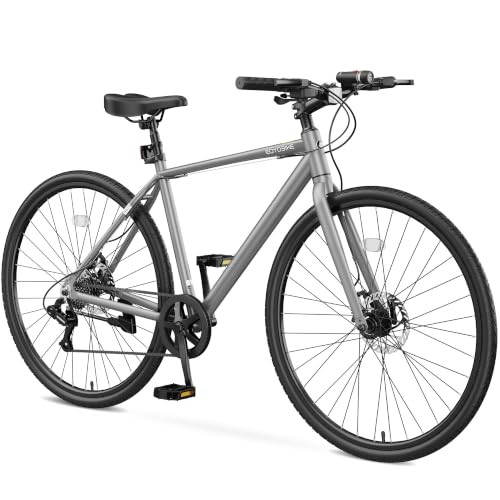
- Aluminum frame with nimble 700C wheels
- Eight-speed drivetrain for urban routes and hills
- LED headlight and reflectors included
Best For: Beginner commuters and everyday city riders
Best Gear Range

- 21-speed Shimano shifting system
- Adjustable saddle and handlebars
- Mounting points for racks and mudguards
Best For: Mixed-route riders wanting gearing and customization
Lightweight Urban Pick

- 29.5-pound aluminum frame
- 700C wheels and 8 speeds
- Front and rear mechanical disc brakes
Best For: Paved-road commuters prioritizing low weight and urban maneuverability
Trail-Ready Value

- Dual front and rear V-brakes
- Front suspension for rough terrain
- Sturdy carbon steel frame
Best For: Mixed-surface riders who need trail capability and traditional V-brakes
Best for Comfort

- Upright flat-bar riding position
- 7-speed drivetrain for varied routes
- 90% assembled with tools and pedals
Best For: Beginner commuters wanting comfortable, practical road and city riding
Trail-Ready Alternative
21-Speed Aluminum Mountain Bike

- Lightweight aluminum frame with internal cable routing
- Lockout suspension fork and mechanical dual disc brakes
- 21 speeds, double-wall rims, and 85% assembly
Best For: Mixed paved and unpaved riding with a trail bias
Urban Rim-Brake Pick
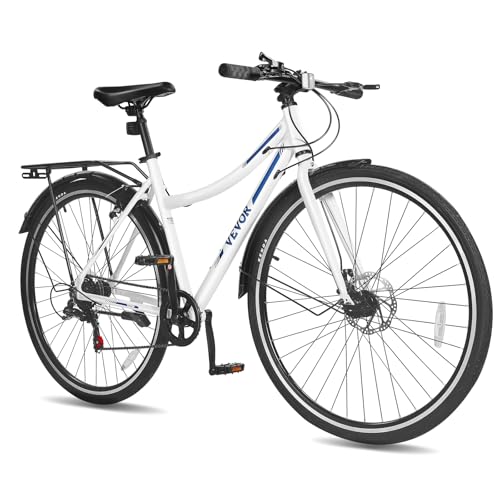
- Front disc brake paired with rear V-brake
- 700x35C tires for streets and light gravel
- Fenders, rear rack, kickstand, and adjustable seat included
Best For: Daily urban commuting with mixed braking
High-Gear Commuter Alternative

- 24-speed 3x8 drivetrain for varied urban routes
- 700x32C wheels support efficient paved-road riding
- 90% assembled with adjustable seat and internal wiring
Best For: Paved-road commuting with extensive gear range
Best Commuter Value – Viribus 7-Speed 700C Hybrid Bike
For shoppers comparing hybrid bikes with rim brakes, note that this Viribus model uses disc brakes instead. Its lightweight aluminum frame, 700C wheels, seven-speed drivetrain, lights, and largely pre-assembled design make it a practical option for commuting and recreational road riding.
Best For: Adult commuters and casual riders who want a lightweight, ready-to-finish city bike with useful included accessories.
Pros:
- Lightweight, corrosion-resistant aluminum frame supports up to 330 pounds.
- Seven-speed thumb shifter provides adaptable gearing for roads and hills.
- Includes front and rear lights, reflectors, and a kickstand.
- Arrives more than 85% assembled.
Cons:
- Uses disc brakes rather than rim brakes.
- Listed size is intended for riders approximately 5’7″–6’1″.
The Viribus is a well-equipped commuter choice with a straightforward seven-speed setup and helpful safety accessories. It is less suitable for buyers specifically requiring rim brakes.
Best Wheel Upgrade – Wheel Master 700C Alloy Disc Front Wheel
This Wheel Master product is a replacement front wheel, not a complete bicycle, so it is relevant to hybrid-bike shoppers planning a wheel upgrade rather than buying a finished ride. Its double-wall alloy rim, 32 spokes, quick-release axle, and six-bolt disc compatibility support durable disc-brake builds.
Best For: DIY mechanics and riders replacing a compatible 700C or 29-inch front wheel on a disc-brake hybrid bike.
Pros:
- Double-wall alloy construction is designed for added strength.
- 32-hole rim and 14G spokes provide balanced support.
- Quick-release axle and six-bolt disc-compatible hub are included.
- 25mm internal width accepts tube-type tires with SV valves.
Cons:
- Only the front wheel is included.
- Designed for disc brakes, not rim brakes.
- Compatibility should be checked against axle, tire, and rotor requirements.
For a compatible disc-brake hybrid, this Wheel Master wheel offers a sturdy alloy replacement platform. It is not a plug-and-play choice for rim-brake bikes or shoppers seeking a complete bicycle.
Best Beginner Commuter – Lightweight 8-Speed 700C Hybrid Bike
Among hybrid bikes with rim brakes, this model stands apart because it uses dual disc brakes. Its aluminum frame, 700C wheels, eight-speed drivetrain, upright geometry, lighting, and 95% pre-assembled setup make it aimed at practical urban riding.
Best For: Beginners and commuters who want a lighter-feeling city bike with multiple gears and visibility accessories.
Pros:
- Lightweight, rust-resistant aluminum frame is easy to maneuver.
- Eight-speed drivetrain handles flat routes, moderate hills, and fitness rides.
- Upright geometry and flat handlebar support a more comfortable riding posture.
- Includes an LED headlight and front/rear reflectors.
Cons:
- Uses dual disc brakes rather than rim brakes.
- Available sizing overlaps, so riders should compare the listed height ranges carefully.
This bike offers a balanced commuter specification for riders prioritizing comfort, visibility, and easy setup. Buyers committed to rim-brake systems will need to consider another model.
Best Gear Range – Jupiter 21-Speed Hybrid Bike
For shoppers seeking hybrid bikes with rim brakes, this Jupiter instead offers dual disc brakes and a broad 21-speed range. Its aluminum frame, adjustable contact points, mounting options, and included commuter accessories make it adaptable for road, gravel, and trail use.
Best For: Riders who want extensive gearing and a customizable hybrid bike for mixed paved and unpaved routes.
Pros:
- 21-speed Shimano EF500 Easyfire system offers a wide range of gearing.
- Lightweight aluminum alloy frame balances durability and handling.
- Adjustable saddle and handlebars help personalize riding position.
- Mounting points accommodate accessories such as racks, mudguards, and bottle holders.
Cons:
- Uses dual disc brakes rather than rim brakes.
- The listed 19-inch frame size may not suit every rider.
- More gearing may require additional setup and adjustment than a simpler drivetrain.
The Jupiter is the most versatile option here for riders who value gear range and accessory customization. Its disc-brake setup and fixed 19-inch frame size are the main considerations.
Lightweight Urban Pick – 8-Speed Commuter Hybrid
For shoppers comparing hybrid bikes with rim brakes, note that this model uses front and rear mechanical disc brakes instead. Its lightweight aluminum frame, 700C wheels, rigid fork, and 8-speed drivetrain make it a practical option for paved roads and urban commuting.
Best For: City commuters who want a lightweight, fast-rolling hybrid bike with mechanical disc braking.
Pros:
- Lightweight 29.5-pound aluminum frame is easier to carry and maneuver.
- 700C wheels support efficient rolling on paved roads.
- 8-speed drivetrain helps handle both flat streets and city inclines.
- Arrives 85% pre-assembled and includes setup tools.
Cons:
- Uses disc brakes rather than rim brakes.
- Rigid fork provides no suspension for rough surfaces.
- Only two frame sizes are listed.
This is a strong urban-focused choice if low weight, efficient wheels, and a straightforward 8-speed setup matter more to you than suspension or traditional rim brakes.
Trail-Ready Value – 26-Inch Hybrid Mountain Bike
Although shoppers seeking hybrid bikes with rim brakes may find this model appealing because it has dual V-brakes, its design leans toward mountain and trail riding. The steel frame, 26-inch wheels, front suspension, and multi-speed gearing suit riders who split time between city streets and unpaved terrain.
Best For: Riders who want an affordable, versatile bike for trails, rough roads, and casual city use.
Pros:
- Front and rear V-brakes provide responsive stopping control.
- Front suspension helps absorb bumps on rough roads and trails.
- Steel frame offers stability and load-bearing strength.
- 90% pre-assembled for relatively quick setup.
Cons:
- Steel construction may be less convenient to carry than a lighter aluminum frame.
- 26-inch wheels are smaller than the 700C wheels on road-oriented hybrids.
- Product information lists 7 speeds, while the title references 7/21 speed.
Choose this bike when V-brakes and rough-surface capability are priorities. Its suspension and durable steel construction make it less focused on lightweight, high-speed commuting.
Best for Comfort – 700C 7-Speed Hybrid
For those comparing hybrid bikes with rim brakes, this beginner-friendly model uses dual disc brakes instead. Its flat handlebar, upright riding position, 700C-style wheel size, and 7-speed drivetrain are geared toward comfortable road, city, and countryside rides.
Best For: New or casual riders seeking an upright, easy-to-use commuter bike for paved routes.
Pros:
- Flat handlebars offer a stable grip and approachable handling.
- Upright geometry is designed to reduce back, arm, and neck strain.
- 7-speed gearing supports hills, flats, and everyday city riding.
- Arrives 90% assembled with pedals and installation tools included.
Cons:
- Uses dual disc brakes rather than rim brakes.
- Rigid suspension is less suited to heavily rough terrain.
- Listed sizing is focused on taller riders, with M fitting 5’9″–6’1″ and L fitting 6’1″–6’5″.
This model is a sensible fit for beginners who value comfort and simple operation. Confirm the available frame size before buying, especially if you fall outside the listed height ranges.
Trail-Ready Alternative – 21-Speed Aluminum Mountain Bike
Although it is not a rim-brake model, this 21-speed mountain bike is a useful comparison for shoppers considering hybrid bikes with rim brakes and wanting more trail capability. Its aluminum frame, lockout suspension fork, mechanical disc brakes, and 26-inch wheels suit mixed paved and unpaved riding.
Best For: Riders who prioritize trail versatility, suspension comfort, and stronger disc-braking performance over a traditional hybrid setup.
Pros:
- Lightweight aluminum frame with internal cable routing
- Lockout suspension fork helps balance trail comfort and paved-road efficiency
- 21-speed trigger shifting and double-wall aluminum rims
- Arrives 85% assembled with included tools
Cons:
- Uses mechanical disc brakes rather than rim brakes
- Mountain-bike configuration may be less efficient for strictly urban commuting
This is best viewed as an off-road-oriented alternative rather than a direct rim-brake hybrid. Choose it when varied terrain, suspension, and disc-brake control matter most.
Urban Rim-Brake Pick – VEVOR 7-Speed Hybrid Bike
For shoppers specifically comparing hybrid bikes with rim brakes, this VEVOR model stands out because it pairs a rear V-brake with a front disc brake. The rigid aluminum-frame design, 700x35C tires, fenders, rack, and kickstand make it practical for everyday city riding and light gravel.
Best For: Urban commuters who want a practical hybrid with a rear rim brake, upright adjustability, and useful commuter equipment.
Pros:
- Rear V-brake offers the familiar maintenance profile of a rim brake
- Lightweight, corrosion-resistant aluminum frame supports up to 330 pounds
- 700x35C tires and double-wall rims suit city streets and gravel roads
- Includes fenders, rear rack, kickstand, and adjustable seat
Cons:
- Mixed braking system is not a full front-and-rear rim-brake setup
- Only 7 speeds
- Listed minimum rider height is 64 inches
This is the closest match in the group for a rim-brake-focused buyer, though its front disc and rear V-brake combination is a compromise. Its commuter accessories add everyday practicality without requiring a separate rack or fenders.
High-Gear Commuter Alternative – 24-Speed 700C Hybrid Bike
This hybrid is another alternative for shoppers researching hybrid bikes with rim brakes, but it uses dual disc brakes instead. Its 24-speed drivetrain, 700x32C wheels, internal wiring, and adjustable seat are geared toward paved roads, urban terrain, and longer commuter rides.
Best For: Urban and paved-road riders who want broad gearing, large wheels, and a more upright long-distance riding position.
Pros:
- 24-speed 3×8 drivetrain provides a broad range for climbs and descents
- 700x32C wheels are designed to reduce rolling resistance
- Internal wiring keeps the frame appearance clean
- 90% pre-assembled with tools and installation instructions
Cons:
- Uses dual disc brakes rather than rim brakes
- Carbon steel frame is less aligned with lightweight aluminum hybrid options
- Suspension details are listed as dual, but the supplied notes do not specify the components
Its high gear count and 700C wheels make it appealing for commuters covering varied urban routes. However, buyers specifically seeking rim-brake simplicity should consider the VEVOR model instead.
How We Picked the Best Hybrid Bikes with Rim Brakes
We focused on features that matter for everyday riding rather than headline specifications alone. Our comparison considers frame material, wheel size, number of gears, brake design, tire versatility, riding position, and likely maintenance needs. Aluminum frames generally offer a useful balance of low weight and corrosion resistance, while steel frames can provide a more economical option with a sturdier, smoother feel.
Because product listings can vary by size and configuration, confirm the exact brake type, included components, frame size, and assembly requirements before ordering. Some bikes in this category may use disc brakes or mixed configurations, so shoppers specifically seeking rim brakes should verify the listing carefully.
Quick Comparison
- Best for efficient city riding: Look for a lightweight 700C bike with a moderate gear range and narrow-to-medium tires.
- Best for comfort: Choose an upright geometry, wider tires, ergonomic contact points, and, where appropriate, a suspension fork.
- Best for varied terrain: A broader gear range and more durable tires help when routes include hills, gravel, or uneven pavement.
- Best for simpler upkeep: A conventional rim-brake setup is typically easy to inspect, adjust, and replace with widely available pads.
Key Buying Factors for Hybrid Bikes with Rim Brakes
Brake Performance and Maintenance
Rim brakes are lightweight, affordable, and straightforward to service. They work especially well for dry-weather commuting and recreational riding. Their performance can decline in heavy rain or when the wheel rim is dirty, so check pad alignment regularly and replace worn pads promptly. Make sure the brake levers feel firm and that replacement pads are easy to source.
Frame Size, Fit, and Riding Position
Correct sizing matters more than a small difference in component count. Check the manufacturer’s height chart, then consider standover clearance, reach, saddle adjustment, and handlebar height. An upright position improves visibility and comfort, while a lower position may feel faster on longer paved rides.
Wheels, Tires, and Gearing
700C wheels roll efficiently over pavement and are common on commuter hybrids. Smaller wheels can feel more manageable for shorter riders, while wider tires improve comfort and grip on rough streets. Seven speeds may be enough for relatively flat routes; 21 or 24 speeds provide more flexibility for hills, though derailleur adjustment can require more attention.
Assembly and Everyday Equipment
Budget bikes commonly require partial assembly. Check whether tools are included and plan to inspect brake alignment, torque, shifting, and tire pressure before the first ride. If commuting, budget separately for lights, a lock, a rear rack, fenders, and a helmet.
Who Should Buy Which Hybrid Bikes with Rim Brakes?
Choose a lightweight 700C aluminum model if you mainly ride paved streets and want an efficient commuter or fitness bike. Pick a comfort-oriented design if upright posture and relaxed handling matter most. Riders tackling hills should prioritize a useful low gear over simply selecting the highest speed count. If your routes include rough paths or light gravel, favor wider tires, a sturdy frame, and appropriate suspension—but avoid treating a hybrid as a replacement for a dedicated mountain bike.
Finally, select rim brakes when easy maintenance, lower replacement cost, and mostly dry-weather riding are priorities. For frequent wet-weather commuting, steep descents, or muddy conditions, a comparable hybrid with quality disc brakes may be a better fit.