The best hardtail mountain bikes balance efficient climbing, dependable handling, and lower maintenance than full-suspension designs. This roundup includes options for beginners, trail riders, dirt-jump enthusiasts, and experienced cyclists seeking capable components without unnecessary complexity.
Compare wheel sizes, frame materials, suspension travel, gearing, and brake systems to find the bike that matches your terrain, riding style, and budget.
Best 10 Hardtail Mountain Bikes Picks for 2026
Best Fat-Tire Explorer
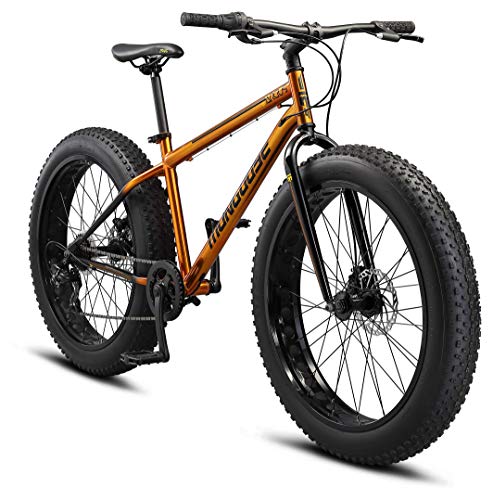
- 4-inch tires for loose terrain
- Durable steel rigid hardtail
- 7-speed drivetrain with disc brakes
Best For: Beginner riders exploring sand, snow, gravel, and rough trails
Best Aggressive Trail Pick

- 140mm RockShox Pike fork
- 12-speed Shimano drivetrain
- Hydraulic brakes and dropper post
Best For: Experienced riders tackling technical trails and jumps
Best Value 29er
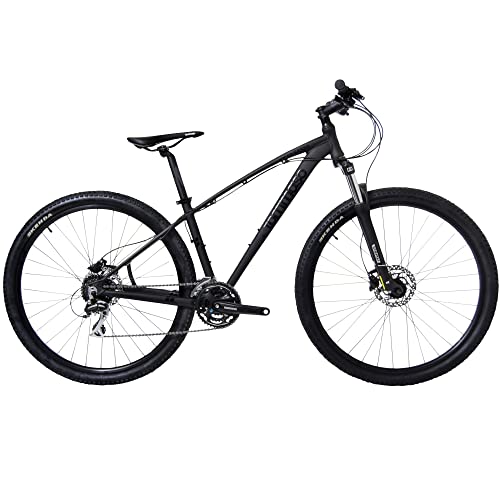
- 29-inch wheels for rollover ability
- 24-speed Shimano drivetrain
- Hydraulic brakes and lifetime frame warranty
Best For: New or returning riders wanting affordable trail performance
Best Starter Trail Bike

- Aluminum frame with front suspension
- 7-speed twist-shift drivetrain
- Knobby tires for unpaved trails
Best For: Youth and adult beginners riding paths and moderate trails
Versatile Trail Starter
Ktaxon 27.5-Inch Mountain Bike

- 21-speed drivetrain for varied terrain
- Lock-out front fork and mechanical disc brakes
- 85% assembled with kickstand included
Best For: Intermediate riders tackling mixed gravel, dirt, and rocky paths
Dirt-Jump Specialist
Gravity Salire SJ-50 Dirt Jumper

- 100mm VAXA front suspension fork
- Reinforced steel frame with 26-inch wheels
- Mechanical disc brake and double-walled rims
Best For: Dirt-jump and BMX-style terrain
High-Control Trail Upgrade

- 140mm adjustable air fork with hydraulic damping
- Shimano Deore 1x12 drivetrain and hydraulic brakes
- 29-inch tires with front and rear thru-axles
Best For: Technical trails, climbs, and descents
Premium Full-Suspension Pick

- Carbon full-suspension frame
- Shimano DEORE 12-speed drivetrain
- Four-piston hydraulic brakes
Best For: Aggressive trails and enduro-style riding
Fast XC Value Pick
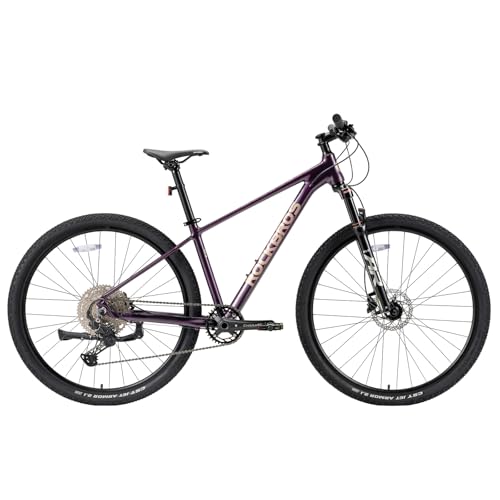
- Lightweight aluminum 29er frame
- 1x10 drivetrain with 11-50T cassette
- Hydraulic brakes and lockout fork
Best For: Cross-country trails and gravel riding
Lightweight Carbon Hardtail Pick
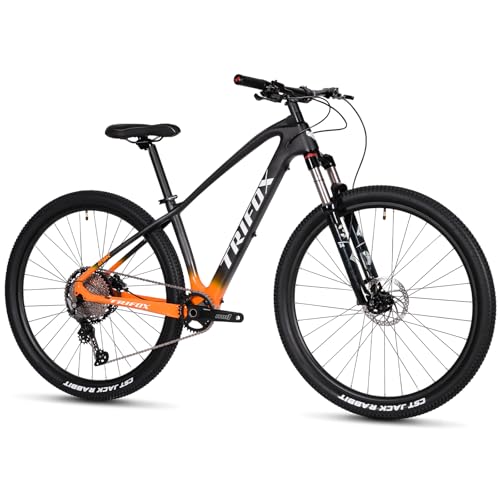
- 26-pound T800 carbon frame
- 130mm lockable hydraulic fork
- Shimano DEORE 12-speed drivetrain
Best For: Lightweight cross-country and trail riding
Best Fat-Tire Explorer – Mongoose Argus ST
The Mongoose Argus ST is a distinctive option among hardtail mountain bikes, using wide 4-inch tires to improve grip on loose sand, snow, gravel, and rough trails. Its rigid steel frame and fork favor durability and simplicity, while the 7-speed drivetrain provides useful gearing for varied terrain.
Best For: Beginner riders who want a fat-tire bike for mixed, loose, or all-season terrain.
Pros:
- 4-inch knobby tires provide substantial traction on sand, snow, gravel, and trails.
- Steel hardtail frame and rigid fork are built for durability.
- 7-speed Shimano drivetrain and mechanical disc brakes offer practical trail control.
Cons:
- At 42 pounds, it is relatively heavy.
- The rigid fork does not absorb bumps like a suspension fork.
- Its 26-inch fit is specified for riders approximately 5’7″ to 6’1″ tall.
The Argus ST prioritizes flotation, grip, and toughness over low weight or front suspension. It is a sensible pick when year-round traction matters more than fast, lightweight trail performance.
Best Aggressive Trail Pick – Canyon Stoic 4
The Canyon Stoic 4 is a performance-focused choice among hardtail mountain bikes, combining a long, slack aluminum frame with a 140mm RockShox Pike Select fork. Its 12-speed Shimano drivetrain, hydraulic disc brakes, and dropper post equip it for technical trails, jumps, and aggressive riding.
Best For: Experienced adult riders seeking a capable hardtail for demanding technical trails and jumps.
Pros:
- 140mm RockShox Pike Select fork is designed to handle bigger hits.
- Slack geometry and long reach support stable handling on rough terrain.
- 12-speed Shimano drivetrain, SRAM hydraulic brakes, and dropper post provide strong trail control.
Cons:
- Its aggressive setup may be more bike than casual riders need.
- Wheel size varies by frame size, so fit selection requires attention.
- The supplied listing identifies this model as a 2023 version.
The Stoic 4 stands out for riders who want hardtail simplicity without giving up serious trail capability. Its suspension and control components make it the most aggressive option in this group.
Best Value 29er – Tommaso Gran Sasso
The Tommaso Gran Sasso offers a well-equipped hardtail mountain bike setup for riders who want trail-ready performance without stepping into an entry-level specification. It pairs 29-inch wheels and a 100mm Suntour fork with Shimano hydraulic disc brakes and a 24-speed drivetrain.
Best For: New or returning adult riders who want capable climbing, rollover performance, and dependable stopping power.
Pros:
- 29-inch wheels help roll over rocks and roots and can improve climbing efficiency.
- Shimano M315 hydraulic disc brakes provide strong braking in varied conditions.
- 24-speed Shimano drivetrain and 100mm Suntour fork support varied trail riding.
- Aluminum frame comes with a lifetime frame warranty.
Cons:
- Professional assembly and tuning are required to validate warranties.
- The listed large size is intended for riders approximately 5’11” to 6’1″ tall.
- The 40-pound weight is substantial for a trail bike.
The Gran Sasso balances practical components with a durable aluminum frame. It is particularly appealing to riders who value hydraulic braking and 29er rollover benefits while staying within a more accessible performance category.
Best Starter Trail Bike – Mongoose Flatrock
The Mongoose Flatrock is an accessible hardtail mountain bike for riders beginning to explore unpaved paths and local trails. Its aluminum frame, front suspension fork, 26-inch wheels, and 7-speed twist-shift drivetrain provide a straightforward setup for everyday off-road riding.
Best For: Youth, teen, and adult riders seeking a simple bike for bike paths, unpaved trails, and moderate terrain.
Pros:
- Aluminum frame keeps the bike durable while avoiding a steel frame construction.
- Front suspension fork helps smooth bumps and uneven surfaces.
- 7-speed gearing offers useful range for recreational trail riding.
- Knobby tires provide traction away from pavement.
Cons:
- Linear-pull brakes are less powerful than hydraulic disc brakes.
- Seven speeds provide less range than multi-speed alternatives in this roundup.
- The listed 26-inch fit is specified for riders approximately 5’4″ to 6’2″ tall.
The Flatrock is a practical starting point for recreational off-road riding. Its simpler components suit moderate use, though riders planning technical or aggressive trails may prefer stronger braking and more advanced equipment.
Versatile Trail Starter – Ktaxon 27.5-Inch Mountain Bike
For riders comparing hardtail mountain bikes for mixed trails and everyday off-road use, the Ktaxon offers a practical combination of front suspension, 21-speed shifting, and mechanical disc brakes. Its 27.5-inch setup is paired with an adjustable seat post and an aluminum wheelset.
Best For: Intermediate riders who want a versatile hardtail mountain bike for gravel paths, dirt paths, and rocky roads.
Pros:
- 21-speed trigger shifting helps accommodate varied terrain.
- Lock-out front suspension and a shock-absorbing fork help smooth bumps and dips.
- Mechanical dual disc brakes provide responsive braking.
- Arrives 85% assembled, with a kickstand included.
Cons:
- The high-carbon steel frame contributes to a listed weight of 16 kg.
- Assembly still requires fitting the handlebar, saddle, front wheel, and pedals, plus brake and gear adjustments.
- The listed warranty is 30 days.
The Ktaxon is a sensible feature-focused option when you want broad gearing and basic front suspension without moving to a more specialized trail build. Check sizing carefully, since this model is offered in multiple wheel sizes.
Dirt-Jump Specialist – Gravity Salire SJ-50 Dirt Jumper
Gravity Salire SJ-50 Dirt Jumper Bike with Disc Brake Suspension Fork 26 inch Wheels
Check Price On AmazonThe Gravity Salire SJ-50 takes a more focused approach than many hardtail mountain bikes, pairing a reinforced high-tensile steel frame with 26-inch wheels and a 100mm VAXA suspension fork. Its dirt-jumper configuration is designed around cycling and BMX-style terrain.
Best For: Adult riders seeking a dirt-jump-oriented hardtail mountain bike with a front suspension fork and disc brake.
Pros:
- Reinforced steel frame is suited to the dirt-jumper format.
- 100mm VAXA suspension fork provides front travel for BMX-style terrain.
- Mechanical disc brake offers disc-braking control.
- Double-walled 26-inch rims and small-block tires are included.
Cons:
- Its dirt-jumper design is less trail-generalist than a conventional mountain bike.
- The high-tensile steel frame and 30-pound listed weight are not especially lightweight.
- The listing identifies a limited warranty without specifying its duration.
The Salire SJ-50 makes the most sense for riders prioritizing dirt-jump and BMX-style riding over long-distance trail efficiency. Its 26-inch wheels, 100mm fork, and three-piece crank support that narrower use case.
High-Control Trail Upgrade – ROCKBROS MT600 29er
Among these hardtail mountain bikes, the ROCKBROS MT600 is the most trail-focused build. It combines a 140mm adjustable air fork with hydraulic damping, a Shimano Deore 1×12 drivetrain, hydraulic disc brakes, and 29-inch Kenda tires for controlled riding over uneven terrain.
Best For: Riders who want a 29er hardtail mountain bike for technical trails, climbs, and descents.
Pros:
- 140mm air fork has adjustable air pressure, hydraulic damping, and crown-mounted lockout.
- Shimano Deore M6100 1×12 drivetrain offers a wide 11-50T cassette range.
- Shimano MT200 hydraulic disc brakes provide progressive speed control.
- 29 x 2.2-inch Kenda tires and front and rear thru-axles support a planted feel.
Cons:
- At 32 pounds, it is not the lightest option in this group.
- The maximum system weight is 220 pounds, including rider and cargo.
- Riders must choose the frame size carefully because fit ranges vary by size.
The MT600 is the strongest choice here for riders who value modern trail components and braking control. Its size range covers riders from 5 feet 3 inches to 6 feet 6 inches, but matching your height to the correct frame is essential.
Premium Full-Suspension Pick – SAVADECK Titan 612
For riders comparing hardtail mountain bikes with more technical-trail capability, the SAVADECK Titan 612 takes a different approach with a lightweight carbon full-suspension frame. Its dual-link suspension, 12-speed drivetrain, four-piston brakes, and wide tires are aimed at demanding off-road riding.
Best For: Aggressive trail riding, enduro-style terrain, and riders prioritizing suspension and braking control.
Pros:
- Carbon fiber full-suspension frame with internal cable routing
- DNM air shock with three-stage lockout and rebound adjustment
- Shimano DEORE M6100 12-speed groupset
- Four-piston hydraulic disc brakes and 2.4-inch Continental tires
Cons:
- Full-suspension design is more specialized than a simple hardtail platform
- Listed with 27.5-inch wheels and a 19-inch frame size
The Titan 612 is the most trail-focused option here, particularly for riders who value downhill control, traction, and adjustable suspension over simplicity. Its feature set is substantial for technical terrain, though buyers should confirm the listed wheel and frame sizing before ordering.
Fast XC Value Pick – ROCKBROS MT400 29er
The ROCKBROS MT400 is a practical alternative for riders shopping hardtail mountain bikes for cross-country riding, gravel paths, and everyday use. Its aluminum 29er frame, 1×10 drivetrain, lockout fork, and hydraulic brakes emphasize efficient rolling and straightforward trail performance.
Best For: Fast cross-country riding, gravel paths, and taller riders seeking a stable 29er.
Pros:
- 29-inch aluminum frame designed for efficient power transfer
- 1×10 drivetrain with an 11-50T cassette for climbing range
- Remote-lockout oil-spring fork with preload adjustment
- Hydraulic disc brakes and 2.1-inch trail tires
Cons:
- Only front suspension, with no rear suspension for rougher terrain
- Listed 21-inch frame is specified for riders approximately 5’9″ to 6’6″
With its large wheels and lockout fork, the MT400 suits riders who want a responsive hardtail-style setup that can transition between trails and paved surfaces. The fixed 21-inch frame specification makes fit verification especially important.
Lightweight Carbon Hardtail Pick – Trifox M2 29er
For riders specifically seeking hardtail mountain bikes with a lightweight construction, the Trifox M2 pairs a T800 carbon fiber frame with a 130mm lockable hydraulic fork. Its Shimano DEORE M6100 12-speed drivetrain, hydraulic disc brakes, and 29-inch tires create a capable front-suspension trail package.
Best For: Riders wanting a lightweight carbon 29er with broad gearing and adjustable front suspension.
Pros:
- T800 carbon frame with a listed total bike weight of 26 pounds
- 130mm hydraulic fork with a lockout function
- Shimano DEORE M6100 12-speed shifting system
- Shimano hydraulic disc brakes and 29×2.1-inch tires
Cons:
- Only front suspension, so the rear remains rigid over rough terrain
- One-year warranty is shorter than the SAVADECK listing’s two-year warranty
- Assembly is required, though the bike is supplied 85% pre-assembled
The M2 stands out for its low listed weight and carbon frame while retaining useful trail-oriented equipment. Its available 15.5-, 17-, and 19-inch sizes provide more fit choices than some alternatives, but buyers should select carefully before assembly.
How We Picked These Hardtail Mountain Bikes
We focused on the specifications that most affect real-world performance: frame construction, wheel size, drivetrain range, suspension design, braking hardware, fit options, and intended use. The selection spans affordable recreational models, aggressive trail bikes, fat-tire designs, dirt jumpers, and lightweight carbon builds.
Because equipment and sizing can vary by configuration, confirm the exact model, wheel size, frame size, and component package before ordering. Assembly, brake adjustment, and derailleur tuning may also be required on bikes shipped directly to customers.
Quick Comparison
- Best for technical trail riding: Look for a modern geometry, hydraulic disc brakes, a wide-range drivetrain, and a suspension fork with trail-appropriate travel.
- Best for beginners and casual use: Prioritize a manageable frame, reliable shifting, comfortable contact points, and easy-to-service parts.
- Best for dirt jumps: Choose a compact 26-inch design with a strong frame, responsive fork, and simple gearing.
- Best for snow, sand, and loose terrain: Fat tires provide additional flotation and traction, though they add rolling resistance and weight.
- Best for speed and long climbs: A lightweight aluminum or carbon frame, efficient 29-inch wheels, and a broad 12-speed drivetrain can reduce effort over distance.
Key Buying Factors for Hardtail Mountain Bikes
Frame and Fit
Frame size matters more than small component differences. Use the manufacturer’s height and inseam chart, then consider reach and riding position. Aluminum is a practical balance of weight, stiffness, durability, and cost, while carbon can reduce weight and vibration but usually costs more.
Wheel Size and Tires
29-inch wheels roll efficiently over roots and rocks and maintain momentum on longer rides. Smaller wheels can feel more maneuverable and may suit shorter riders or dirt-jump use. Tire width and tread should match the surface: aggressive knobbies improve grip, while faster-rolling tires work better for pavement and hardpack.
Suspension, Gearing, and Brakes
Consider fork travel in relation to your terrain. Shorter travel suits smoother paths, while longer-travel forks provide more control on rough descents but can add weight. A wide-range drivetrain helps with steep climbs, and hydraulic disc brakes generally deliver stronger, more consistent stopping than basic mechanical systems.
Maintenance and Setup
Hardtail Mountain Bikes have fewer suspension components than full-suspension bikes, but they still need clean chains, properly inflated tires, adjusted shifting, and inspected brake pads. Verify that replacement parts are readily available and budget for professional setup if you are not comfortable assembling a bicycle.
Who Should Buy Which Hardtail Mountain Bikes?
New riders and families should favor affordable, easy-to-control models with dependable gearing and a comfortable fit. Trail-focused riders should spend more on hydraulic brakes, modern trail geometry, a quality fork, and a wide-range drivetrain. Dirt-jump riders should choose a compact, reinforced bike designed for jumps rather than long-distance efficiency. Adventure and mixed-terrain riders may prefer 29-inch wheels and versatile tires, while performance-oriented cyclists can justify a lighter carbon frame and upgraded 12-speed components.
Ultimately, the right choice is the bike that fits correctly and matches your regular terrain. A well-sized, simpler hardtail will usually be more enjoyable than a higher-specification bike that is too large, too aggressive, or poorly suited to your riding goals.