Carbon mountain bikes can deliver a useful balance of low weight, stiffness, and vibration control for riders who want faster, more confident trail performance.
This roundup covers ten options ranging from aggressive full-suspension trail bikes to affordable carbon-frame builds and versatile all-terrain models. Compare frame design, components, fit, and intended use before choosing.
Best 10 Carbon Mountain Bikes Picks for 2026
Premium Trail Pick
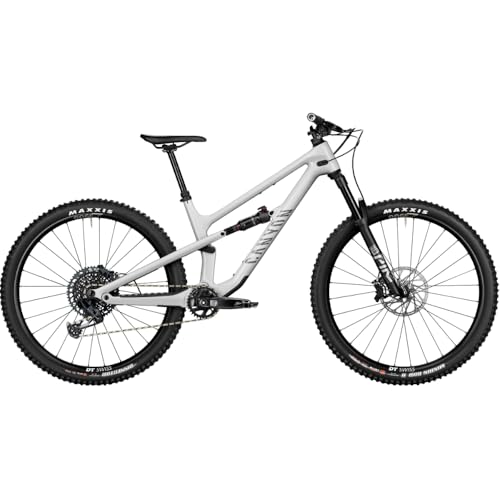
- Lightweight carbon frame
- 140mm front and 125mm rear suspension
- SRAM GX Eagle 12-speed drivetrain
Best For: Technical trail riding and experienced mountain bikers
Value Carbon Hardtail

- Carbon frame with internal cable routing
- Shimano 10-speed CUES drivetrain
- Hydraulic disc brakes and 29-inch wheels
Best For: Recreational off-road riding and entry-level racing
Budget Beginner Option

- Steel dual-suspension frame
- 18-speed twist-shift drivetrain
- 26-inch tires and included kickstand
Best For: Casual riders and beginners on moderate terrain
Enduro-Ready Carbon Pick

- Full-suspension carbon frame
- Shimano DEORE M6100 12-speed groupset
- Four-piston hydraulic brakes and 2.4-inch tires
Best For: Technical trail and enduro-style riding
Everyday Trail Value
21-Speed High-Carbon-Steel MTB

- 21-speed trigger shifting
- Dual disc brakes and front suspension
- Adjustable seat with reflective details
Best For: Casual trails, commuting, and park riding
Lightweight Carbon Performance
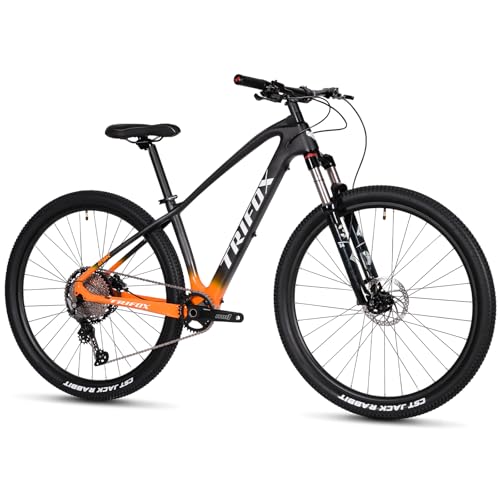
- T800 carbon-fiber frame and 26-pound listed weight
- Shimano Deore M6100 12-speed drivetrain
- 130mm fork and hydraulic disc brakes
Best For: Performance-minded adult trail riders
Beginner Trail Choice
18-Speed Entry-Level Steel MTB

- 18-speed drivetrain for varied terrain
- Simple, adjustable V-brake system
- 90% pre-assembled with 24- and 26-inch options
Best For: Beginners, commuting, and easy trail rides
Lightweight Trail Pick
Trifox M2 29er Carbon Mountain Bike

- 26-pound T800 carbon-fiber frame
- Shimano Deore 12-speed drivetrain
- 130mm fork and hydraulic disc brakes
Best For: Adult riders wanting a lightweight 29er for mountain terrain
Large-Frame Trail Option
Trifox M2 29er Carbon Mountain Bike
- 19-inch frame with 29-inch wheels
- 26-pound carbon-fiber construction
- 12-speed Shimano Deore gearing
Best For: Adult riders who fit a larger 19-inch mountain-bike frame
Blue 29er Choice
Trifox M2 Carbon Mountain Bike

- Blue 19-inch carbon 29er
- Shimano Deore 12-speed gearing
- 130mm fork with hydraulic disc brakes
Best For: Adult riders seeking a blue, front-suspension carbon mountain bike
Premium Trail Pick – Canyon Spectral 125 CF 7
The Canyon Spectral 125 CF 7 is a high-performance choice among carbon mountain bikes for riders who want responsive handling on technical trails. Its lightweight carbon frame, 140mm front travel, 125mm rear travel, and 12-speed drivetrain are suited to demanding climbs, descents, and varied mountain terrain.
Best For: Experienced trail riders seeking a lightweight, aggressive full-suspension bike.
Pros:
- Lightweight carbon fiber frame balances stiffness and responsiveness.
- RockShox Pike Select+ fork and Deluxe Select+ shock provide 140mm/125mm of travel.
- SRAM GX Eagle 12-speed drivetrain offers a wide climbing range.
- Tubeless-ready wheels, dropper seatpost, and SRAM Code RS disc brakes support technical riding.
Cons:
- Performance-focused components may be more than casual riders need.
- Listed in a medium, 29-inch configuration, so fit should be confirmed before purchase.
This is the most trail-focused option in the group, combining carbon construction with capable suspension and braking hardware. It is a strong fit when control and speed on challenging terrain matter more than simplicity or entry-level pricing.
Value Carbon Hardtail – SAVADECK Lantop 610
The SAVADECK Lantop 610 is a practical carbon mountain bike for riders who want a lightweight frame, hydraulic braking, and a straightforward 10-speed setup. Its oil-spring fork and 29-inch wheels make it suited to multi-terrain riding, gravel paths, and entry-level off-road use.
Best For: Commuters, recreational riders, and entry-level racers wanting a carbon frame.
Pros:
- Carbon fiber frame reduces weight while resisting corrosion.
- Shimano U6000 shifter and U6020 CUES rear derailleur provide 10-speed shifting.
- Hydraulic disc brakes offer controlled stopping and short braking distances.
- Arrives nearly 90% pre-assembled and includes a tool kit.
Cons:
- Its oil-spring fork is less adjustable than the air-suspension systems on some higher-end options.
- The supplied details list the suspension type as rigid despite describing an oil-spring fork, so buyers should verify the exact configuration.
With its carbon frame and hydraulic brakes, the Lantop 610 offers useful upgrades over a basic recreational bike without adding a complex multi-link suspension system. Check the size guide carefully, with listed options for riders from approximately 165 to 188 cm.
Budget Beginner Option – WEIZE Adult Mountain Bike
The WEIZE adult mountain bike is a beginner-oriented option with a steel frame, dual suspension, and 18-speed shifting. It is not a carbon mountain bike, but it can suit riders prioritizing an accessible setup for neighborhood paths, moderate trails, and general recreational use.
Best For: Beginners and casual riders who want an affordable full-suspension bike.
Pros:
- Front fork and rear coil shock help smooth bumps.
- 18-speed twist shifters provide cadence options on varied terrain.
- 26-inch all-terrain tires are listed for riders from 5’2″ to 6’2″.
- Includes a kickstand and reflectors.
Cons:
- High-carbon-steel frame is heavier than a carbon fiber frame.
- Linear-pull V brakes provide less advanced braking performance than hydraulic disc brakes.
- Its beginner-focused components are not aimed at aggressive technical riding.
The WEIZE makes the most sense when price, comfort, and basic versatility are more important than low weight or race-level performance. Choose it as a recreational starting point rather than as a direct alternative to the carbon models in this roundup.
Enduro-Ready Carbon Pick – SAVADECK Titan 612
The SAVADECK Titan 612 is one of the more capable carbon mountain bikes here for technical trails and enduro-style riding. Its full-suspension carbon frame, adjustable DNM air shock, 12-speed Shimano DEORE drivetrain, four-piston hydraulic brakes, and wide 2.4-inch tires are designed for control on rough terrain.
Best For: Trail and enduro riders who want adjustable suspension and powerful braking.
Pros:
- Lightweight full-suspension carbon frame includes a reinforced rear triangle.
- DNM air shock offers three-stage lockout and rebound adjustment.
- Shimano DEORE M6100 12-speed groupset supports demanding climbs and descents.
- Four-piston hydraulic brakes and 2.4-inch Continental tires add control on rough surfaces.
Cons:
- The performance-oriented setup may be unnecessary for casual path riding.
- Listed as a 29-inch, size-17 configuration, so riders should confirm fit.
The Titan 612 stands out for its combination of adjustable suspension, substantial braking power, and wide tires. It is a compelling choice for riders who regularly tackle rocky descents, root-filled climbs, mud, or gravel and want more tuning potential than a basic hardtail provides.
Everyday Trail Value – 21-Speed High-Carbon-Steel MTB
For shoppers comparing carbon mountain bikes on a budget, this model offers a more traditional high-carbon-steel frame with practical trail and commuting features. It combines 21 speeds, front suspension, adjustable fit, and dual disc brakes for versatile recreational riding.
Best For: Casual trail rides, park outings, commuting, and riders who want broad gearing and adjustable seating.
Pros:
- 21-speed trigger shifting supports varied terrain and easier gear changes.
- Dual disc brakes provide front and rear stopping power.
- Front lock-out suspension fork helps smooth bumps and dips.
- Adjustable seat and reflective details add everyday practicality.
Cons:
- Its high-carbon-steel frame and 38.6-pound weight are less weight-focused than carbon mountain bikes.
- Only a 30-day manufacturer warranty is listed.
This is a practical recreational MTB rather than a lightweight carbon build. Its combination of gearing, suspension, braking, and adjustability makes it a flexible choice for mixed everyday use.
Lightweight Carbon Performance – Shimano 12-Speed Carbon 29er
Among these carbon mountain bikes, the Trifox M2 stands out for its T800 carbon-fiber frame and stated 26-pound vehicle weight. A Shimano Deore M6100 12-speed drivetrain, 130mm lockable hydraulic fork, hydraulic disc brakes, and 29-inch tires give it a performance-oriented trail setup.
Best For: Adult riders seeking a lightweight carbon frame, modern 12-speed gearing, and capable equipment for mountain terrain.
Pros:
- T800 carbon-fiber frame keeps the listed vehicle weight to 26 pounds.
- Shimano Deore M6100 12-speed shifting offers a wide range of gears.
- 130mm lockable hydraulic fork provides adjustable front suspension.
- Shimano hydraulic disc brakes and 29-by-2.1-inch tires support traction and control.
Cons:
- Adult sizing is limited to the listed 15.5-, 17-, and 19-inch frame options.
- The bike arrives 85% pre-assembled, so final assembly is still required.
This is the clearest performance pick in the group for buyers specifically prioritizing carbon construction. Its lightweight frame and higher-spec Shimano components make it the strongest fit for more demanding trail use.
Beginner Trail Choice – 18-Speed Entry-Level Steel MTB
While it is not a carbon mountain bike, this HILAND model is a straightforward entry-level alternative for riders who value affordability and simple operation. Its high-carbon-steel frame, 18 speeds, rigid suspension, and easy-to-maintain V-brakes suit basic trail and everyday cycling.
Best For: Beginners, commuters, school riders, and shorter adults choosing between 24- and 26-inch wheel sizes.
Pros:
- 18-speed gearing provides useful control across changing terrain.
- V-brakes are described as reliable and easy to maintain or adjust.
- Arrives 90% pre-assembled for quicker setup.
- 24- and 26-inch sizes accommodate the listed rider-height ranges.
Cons:
- The steel frame and rigid suspension are less performance-focused than a carbon build with front suspension.
- V-brakes do not offer the same stated setup as hydraulic or dual disc systems.
- The listed 26-inch version is limited to a 1.95-inch-wide tire.
This model makes the most sense as a low-complexity introduction to mountain biking. Choose it for basic trails and everyday riding rather than for lightweight performance or technical terrain.
Lightweight Trail Pick – Trifox M2 29er Carbon Mountain Bike
For riders comparing carbon mountain bikes, the Trifox M2 stands out with a T800 carbon-fiber frame and a listed 26-pound vehicle weight. Its 12-speed Shimano Deore drivetrain, 130mm lockable fork, hydraulic disc brakes, and 29-inch tires make it equipped for varied mountain terrain.
Best For: Adult riders seeking a lightweight 29er with front suspension and a wide-range 12-speed drivetrain.
Pros:
- T800 carbon-fiber frame with fully internal cable routing
- Shimano M6100 Deore 12-speed shifting system
- 130mm lockable hydraulic suspension fork
- Shimano hydraulic disc brakes and 29 x 2.1-inch tires
Cons:
- Front suspension only; it is not a full-suspension mountain bike
- Available sizing should be checked carefully before ordering
With a carbon frame, trail-oriented tires, and strong component coverage, this model is a practical option for riders prioritizing lower weight and versatile trail capability. It arrives 85% assembled with tools and an installation video for setup support.
Large-Frame Trail Option – Trifox M2 29er Carbon Mountain Bike
This Trifox M2 is a strong consideration among carbon mountain bikes for riders who need the larger 19-inch frame configuration. The carbon-fiber 29er combines a 12-speed Shimano Deore drivetrain, a lockable 130mm hydraulic fork, hydraulic disc brakes, and wide tires for mountain riding.
Best For: Adult riders who fit a 19-inch frame and want a carbon 29er with a broad gear range.
Pros:
- 19-inch frame size with 29-inch wheels
- Lightweight 26-pound T800 carbon-fiber construction
- Shimano M6100 Deore 12-speed drivetrain
- Wide 29 x 2.1-inch tires and hydraulic disc brakes
Cons:
- The 19-inch size may not suit shorter riders
- Front-only suspension limits cushioning compared with full-suspension designs
The key distinction here is the 19-inch sizing, so fit should be confirmed before purchase. For compatible riders, the carbon frame, 130mm fork, and trail-focused components offer a well-rounded setup, while the 85% pre-assembly can simplify initial setup.
Blue 29er Choice – Trifox M2 Carbon Mountain Bike
Riders shopping for carbon mountain bikes can consider this blue Trifox M2 as a color-specific version of the 29er platform. It pairs a 26-pound T800 carbon-fiber frame with Shimano M6100 Deore 12-speed gearing, a 130mm lockable fork, hydraulic disc brakes, and 29 x 2.1-inch tires.
Best For: Adult riders who want a blue carbon 29er with front suspension and trail-ready equipment.
Pros:
- Blue finish with a T800 carbon-fiber frame
- Shimano M6100 Deore 12-speed drivetrain
- 130mm lockable hydraulic front fork
- Hydraulic disc brakes and multi-segment 29 x 2.1-inch tires
Cons:
- Only front suspension is specified
- The listed configuration is a 19-inch frame, so fit is important
This model makes the most sense when its blue finish and 19-inch sizing match your preferences. Its carbon construction and component package support varied mountain-terrain use, while the included tools and 85% pre-assembly help reduce the work required before riding.
How We Picked These Carbon Mountain Bikes
We selected models across several riding styles and budgets, including full-suspension trail bikes, soft-tail designs, hardtail-style builds, and bikes marketed for general off-road use. We focused on frame material, suspension layout, drivetrain range, braking hardware, wheel size, and the practical needs of adult riders. Because specifications and sizing can vary by seller, verify the current listing, available frame sizes, assembly requirements, and warranty terms before ordering.
A carbon frame does not automatically make a bike the best choice. A well-matched suspension setup, reliable brakes, correct fit, and appropriate component quality matter just as much as material.
Quick Comparison
- Best for demanding trail riding: Look for a capable full-suspension bike with modern geometry, dependable hydraulic brakes, and a wide-range drivetrain.
- Best for efficient climbing: A lighter hardtail or soft-tail carbon build can transfer power effectively and require less maintenance.
- Best for mixed recreational use: Prioritize comfortable fit, simple controls, durable tires, and readily available replacement parts.
- Best value: Compare the complete build rather than the frame label alone; drivetrain, fork, brakes, wheels, and assembly can change the real value considerably.
Key Buying Factors for Carbon Mountain Bikes
Frame, Fit, and Intended Terrain
Choose the frame size from the manufacturer’s chart using your height and inseam, then consider reach and riding position. Cross-country riders may prefer an efficient, lighter-feeling setup, while technical trail riders generally benefit from slacker geometry, longer travel, and stronger wheels. Confirm the bike’s rider-weight limit and whether the frame is intended for trail, cross-country, or general recreational use.
Suspension and Wheel Configuration
Front suspension is usually sufficient for smoother paths and climbing efficiency. Full suspension adds traction and comfort over roots, rocks, and repeated impacts, but it also adds weight, cost, and maintenance. Larger wheels can roll over obstacles more easily, while smaller wheels may feel more maneuverable and suit shorter riders.
Drivetrain and Brakes
A wide-range 10- or 12-speed drivetrain provides useful climbing gears, but gear count alone is not a quality guarantee. Check the cassette range, derailleur specification, crankset, and replacement-part availability. Hydraulic disc brakes generally offer stronger, more consistent control than mechanical systems, especially on long or wet descents. Rotor size and proper setup also affect braking performance.
Carbon Construction and Ownership
Inspect the frame warranty and follow torque specifications when installing components. Carbon should be checked after a significant impact, and damaged parts should be evaluated by a qualified technician rather than repaired casually. Factor in professional assembly, suspension setup, tubeless compatibility, replacement tires, and ongoing service costs.
Who Should Buy Which Carbon Mountain Bikes?
Choose the Canyon Spectral 125 CF 7 if your priority is a recognized trail-focused platform and you regularly ride technical terrain. Consider the SAVADECK Titan 612 for a carbon soft-tail concept with a broad 12-speed drivetrain and an efficiency-oriented feel. The SAVADECK Lantop 610 may suit riders seeking a more accessible carbon build with hydraulic braking and versatile gearing.
Consider the other carbon-frame 29er listings if you want a long-travel fork and Deore 12-speed equipment, but carefully confirm that each listing has genuinely different specifications before purchasing. The WEIZE and 21-speed models are better suited to casual riders who prioritize general-purpose use over aggressive trail performance. The HILAND high-carbon-steel model is not a carbon-fiber bike; it may appeal to recreational buyers seeking a lower-cost starting point, but expect a heavier frame. Match the bike to your terrain, fit, maintenance comfort, and budget—not the word “carbon” alone.