Finding a cache is easier when your GPS is accurate, durable, and simple to use in the field. The right handheld navigator can also improve confidence on wooded trails, remote routes, and changing terrain.
We compared 10 handheld GPS devices for geocaching across accuracy, satellite support, screen visibility, battery design, mapping features, and overall usability to help you choose a dependable match for your style of caching.
Best 10 Handheld Gps Devices for Geocaching Picks for 2026
Reliable Trail Navigator

- Sunlight-readable 2.2-inch color display
- TopoActive routable maps included
- Up to 25 hours with two AA batteries
Best For: Straightforward trail geocaching and hiking
Geocaching Specialist

- Purpose-built for geocaching
- Three-meter high-sensitivity GPS accuracy
- Waterproof sunlight-readable color screen
Best For: Dedicated geocaching with simple controls
Multi-Band Accuracy
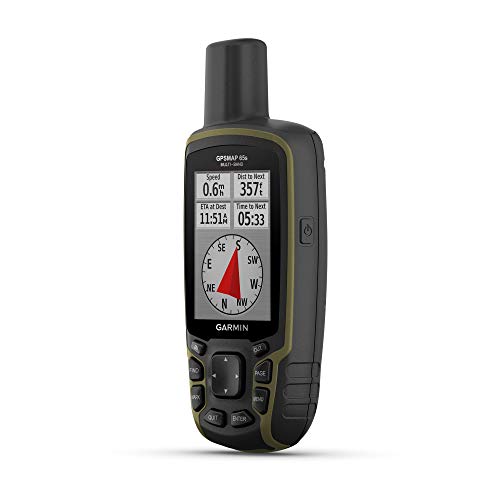
- Multi-band and expanded GNSS support
- 3-axis compass and barometric altimeter
- 2.6-inch display with TopoActive mapping
Best For: Challenging terrain and advanced field navigation
Long-Lasting Cache Companion

- Up to 168 hours of standard battery life
- Geocaching Live updates via Garmin Explore
- Multi-GNSS support and IPX7 water resistance
Best For: Multi-day geocaching and app-connected cache updates
Feature-Rich Classic

- 3-inch sunlight-readable touchscreen
- GPS/GLONASS with compass and altimeter
- 8MP camera and dual-battery system
Best For: Geocachers wanting touchscreen navigation and waypoint-sharing features
Long-Battery Value Pick

- Up to 36 hours of battery life
- Multi-GNSS positioning with USA Topo maps
- 3.2-inch sunlight-readable screen
Best For: Outdoor users prioritizing runtime and button-based navigation
Solar-Powered Geocaching Choice

- Solar charging or up to 200 hours of battery life
- Multi-band GPS and digital compass
- Geocaching Live updates via Garmin Explore
Best For: Extended outings where battery endurance matters most
Camera-Ready Trail Explorer

- 3-inch sunlight-readable touchscreen
- Built-in 3.2MP camera
- Waterproof with altimeter and compass
Best For: Feature-focused geocachers who want photography and a larger display
Long-Life Navigation Pick

- Up to 25-hour battery life
- Preloaded routable TopoActive maps
- Adds compass and barometric altimeter
Best For: Extended hikes and cycling trips requiring durable, efficient navigation
Simple Geocaching Value

- Paperless geocaching support
- IPX7 waterproof construction
- Up to 20 hours on two AA batteries
Best For: Straightforward geocaching and basic navigation on a budget
Reliable Trail Navigator – Garmin eTrex 22x
The Garmin eTrex 22x is a practical choice among handheld GPS devices for geocaching, with a sunlight-readable color display, preloaded TopoActive maps, and support for both GPS and GLONASS. Its button controls and durable handheld design suit hikers and cyclists who want straightforward navigation.
Best For: Geocachers who want dependable trail navigation, long battery life, and expandable map storage.
Pros:
- Sunlight-readable 2.2-inch color display
- Preloaded routable TopoActive roads and trails
- GPS and GLONASS support for challenging environments
- Up to 25 hours of battery life with two AA batteries
Cons:
- No touchscreen
- Small 2.2-inch display
- Bluetooth connectivity is included, but the supplied notes do not specify its supported functions
With 8 GB of internal memory and a microSD card slot, the eTrex 22x offers useful room for additional maps. It is a solid, button-operated option for routine geocaching trips and outdoor navigation.
Geocaching Specialist – Magellan eXplorist GC
The Magellan eXplorist GC is purpose-built for geocaching, pairing simple controls and menus with a sunlight-readable color screen. Its high-sensitivity SiRFstarIII GPS is rated for three-meter accuracy, helping users navigate close to a cache location.
Best For: Geocachers who prioritize a dedicated, easy-to-use device with a waterproof design.
Pros:
- Designed specifically for geocaching
- Sunlight-readable 2.2-inch color transflective screen
- High-sensitivity GPS with three-meter accuracy
- Waterproof construction
Cons:
- Older model from 2010
- Listed battery life is 18 hours
- USB is the listed connectivity technology
Its intuitive interface, vibrant graphics, and dedicated geocaching focus make the eXplorist GC approachable for beginners. Buyers should weigh its older design and shorter listed battery life against its specialized feature set.
Multi-Band Accuracy – Garmin GPSMAP 65s
The Garmin GPSMAP 65s is one of the more advanced handheld GPS devices for geocaching, using expanded GNSS support and multi-band technology to improve positioning in forests, steep terrain, and urban canyons. It also adds a 3-axis compass, barometric altimeter, and routable TopoActive mapping.
Best For: Experienced geocachers who need enhanced positioning and field navigation tools in difficult environments.
Pros:
- Multi-band technology and expanded GNSS support
- 2.6-inch sunlight-readable color display
- 3-axis compass and barometric altimeter
- Compatible with Garmin Explore for tracks, routes, and waypoints
Cons:
- Listed battery life is 16 hours
- Garmin Explore features require a compatible smartphone
- Button-operated interface may be less immediate than a touchscreen
The GPSMAP 65s is a strong fit when positioning reliability and navigation sensors matter more than minimal size or maximum battery life. Its 16 GB of storage, microSD support, and public-land mapping add flexibility for extended outdoor use.
Long-Lasting Cache Companion – Garmin eTrex SE
The Garmin eTrex SE stands out among handheld GPS devices for geocaching with exceptionally long battery life, multi-GNSS support, and automatic cache updates through Geocaching Live when paired with the Garmin Explore app. Its compact button-operated design and IPX7 water resistance are well suited to changing outdoor conditions.
Best For: Geocachers who want extended trips, app-connected cache information, and low battery maintenance.
Pros:
- Up to 168 hours in standard mode or 1,800 hours in expedition mode
- Automatic cache descriptions, logs, and hints through Geocaching Live
- GPS, GLONASS, Galileo, BeiDou, and QZSS support
- IPX7 water-resistant design and digital compass
Cons:
- Two AA batteries are required but not included
- App-connected features require a compatible smartphone
- Small 2.2-inch display
The eTrex SE is especially compelling for multi-day adventures where battery life and current cache information are priorities. Pairing it with a smartphone unlocks its wireless updates, planning tools, and Geocaching Live integration.
Feature-Rich Classic – Garmin Oregon 650
Garmin 010-01066-20 Oregon 650 3-Inch Worldwide Handheld GPS with 8MP Digital Camera
Check Price On AmazonThe Garmin Oregon 650 is a versatile choice among handheld GPS devices for geocaching, combining a sunlight-readable touchscreen with dedicated outdoor sensors and wireless sharing. Its built-in camera and dual-battery setup add useful flexibility for longer outings.
Best For: Geocachers who want a touchscreen navigator with waypoint sharing, a camera, and multiple navigation sensors.
Pros:
- Sunlight-readable 3-inch multi-touch display supports landscape and portrait orientations.
- GPS/GLONASS positioning is paired with a 3-axis compass, accelerometer, and barometric altimeter.
- 8MP autofocus camera includes an LED flash/torch and digital zoom.
- Supports AA batteries or the included rechargeable NiMH battery pack.
Cons:
- The 2013 model has a smaller screen than some newer handheld GPS units.
- Battery life is listed at up to 16 hours.
- Wireless sharing depends on ANT or Bluetooth-compatible devices.
The Oregon 650 remains appealing for users who value a broad feature set and easy touchscreen interaction. It is especially practical for sharing geocaches, routes, and waypoints between compatible units.
Long-Battery Value Pick – NiesahYan Handheld GPS
This compact handheld GPS is a practical option for geocaching trips that demand long battery life and simple button control. It combines a sunlight-readable 3.2-inch screen, multi-GNSS support, USA Topo maps, and a water-resistant design.
Best For: Hikers and geocachers seeking extended runtime, physical controls, and preloaded USA topographic maps.
Pros:
- Up to 36 hours of battery life from a rechargeable battery.
- Multi-GNSS support includes GPS, Galileo, BeiDou, and QZSS.
- Includes a 3-axis compass, barometric altimeter, and preloaded USA Topo maps.
- IP66 water resistance and a sunlight-readable 3.2-inch display suit outdoor use.
Cons:
- The non-touchscreen interface relies primarily on physical buttons.
- Its mapping is described as USA-focused, which may limit usefulness elsewhere.
- The brand and model have less established recognition than Garmin alternatives.
With its long claimed runtime and broad satellite-system support, this navigator is well suited to full-day outings. Its button-based operation may also be preferable when wearing gloves or navigating in wet conditions.
Solar-Powered Geocaching Choice – Garmin eTrex Solar
The Garmin eTrex Solar is one of the most convenient handheld GPS devices for geocaching when battery endurance is a priority. Its solar charging capability, multi-band GPS, rugged water-resistant housing, and Garmin Explore connectivity make it a strong fit for extended outdoor use.
Best For: Geocachers who want very long battery life and live cache updates through a compatible smartphone.
Pros:
- Can provide unlimited battery life in sunny 75,000-lux conditions, or up to 200 hours without solar charging.
- Multi-band GPS is designed to improve positional accuracy.
- Garmin Explore pairing provides Geocaching Live cache descriptions, logs, and hints.
- IPX7 water resistance and a digital compass support use in changing weather.
Cons:
- The 2.2-inch display is smaller than the screens on the other listed options.
- Geocaching Live updates require pairing with a compatible smartphone.
- The unit has limited listed internal memory at 28 MB.
The eTrex Solar stands out for endurance rather than screen size or camera features. For users comfortable carrying a smartphone for connected functions, its solar capability and Geocaching Live integration offer a compelling combination.
Camera-Ready Trail Explorer – Oregon 550T
Garmin Oregon 550T 3-Inch Handheld GPS Navigator with 3.2MP Digital Camera (U.S. Topographic Maps)
Check Price On AmazonFor geocachers who want more than basic waypoint navigation, the Garmin Oregon 550T combines a sunlight-readable 3-inch color touchscreen with a built-in camera and detailed outdoor features. Its rugged, waterproof design makes it a practical choice for demanding hikes and changing weather.
Best For: Geocachers who want a large touchscreen, integrated photography, and altitude-tracking features.
Pros:
- 3-inch sunlight-readable color touchscreen
- 3.2MP autofocus camera with 4x digital zoom
- Barometric altimeter and 3-axis electronic compass
- Rugged, waterproof construction with geocaching support
Cons:
- Older model with a resistive touchscreen
- Listed battery life is up to 16 hours
- Heavier than the eTrex models in this roundup
The Oregon 550T is feature-rich for handheld GPS devices for geocaching, especially if you value a bigger display and the ability to take location-related photos. Its extra features add versatility, though simpler models may be more practical for lightweight trips.
Long-Life Navigation Pick – eTrex 32x
The Garmin eTrex 32x is a rugged, straightforward option for geocachers who prioritize dependable navigation and long battery life. Its sunlight-readable color display, preloaded TopoActive maps, and GPS/GLONASS support suit cycling, hiking, and outdoor searching.
Best For: Geocachers seeking long battery life, built-in topographic maps, and a compass-equipped handheld.
Pros:
- Up to 25 hours of GPS use on two AA batteries
- Preloaded routable TopoActive roads and trails
- GPS and GLONASS support for challenging environments
- 3-axis compass, barometric altimeter, and 8GB internal storage
Cons:
- Smaller 2.2-inch display than the Oregon 550T
- Does not include a built-in camera
- Touchscreen and operating-system details may be less relevant than its physical navigation design
Among handheld GPS devices for geocaching, the eTrex 32x offers a strong balance of endurance, mapping, and outdoor sensors. It is a sensible choice for extended outings where replacing or recharging batteries frequently is inconvenient.
Simple Geocaching Value – eTrex 10
The Garmin eTrex 10 keeps handheld GPS devices for geocaching simple with a rugged body, button controls, paperless geocaching support, and a worldwide basemap. Its monochrome screen and 20-hour AA-battery life make it a practical option when core navigation matters more than color mapping.
Best For: Budget-conscious geocachers who want basic waypoint navigation and paperless cache support.
Pros:
- Paperless geocaching support
- Worldwide basemap with GPS, HotFix, and GLONASS support
- IPX7 waterproofing for rain and splashes
- Up to 20 hours of use on two AA batteries
Cons:
- Monochrome 2.2-inch display with 128 x 160 resolution
- Limited 6MB memory
- Lacks the color mapping and sensors found on the eTrex 32x
The eTrex 10 is best suited to users who want reliable coordinates and geocaching essentials without paying for advanced display features. Its limited screen and memory are trade-offs, but the compact, waterproof design remains useful for straightforward searches.
How We Picked These Handheld Gps Devices for Geocaching
We focused on features that matter during real geocaching trips rather than judging devices by specifications alone. Our comparison considers satellite reception, waypoint handling, durability, water resistance, battery life, screen or button usability, mapping support, and the learning curve for new users. We also included a range of options, from basic eTrex-style navigators to feature-rich models with electronic compasses, altimeters, expanded satellite compatibility, and multi-band positioning.
Because geocaching conditions vary, no single model is best for everyone. A compact unit with physical buttons may be preferable in rain or cold weather, while a larger color display can make maps and route planning easier to follow.
Quick Comparison
- Best for straightforward navigation: Basic Garmin eTrex models offer dependable waypoint navigation without unnecessary complexity.
- Best for challenging reception: Multi-band GPS devices with expanded satellite support can provide improved accuracy under tree cover, near buildings, and in rugged terrain.
- Best for longer outings: Look for efficient battery systems, replaceable batteries, or solar-assisted designs.
- Best for map-focused users: Color-screen Oregon models are useful when viewing topographic maps and navigating more involved routes.
- Best for geocaching-specific use: The Magellan eXplorist GC is designed around geocaching workflows and may appeal to users who want a dedicated experience.
Key Buying Factors for Handheld Gps Devices for Geocaching
Accuracy and Satellite Support
Basic GPS reception is sufficient for many parks and open trails, but expanded satellite systems and multi-band technology can improve performance in difficult environments. These features are especially useful when caches are hidden in dense forests or urban areas.
Screen and Controls
A color display helps with maps, while physical buttons remain practical in wet conditions and when wearing gloves. Consider whether you prioritize detailed visual navigation or simple, low-distraction operation.
Battery Life and Power Options
Check expected runtime and battery type before buying. Replaceable AA batteries are convenient for remote trips, whereas rechargeable or solar-assisted designs can reduce the need to carry spares.
Durability and Mapping
Choose a water-resistant, rugged unit for frequent outdoor use. Preloaded maps, expandable mapping, and wireless transfer features can save preparation time, but they may increase cost and complexity.
Who Should Buy Which Handheld Gps Devices for Geocaching?
Beginners and casual geocachers should start with a simple, affordable eTrex model that provides reliable coordinates and waypoint navigation. Frequent trail users may prefer a color-screen navigator with mapping and an electronic compass. Advanced users or those caching in difficult terrain should consider a multi-band model such as the GPSMAP 65s for stronger reception and added sensors. Long-distance and low-maintenance explorers may benefit from a solar-assisted design, while users who want a purpose-built geocaching interface should examine the dedicated Magellan option.