Reliable navigation can make camping trips safer and less stressful, especially when trails are remote, weather changes quickly, or mobile service disappears. The best handheld GPS devices for camping provide dependable location tracking, readable maps, and controls you can use outdoors.
This roundup compares 10 rugged handheld navigators, including straightforward eTrex models, advanced GPSMAP units, and larger-screen options. Use the buying guide below to match features such as satellite support, battery life, mapping, and durability to your style of camping.
Best 10 Handheld Gps Devices for Camping Picks for 2026
Most Accurate Navigation
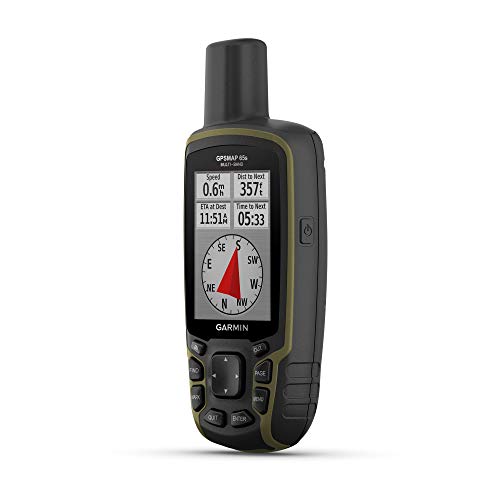
- Multi-band GNSS for challenging terrain and dense forests
- TopoActive and U.S. public land maps included
- Compass, altimeter, buttons, and 16-hour battery
Best For: Accurate backcountry navigation in difficult environments
Longest Battery Runtime

- Up to 36 hours of battery life
- 3.2-inch sunlight-readable color display
- USA Topo maps, worldwide basemap, and 64 GB storage
Best For: Long camping hikes with extended time between charges
Best for Battery Freedom

- Up to 200 hours without solar charging
- Unlimited battery in specified sunny conditions
- Multi-band GPS, compass, and IPX7 water resistance
Best For: Extended camping trips with limited access to power
Best Mapping Features
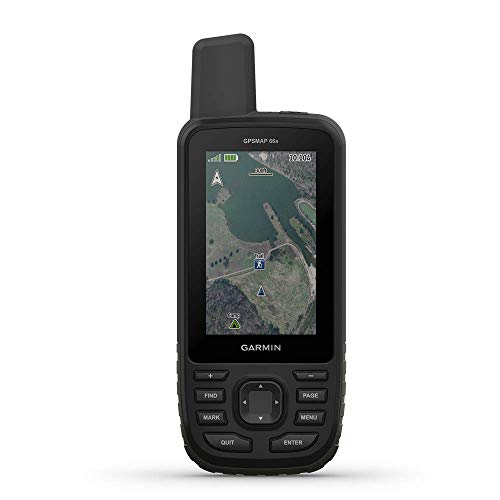
- 3-inch sunlight-readable color display
- TOPO maps and BirdsEye imagery access
- Weather, geocaching, compass, and altimeter features
Best For: Campers wanting rich maps and connected navigation features
Reliable Trail Starter

- 2.2-inch sunlight-readable color display
- TopoActive maps with routable trails
- Up to 25 hours on two AA batteries
Best For: Button-based camping and hiking navigation
Large-Screen Expedition Navigator

- Glove-friendly 5-inch touchscreen
- MIL-STD 810 and IPX7-rated construction
- 32 GB memory with ABC navigation sensors
Best For: Feature-rich camping and expedition use
Long-Life Value Navigator

- 3.2-inch sunlight-readable button display
- Up to 36 hours via rechargeable battery
- USA Topo maps and four-system GNSS support
Best For: Long camping trips with limited charging access
Best Long-Battery GPS

- Up to 1,800 hours in expedition mode
- Sunlight-readable 2.2-inch display
- Multi-GNSS, compass, and IPX7 water resistance
Best For: Long camping trips and bright outdoor conditions
Best Map-Ready GPS

- Preloaded routable Topo Active maps
- 8 GB storage plus microSD expansion
- 3-axis compass and barometric altimeter
Best For: Hikers needing trail maps and expandable storage
Best Value Sensor GPS

- 3.7 GB storage with microSD expansion
- 3-axis compass and barometric altimeter
- Wireless sharing for routes and waypoints
Best For: Campers wanting flexible maps and elevation data
Most Accurate Navigation – Garmin GPSMAP 65s
For campers who regularly navigate dense forests, steep terrain, or other challenging locations, the Garmin GPSMAP 65s is a strong handheld GPS device for camping. Its multi-band technology, expanded GNSS support, button controls, and built-in sensors prioritize dependable field navigation.
Best For: Campers and hikers who want accurate navigation and detailed mapping in difficult environments.
Pros:
- Multi-band technology and expanded GNSS support improve accuracy in forests, steep country, and urban canyons.
- Includes routable TopoActive maps and U.S. federal public land boundaries.
- Three-axis compass and barometric altimeter support navigation and elevation awareness.
- Sunlight-readable 2.6-inch color display and physical buttons are practical outdoors.
Cons:
- Battery life is listed at up to 16 hours, which is less than some long-runtime alternatives.
- Garmin Explore features require a compatible smartphone.
- Mapping coverage includes North America, with public land maps noted as U.S.-only.
The GPSMAP 65s is a capable choice when positional accuracy matters more than maximum battery life. It is especially well suited to serious camping trips where terrain and tree cover can make navigation difficult.
Longest Battery Runtime – S190 Handheld GPS
The S190 is a practical handheld GPS device for camping when long battery life and straightforward route tracking are priorities. It supports multiple satellite systems, includes U.S. topo maps, and uses a large sunlight-readable screen for easier viewing on the trail.
Best For: Campers planning long hikes who want extended runtime and simple button-operated navigation.
Pros:
- Up to 36 hours of battery life supports longer outings between charges.
- Connects to GPS, BeiDou, Galileo, and QZSS satellite systems.
- 3.2-inch sunlight-readable color display is easy to view in varied outdoor lighting.
- Includes USA Topo maps, a worldwide basemap, and 64 GB of internal memory.
Cons:
- The supplied map zoom tier may go blank when zoomed in too far until more detailed files are downloaded.
- IP64 protection covers splashes and outdoor elements but is not presented as full waterproofing.
- Detailed map downloads require using the manufacturer’s website and following its instructions.
With its unusually long stated battery life and generous storage, the S190 is appealing for extended camping routes. Buyers should be prepared to manage additional map downloads if they need more detail than the preloaded files provide.
Best for Battery Freedom – Garmin eTrex Solar
The Garmin eTrex Solar offers a compelling approach to handheld GPS devices for camping by combining multi-band GPS with solar charging. It is compact, button-operated, water-resistant, and designed to provide up to 200 hours without solar charging—or unlimited battery life in sufficiently sunny conditions.
Best For: Campers who prioritize extended battery life, simple navigation, and a compact rugged design.
Pros:
- Can provide unlimited battery life in sunny conditions rated at 75,000 lux.
- Offers up to 200 hours of operation without solar charging.
- Multi-band GPS and a digital compass support more reliable navigation.
- IPX7 water resistance and a high-contrast display suit outdoor use.
Cons:
- Its 2.2-inch display is smaller than the screens on several other models in this roundup.
- Solar performance depends on sufficiently sunny conditions.
- Additional trip planning, weather, updates, and mapping features require a compatible smartphone and Garmin Explore app.
The eTrex Solar stands out for trips where recharging is inconvenient. Its screen is compact and its solar benefit depends on available sunlight, but the exceptional stated runtime makes it a strong option for extended camping adventures.
Best Mapping Features – Garmin GPSMAP 66s
The renewed Garmin GPSMAP 66s is a feature-rich handheld GPS device for camping, with a large 3-inch sunlight-readable display, multiple satellite systems, preloaded TOPO U.S. and Canada maps, and access to BirdsEye Satellite Imagery. It also adds weather and geocaching functions through expanded wireless connectivity.
Best For: Campers and hikers who want a large display, extensive map options, and connected outdoor features.
Pros:
- Large 3-inch sunlight-readable color display improves map viewing.
- Supports multiple GNSS systems and includes a three-axis compass and barometric altimeter.
- Preloaded TOPO U.S. and Canada maps plus direct-to-device BirdsEye imagery downloads.
- Wireless features support Active Weather, animated radar, and Geocaching Live.
Cons:
- Battery life is listed at up to 15 hours.
- This is a renewed product with a stated 90-day limited warranty.
- Weather and connected geocaching features rely on wireless connectivity and a compatible smartphone.
The GPSMAP 66s is a good match for campers who value map detail and a larger viewing area over maximum battery endurance. Because it is renewed, warranty coverage and product condition deserve extra attention before purchase.
Reliable Trail Starter – Garmin eTrex 22x
For campers who want dependable navigation without a touchscreen, the Garmin eTrex 22x is a practical choice among handheld GPS devices for camping. Its compact design, physical controls, preloaded topographic maps, and support for both GPS and GLONASS make it well suited to hiking and backcountry route-finding.
Best For: Campers and hikers seeking a straightforward, button-operated GPS with long battery life.
Pros:
- Sunlight-readable 2.2-inch color display with 240 x 320 resolution
- Preloaded TopoActive maps include routable roads and trails
- GPS and GLONASS support can improve tracking in challenging environments
- Up to 25 hours of battery life from two AA batteries
Cons:
- Small screen compared with larger modern navigators
- No touchscreen; navigation relies on physical buttons
- Additional maps may require the microSD card slot or internal storage
The eTrex 22x emphasizes simplicity and replaceable-battery convenience. It is a sensible option for campers who value reliable basic navigation over a large display or advanced connected features.
Large-Screen Expedition Navigator – Garmin Montana 710
The Garmin Montana 710 is a feature-rich option for campers who prefer a large, easy-to-view screen. Its 5-inch touchscreen, rugged construction, extensive map support, and navigation sensors make it suitable for demanding camping, hiking, vehicle, and outdoor trips.
Best For: Outdoor users who want a large touchscreen, expanded storage, and versatile mapping features.
Pros:
- Glove-friendly 5-inch color touchscreen
- Rugged construction rated to MIL-STD 810 and IPX7 water resistance
- 32 GB of memory for maps and expedition data
- Includes an altimeter, barometer, and 3-axis electronic compass
Cons:
- Larger and heavier than compact handheld GPS units
- Some maps, imagery, mounting options, and premium content are sold separately
- Rechargeable battery provides up to 24 hours in GPS mode, while AA batteries are not included
The Montana 710 is built for campers who want more than basic waypoint navigation. Its large screen and rugged feature set are appealing for extended expeditions, though its size and add-on mapping costs may matter to minimalist backpackers.
Long-Life Value Navigator – NiesahYan Handheld GPS
This compact NiesahYan navigator offers a practical feature set for campers looking for handheld GPS devices for camping with long runtime and broad satellite support. It combines a sunlight-readable 3.2-inch screen, physical buttons, USA topographic maps, and a rechargeable USB-C battery.
Best For: Campers who want extended battery life, USA topo maps, and multi-GNSS positioning in a compact device.
Pros:
- Sunlight-readable 3.2-inch display with physical controls
- Supports GPS, Galileo, BeiDou, and QZSS satellite systems
- Up to 36 hours of rechargeable battery life
- Includes USA Topo maps, 32 GB memory, compass, and barometric altimeter
Cons:
- IP66 water resistance is specified rather than full waterproofing
- Non-touchscreen interface may feel less convenient for some users
- Brand and model information are less established than Garmin alternatives
With its long stated battery life and included USA topo maps, this navigator is attractive for camping trips where charging access is limited. Its compact button-based design also keeps operation practical in bright or changing outdoor conditions.
Best Long-Battery GPS – Garmin eTrex SE
For campers who prioritize extended trips and simple navigation, the Garmin eTrex SE is one of the most practical handheld GPS devices for camping. Its sunlight-readable screen, multi-GNSS support, digital compass, and replaceable AA batteries make it well suited to changing outdoor conditions.
Best For: Long camping trips, bright outdoor conditions, and users who want wireless smartphone features.
Pros:
- Up to 168 hours of standard battery life or up to 1,800 hours in expedition mode.
- 2.2-inch high-resolution display designed for readability in bright sunlight.
- Multi-GNSS support and a digital compass provide useful navigation assistance.
- IPX7 water resistance and field-replaceable AA batteries suit outdoor use.
Cons:
- AA batteries are not included.
- Some app-connected features require a compatible smartphone and Garmin Explore.
The eTrex SE stands out for its exceptional battery flexibility and modern Garmin Explore connectivity. It is a strong choice when dependable basic navigation matters more than a large display or touchscreen interface.
Best Map-Ready GPS – Garmin eTrex 32x
The Garmin eTrex 32x is a rugged option for campers who want built-in mapping and expandable storage. With preloaded Topo Active maps, a sunlight-readable color display, and support for both GPS and GLONASS, it is designed for hiking and cycling routes in demanding environments.
Best For: Campers and hikers who want routable trails, extra map storage, and a built-in compass and altimeter.
Pros:
- Preloaded Topo Active maps include routable roads and trails.
- 8 GB of internal memory plus a microSD card slot supports additional map downloads.
- A 3-axis compass and barometric altimeter add useful outdoor navigation data.
- Sunlight-readable 2.2-inch color display improves field readability.
Cons:
- Battery life is up to 25 hours in GPS mode, much less than the eTrex SE.
- The device uses a smaller 240 x 320 display resolution.
Choose the eTrex 32x if map capacity and trail guidance are higher priorities than maximum battery endurance. Its dedicated sensors and expandable storage make it a versatile traditional handheld navigator.
Best Value Sensor GPS – Garmin eTrex 30x
The Garmin eTrex 30x remains a capable choice among handheld GPS devices for camping, especially for users who want a color display, flexible map support, and built-in sensors. Its worldwide basemap, 3.7 GB of internal memory, microSD slot, and wireless sharing support provide useful versatility for outdoor trips.
Best For: Campers who want expandable maps, altitude information, and wireless waypoint or route sharing.
Pros:
- Sunlight-readable 2.2-inch color display with 240 x 320 resolution.
- 3.7 GB of internal memory plus a microSD card slot supports several map types.
- Built-in 3-axis compass and barometric altimeter aid navigation and elevation tracking.
- Can wirelessly share waypoints, tracks, routes, and geocaches with compatible devices.
Cons:
- Battery life is up to 25 hours in GPS mode.
- Some map options, including BirdsEye Satellite Imagery, require a subscription.
- Its model year is 2015, so it lacks some newer connectivity features.
The eTrex 30x is a sensible pick for campers who value mapping flexibility and traditional navigation sensors. It offers broad storage and sharing capabilities, though its older design and limited battery runtime should be considered.
How We Picked the Best Handheld Gps Devices for Camping
We focused on handheld navigators suited to outdoor use rather than phone-only navigation. The selection emphasizes rugged construction, weather resistance, dependable satellite reception, outdoor-readable displays, practical controls, and battery options that work away from electrical outlets. We also included a range of designs, from compact budget-friendly units to feature-rich models with electronic compasses, altimeters, expanded satellite support, and larger screens.
Because features vary by model and package, check the current listing for included maps, connectivity, battery type, storage, and warranty details before buying.
Quick Comparison
| Best For | Look For | Typical Advantage |
|---|---|---|
| Simple trail navigation | Physical buttons and basic mapping | Easy operation and low distraction |
| Frequent backcountry trips | Long battery life and rugged housing | Reliable use far from services |
| Dense forests or canyons | Multi-band or expanded satellite support | Improved positioning in difficult conditions |
| Route planning and visibility | Larger color display and generous storage | Easier map viewing and waypoint management |
| Minimal maintenance | Solar charging or widely available batteries | More flexibility during extended trips |
Key Buying Factors for Handheld Gps Devices for Camping
Satellite Reception and Accuracy
GPS, Galileo, GLONASS, and other satellite-system support can improve positioning availability. Multi-band technology may provide an additional advantage near cliffs, heavy tree cover, or buildings, although no receiver eliminates every reception problem.
Maps, Routes, and Storage
Confirm whether the device includes topographic maps or requires downloads and subscriptions. Internal storage and expandable memory matter if you plan to save multiple regions, tracks, and waypoints. A unit that supports GPX files can also simplify route transfers.
Battery Life and Charging
Compare expected runtime in the navigation modes you will actually use. Replaceable AA or AAA batteries are convenient on long trips because you can carry spares, while rechargeable or solar-capable models may reduce battery waste and charging equipment.
Screen and Controls
A sunlight-readable color screen helps with maps, but physical buttons are often easier to operate with gloves, rain, or cold hands. Consider screen size, resolution, touch sensitivity, and whether the interface remains comfortable without a phone connection.
Durability and Sensors
Look for water resistance, a solid case, and a design appropriate for repeated outdoor handling. A three-axis compass can provide directional information while stationary, while an altimeter can help track elevation changes; both require sensible calibration and interpretation.
Who Should Buy Which Handheld Gps Devices for Camping?
Choose a compact eTrex-style navigator if you want straightforward waypoint and track recording, long runtime, and a small pack footprint. Select a GPSMAP model if reception performance, sensors, expanded mapping, and more advanced navigation tools are priorities. A larger Montana-style unit is better for shoppers who value a spacious display and easier map interaction over minimal weight.
For occasional campers, prioritize simple controls, included maps, and replaceable batteries rather than paying for features you will rarely use. Frequent backpackers should focus on battery strategy, satellite performance, waterproofing, and route-management tools. Before heading out, load and test maps, record emergency coordinates, carry a backup compass, and remember that a handheld GPS complements—not replaces—basic navigation skills.