The right insoles can make running shoes feel more supportive, reduce pressure underfoot, and improve comfort over longer distances. The best choice depends on your arch height, gait, shoe fit, and how much cushioning or stability you need.
We compared 10 popular options, including corrective designs for overpronation, cushioned inserts for everyday training, and trim-to-fit models for flexible sizing. Use the guide below to narrow the field before choosing a pair.
Best 10 Orthotic Insoles for Runners Picks for 2026
Maximum Motion Control
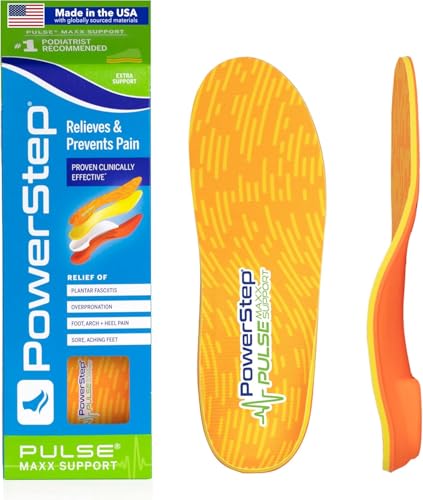
- Rigid shell and angled heel for correction
- Dual-layer impact cushioning
- Made in the USA with 30-day guarantee
Best For: Runners needing strong overpronation support
Flexible Cushioning
Superfeet Run Cushion Medium Arch

- Medium-arch flexible orthotic support
- Responsive forefoot cushioning and rebound
- Heel cushion helps disperse impact
Best For: Runners wanting a cushioned medium-arch fit
Soft Athletic Support

- Lightweight full-foot impact cushioning
- Deep heel cup centers the foot
- Soft arch and metatarsal support
Best For: Active users who prefer gentle, cushioned support
High-Arch Comfort
Superfeet Run Cushion High Arch

- Flexible high- and medium-arch support
- Cushioning for running and walking footwear
- Trim-to-fit design with odor-control cover
Best For: Runners needing cushioned high-arch support
Lightweight Cushioning Pick
SOF SOLE ATHLETE Men's Insoles

- Heel-and-forefoot gel cushions foot strikes
- Lightweight foam supports all-day comfort
- Moisture control and ventilation help keep feet fresh
Best For: Runners wanting neutral-arch cushioning and a light athletic insole
Flexible Low-Arch Support
Superfeet Run Cushion Low Arch

- Flexible support for low arches
- Adaptive design flexes with the foot
- Trim-to-fit construction with odor control
Best For: Low-arch runners and walkers wanting cushioned, flexible support
Impact and Energy Return Pick

- Gel pads target heel and forefoot impacts
- Medium-low arch support allows foot flex
- Trim-to-fit design suits multiple athletic shoes
Best For: Athletes wanting low-arch support with cushioning and energy return
Everyday Run Comfort
Dr. Scholl's Run Active Comfort Insoles

- Three-zone cushioning helps reduce shock
- Reinforced low-arch support
- Trim-to-fit with odor-control technology
Best For: Women runners seeking cushioned support for training and standing
Performance-Focused Support
CURREX RunPro Insoles for Running Shoes
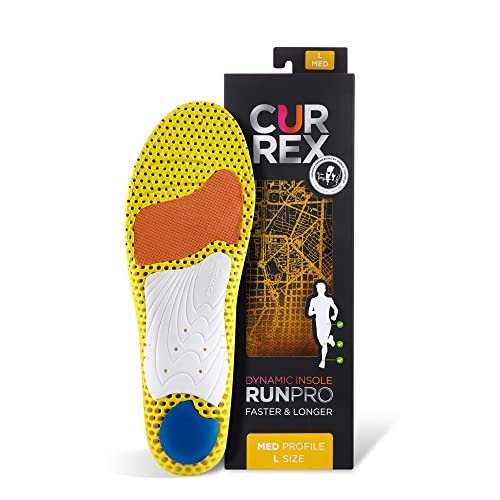
- Dynamic arch support with deep heel cup
- Flexible, shock-absorbing running design
- Breathable materials and zero heel drop
Best For: Runners wanting activity-specific stability and cushioning
Multi-Sport Joint Protection
Dr. Scholl's Sport Insoles for Men

- Gel cushioning absorbs athletic impact
- High-arch support for men
- Flexible support for multidirectional movement
Best For: Men using one insert across running and multiple sports
Maximum Motion Control – PowerStep Pulse Maxx
For runners seeking orthotic insoles for runners with strong overpronation support, the PowerStep PULSE Maxx emphasizes stability, alignment, and impact cushioning. Its rigid shell, angled heel, and dual-layer cushioning are designed for rigorous activity and running shoes.
Best For: Runners who need maximum support and corrective motion control for overpronation.
Pros:
- Rigid shell and angled heel support alignment.
- Dual-layer cushioning helps absorb impact.
- Designed specifically for running shoes and high activity.
- Made in the USA and backed by a 30-day money-back guarantee.
Cons:
- The firmer corrective design may require a gradual break-in period.
- Available sizing is intended to be used without trimming, so careful size selection matters.
The PULSE Maxx is the most stability-focused option in this group. It makes sense for runners prioritizing structured correction over a softer, more flexible feel.
Flexible Cushioning – Superfeet Run Cushion Medium Arch
The Superfeet Run Cushion Medium Arch is a flexible choice among orthotic insoles for runners, combining medium-arch support with cushioning for running and athletic footwear. Its design is intended to flex with the foot while supporting smooth heel-to-toe movement.
Best For: Runners with medium arches who want flexible support and cushioning in standard or zero-drop running shoes.
Pros:
- Adaptive design flexes with the foot.
- Responsive forefoot zone supports cushioning and rebound.
- Energizing heel cushion helps disperse heel-strike impact.
- Dual comfort layers cushion sore arches.
Cons:
- Designed for medium arches rather than high or low arches.
- Listed for standard shoe width.
This model suits runners who want support without a rigid, heavily corrective feel. Its combination of heel cushioning and forefoot response makes it a balanced everyday running option.
Soft Athletic Support – Spenco Polysorb Cross Trainer
The Spenco Polysorb Cross Trainer offers a softer, lightweight approach to orthotic insoles for runners, with full-foot cushioning, a deep heel cup, and gentle arch support. It is designed for running, walking, training, and other active days.
Best For: Runners and athletes who prefer soft cushioning with moderate structure rather than a rigid corrective insert.
Pros:
- Lightweight foam helps absorb impact and pressure.
- Heel and forefoot pads add targeted cushioning.
- Deep heel cup helps keep the foot centered.
- Includes soft arch support and metatarsal padding.
Cons:
- Does not provide corrective support according to the product details.
- The softer construction may be less suitable for runners seeking firm motion control.
- Listed sizing covers a specific men’s and women’s range.
The Polysorb Cross Trainer is a practical comfort-first pick. Its heel cup and cushioning provide stability and shock absorption, while the softer arch treatment avoids an overly rigid feel.
High-Arch Comfort – Superfeet Run Cushion High Arch
The Superfeet Run Cushion High Arch is designed for runners comparing orthotic insoles for runners with high or medium arches. It combines flexible arch support, cushioning, and a moisture-wicking top cover for running and walking footwear, including zero-drop shoes.
Best For: Runners with high or medium arches who want flexible support and a trimmable fit.
Pros:
- Provides flexible support for high and medium arches.
- Adaptive Comfort Technology flexes with the foot.
- Moisture-wicking top cover helps reduce odors.
- Can be trimmed to fit shoes and boots.
Cons:
- Requires trimming before use.
- May not be the right match for runners needing a low-arch design.
- Listed for standard shoe width.
This is a versatile option for runners who need more arch height than a medium-arch insert provides. The trim-to-fit design adds flexibility, while the cushioning keeps the focus on everyday running comfort.
Lightweight Cushioning Pick – SOF SOLE ATHLETE Men's Insoles
For runners who want comfortable orthotic insoles for runners without a heavy, rigid feel, the SOF SOLE ATHLETE combines heel-and-forefoot gel with full-length foam cushioning. Its neutral arch and athletic shape are designed for running and other active footwear.
Best For: Runners seeking lightweight cushioning, moisture control, and a neutral-arch fit.
Pros:
- Gel in the heel and forefoot helps absorb impact from foot strikes.
- Full-length foam provides cushioning while keeping the insole lightweight.
- Moisture-wicking material and midfoot ventilation help feet stay drier and cooler.
- Heel cup helps stabilize the foot during activity.
Cons:
- Neutral arch support may not suit runners seeking corrective or high-arch support.
- The supplied size is limited to men’s 9–10.5.
The SOF SOLE ATHLETE is a practical choice when cushioning and ventilation matter more than structured correction. Its neutral design makes it versatile, while the gel and foam combination targets everyday running comfort.
Flexible Low-Arch Support – Superfeet Run Cushion Low Arch
The Superfeet Run Cushion Low Arch is a strong option for runners comparing orthotic insoles for runners with flexible, low-arch support. Its Adaptive Comfort Technology is designed to flex with the foot, while the trim-to-fit format helps accommodate compatible running shoes.
Best For: Runners and walkers with low arches who want flexible support and cushioning.
Pros:
- Low-arch support is designed for flexible support during running and walking.
- Adaptive Comfort Technology flexes with the foot to support heel-to-toe turnover.
- Moisturewick top cover helps reduce odors and keep feet fresh.
- Can be trimmed to fit; sizing guidance recommends sizing up when between sizes.
Cons:
- Designed specifically for low arches, so it may not be appropriate for other arch types.
- Requires trimming before use for a customized shoe fit.
- The listed size range is limited to 7.5–9 men’s and 8.5–10 women’s.
Choose this model if your priority is a flexible low-arch platform rather than a firm corrective feel. The cushioning, odor-control cover, and trim-to-fit design make it well suited to running and walking footwear.
Impact and Energy Return Pick – EASYFEET Flame Boost Insoles
Runners looking for orthotic insoles for runners with added impact protection may prefer the EASYFEET Flame Boost. It combines medium-low arch support with PU gel pads, a foam body, and a thermoplastic polyurethane arch intended to balance cushioning and energy return.
Best For: Runners and multi-sport athletes seeking low-arch support, shock absorption, and a trim-to-fit design.
Pros:
- PU gel pads under the heel and forefoot target high-impact areas.
- Medium-low arch support is designed to support the arch while allowing foot flex.
- Thermoplastic polyurethane arch is described as providing energy return during steps.
- Orxinlite material promotes cushioning and airflow, and the insole can be trimmed to fit.
Cons:
- Low-arch support may not match runners who need a different arch profile.
- Trimming is required to match the insole to the shoe.
- The supplied size covers men’s 9–10.5 and women’s 10–11.5.
This is the most feature-focused option of the three for runners who want impact cushioning alongside a more structured arch component. Its broad athletic-use design also suits basketball, tennis, hiking, and training shoes.
Everyday Run Comfort – Dr. Scholl's Run Active Comfort Insoles
For runners seeking orthotic insoles for runners that balance cushioning and support, these trim-to-fit inserts use a three-zone heel-to-toe design to reduce shock. Reinforced arch support and odor-control technology make them practical for regular training and extended time on your feet.
Best For: Women runners with low arches who want shock reduction, arch support, and freshness during runs or prolonged standing.
Pros:
- Designed to help address discomfort associated with runner’s knee, shin splints, and plantar fasciitis.
- Three-zone construction helps reduce shock from heel to toe.
- Trim-to-fit design and Polygiene StayFresh technology add everyday convenience.
Cons:
- Listed specifically for women and low-arch support.
- Requires trimming for a customized fit.
Choose this pair if your priority is approachable cushioning and low-arch support rather than a highly specialized running-footstrike design.
Performance-Focused Support – CURREX RunPro Insoles for Running Shoes
Among orthotic insoles for runners, the CURREX RunPro stands out for its activity-specific construction, flexible heel-to-toe cushioning, and dynamic arch support. Its deep heel cup, breathable top layer, and zero heel drop are designed for runners who want stability without giving up movement.
Best For: Men and women with medium arches who want running-specific support, cushioning, moisture management, and a trim-to-fit option.
Pros:
- Dynamic arch support and a deep heel cup help improve stability.
- Rebound cushioning and controlled power transmission support propulsion.
- Breathable mesh and PORON foam help manage moisture and odor.
- Flexible construction folds at the flex point and can be trimmed to fit.
Cons:
- This listing is the large size for men’s 9–10.5 or women’s 10.5–12.
- Replacement is recommended after 500-plus miles or 12 months.
This is the strongest match for runners who want a purpose-built insert with a structured heel cup and support profile, provided the listed size and medium-arch configuration fit.
Multi-Sport Joint Protection – Dr. Scholl's Sport Insoles for Men
These orthotic insoles for runners are built as versatile sport inserts for men, combining gel cushioning with high-arch support. Flexible side-to-side support and shock absorption make them suitable for running alongside fitness classes and other athletic activities.
Best For: Men with high arches who want flexible support and shock absorption across multiple sports.
Pros:
- Helps reduce stress and shock affecting the feet, knees, and lower back.
- Flexible side-to-side support accommodates multidirectional movement.
- Gel material provides cushioning for athletic shoes.
Cons:
- Designed specifically for men and listed for high-arch support.
- Positioned as an all-purpose sport insert rather than a running-specific model.
Consider this pair if you want one supportive insert for running and varied athletic use; runners seeking specialized running geometry may prefer a more activity-specific option.
How We Picked the Best Orthotic Insoles for Runners
We focused on features that matter during repeated impact: arch support, heel stability, cushioning, shock absorption, moisture management, and compatibility with running shoes. The selection includes low-, medium-, and high-arch designs, along with options intended for overpronation and general athletic use.
We also considered fit flexibility. Some insoles use dedicated sizes, while others can be trimmed or moved between shoes. Because comfort is highly personal, this list favors a range of support levels rather than a single design for every runner.
Quick Comparison
| Best For | What to Look For |
|---|---|
| Overpronation | Structured arch support and a stable heel platform |
| High arches | Contoured support with cushioning under the arch |
| Low arches | Moderate support that does not feel overly rigid |
| Long training runs | Heel-to-toe cushioning, shock absorption, and moisture control |
| Flexible sizing | Trim-to-fit construction or a broad size range |
Key Buying Factors for Orthotic Insoles for Runners
Arch Support and Pronation
Match the insole to your foot shape rather than assuming more support is better. High-arch runners often benefit from a contoured, cushioned insert, while low-arch runners may prefer a less aggressive profile. If your feet roll inward substantially, a stability-focused model may provide better control than a soft, flat insert.
Cushioning and Impact Protection
Gel, foam, and blended cushioning can reduce the feel of repeated impact, but thicker is not always better. Check that the insole leaves enough room inside your shoe and does not make your toes feel cramped. Runners who prioritize responsiveness may prefer firmer foam, while those logging long miles may value a softer heel and forefoot.
Fit, Volume, and Break-In Time
Remove the original sockliner when possible and compare its shape with the replacement. A full-length insole may require extra shoe volume, particularly in snug performance shoes. Introduce supportive orthotics gradually over several short runs so your feet can adapt.
Breathability and Durability
Moisture-control materials and odor-resistant treatments are useful for frequent training. Look for sturdy top covers and supportive foam that will not quickly compress. Replace worn insoles when cushioning feels uneven, the heel becomes unstable, or the material remains permanently flattened.
Who Should Buy Which Orthotic Insoles for Runners?
Choose a stability-focused model if overpronation or inward ankle movement is your main concern. Choose a high-arch design if you need more contoured support and pressure relief beneath a pronounced arch. Choose a low- or medium-arch option if you want moderate guidance without an especially rigid feel.
Choose a cushioned athletic insert for everyday training, walking, or longer sessions where comfort is the priority. Choose a trim-to-fit design if you need flexible sizing or plan to use the insoles in several pairs of shoes. If pain persists, worsens, or changes your running form, consult a podiatrist or sports-medicine professional rather than relying on insoles alone.