Tight calves can affect running form, squat depth, ankle mobility, and recovery. The right calf stretcher can make regular mobility work easier to perform consistently, whether you train at home, in a gym, or while traveling.
These 10 picks include compact foot rockers, strap-based stretchers, and sturdy slant boards with adjustable angles. Use the guide below to match the design, capacity, and adjustability to your training needs.
Best 10 Calf Stretchers for Athletes Picks for 2026
Targeted Foot Relief

- Rocker design targets the lower leg
- Slip-resistant rubber pads
- Fits shoes up to size 12
Best For: Single-foot calf and foot stretching
Adjustable Training Platform
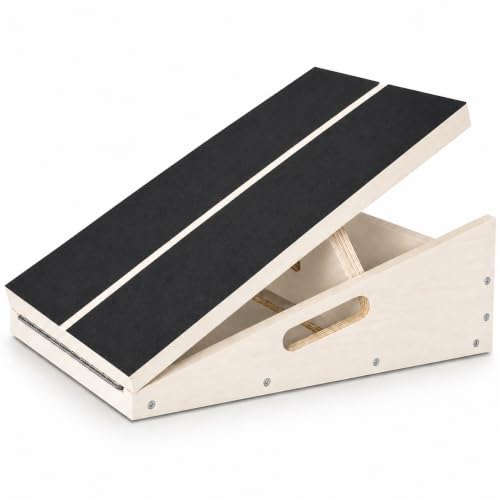
- Five angles from 15° to 35°
- 500-pound stated capacity
- Useful for stretching and squats
Best For: Progressive mobility and gym training
Two-Foot Rocker

- Stretch one or both feet
- Slip-resistant rocker pads
- QR-code stretching guide included
Best For: Simultaneous or alternating foot stretching
Portable Incline Mobility Board

- Four angles from 30° to 45°
- Lightweight portable construction
- Supports stretching and squats
Best For: Portable mobility and rehabilitation routines
Best Overall
PowerStep UltraFlexx Foot Rocker

- Stretches and strengthens the foot and lower leg
- Non-skid rocker supports stable positioning
- Targets calf, Achilles, plantar fascia, and shin discomfort
Best For: Athletes needing foot and calf stretching with supportive athletic shoes
Best Adjustable Option
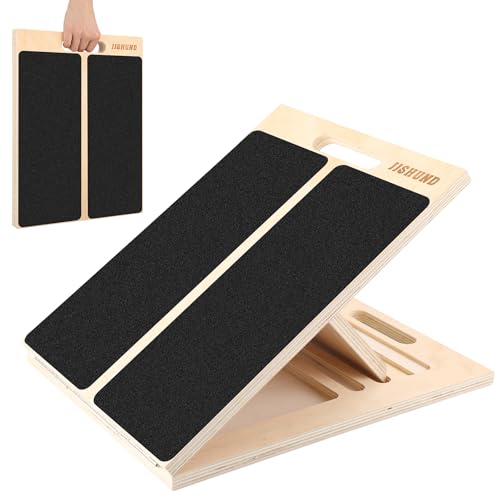
- Five adjustable angles from 20° to 45°
- Foldable with a built-in carrying handle
- Anti-slip surface and bottom pad
Best For: Athletes seeking adjustable stretch intensity and portable training support
Best Portable Foam Design
Pro-Tec Athletics Calf Stretcher

- Firm EVA foam offers a compact stretching platform
- Supports balance and core exercises
- Textured surface helps reduce slipping
Best For: Athletes wanting lightweight calf and Achilles stretching on the go
Heavy-Duty Adjustable Pick

- 660-pound-rated steel construction
- Four angles from 15° to 40°
- Detachable tube supports incline squats
Best For: Athletes wanting a sturdy, adjustable stretching and squat platform
Rehabilitation Strap Pick
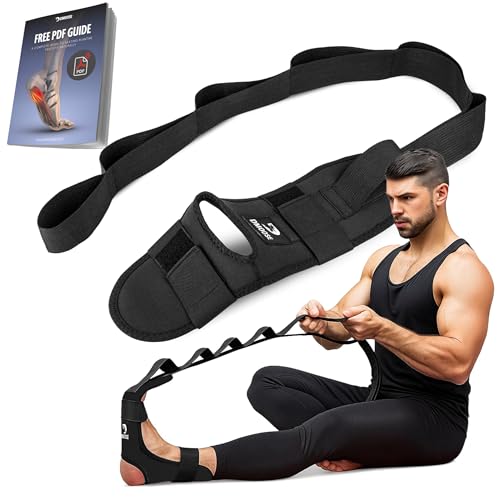
- Padded support for comfortable stretching
- Seven loops for varied hand positions
- Lightweight design with e-guide included
Best For: Portable flexibility work and rehabilitation routines
Portable Wooden Wedge Pick

- Portable 5-pound design with handle
- Four angles from 20° to 40°
- Non-slip surface and 500-pound capacity
Best For: Athletes needing a transportable wedge for mobility and squats
Targeted Foot Relief – ProStretch Original
For athletes seeking calf stretchers for athletes, the ProStretch Original uses a rocker design to position the foot for a focused lower-leg stretch. Its slip-resistant rubber pads and compact construction make it practical for regular use with athletic shoes.
Best For: Athletes and active adults who want a single-foot rocker for tight calves, plantar fasciitis-related discomfort, or lower-leg flexibility work.
Pros:
- Rocker design helps isolate the lower-leg muscles, tendons, and ligaments.
- Slip-resistant pads are designed to limit sliding during use.
- Lightweight 14-ounce construction and included QR-code stretching guide.
- Made in the U.S.A. and covered by a 1-year warranty.
Cons:
- Fits adult shoes up to size 12 and has a recommended 250-pound weight limit.
- Requires socks and rubber-soled athletic shoes during use.
This is a focused option when you prefer a guided rocker motion over a broad standing platform. The single-foot format is simple and portable, though its fit and footwear requirements should be checked before purchase.
Adjustable Training Platform – Wooden Slant Board
This wooden slant board is a versatile choice among calf stretchers for athletes, offering five incline settings from 15° to 35°. It supports calf stretching, ankle mobility, squats, calf raises, and warm-ups at home or in the gym.
Best For: Athletes, runners, and fitness users who want adjustable calf stretching plus mobility and strength exercises on a stable platform.
Pros:
- Five angle settings allow users to adjust the stretch progressively.
- Textured top and slip-resistant base help provide secure positioning.
- Reinforced wooden construction supports up to 500 pounds.
- Side handle, visual exercise guide, and 3-year warranty add practicality.
Cons:
- At 3.85 kg, it is heavier than a small rocker-style stretcher.
- The broad platform may take more storage space than a compact foot rocker.
Choose this model if adjustability and exercise versatility matter more than minimal size. Its lower angles can suit gentler work, while higher settings offer progression as mobility improves.
Two-Foot Rocker – ProStretch Double
The ProStretch Double is designed for athletes who want to stretch one or both feet with a dual rocker. As calf stretchers for athletes, it combines a guided rocking motion with slip-resistant pads for focused calf, foot, and lower-leg work.
Best For: Active adults who want the option to stretch both sides simultaneously or concentrate on one foot at a time.
Pros:
- Dual-foot design supports simultaneous or single-foot stretching.
- Rocker geometry positions the feet for a focused stretch.
- Slip-resistant pads help keep the device from moving.
- Includes a QR-code stretching guide and has a 1-year warranty.
Cons:
- Fits adult shoes up to size 12 and has a recommended 250-pound weight limit.
- Use requires socks and rubber-soled athletic shoes.
- At 2 pounds, it is less lightweight than the single ProStretch version.
The dual format is convenient when balanced stretching or time-efficient routines are priorities. It is a focused tool rather than a multi-angle platform, so consider the slant board alternatives if you also want squats or calf raises.
Portable Incline Mobility Board – Adjustable Wooden Slant Board
This portable wooden slant board offers four incline positions—30°, 35°, 40°, and 45°—for calf stretching, squats, and weight-bearing mobility work. It is a practical option among calf stretchers for athletes who want to move their equipment between home, office, gym, or clinic.
Best For: Beginners through veteran athletes who need a lightweight, adjustable board for stretching, mobility, and rehabilitation-oriented routines.
Pros:
- Four adjustable angles support different flexibility and training levels.
- Lightweight design weighs about 4.5 to 5 pounds for easier portability.
- Suitable for calf stretching, squats, and weight-bearing exercises.
- Designed for use across home, office, gym, and physiotherapy settings.
Cons:
- The listed angle range starts at 30°, with no lower-angle setting specified.
- Product notes do not specify a weight capacity or warranty.
- Unlike the other wooden board, no slip-resistant base is identified in the supplied details.
This board suits users who value portability and a higher-angle progression range. Before buying, verify that the starting 30° incline and available stability features match your comfort level and training setup.
Best Overall – PowerStep UltraFlexx Foot Rocker
For athletes looking for calf stretchers for athletes that also address foot and lower-leg discomfort, the PowerStep UltraFlexx Foot Rocker provides a stable way to stretch and strengthen the foot, calf, and surrounding tissues. Its non-skid rocker design is intended for use with sturdy athletic shoes.
Best For: Athletes managing tight calves, plantar fasciitis, Achilles tendonitis, or shin splints.
Pros:
- Supports foot and calf stretching and strengthening.
- Can help improve lower-leg flexibility.
- Non-skid rocker bottom promotes a stable position.
- Lightweight plastic construction weighs about 0.4 kg.
Cons:
- Designed for use with sturdy athletic shoes rather than barefoot stretching.
- Offers a fixed rocker format instead of adjustable angles.
This is a focused choice for athletes who want one compact tool for foot and calf mobility, especially when plantar fascia, Achilles, or shin discomfort is part of the stretching routine.
Best Adjustable Option – Portable Wooden Slant Board
Athletes comparing calf stretchers for athletes may prefer this portable slant board when adjustable intensity matters. It offers five incline settings from 20° to 45°, allowing users to progress from gentle mobility work to deeper stretching.
Best For: Athletes who want adjustable calf, ankle, heel, and Achilles stretching for warm-ups, recovery, or training.
Pros:
- Five angle settings accommodate different training and stretching needs.
- Foldable design and built-in handle support portability.
- Anti-slip surface and bottom pad help limit movement.
- Thickened wood construction supports loads up to about 200 pounds.
Cons:
- At 4.8 pounds, it is heavier than compact foam or plastic stretchers.
- Its 200-pound maximum recommended load may not suit every user.
The adjustable angle range makes this a versatile option for athletes who want to control stretch depth and use the same board across warm-ups, regular training, and deeper Achilles-focused work.
Best Portable Foam Design – Pro-Tec Athletics Calf Stretcher
For athletes who want calf stretchers for athletes that can also support balance and strengthening work, the Pro-Tec Athletics Calf Stretcher uses firm EVA foam in a compact format. Its textured surface is designed to help prevent slipping during stretching and exercise routines.
Best For: Athletes seeking a lightweight calf and Achilles stretching tool for home, gym, or travel use.
Pros:
- Compact travel size makes it easy to carry.
- Firm EVA foam is designed to retain its shape.
- Supports calf and Achilles flexibility, balance, and core exercises.
- Textured surface helps prevent slipping and is easy to keep clean.
Cons:
- It does not offer adjustable incline angles.
- The compact platform may provide less foot coverage than a full slant board.
This lightweight stretcher is a practical pick for athletes who value portability and want a multifunctional platform for stretching, balance, and strengthening rather than an adjustable board.
Heavy-Duty Adjustable Pick – PROIRON Steel Slant Board
For athletes seeking calf stretchers for athletes that can also support strength work, the PROIRON Steel Slant Board combines a steel frame, four incline settings, and a padded foot tube. Its adjustable design suits gradual mobility work as well as more demanding calf, hamstring, ankle, and squat sessions.
Best For: Athletes who want a sturdy, adjustable slant board for stretching and incline squat exercises.
Pros:
- Steel construction is rated to support up to 660 pounds.
- Four adjustable angles from 15° to 40° accommodate different flexibility levels and training goals.
- Foam padding and rubber feet improve comfort and stability.
- Detachable padded tube allows use as an incline bench for squats.
Cons:
- At 5.78 kg, it is less convenient to transport than a strap or wooden wedge.
- The steel design may be more equipment than needed for simple stretching.
This is the most substantial option in the group, particularly for athletes who want a stable platform that can handle repeated training. The four angle choices make it easier to progress gradually, while the dual-use design adds versatility for home-gym workouts.
Rehabilitation Strap Pick – DMoose Foot & Calf Stretcher
The DMoose Foot & Calf Stretcher is a portable choice for athletes comparing calf stretchers for athletes with rehabilitation and flexibility needs. Its padded foot support, adjustable hook-and-loop fit, and seven hand loops help users maintain tension across foot, calf, hamstring, and lower-body stretches.
Best For: Athletes, yogis, dancers, and rehabilitation users who prioritize portability and guided stretching.
Pros:
- Eight-millimeter neoprene padding is designed to reduce discomfort during stretching.
- Seven hand loops provide multiple grip positions and tension options.
- Adjustable straps fit different foot sizes and help support consistent positioning.
- Lightweight 0.12 kg design is easy to carry, and an exercise e-guide is included.
Cons:
- It does not provide the rigid platform or weight-bearing support of a slant board.
- Users must actively hold the strap to create and maintain the stretch.
This is the most travel-friendly option and offers more hands-on control than a fixed wedge. It is well suited to athletes working on range of motion or rehabilitation, especially when a compact tool and multiple grip positions matter more than a standing stretch platform.
Portable Wooden Wedge Pick – TEMI Slant Board
The TEMI Slant Board offers a compact, wood-built approach for athletes looking for calf stretchers for athletes that can move between home, the gym, and the office. Its built-in handle, non-slip surface, and four incline positions support calf stretching, ankle mobility, heel stretches, and squat positioning.
Best For: Athletes who want a portable wedge for mobility drills, stretching, balance work, and squats.
Pros:
- Weighs about 5 pounds and includes a built-in handle for easier transport.
- Four incline settings—20°, 25°, 30°, and 40°—allow position adjustments.
- Wood construction and a stated 500-pound capacity provide a stable training base.
- Non-slip surface supports calf stretches, ankle drills, and squat work.
Cons:
- It has fewer angle options than the PROIRON board.
- The wooden wedge lacks the padded foot tube and dual-use incline-bench feature of the steel option.
The TEMI is a practical middle ground between a heavy steel board and a flexible strap. Its carrying handle and compact footprint make it convenient for athletes who want a dedicated incline wedge without sacrificing adjustability or stability.
How We Picked the Best Calf Stretchers for Athletes
We focused on the features that matter during repeated mobility sessions: stretch control, stability, portability, adjustability, construction, and ease of use. The selection includes dedicated calf stretchers as well as slant boards that can support calf raises, squats, ankle-mobility drills, and rehabilitation exercises.
We also considered different training environments. Compact rocker and strap designs suit athletes who want targeted foot and calf work, while wooden and steel incline boards generally offer a broader, more stable platform. Product claims about pain relief should not replace professional evaluation for persistent or worsening symptoms.
Quick Comparison
| Design | Best suited for | Main advantage | Potential trade-off |
|---|---|---|---|
| Foot rocker | Targeted daily stretching | Simple, compact positioning | Less versatile for loaded exercises |
| Strap-based stretcher | Controlled foot and calf tension | Fine adjustment and portability | Requires active setup and positioning |
| Wooden slant board | Home mobility and squats | Wide, stable standing surface | Can be bulky to store |
| Adjustable steel slant board | Frequent or higher-load use | Durability and angle selection | Usually heavier and less portable |
Key Buying Factors for Calf Stretchers for Athletes
Angle and Stretch Control
A fixed wedge is straightforward, but adjustable models let you begin with a mild stretch and progress gradually. Multiple angles are particularly useful when alternating between warm-up mobility, post-training stretching, and rehabilitation work.
Stability and Weight Capacity
Look for a broad base, non-slip contact points, and a capacity that comfortably exceeds your body weight and intended exercises. A stable platform is important when using the device for squats, heel drops, or single-leg work.
Foot Fit and Comfort
Check the platform length and width, especially if you have larger feet or plan to wear athletic shoes. Padded straps and contoured surfaces can make longer sessions more comfortable, while textured surfaces may improve grip.
Portability and Storage
Runners and traveling athletes may prefer a lightweight rocker or strap system. A slant board is a better choice when stability and exercise versatility matter more than compact storage.
Who Should Buy Which Calf Stretchers for Athletes?
- For a compact everyday tool: Choose a foot rocker or dedicated single-leg calf stretcher that is quick to set up beside a desk, gym bag, or recovery area.
- For adjustable stretching: Select a strap-based model or an incline board with several settings so you can control intensity as flexibility improves.
- For squats and ankle mobility: A sturdy slant board provides a larger standing surface and can support more than calf stretching alone.
- For frequent, demanding use: Prioritize a reinforced or steel construction, a high stated weight capacity, secure footing, and an angle-locking mechanism.
- For injury-related discomfort: Favor gradual adjustment and comfortable support, and consult a qualified clinician if pain persists, limits activity, or follows an acute injury.