The right insoles can improve comfort, stabilize your stride, and reduce pressure from long hours on your feet. This roundup compares 10 options designed for common needs such as plantar fasciitis, high arches, flat feet, overpronation, and heavy-duty support.
Use the buying guide below to match cushioning, arch structure, shoe fit, and weight capacity with your daily routine.
Best 10 Orthotic Insoles for Men Picks for 2026
Plantar Fasciitis Relief Pick

- Targets plantar fasciitis and heel spur pain
- Deep heel cup cushions and stabilizes
- Trim-to-fit men's size 8–13 design
Best For: Men seeking targeted plantar fasciitis and heel pain relief
Workday Comfort Pick
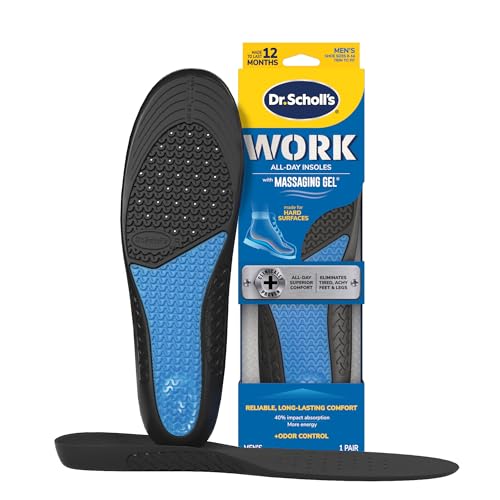
- Reduces fatigue during long workdays
- Gel cushioning absorbs hard-surface impact
- Odor-control technology helps manage moisture
Best For: Workers and active users on their feet for extended periods
Low-Profile Orthotic Pick

- Fits tighter-fitting shoes
- Supports mild to moderate pronation
- No trimming required
Best For: Men needing neutral-arch support in low-profile footwear
High-Arch Support Pick
Structured Cushioning for Roomy Shoes

- Built specifically for high arches
- Deep heel cup supports natural cushioning
- Trim-to-fit design with odor-control cover
Best For: Men with high arches and roomy shoes or boots
Maximum Stability Pick

- Angled heel post helps control inward rolling.
- Deep heel cradle supports stability and positioning.
- Thick, cushioned design needs removable factory insoles.
Best For: Firm support for flat feet and overpronation
Everyday Comfort Pick
WalkHero Plantar Fasciitis Insoles

- Deep heel cup supports foot positioning.
- EVA material provides shock absorption.
- Designed for wider feet and roomy shoes.
Best For: Moderate daily support in high-volume footwear
Heavy-Duty Work Pick
Dr. Scholl's Heavy Duty Support

- Designed for men over 200 pounds and wide feet.
- Supportive heel cushioning helps distribute pressure.
- Trim-to-fit design suits shoes and work boots.
Best For: Big-and-tall users needing durable all-day support
Podiatrist-Recommended Pick

- Podiatrist-recommended plantar fasciitis support
- Dual-layer cushioning and heel cushioning
- Sized to fit with no trimming required
Best For: Men wanting cushioned, ready-to-wear support for everyday shoes
Heavy-Duty High-Arch Pick

- Designed for users over 220 pounds
- Rigid high-arch support with shock absorption
- Trim-to-fit design for boots and work shoes
Best For: Men needing firm support for standing, work, or active footwear
Work Boot Support Pick
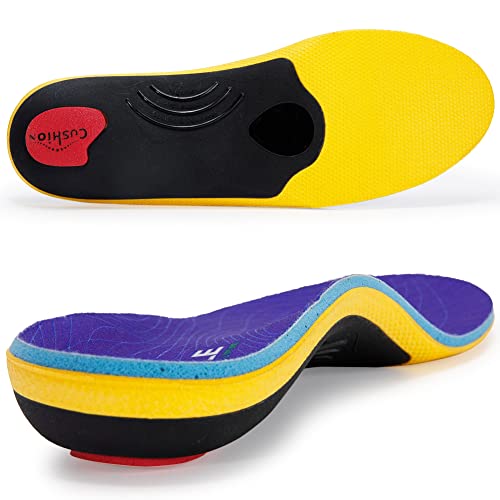
- Heavy-duty support for users over 220 pounds
- Deep heel cup and firm high-arch control
- Trim-to-fit for boots and work shoes
Best For: Men seeking structured support for work boots and long standing periods
Plantar Fasciitis Relief Pick – Targeted Heel Pain Support
If you need orthotic insoles for men specifically aimed at plantar fasciitis and heel spurs, this full-length Dr. Scholl’s design focuses on relieving pain at the source. Its deep heel cup, arch support, and trim-to-fit construction make it a practical option for everyday shoes.
Best For: Men seeking plantar fasciitis, heel spur, and morning heel-pain relief.
Pros:
- Designed to immediately relieve plantar fasciitis and heel spur pain.
- Deep, shock-absorbing heel cup adds cushioning and stability.
- Distributes pressure across the foot and supports multiple arch types, including high arches.
- Full-length design can be trimmed to fit men’s size 8–13 shoes.
Cons:
- Listed as a single insole product rather than a pair.
- May require trimming for a precise shoe fit.
This is the most condition-focused choice in the group. Choose it when plantar fasciitis relief and heel support matter more than a general-purpose comfort insert.
Workday Comfort Pick – Massaging Gel for Tired Feet
Dr. Scholl's Work All-Day Superior Comfort Insoles (with) Massaging Gel, Men, 1 Pair, Trim to Fit
Check Price On AmazonFor men comparing orthotic insoles for men who spend long hours standing or walking, these Dr. Scholl’s Work All-Day insoles emphasize cushioning and fatigue reduction. Extended gel cushioning, responsive support, and trim-to-fit sizing suit demanding work shoes and boots.
Best For: Workers and active users who need comfort on hard indoor or outdoor surfaces.
Pros:
- Designed to reduce tired, achy feet and legs during long workdays.
- Extended massaging gel cushioning helps reduce impact and shock.
- Responsive cushioning supports energy return with each step.
- Polygiene StayFresh technology helps control odor and moisture buildup.
Cons:
- Built primarily for comfort and fatigue reduction rather than condition-specific correction.
- Requires trimming to customize the fit.
This is a sensible everyday work insert when prolonged standing, hard floors, and foot freshness are your main concerns. Its all-arch-type sizing and all-width fit add versatility.
Low-Profile Orthotic Pick – Neutral Arch Alignment
These PowerStep Original orthotic insoles for men are designed for tighter-fitting shoes where a bulky insert may not work. The full-length, low-profile shape combines a contoured neutral arch, deep heel cradle, and firm-but-flexible support for mild to moderate pronation.
Best For: Men with neutral arches who want support in low-profile athletic, work, casual, or select dress shoes.
Pros:
- Low-profile design is made for tighter-fitting footwear.
- Contoured neutral arch and deep heel cradle support alignment and stability.
- Supports concerns including plantar fasciitis, Achilles tendonitis, and shin splints.
- Requires no trimming and can be moved between compatible shoes.
Cons:
- Designed for mild to moderate pronation rather than every foot type.
- Fits shoes with a removable factory insole.
- Listed size covers men’s 10–10.5.
Choose this model when shoe space is limited and you want a reusable, ready-to-wear orthotic. Its neutral-arch support makes it more specialized than a general cushioning insole.
High-Arch Support Pick – Structured Cushioning for Roomy Shoes
For men shopping for orthotic insoles for men with high arches, Superfeet All-Purpose High Arch insoles provide structured support in roomy footwear. A deep heel cup, high-density foam, and moisture-wicking top cover create a supportive full-foot platform that can be trimmed to fit.
Best For: Men with high arches who wear roomy shoes or boots.
Pros:
- Specifically designed for high-arch support.
- Deep heel cup cradles the heel and works with natural cushioning.
- High-density closed-cell foam supports the whole foot.
- Trim-to-fit design and moisture-wicking top cover add practicality.
Cons:
- Designed for roomy footwear, so it may not suit tight shoes.
- Requires trimming before use.
- Listed men’s size range is 9.5–11.
This is the clearest match for high-arch users who have enough room in their shoes for a structured insert. It prioritizes arch support and heel cradling over a minimal profile.
Maximum Stability Pick – PowerStep Pinnacle Maxx
For shoppers comparing orthotic insoles for men who need firm motion control, the PowerStep Pinnacle Maxx combines a slightly angled heel post with a deep heel cradle. Its dual-layer cushioning adds comfort, while the thick design is intended for shoes with removable factory insoles.
Best For: Men with flat feet or overpronation seeking firm, stability-focused support in compatible shoes.
Pros:
- Angled heel post helps limit inward rolling and improve stability.
- Deep heel cradle supports positioning and motion control.
- Dual-layer cushioning provides support from heel to toe.
- Ready to wear without trimming and made in the USA.
Cons:
- Thick profile requires shoes with removable factory insoles.
- Firm structure may not suit shoppers seeking a soft, flexible insert.
The Pinnacle Maxx is the most stability-oriented option here. Choose it when overpronation control and a substantial, ready-to-wear design matter more than maximum versatility.
Everyday Comfort Pick – WalkHero Plantar Fasciitis Insoles
These WalkHero inserts are a practical choice for men seeking orthotic insoles for men with moderate arch support and cushioning. A deep heel cup helps stabilize the foot, while EVA material provides shock absorption for everyday walking, work, running, and casual footwear.
Best For: Men with wider feet who want moderate support for daily use in roomy, high-volume shoes.
Pros:
- Deep heel cup helps maintain foot positioning and stability.
- EVA construction provides shock absorption and helps reduce foot fatigue.
- Designed for wider feet and high-volume footwear.
- Suitable for work boots, basketball shoes, running shoes, and casual shoes.
Cons:
- Designed for moderate rather than maximum control.
- May be a less suitable fit for narrow or low-volume shoes.
WalkHero stands out for everyday cushioning and a wide-foot-friendly shape. It is a sensible option when you want supportive comfort without the more substantial stability focus of a heavy-duty orthotic.
Heavy-Duty Work Pick – Dr. Scholl's Heavy Duty Support
For men comparing orthotic insoles for men who weigh over 200 pounds, are tall, or have wide feet, Dr. Scholl’s Heavy Duty Support model is built around durable support and pressure distribution. Its targeted cushioning and supportive heel design are suited to sneakers, work boots, and other everyday shoes.
Best For: Big-and-tall men or men with wide feet who need all-day support in work and casual footwear.
Pros:
- Specifically designed for men over 200 pounds, taller men, and wide feet.
- Supportive heel cushioning surrounds the heel and helps distribute pressure.
- Designed for all-day use and built for durability.
- Can be trimmed to fit men’s shoes in sizes 8–14.
Cons:
- Trim-to-fit installation requires cutting for the desired shoe.
- Its heavy-duty focus may be more support than lighter users need.
This is the strongest match for larger frames, wide feet, and demanding daily wear. Select it when durable cushioning and pressure distribution are higher priorities than a ready-to-wear, no-trim format.
Podiatrist-Recommended Pick – PowerStep Pinnacle
For shoppers comparing orthotic insoles for men, the PowerStep Pinnacle is a podiatrist-recommended option focused on plantar fasciitis relief, heel cushioning, and neutral arch support. Its dual-layer cushioning and ready-to-wear sizing make it practical for everyday shoes with removable factory insoles.
Best For: Men seeking cushioned, non-trim orthotics for plantar fasciitis, heel spurs, or general foot fatigue.
Pros:
- Podiatrist recommended for plantar fasciitis and related foot pain.
- Combines premium arch support with dual-layer cushioning and heel cushioning.
- Fits athletic, walking, running, work, and some casual shoes.
- Ordered by shoe size with no trimming required; made in the USA.
Cons:
- Designed for shoes where the original insole can be removed.
- Medium-width, neutral-arch design may not suit every foot shape.
The Pinnacle stands out when you want a structured, ready-to-use insert from an established orthotic brand. Confirm that your shoes have removable insoles and that the listed men’s size range fits.
Heavy-Duty High-Arch Pick – VALSOLE 250+ lbs Insole
Among orthotic insoles for men, this VALSOLE model is aimed at users over 220 pounds who need strong high-arch support and shock absorption. Its heel cup, Poron heel pads, and trim-to-fit design make it suited to work footwear, boots, and active shoes.
Best For: Men over 220 pounds who stand, walk, run, or work in supportive boots and shoes.
Pros:
- Designed for users weighing over 220 pounds with heavy-duty support.
- Combines a rigid TPU support piece, high arch support, and heel cushioning.
- Helps distribute weight and absorb impact during standing and movement.
- Can be trimmed for walking, running, athletic, work, hiking, and other shoes.
Cons:
- High-arch, firm support may require an adjustment period.
- The manufacturer recommends starting at two to three hours daily and building up over three to seven days.
This is a practical choice if heavy-duty construction and high-arch control matter more than an immediately soft feel. Follow the gradual break-in guidance, especially if you are new to rigid orthotics.
Work Boot Support Pick – VALSOLE Heavy Duty Orthotics
For men comparing orthotic insoles for men for demanding workdays, this VALSOLE insert combines heavy-duty high-arch support with a deep heel cup and Poron heel pad. It is designed for users over 220 pounds and can be trimmed for work boots, running shoes, hiking shoes, and other footwear.
Best For: Men over 220 pounds who want firm arch control and cushioning for work boots or prolonged standing.
Pros:
- Provides heavy-duty support for users over 220 pounds.
- Rigid arch support and a deep heel cup promote stability and balance.
- Poron heel cushioning helps absorb shock with each step.
- Trim-to-fit design works with boots, work shoes, athletic shoes, and high-volume dress shoes.
Cons:
- Its high-arch, rigid support may feel firm during initial wear.
- Requires trimming to achieve the best fit in some footwear.
The Heavy Duty Orthotics are especially compelling for work footwear and users who want more structure than a soft foam insert provides. Check shoe volume and trim carefully so the deep heel cup and arch sit properly.
How We Picked the Best Orthotic Insoles for Men
We evaluated these Orthotic Insoles for Men by their intended support level, foot-condition focus, materials, construction, fit options, and everyday versatility. The selection includes cushioned gel designs for work, firmer orthotic models for alignment and arch support, high-arch options, and heavy-duty inserts for larger users or demanding footwear.
We also considered whether an insole is trim-to-fit, available in multiple sizes, compatible with removable shoe liners, and likely to work in common footwear such as work boots, walking shoes, sneakers, and casual shoes. Product claims about plantar fasciitis relief or pronation control should be viewed as intended use rather than a guarantee of medical results.
Quick Comparison
- Best for plantar fasciitis: Choose a model specifically shaped to support the arch and cushion the heel.
- Best for workdays: Look for shock absorption, pressure distribution, and a design that fits securely in work shoes or boots.
- Best for high arches: Select an insole with substantial arch fill that matches your natural arch height.
- Best for flat feet or overpronation: Favor structured models with a stable heel cup and firmer support.
- Best for heavier users: Consider heavy-duty inserts rated for higher body weights and built to resist compression.
- Best for tight shoes: Choose a slimmer design, and check whether the original liner must be removed first.
Key Buying Factors for Orthotic Insoles for Men
Arch Support and Foot Type
Arch height matters more than the label on the package. High arches generally benefit from supportive cushioning that fills the arch without creating a hard pressure point. Flat feet or overpronation often require a firmer platform and a stable heel cup to help limit excessive inward rolling.
Cushioning Versus Control
Gel and foam can soften impact, but maximum cushioning is not always the same as maximum stability. If your main concern is heel pain or long standing, prioritize shock absorption. If your feet roll inward or feel unstable, choose a more structured orthotic and allow time to adjust.
Fit, Volume, and Shoe Compatibility
Check the listed men’s size range and measure against the manufacturer’s chart. Trim-to-fit designs are useful, but trimming should follow the shoe’s original insert as a template. In a low-volume or tight shoe, a thick insole may crowd the toes; removing the factory liner can create additional room when the shoe allows it.
Durability and Weight Rating
Heavier users and people wearing work boots daily should look for reinforced construction, durable top covers, and an appropriate weight rating. Replace insoles when the arch support collapses, cushioning stays compressed, or discomfort returns.
Who Should Buy Which Orthotic Insoles for Men?
Choose a plantar-fasciitis-focused insole if heel pain is your primary concern. Choose a high-arch model if you need more support beneath a pronounced arch. Choose a maximum-stability design for flat feet, overpronation, or a tendency for shoes to wear unevenly. Choose a cushioned work insole for long shifts spent standing or walking. Choose a heavy-duty option if standard inserts compress quickly or you need support for a higher body weight. Finally, select a slimmer or trim-to-fit model when shoe space is limited.
Introduce new orthotics gradually, beginning with a few hours per day. Stop using them if they cause sharp pain, numbness, or worsening symptoms, and consult a podiatrist for persistent or severe foot problems.