Heavy squats, deadlifts, and other strength movements demand equipment that stays secure without distracting you from technique. The right belt can provide consistent abdominal bracing and a dependable fit during challenging sets.
We selected 10 weightlifting belts for heavy lifting across several materials, closure systems, widths, and price points. Use the guide below to match belt construction and adjustability to your training style.
Best 10 Weightlifting Belts for Heavy Lifting Picks for 2026
IPF-Approved Leather Support
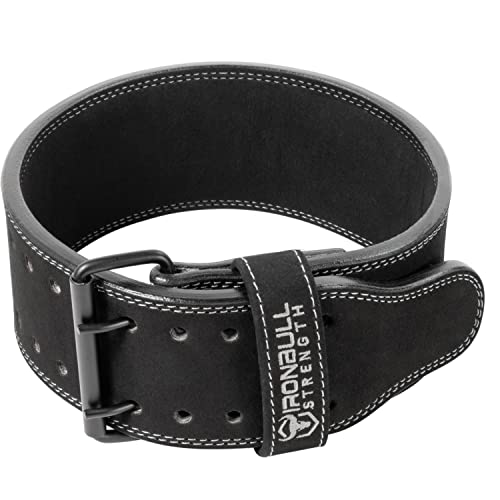
- IPF, USAPL, USPA, and IPL approved
- 10mm single-piece suede leather
- 4-inch profile for core stability
Best For: Powerlifters seeking firm leather support
Quick-Locking Nylon Security

- Full-metal buckle locks under load
- Quick-release roller for fast changes
- Flexible, washable nylon needs no break-in
Best For: Lifters needing quick, adjustable support
Comfort-Focused Leather Training
Gymreapers Leather Weightlifting Belt

- Reinforced real leather construction
- 4-inch support with lightweight design
- Multiple adjustment points and roll-up storage
Best For: Everyday gym training and bodybuilding
Heavy-Duty Lever Support

- Stretch-resistant 10mm leather construction
- Quick-lock lever buckle
- 4-inch support for squats and deadlifts
Best For: Powerlifters seeking firm, fast-adjusting support
Comfort-Focused Fit

- Padded lumbar support with tapered waist
- 6mm genuine buffalo leather
- Dual-prong adjustable steel buckle
Best For: Lifters wanting comfort-focused, contoured support
Adjustable Strength Choice
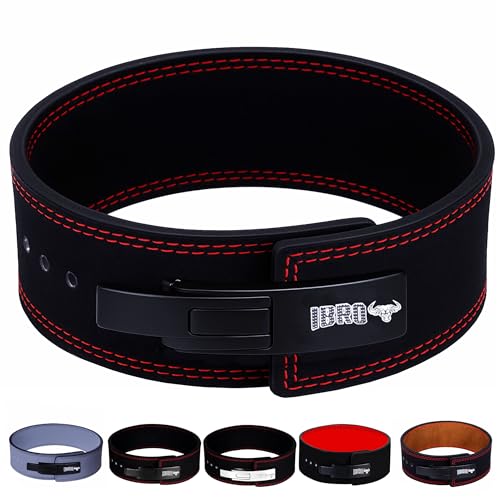
- Quick-release steel lever
- 8mm, 10mm, and 13mm thickness options
- Double-stitched 4-inch leather design
Best For: Lifters wanting customizable thickness and repeatable fit
Leather Support Pick
Genuine Leather Weightlifting Belt

- Double-sided leather with 7 mm thickness
- Suede lining adds padding and comfort
- Measure true waist, not pant size
Best For: Daily weightlifting and traditional leather-belt preferences
Quick-Change Pick
Gymreapers Quick Locking Weightlifting Belt

- Quick-locking buckle reduces transition time
- Lightweight 4-inch nylon construction
- Designed for lifting and cross-training
Best For: Fast-paced workouts and frequent exercise changes
Adjustability Pick
RDX Cowhide Leather Weightlifting Belt

- 7 mm cowhide leather construction
- Choose between 4-inch and 6-inch widths
- 10 holes with a dual-pronged buckle
Best For: Heavy strength training with customizable leather support
IPF-Approved Leather Support – 10mm Powerlifting Belt
For lifters comparing weightlifting belts for heavy lifting, this 10mm suede leather option emphasizes firm, consistent support for squats, deadlifts, and bench presses. Its 4-inch profile is designed to stabilize the back and core, though the leather may need a short break-in period.
Best For: Powerlifters and strength athletes who want a thick, competition-approved leather belt.
Pros:
- IPF, USAPL, USPA, and IPL approved.
- Single-piece, 10mm A-grade suede leather construction.
- 4-inch width supports the back, abs, and core.
- Includes a lifetime warranty against manufacturing defects and a 30-day satisfaction guarantee.
Cons:
- May require a break-in period.
- Prong-belt adjustment is generally slower than quick-release designs.
This is a substantial choice for heavy training and sanctioned powerlifting, especially if you prefer the rigid feel and durability of leather.
Quick-Locking Nylon Security – Element 26 Self-Locking Belt
Among weightlifting belts for heavy lifting, the Element 26 stands out for its automatic full-metal locking buckle and fast-release roller. Its flexible nylon construction is intended to provide adjustable intra-abdominal pressure without a leather break-in period.
Best For: Weightlifters, functional fitness athletes, and lifters who prioritize quick adjustments between sets.
Pros:
- Self-locking metal buckle engages under load.
- Quick-release roller enables fast removal and repositioning.
- Breathable, washable nylon requires no break-in period.
- Competition-approved design folds easily into a gym bag.
Cons:
- Nylon may provide a less rigid feel than a thick leather belt.
- Hook-and-loop closure may appeal less to lifters who prefer a traditional prong buckle.
This belt is a practical pick for high-frequency training where secure support and quick transitions matter more than a rigid leather build.
Comfort-Focused Leather Training – Gymreapers Leather Weightlifting Belt
For shoppers evaluating weightlifting belts for heavy lifting, the Gymreapers leather belt combines a 4-inch support profile with a lightweight, form-fitting design. Its reinforced leather, metal buckle, and multiple adjustment points are aimed at everyday squatting and strength training.
Best For: Bodybuilders and recreational strength trainees who want comfortable leather support that packs easily.
Pros:
- Made from reinforced real leather and stitching.
- 4-inch width supports the back, spine, and core.
- Lightweight design rolls up for compact storage.
- Multiple adjustment holes help customize the fit.
Cons:
- Not described as competition approved.
- Leather construction may need more care than washable nylon.
This option balances support and portability well, making it suitable for gym users who want a traditional leather belt without an especially bulky design.
Extra-Wide Padded Stability – RitFit 6-Inch Lifting Belt
For athletes searching for weightlifting belts for heavy lifting, the RitFit uses a 6-inch contoured profile to cover more of the midsection. Its reinforced tricot construction, padded lumbar support, hook-and-loop strap, and stainless steel buckle are designed for adjustable support during squats and deadlifts.
Best For: Lifters who prefer broad lumbar coverage and quick, secure adjustments for strength workouts.
Pros:
- Extra-wide 6-inch contoured design supports the back and core.
- Quick-adjust hook-and-loop strap with stainless steel buckle.
- Reinforced tricot is designed for durability and comfort.
- Available in multiple sizes and colors with a replacement guarantee.
Cons:
- The 6-inch profile may feel bulkier than a standard 4-inch belt.
- Hook-and-loop closure may not suit those seeking a traditional leather or prong design.
Choose the RitFit if maximum coverage and convenient adjustment are priorities; its wider shape is particularly suited to lifters who like substantial lumbar support.
Heavy-Duty Lever Support – 10mm Leather Lever Belt
For lifters comparing weightlifting belts for heavy lifting, this 10mm leather model combines a rigid 4-inch profile with a quick-lock lever. It is designed to provide consistent core and lower-back support during demanding squats, deadlifts, and powerlifting sessions.
Best For: Powerlifters who want sturdy leather construction and fast, repeatable lever adjustments.
Pros:
- 10mm premium leather with suede lining resists stretching.
- Heavy-duty lever buckle closes quickly and securely.
- Four-inch width provides even torso, abdominal, and lower-back support.
- Suitable for men and women training with heavy weights.
Cons:
- Lever belts require accurate waist measurement and setup.
- At 3.9 pounds, it may feel substantial compared with lighter belts.
This is a straightforward choice for serious strength training, especially if you prefer the speed of a lever closure and the firm feel of a 10mm leather belt. Measure your true waist rather than relying on pants size.
Comfort-Focused Fit – Pink Padded Leather Gym Belt
This Jaffick belt is a practical option among weightlifting belts for heavy lifting when comfort and a contoured fit matter. Its tapered design, padded lumbar area, and genuine buffalo leather construction are intended to support squats, deadlifts, and cross-training workouts.
Best For: Women and men who want a padded, tapered belt with a traditional dual-prong adjustment.
Pros:
- Genuine buffalo leather offers a flexible yet sturdy feel.
- Approximately 20mm of padded lumbar support helps improve comfort.
- Tapered waist design is intended to reduce pinching.
- Dual-prong steel buckle and reinforced rivets provide adjustable support.
Cons:
- The traditional dual-prong buckle takes longer to adjust than a lever.
- The pink color and contoured design may not suit every lifter.
- At 6mm thick, it is less rigid than the listed 10mm belts.
Choose this model if you prioritize lumbar padding and a more flexible fit over maximum stiffness. Use the listed waist ranges and measure carefully for the dual-prong closure.
Adjustable Strength Choice – IBRO 10mm Lever Belt
The IBRO 10mm belt is built for shoppers comparing weightlifting belts for heavy lifting across different training styles. Its steel quick-release lever, uniform 4-inch width, suede-finished leather, and available 8mm, 10mm, and 13mm thicknesses make it adaptable from general weightlifting to advanced powerlifting.
Best For: Lifters who want repeatable lever tension, multiple thickness options, and sizing for men and women.
Pros:
- Quick-release lever clamps to a consistent fit between sets.
- 10mm version offers an all-round balance of support and flexibility.
- Genuine leather core, suede finish, and double stitching help it hold its shape.
- Available in 8mm, 10mm, and 13mm versions for different preferences.
Cons:
- Arrives unassembled, and a Phillips screwdriver is not included.
- Lever screws should be tightened and checked before each session.
- The 13mm option may be too stiff or heavy for newer lifters.
This is one of the more versatile choices in the group because buyers can select a thickness suited to their experience and lifting style. The included sizing guidance is based on waist measurement at the belly button, not pants size.
Leather Support Pick – Genuine Leather Weightlifting Belt
For shoppers comparing weightlifting belts for heavy lifting, this genuine leather model emphasizes durable construction, a suede interior, and a wide design intended to support the back and abdomen. Be sure to measure your true waist around the lower back and over the belly button rather than relying on pant size.
Best For: Daily gym training, weightlifting, cross-training, and lifters who prefer a traditional leather belt with padded suede lining.
Pros:
- Double-sided leather construction with reinforced top stitching.
- Suede lining adds padding and helps improve wearing comfort.
- Available in sizes S through XXL, with a buckle closure and 7 mm thickness.
- Wide design provides support for the back and abdomen during training.
Cons:
- Sizing requires measuring true waist size rather than pant size.
- The supplied listing identifies this model as a 6-inch-wide belt, which may feel substantial for some exercises.
This is a straightforward option for lifters who want leather durability and a cushioned interior for regular strength training. Confirm the measurement and preferred width before ordering.
Quick-Change Pick – Gymreapers Quick Locking Weightlifting Belt
Among weightlifting belts for heavy lifting, the Gymreapers model stands out for its quick-locking buckle and lightweight nylon construction. It is designed for athletes who move between exercises frequently and want an adjustable belt with minimal downtime.
Best For: Cross-training, Olympic lifting, powerlifting, bodybuilding, and workouts that require fast transitions between movements.
Pros:
- Quick-locking buckle allows fast securing and release between exercises.
- Uniform 4-inch width is designed to provide consistent support around the torso.
- Made from high-grade nylon with reinforced stitching.
- Tested in competition and suitable for a range of lifting-focused sports.
Cons:
- Measure around the navel for sizing; regular waist or pant measurements may be inaccurate.
- Nylon construction may not appeal to lifters seeking a traditional leather belt.
This belt is a practical fit for fast-paced training and athletes who value simple adjustments. Its lightweight nylon design and quick buckle prioritize convenience while retaining a supportive 4-inch profile.
Adjustability Pick – RDX Cowhide Leather Weightlifting Belt
For weightlifting belts for heavy lifting, this RDX belt combines 7 mm cowhide leather with a choice of 4-inch or 6-inch back widths. Its dual-pronged roller buckle, 10 adjustment holes, and suede interior make it a versatile choice for squats, deadlifts, Olympic lifting, and general strength work.
Best For: Lifters who want a leather belt with multiple adjustment points, padded lumbar support, and width options for different training preferences.
Pros:
- Genuine cowhide leather is 7 mm thick for durable training use.
- Available in 4-inch and 6-inch variations with a wide padded back.
- Dual-pronged roller buckle uses 10 precision-drilled holes for adjustment.
- Suede lining and a leather buckle flap help improve comfort.
Cons:
- Sizing must be based on measurements around the lower back and belly button, not pant size.
- The leather construction may feel less flexible than a lightweight nylon belt.
- If between sizes, the supplied guidance recommends choosing the larger size.
This model offers a strong balance of adjustability, leather durability, and width choice. It is especially useful for lifters who want to tailor their belt setup to heavy squats, deadlifts, and other demanding sessions.
How We Picked the Best Weightlifting Belts for Heavy Lifting
We focused on features that matter under load: belt material, thickness, width, closure security, adjustability, comfort, and intended use. The lineup includes leather powerlifting belts for maximum rigidity, flexible quick-lock options for varied workouts, and contoured or padded designs for users who prioritize comfort.
We also considered whether a belt is suitable for competition-style lifting, general strength training, bodybuilding, or occasional gym use. Product claims such as IPF approval should still be checked against current federation rules before entering a meet.
Quick Comparison
| Best For | Recommended Style | What to Look For |
|---|---|---|
| Maximum support | 10mm leather lever or prong belt | Rigid construction and secure closure |
| Fast adjustments | Self-locking or quick-lock belt | Reliable buckle and easy tension changes |
| General gym training | Neoprene or padded belt | Comfort, flexibility, and broad adjustability |
| Competition preparation | Powerlifting-style leather belt | Consistent dimensions and federation compliance |
Key Buying Factors for Weightlifting Belts for Heavy Lifting
Material and Thickness
Thick leather generally offers the firmest, most stable brace, but it may require a break-in period. Neoprene and padded belts are more comfortable and flexible, making them useful for higher-repetition training, although they usually provide less rigid support.
Closure and Adjustability
Prong belts offer familiar, incremental adjustment and are easy to inspect. Lever belts lock tightly and are quick to use once fitted, but changing sizes can take more effort. Self-locking and quick-lock buckles are convenient when you move between exercises or share equipment.
Width, Fit, and Comfort
A belt should sit securely around the torso without digging into the ribs or hips. Wider belts can feel more supportive for powerlifting, while four-inch or contoured designs may allow better movement for different body shapes. Measure your waist where the belt will sit and follow the manufacturer’s sizing chart rather than relying on pant size.
Training and Competition Needs
For heavy singles and low-repetition squats or deadlifts, prioritize rigidity and a closure that will not shift. For bodybuilding, circuit work, or mixed training, a lighter belt may be more comfortable. If you compete, verify thickness, width, materials, and buckle rules with your federation.
Who Should Buy Which Weightlifting Belts for Heavy Lifting?
- Powerlifters and advanced lifters: Choose a 10mm leather lever or prong belt for consistent bracing and dependable support.
- Mixed-program athletes: Consider a self-locking or quick-lock belt when fast adjustments matter between exercises.
- Beginners: Start with an adjustable, comfortable design that helps you learn proper bracing rather than choosing the stiffest belt available.
- Bodybuilders and general gym users: A padded neoprene or moderately rigid leather belt can balance support, mobility, and comfort.
- Women or lifters with shorter torsos: Look for contoured or narrower options that do not interfere with the ribs or hips.
Whichever style you choose, a belt should supplement—not replace—sound lifting technique, progressive training, and proper warm-ups.