The right belt can make heavy squats, deadlifts, and accessory work feel more secure without complicating your home-gym setup. This roundup compares 10 weightlifting belts across leather, quick-lock, dip, and hip-thrust designs.
Use the guide below to match belt style, width, closure, and fit with your training priorities, experience level, and available equipment.
Best 10 Weightlifting Belts for Home Gyms Picks for 2026
Leather Power Support
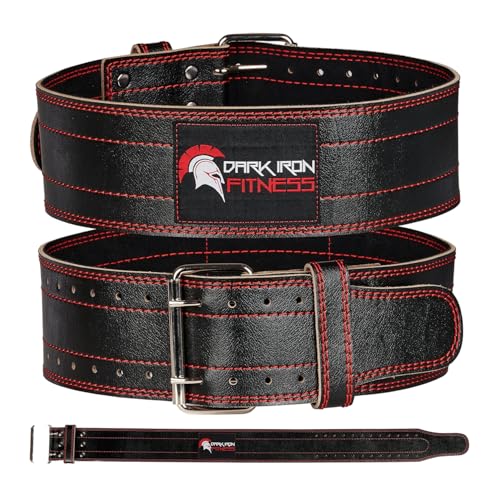
- Genuine leather with reinforced stitching
- Four-inch support with 12 adjustment holes
- Double-prong buckle for secure heavy lifting
Best For: Powerlifting-style home workouts and lifters seeking traditional leather support
Quick-Lock Performance

- Full-metal self-locking buckle
- Infinitely adjustable, breathable nylon
- Folds easily for gym-bag storage
Best For: Olympic lifting, functional fitness, and quick transitions between sets
Lightweight Leather Comfort
Gymreapers 4-Inch Leather Belt

- Reinforced real leather construction
- Lightweight, form-fitting 4-inch profile
- Rolls up for convenient storage
Best For: Bodybuilding and general strength training at home
Best Hip Thrust Belt
Bellabooty Premium Hip Thrust Belt

- Supports loads up to 400 pounds
- Padded, non-slip design for hip thrusts
- Quick setup with dumbbells, kettlebells, or plates
Best For: Glute-focused home workouts and hip thrusts
Best Dip Belt
Gymreapers Dip Belt With Chain

- Supports up to 300 pounds
- 38-inch steel chain loads multiple plates
- Designed for dips, pull-ups, chin-ups, and belt squats
Best For: Progressive resistance on bodyweight exercises
Best Adjustable Lifting Belt
DMoose Fitness Weight Lifting Belt

- 6-inch back support for squats and deadlifts
- Adjustable hook-and-loop closure with locking mechanism
- Neoprene build with breathable foam cushioning
Best For: Adjustable lumbar support during heavy home-gym lifts
Best Quick-Lock Option

- Quick-lock buckle speeds up adjustments
- Uniform 4-inch nylon support profile
- Lightweight design for varied workouts
Best For: Lifters who want fast transitions and lightweight support
Best for Mobility
Auto-Lock Neoprene Support Belt
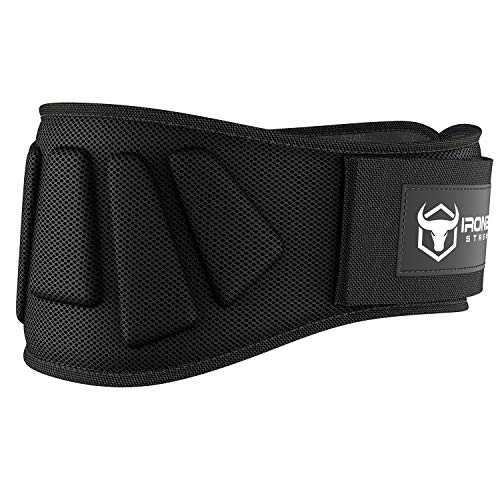
- Contoured 6-inch support zones
- Breathable neoprene and mesh construction
- Auto-lock buckle for secure fastening
Best For: Users balancing back support with workout mobility
Best Leather Build

- 7 mm cowhide leather construction
- Padded 4-inch or 6-inch lumbar support
- Ten-hole dual-prong adjustment system
Best For: Heavy strength training with a traditional leather feel
Leather Power Support – Genuine Leather 4-Inch Belt
For home gyms focused on heavy squats, deadlifts, and strength work, this genuine-leather option is one of the more traditional weightlifting belts for home gyms. Its 4-inch profile, double-row stitching, and double-prong buckle emphasize firm support and durability.
Best For: Lifters who want a durable leather belt with a secure double-prong closure for powerlifting-style training.
Pros:
- Genuine leather with reinforced double-row stitching
- Four-inch width supports the lower back and core
- Twelve one-inch adjustment holes allow precise sizing
- Double-prong buckle and keeper loop help secure the belt
Cons:
- Leather may require conditioning and more maintenance than nylon
- Double-prong adjustment can be slower than a quick-release design
This belt suits home lifters who prioritize rigid, classic construction and a broad size range. Measure around the natural waist at the belly button before choosing a size.
Quick-Lock Performance – Element 26 Self-Locking Belt
The Element 26 is a practical choice among weightlifting belts for home gyms when fast adjustment matters. Its premium nylon construction conforms to the core, while the full-metal self-locking buckle is designed to engage under load and release quickly between sets.
Best For: Olympic lifting, functional fitness, and home-gym users who want fast, adjustable support.
Pros:
- Self-locking metal buckle with quick-release roller
- Infinitely adjustable nylon design supports precise pressure control
- Breathable, hand-washable material that folds into a gym bag
- Four-inch profile is designed for lifting and competition use
Cons:
- Nylon offers a different feel from a rigid leather belt
- The supplied listing identifies the closure as hook and loop despite the described metal locking buckle
Choose this model if you move between exercises frequently and value convenient repositioning. Its flexible nylon construction also avoids a leather break-in period.
Lightweight Leather Comfort – Gymreapers 4-Inch Leather Belt
Gymreapers offers a lightweight leather alternative for weightlifting belts for home gyms, combining a 4-inch support panel with a form-fitting design. The reinforced leather, numerous adjustment holes, and metal buckle are intended to provide support without excessive bulk.
Best For: Bodybuilding and general strength training where leather support and packability are priorities.
Pros:
- Real reinforced leather construction
- Four-inch width supports the back, spine, and core
- Lightweight design can be rolled for gym-bag storage
- Numerous adjustment holes help create a personalized fit
Cons:
- Leather may need more care than washable synthetic materials
- Buckle closure is not as quick to adjust as a hook-and-loop system
This is a balanced pick for a home lifter who wants leather durability in a relatively lightweight format. Confirm the available sizing and fit around your waist before ordering.
Extra-Wide Lumbar Support – RitFit 6-Inch Lifting Belt
For home lifters who prefer more coverage, the RitFit 6-inch belt stands out among weightlifting belts for home gyms. Its contoured, extra-wide profile is designed to support the back, abs, and core, while the hook-and-loop strap enables quick adjustments.
Best For: Squats, deadlifts, and leg-focused training for users who want broad lumbar coverage.
Pros:
- Six-inch contoured design provides broad back and core coverage
- Reinforced tricot construction is designed for durability
- Hook-and-loop strap and stainless steel buckle allow quick adjustment
- Available in multiple sizes and colors
Cons:
- Six-inch width may feel bulkier than a standard 4-inch belt
- Hook-and-loop closure may appeal less to lifters seeking a traditional leather buckle
- Extra coverage may not suit every exercise or body type
Consider the RitFit when maximum coverage and quick adjustability matter more than a minimalist profile. The listed medium size fits 30–36-inch waists, but consult the sizing guide for the best match.
Best Hip Thrust Belt – Bellabooty Premium Hip Thrust Belt
If your home training centers on glutes, this specialized option is a practical alternative to a traditional weightlifting belt. The Bellabooty belt is designed for hip thrusts and can also be used with dumbbells, kettlebells, or plates for squats and lunges.
Best For: Home-gym users prioritizing comfortable, supported hip thrusts and glute-focused training.
Pros:
- Supports loads up to 400 pounds, according to the supplied product details.
- Plush padding and a non-slip fit improve comfort during hip thrusts.
- Loop-style setup is designed to be workout-ready in about 20 seconds.
- Works for hip thrusts, squats, lunges, and other compatible exercises.
Cons:
- Its design is specialized for hip thrusts rather than general heavy squats or deadlifts.
- The listed size is 38 inches, so fit should be checked before purchase.
The Bellabooty is a focused choice for a home gym where glute training is the priority. Its padding, quick setup, and broad load compatibility make it more versatile than a basic hip-thrust pad, but it is not the most general-purpose belt in this roundup.
Best Dip Belt – Gymreapers Dip Belt With Chain
For home gyms built around bodyweight strength work, this dip belt adds progressive resistance without requiring a conventional lifting belt. The Gymreapers model uses a 38-inch steel chain to load plates for dips, pull-ups, chin-ups, and belt squats.
Best For: Lifters who want to progress weighted dips, pull-ups, chin-ups, or belt squats at home.
Pros:
- Supports up to 300 pounds for added resistance training.
- Includes a heavy-duty 38-inch steel chain for loading multiple plates.
- Contoured construction and cushioned padding are intended to improve comfort and stability.
- Suitable for both upper-body and lower-body weighted movements.
Cons:
- It is a dip-style belt, not a traditional lumbar-support belt for barbell squats or deadlifts.
- The one-size listing and 32-inch waist detail may require careful fit checking.
- A chain-and-plate setup may be less convenient than a belt designed for bodyweight-only workouts.
The Gymreapers belt is the strongest match for a home gym with a pull-up station, dip bars, or a setup for belt squats. Its long steel chain and stated 300-pound capacity support progressive loading, while the padded, contoured design addresses comfort during heavier sets.
Best Adjustable Lifting Belt – DMoose Fitness Weight Lifting Belt
This DMoose belt is a conventional option for home-gym squat and deadlift sessions. Its 6-inch back support, neoprene construction, hook-and-loop closure, and auto-locking mechanism are designed to provide an adjustable, secure fit during intense workouts.
Best For: Men and women seeking adjustable lumbar support for squats, deadlifts, and cross-training.
Pros:
- The 6-inch back section provides broad support during heavy lifts.
- Neoprene, nylon, and a 0.375-inch breathable foam core add cushioning and flexibility.
- Hook-and-loop closure allows quick adjustment for a snug fit.
- Advanced locking hardware is designed to keep the belt secure during workouts.
Cons:
- The supplied listing identifies this model as Medium, so sizing should be verified.
- A 6-inch support profile may feel more substantial than a minimalist training belt.
- The notes do not specify a maximum supported load.
Among these weightlifting belts for home gyms, the DMoose is the most traditional choice for squat and deadlift-focused training. Its adjustable closure and padded, contoured support suit varied sessions, though shoppers should confirm the medium size and avoid assuming a load rating that is not provided.
Best Quick-Lock Option – Gymreapers Quick-Locking Belt
For home lifters who want weightlifting belts for home gyms that are fast to adjust between exercises, this Gymreapers model combines a quick-lock buckle with a consistent 4-inch width. Its nylon construction keeps the design relatively lightweight while providing a secure fit for strength and cross-training sessions.
Best For: Lifters who prioritize quick adjustments, a uniform support profile, and lightweight construction.
Pros:
- Quick-locking buckle helps speed up tightening and release between movements.
- Consistent 4-inch width is designed to support the core around the belt.
- Lightweight nylon construction includes reinforced stitching.
- Listed as competition tested and suitable for powerlifting, Olympic lifting, bodybuilding, and cross-training.
Cons:
- Nylon may not offer the rigid feel of a thick leather belt.
- Accurate sizing requires measuring around the navel rather than relying on waist or pants size.
The Gymreapers belt is a practical home-gym choice when convenience matters. Its quick-lock system and lightweight build make it especially appealing for workouts that move between heavy lifts and faster-paced exercises.
Best for Mobility – Auto-Lock Neoprene Support Belt
This auto-lock belt is a flexible option among weightlifting belts for home gyms, pairing a contoured shape with a neoprene and mesh construction. The 6-inch front and rear sections support the lower back and abdomen, while tapered sides are intended to preserve movement during varied training.
Best For: Home-gym users who want breathable materials, a contoured fit, and mobility for multiple exercises.
Pros:
- Auto-lock roller buckle is designed for straightforward, secure fastening.
- Contoured 6-inch front and rear areas provide broad support.
- Tapered sides allow more freedom of movement.
- Neoprene and mesh materials are described as comfortable, lightweight, and breathable.
Cons:
- Its 0.13-inch thickness may feel less substantial than a heavy leather belt.
- Sizing requires checking the listing chart and measuring the true waist, not pants size.
Choose this model if comfort and movement are as important as support. The auto-lock closure and breathable construction suit home workouts that combine squats, deadlifts, rows, and cross-training.
Best Leather Build – RDX Cowhide Powerlifting Belt
For lifters seeking a more substantial belt for home-gym strength work, the RDX uses 7 mm cowhide leather with a padded lumbar section. It is available in 4-inch and 6-inch profiles and uses a dual-pronged roller buckle with ten adjustment holes for a more traditional, highly adjustable setup.
Best For: Strength trainees who prefer durable leather construction and broad lumbar support for heavy lifting.
Pros:
- 7 mm cowhide leather is designed for durability and pressure management.
- Available in 4-inch and 6-inch versions with padded back support.
- Ten precision-drilled holes provide detailed fit adjustment.
- Steel dual-pronged roller buckle, rivets, and a leather buckle flap reinforce the design.
Cons:
- Leather construction is likely less lightweight and flexible than nylon or neoprene options.
- Correct sizing is especially important; the manufacturer advises measuring around the lower back and belly button rather than using pants size.
- The supplied listing details identify the shown version as a 4-inch model, so buyers should confirm the preferred width.
The RDX is the strongest fit here for users who value a traditional leather belt and extensive adjustability. Its padded lumbar design and heavy-duty hardware make it well suited to focused squat, deadlift, and powerlifting sessions.
How We Picked the Best Weightlifting Belts for Home Gyms
We evaluated these belts by focusing on the features that matter most in a home gym: reliable support, adjustability, construction, closure security, comfort, and versatility. The selection includes traditional leather belts for heavy strength work, quick-lock designs for convenient adjustments, a dip belt for weighted bodyweight training, and a hip-thrust belt for glute-focused workouts.
Because body shape, lifting style, and experience vary, no single belt is ideal for everyone. A well-fitting belt should feel supportive without restricting breathing or forcing you into an uncomfortable position.
Quick Comparison
| Belt type | Best for | Main advantage |
|---|---|---|
| Leather powerlifting belt | Heavy squats and deadlifts | Firm, durable support |
| Quick-lock belt | Mixed home workouts | Fast, consistent adjustments |
| Neoprene belt | General fitness and beginners | Flexible, lightweight comfort |
| Dip belt with chain | Weighted dips and pull-ups | Attaches plates for added load |
| Hip-thrust belt | Glute training | More comfortable positioning over the hips |
Key Buying Factors for Weightlifting Belts for Home Gyms
Width and Rigidity
Four-inch belts offer a balanced profile for many lifters and exercises. Six-inch models provide more lumbar coverage but may feel restrictive, especially for shorter torsos or movements requiring substantial hip and trunk mobility. Stiffer leather generally delivers more bracing support, while padded or neoprene designs are easier to wear during varied workouts.
Closure and Adjustability
Double-prong buckles can provide a traditional, secure fit but take longer to adjust. Auto-lock and quick-lock mechanisms are convenient when several people share equipment or when you switch exercises frequently. Check the adjustment range rather than relying only on the listed size.
Materials and Construction
Real leather is a strong choice for frequent heavy lifting when properly sized and maintained. Neoprene and synthetic materials typically offer greater flexibility and comfort at a lower weight. Reinforced stitching, sturdy hardware, and a durable chain are especially important for belts used with substantial loads.
Fit and Safe Use
Position the belt where it supports your trunk without pressing painfully into the ribs or hips. It should be snug enough to brace against, not so tight that it interferes with normal breathing. A belt supplements sound technique; it does not replace progressive training or professional guidance for existing back pain.
Who Should Buy Which Weightlifting Belts for Home Gyms?
Choose a leather powerlifting belt if your priority is heavy squats, deadlifts, and long-term durability. Choose a quick-lock or neoprene belt if you want fast adjustments and a more versatile option for general home workouts. Choose a six-inch belt if you prefer broader lumbar coverage and have a torso that accommodates the extra height.
Choose a dip belt with a chain for weighted pull-ups and dips, since it is designed to suspend plates rather than brace the lower back. Choose a hip-thrust belt for glute bridges, hip thrusts, and similar exercises where a standard lifting belt may dig into the hips. For most new lifters, prioritize a comfortable, adjustable model that fits correctly before upgrading to a stiffer competition-style belt.