The best running waist packs keep your phone, keys, cards, and other small essentials secure without distracting you from your pace. The right design should stay stable, feel comfortable against your body, and provide enough capacity for your typical route.
We compare 10 popular options across slim storage, phone access, race-day features, adjustability, and everyday versatility so you can choose a pack that matches how and where you run.
Best 10 Running Waist Packs Picks for 2026
Everyday Essentials Pick

- Fits almost all smartphone sizes
- Sweat and splash protection
- Reflective strips for low-light visibility
Best For: Daily runs and light essentials
Race-Day Organization Pick
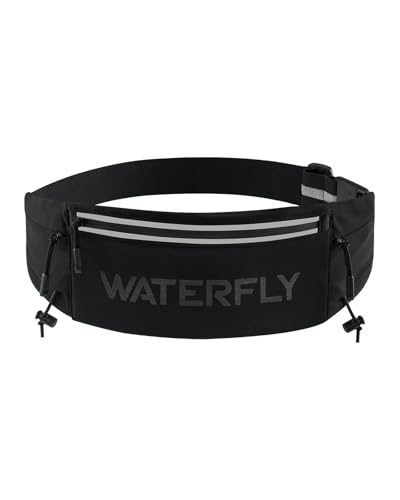
- Three-pocket organization
- Fits phones up to 7 inches
- Includes a race bib clip
Best For: Marathons, triathlons, and organized training
Low-Profile Comfort Pick
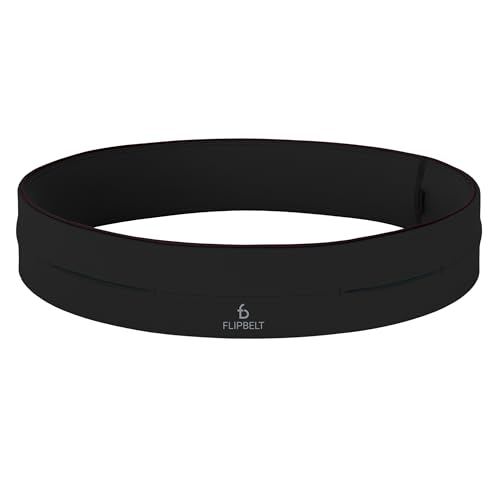
- Flat, no-buckle design
- Four pocket openings and key hook
- Moisture-wicking quick-drying fabric
Best For: Bounce-free everyday carrying
Extended-Fit Trail Pick

- Fits hips up to 70 inches
- Four pockets plus phone stabilizer
- Bungee system carries poles or a layer
Best For: Trail running and larger-bodied athletes
Best Slim Pick

- Fits smartphones with cases
- 27–46-inch adjustable strap
- Reflective and water-resistant design
Best For: Low-profile phone carrying during runs and workouts
Best Organization
WATERFLY Multi-Pocket Running Belt

- Three pockets for organized storage
- 27–48-inch adjustable fit
- Breathable fabric with headphone port
Best For: Longer runs and workouts requiring multiple essentials
Best Compartmentalized Fit
- Separate phone and valuables compartments
- Adjustable elastic straps
- Reflectors and splash protection
Best For: Runners wanting organized storage for daily outdoor activities
Best Lightweight Pick
Slim Running Belt for All Phones
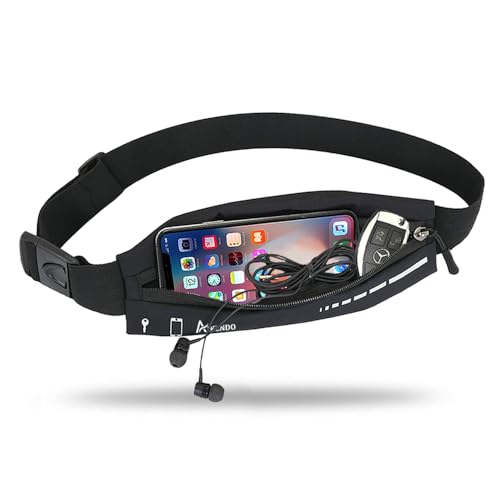
- 2-ounce, low-profile design
- Fits phones with cases
- Reflective and water resistant
Best For: Lightweight everyday runs and walks
Best Organized Value
Three-Pocket Slim Running Belt

- Three zippered pockets
- Lightweight 2-ounce construction
- Reflective outdoor design
Best For: Organized carrying during workouts
Best Capacity Pick
Form-Fitting Three-Pocket Running Belt
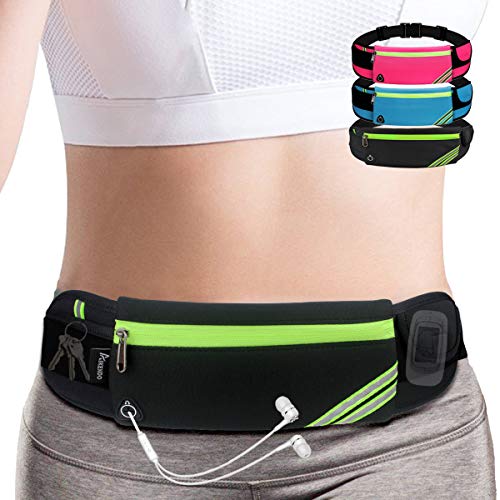
- Roomy 7.9-by-4-inch main pouch
- Three-pocket organization
- Headphone hole for wired listening
Best For: Carrying multiple essentials on runs or trips
Everyday Essentials Pick – Fitgriff Running Belt
For runners who want a compact way to carry a phone and small essentials, this Fitgriff belt is a practical option among running waist packs. Its adjustable elastic strap is designed to stay secure, while the main and small compartments help separate a phone from keys, cash, or cards.
Best For: Everyday running, jogging, hiking, cycling, and travel with light essentials.
Pros:
- Fits almost all smartphone sizes in the main compartment.
- Separate small compartment helps protect the phone from keys and cards.
- Water-repellent construction helps guard against sweat and light rain.
- Reflective strips improve visibility at dusk and at night.
Cons:
- Not fully waterproof in heavy rain or prolonged water exposure.
- Only one main listed pocket, so storage is limited to smaller loads.
- Requires hand washing.
The Fitgriff is a straightforward choice when phone protection, adjustability, and visibility matter more than high-capacity storage. Measure your waist against the size chart before ordering.
Race-Day Organization Pick – WATERFLY Bib Clip Belt
This WATERFLY model stands out among running waist packs for organized storage and race-day convenience. It combines a phone pocket sized for phones up to 7 inches with two side zippered mesh pockets, plus a clip for attaching hole-punched race bibs.
Best For: Runners and racers who need separated storage and a bib attachment point.
Pros:
- Three pockets organize a phone, keys, earphones, gels, and tissues.
- Water-resistant phone pocket fits phones up to 7 inches.
- Included clip attaches hole-punched marathon and triathlon bibs.
- Breathable, moisture-wicking mesh and reflective strips support comfortable, visible runs.
Cons:
- The stated waist range is limited to 30–39 inches.
- The phone pocket is water resistant rather than fully waterproof.
- Hand washing is recommended.
With its three-pocket layout and bib clip, the WATERFLY is especially useful for races and longer workouts where quick access and organization are priorities. Check the waist range before buying.
Low-Profile Comfort Pick – FlipBelt Classic
The FlipBelt Classic offers a streamlined alternative to bulkier running waist packs. It pulls on over the hips and lays flat without buckles, with four pocket openings and an internal key hook for carrying a phone, cards, cash, and other small essentials.
Best For: Runners who prefer a flat, bounce-free belt for small valuables.
Pros:
- Four pocket openings provide flexible storage for small essentials.
- Internal key hook adds security for keys.
- Moisture-wicking, quick-drying fabric is designed to reduce chafing.
- Reflective logo improves visibility while jogging, walking, or hiking.
Cons:
- Not water resistant.
- Snug sizing is important, and the recommended size changes depending on where the belt is worn.
- Its listed phone compatibility is centered on 5- to 6-inch screens and larger, so fit should be checked.
The FlipBelt is a strong fit for users who value a sleek, no-buckle design and easy access over weather protection. Follow the manufacturer’s sizing guidance for your preferred wearing position.
Extended-Fit Trail Pick – Osprey Duro Dyna LT Belt
The Osprey Duro Dyna LT Belt is a higher-capacity option among running waist packs, with a fit that extends up to 70-inch hips. Its four-pocket layout, phone stabilizer pocket, and removable bungee system make it suited to runners carrying fuel, poles, an extra layer, and other trail essentials.
Best For: Larger-bodied runners and trail athletes carrying more gear.
Pros:
- Extended hipbelt fits hips up to 70 inches.
- Four storage areas include a zippered pocket, drop-in pocket, rear stretch pocket, and phone stabilizer pocket.
- Removable bungee system can attach trekking poles or an extra layer.
- Soft airmesh, wide adjustable webbing, and reflective graphics support comfort and visibility.
Cons:
- Its 0.5-liter storage volume may not suit runners carrying a larger load.
- One-size design may offer less sizing flexibility than a multi-size belt.
- The supplied details do not indicate included bottles or a dedicated hydration container.
The Duro Dyna LT is the most trail-oriented choice here, particularly for runners who need an extended fit and attachment options without moving to a full vest. Its compact capacity is best matched to essentials rather than extensive equipment.
Best Slim Pick – All-Phone Running Belt
If you want a low-profile option among running waist packs, this slim belt focuses on carrying a phone comfortably without adding much bulk. Its expandable pocket fits smartphones with cases, while the adjustable strap and reflective details make it practical for everyday workouts and low-light runs.
Best For: Runners who prioritize a slim fit, broad phone compatibility, and basic sweat and weather protection.
Pros:
- Expandable pocket fits all kinds of phones, including phones with cases.
- Adjustable elastic strap fits waists from 27 to 46 inches.
- Water-resistant inner layer and zipper help protect contents from sweat and weather.
- Two reflective strips improve visibility in low-light conditions.
Cons:
- One pocket provides less organization than multi-pocket designs.
- Hand-wash care is required.
At 2.4 ounces, this is a particularly lightweight choice for carrying a phone and a few everyday essentials. Choose it when minimal bulk matters more than maximum storage.
Best Organization – WATERFLY Multi-Pocket Running Belt
For runners who carry more than a phone, this WATERFLY model stands out among running waist packs with three pockets and a spacious main compartment. The breathable Spandex fabric, stretch strap, and secure buckle are designed to keep essentials close without excessive bounce.
Best For: Runners who need room for a phone, keys, cards, cash, headphones, or an insulin pump.
Pros:
- Three pockets provide useful separation for phones and smaller essentials.
- Fits waists from 27 to 48 inches with an adjustable stretch strap.
- Breathable, sweat-wicking Spandex fabric is lightweight and washable.
- Headphone port and reflective logo add convenience and visibility.
Cons:
- Its larger capacity may feel less minimal than a single-pocket belt.
- Hand-wash care is required.
The combination of storage, a heavy-duty SBS zipper, and a slip-proof buckle makes this a versatile pick for longer runs, travel, and workouts. It is a strong choice when organization is more important than the smallest possible profile.
Best Compartmentalized Fit – Fitgriff Secure Running Belt
This Fitgriff belt is a practical choice among running waist packs for separating a phone from smaller items. Its two-compartment layout, adjustable elastic straps, and sweat and splash protection support running, cycling, hiking, fitness, and travel use.
Best For: Runners who want separate storage for a phone and valuables such as keys, cash, or cards.
Pros:
- Main compartment fits almost all smartphone sizes.
- Separate small compartment helps keep keys, cash, and cards away from the phone.
- Elastic, infinitely adjustable straps are designed to stay secure while running.
- Sweat and splash protection plus two reflector strips suit everyday outdoor use.
Cons:
- It is water repellent rather than fully waterproof.
- Only two compartments are included.
- Fit requires selecting the appropriate size using the waist chart.
Fitgriff balances organization and security in a compact two-pocket layout. Keep its water protection limitations in mind, but consider it for routine runs where sweat, light rain, and separated storage are the main concerns.
Best Lightweight Pick – Slim Running Belt for All Phones
If you want running waist packs that stay discreet and light, this AIKENDO belt is designed for low-profile carrying. Its expandable pocket accommodates smartphones with cases along with small essentials, while the soft 2-ounce construction is intended to reduce bouncing and chafing.
Best For: Runners and walkers who want a lightweight phone belt for everyday workouts and low-light outings.
Pros:
- Soft, lightweight 2-ounce material designed for comfortable, bounce-resistant wear.
- Expandable pocket fits smartphones with cases, keys, and money.
- Adjustable strap fits waists from 27 to 45 inches.
- Water-resistant material and reflective details add practical outdoor features.
Cons:
- Only one pocket is listed, so organization is limited.
- Hand-wash care may require extra maintenance.
This is a straightforward choice when minimal bulk matters most. The broad waist range and phone-friendly pocket make it versatile, while the reflective design is useful for runners who exercise in low light.
Best Organized Value – Three-Pocket Slim Running Belt
Among running waist packs, this slim model stands out for adding three zippered pockets without giving up a lightweight profile. The soft waistband is designed to stay comfortable during activity, while the expandable storage accommodates a phone, keys, and other small items.
Best For: Runners who want separate storage for a phone, cash, keys, and other small essentials.
Pros:
- Three pockets provide more organization than a single-compartment belt.
- Lightweight 2-ounce construction is suitable for running, cycling, hiking, and gym use.
- Adjustable strap fits waist sizes from 26 to 38 inches.
- Waterproof listing and reflective details support outdoor use.
Cons:
- The listed waist range is narrower than some comparable belts.
- Spot-clean-only care may limit cleaning options.
Choose this version if compartmentalization is a priority. Its three-pocket layout is useful for separating essentials, though shoppers should confirm that the 26-to-38-inch adjustment range suits their waist.
Best Capacity Pick – Form-Fitting Three-Pocket Running Belt
For shoppers comparing running waist packs with room for more than a phone, this AIKENDO model offers three pockets and a 7.9-by-4-inch main pouch. Its soft, breathable fabric is designed to fit closely without riding up, while a headphone hole supports wired listening during exercise.
Best For: Runners, travelers, and event attendees who need space for several small valuables.
Pros:
- Three pockets and a roomy main pouch hold a phone, cash, cards, keys, and other small items.
- Soft, breathable material is designed to reduce jiggling, bouncing, and chafing.
- Adjustable strap fits waists from 27 to 44 inches.
- Includes a headphone hole and water-resistant material.
Cons:
- It weighs 3.2 ounces, making it heavier than the 2-ounce options here.
- The material is water resistant rather than fully waterproof.
- Hand-wash care is required.
This is the strongest fit for carrying multiple small essentials while staying relatively slim. Its larger storage layout and headphone access broaden its usefulness beyond running, but it is not the lightest option in this group.
How We Picked These Running Waist Packs
We focused on the features that matter most during real runs: secure storage, comfortable fit, low movement, useful capacity, and easy access. The lineup includes slim belts for short workouts, models with multiple pockets for better organization, and options with race-friendly features such as bib clips. We also considered whether each design is practical for different phone sizes, clothing layers, and running conditions.
Because fit is highly personal, check the manufacturer’s sizing information carefully. A belt that is too loose may bounce, while one that is too tight can become uncomfortable over longer distances.
Quick Comparison
| Best For | Look For | Typical Advantage |
|---|---|---|
| Short runs | Slim profile and phone pocket | Lightweight, unobtrusive carry |
| Longer routes | Multiple compartments | Room for keys, cards, fuel, and phone |
| Race day | Bib clip and secure closure | Convenient number-bib placement |
| Everyday use | Adjustable fit and versatile storage | Works for walking, travel, and workouts |
Key Buying Factors for Running Waist Packs
Fit and Stability
Look for an adjustable waistband that sits securely around your natural waist or hips. A close fit helps reduce bouncing, but the belt should not restrict breathing or movement. Stretch fabrics can improve comfort, while structured designs may hold their shape better when loaded.
Capacity and Organization
Match storage to your route. A single phone pocket may be ideal for quick runs, while two or three compartments are more useful when carrying keys, identification, cards, cash, or energy gels. Avoid choosing a bulky pack if you rarely use the extra space.
Phone Compatibility and Access
Confirm the pocket dimensions before buying, especially if you use a large phone or a protective case. A secure zipper or close-fitting stretch pocket helps protect your device, and an accessible layout makes it easier to check music or route directions without stopping.
Weather Resistance and Visibility
Water-resistant fabric or a protected zipper can help with light rain and sweat, but not every running belt is fully waterproof. Reflective details are also valuable for early-morning or evening runs, particularly near roads.
Who Should Buy Which Running Waist Packs?
Choose a slim running belt if you mainly carry a phone and keys and want the least noticeable option. A multi-pocket waist pack is better for longer training sessions, travel, or runners who carry fuel and personal essentials. If you participate in organized races, prioritize a model with a bib clip or dedicated race-day features. For frequent outdoor use, emphasize a secure closure, sweat-resistant materials, reflective detailing, and an adjustable fit.
Ultimately, the best Running Waist Packs are the ones you will wear consistently. Prioritize a stable fit and suitable capacity first, then compare extras such as compartments, bib clips, reflectivity, and weather protection.