Choosing a lightweight power station for tent camping is about balancing portability, battery capacity, and the right outlets for your gear.
Below, we focus on compact options that are easy to pack, simple to use, and practical for overnight trips, weekend camps, and off-grid comfort.
Best 10 Lightweight Power Station for Tent Camping Picks for 2026
Ultralight Trail Power
Jackery Explorer 300 Portable Power Station

- 7.5 lb design is easy to carry to a tent site
- 292Wh capacity with 300W output for essentials
- LiFePO4 battery supports 4,000+ charge cycles
Best For: Light-carry campers needing dependable tent-site power
Compact High-Output Pick
Portable Power Station 600W 299Wh

- 6.8 lb body stays easy to carry to camp
- 600W output with 1200W surge for tougher loads
- 140W USB-C PD and 7 ports add flexibility
Best For: Campers who want a light unit with more power headroom
Mini Backpack Backup
Takki 88.8Wh Portable Power Station

- Only 2.29 lbs and backpack-friendly size
- 8 outputs for phones, lights, and small electronics
- 80% recharge in about 2 hours via AC
Best For: Minimalist campers wanting an ultra-small backup
Balanced Camp Carry
EnginStar Portable Power Station 300W

- 6.5 lb build is easy to carry to camp
- 296Wh and 300W suit common devices
- Pure sine wave AC and 3 charging options
Best For: Everyday tent campers wanting a balanced portable backup
Premium Lightweight Camping Power

- 23.8 lb portable design with foldable handle
- 1,070Wh capacity and 1,500W AC output
- One-hour emergency charging via Jackery app
Best For: Campers who need higher-capacity portable power without going full-size
Ultralight Budget Camp Power
Flashfish 200W Portable Power Station
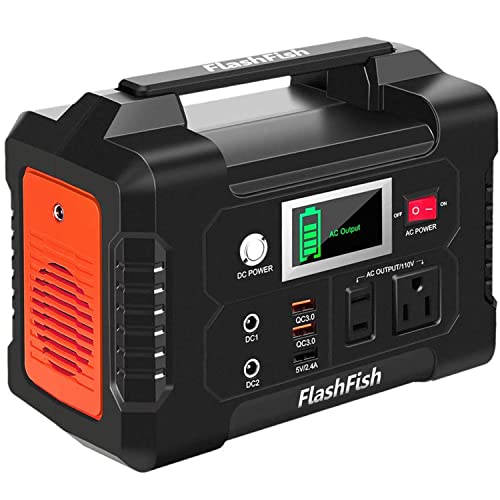
- Only 4.07 lbs with a soft handle
- 151Wh battery and 200W AC output
- AC, car, and solar recharging support
Best For: Solo campers needing the lightest possible backup for small devices
Solar-Ready Tent Camping Power

- 280Wh portable power station with 60W solar panel included
- Multiple AC, DC, USB, and USB-C outputs
- Built-in BMS safety protections
Best For: Tent campers who want an included solar panel and small-device charging
Lightest Carry
ENOFLO 97.68Wh Portable Power Station

- Only 2.2 lbs with a hidden handle
- Six outputs for AC, USB-C, USB-A, and DC
- Flashlight, light panel, and SOS mode included
Best For: Travelers who want the lightest tent-camping backup
Ultralight Trail Power – Jackery Explorer 300 Portable Power Station
If you want a lightweight power station for tent camping, the Jackery Explorer 300 is built for easy carry without giving up useful off-grid power. At 7.5 lbs with a 292Wh capacity, it fits well in a packed campsite setup and still gives you enough output for common gear like phones, cameras, laptops, and a CPAP within its limits.
Best For: Campers who want a very portable power station for light to moderate tent-camping needs.
Pros:
- Only 7.5 lbs, making it easy to pack and carry to a tent site.
- 300W rated output with 2 AC outlets, USB-C PD, USB-A, and a 120W car port.
- LiFePO4 battery chemistry is rated for over 4,000 charge cycles.
- Can reach 80% with a 100W solar panel in about 2.8 hours.
Cons:
- 300W output is best for smaller devices, not high-wattage appliances.
- Solar panel is optional and sold separately.
Overall, this is a strong pick if portability matters most and you want dependable campsite power in a compact body. It keeps the camping load light while still covering the essentials.
Compact High-Output Pick – Portable Power Station 600W 299Wh
For a lightweight power station for tent camping that still delivers more muscle, this 6.8 lb unit stands out with a 600W continuous output and 299Wh capacity. It is compact enough for camping trips, but the higher output makes it more flexible if you need to run gear that smaller stations often cannot handle.
Best For: Campers who want a compact power station with extra output headroom for more demanding devices.
Pros:
- Very light at 6.8 lbs and small enough to pack easily.
- 600W continuous output with 1200W surge gives it more headroom than typical 299Wh units.
- Includes 7 output ports, among them 2 AC outlets and a 140W USB-C PD port.
- Fast recharging options include AC, solar, car, and USB-C PD input.
Cons:
- Solar charging requires panels sold separately.
- More output capability may be more than needed for very basic camping setups.
This is a practical middle ground if you want a lightweight unit for tent camping but also want stronger output for laptops, mini fridges, or CPAP use. It balances portability and performance well for versatile trips.
Mini Backpack Backup – Takki 88.8Wh Portable Power Station
If your version of a lightweight power station for tent camping means the smallest possible carry, the Takki 88.8Wh model is the easiest to pack here at just 2.29 lbs. Its compact size and low capacity make it a simple backup for phones, lights, and other low-draw camping gear, especially when you want something that fits in a backpack.
Best For: Minimalist campers who want an ultra-small backup power source for light devices.
Pros:
- Extremely lightweight at 2.29 lbs and compact enough for a backpack.
- 8 outputs, including AC ports and multiple USB connections.
- Charges to 80% in about 2 hours with the included AC charger.
- Built-in flashlight and light panel add usefulness at camp.
Cons:
- 80W device limit keeps it to small electronics and light gear.
- Not suitable for air mattresses or higher-load appliances.
- Solar panel support is optional and panel is not included.
This is the most packable option in the group, but its small output ceiling means it is best treated as a light-duty backup. For simple tent-camping power needs, though, it is easy to carry and easy to understand.
Balanced Camp Carry – EnginStar Portable Power Station 300W
The EnginStar 300W is a strong fit if you want a lightweight power station for tent camping that stays portable but still covers useful campsite gear. At 6.5 lbs with a 296Wh battery and pure sine wave AC output, it is sized for people who want a manageable carry and dependable power for phones, laptops, cameras, drones, and CPAP units.
Best For: Campers who want a lightweight, well-rounded power station for everyday tent-camping use.
Pros:
- Weighs only 6.5 lbs, making it easy to move with camping gear.
- 296Wh capacity and 300W output cover common electronics and small appliances.
- Pure sine wave AC outlets help protect sensitive devices.
- Three charging methods include AC, solar, and car charging.
Cons:
- 300W output still limits you to smaller devices.
- Solar panel is not included.
- Best performance depends on keeping the battery charged regularly.
As a camping power station, this one lands in a very practical sweet spot: light enough to carry easily, yet capable enough for real campsite use. The multiple charging options also make it easier to keep powered on longer trips.
Premium Lightweight Camping Power – Jackery Explorer 1000 v2
If you want a lightweight power station for tent camping that can still handle serious gear, the Jackery Explorer 1000 v2 is built for that middle ground. At 23.8 lbs, it stays portable enough for campsites and road trips while offering a 1,070Wh battery, 1,500W AC output, and multiple ports for running several devices at once.
Best For: Campers who want a compact but higher-capacity power station for charging phones, laptops, lights, and select small appliances at camp.
Pros:
- Lightweight 23.8 lb build with a foldable handle for easier transport
- 1,070Wh capacity and 1,500W output for more demanding camping loads
- Fast charging options, including a one-hour emergency charge mode via the app
- LiFePO4 battery is rated for long life with 4,000 cycles
Cons:
- More expensive and heavier than smaller tent-camping power banks
- Solar charging is limited to Jackery-compatible solar panels
For campers who need more than a phone charger but still want a manageable carry, this model is a strong fit. It balances portability, output, and battery life better than many larger stations, making it a versatile pick for extended camping use.
Ultralight Budget Camp Power – Flashfish 200W Portable Power Station
For a lightweight power station for tent camping, the Flashfish 200W is the most packable option here. At just 4.07 lbs, it is easy to toss into a backpack or car and is suited to charging small electronics, lights, and other low-power camping essentials rather than high-draw appliances.
Best For: Solo campers and weekend tent trips that only need light device charging and a truly easy-to-carry power source.
Pros:
- Very light at 4.07 lbs with a soft handle
- Useful mix of outputs, including AC, DC, and USB ports
- LCD display shows charge status and output information
- Three recharge options: wall, car, or compatible solar panel
Cons:
- 151Wh capacity is best for smaller devices only
- 200W AC output limits what it can power
- Solar panel is sold separately
This is the pick if portability matters more than runtime or wattage. It keeps tent-camping power simple and affordable, but it is best reserved for phones, tablets, cameras, lights, and similar gear.
Solar-Ready Tent Camping Power – ZeroKor 300W Generator Kit
If you want a lightweight power station for tent camping with solar included, the ZeroKor 300W setup is a practical all-in-one choice. It pairs a 280Wh battery with a 60W solar panel and offers enough output for small camping electronics, with a design that focuses on portable off-grid charging rather than heavy appliances.
Best For: Tent campers who want a compact solar generator kit for keeping small devices charged off-grid.
Pros:
- Includes a 60W solar panel in the box
- 280Wh battery with multiple AC, DC, USB, and USB-C charging outputs
- Built-in BMS protection for short circuit, overload, and overheating safety
- Designed for tent camping and off-grid use
Cons:
- Not suitable for devices over 300W
- Solar panel junction box is not waterproof
- Heavier and less pocketable than ultra-small power banks
This kit makes sense for campers who want solar capability without piecing together separate gear. It is still a small-power solution, but the included panel and multiple output options make it more flexible for off-grid tent trips.
Ultra-Compact Pick – MARBERO 88Wh Portable Power Station for Camping
If you want a lightweight power station for tent camping, this MARBERO unit keeps things simple: it’s small, easy to carry, and offers enough output for basic campsite charging. At 3.2 lbs with a slim body and ergonomic handle, it’s built for travel, quick setup, and emergency use without taking over your gear bag.
Best For: Campers who want a compact backup for phones, lights, tablets, and other low-power essentials in a tent.
Pros:
- Very compact size at 6.5 x 4.6 x 3.1 inches and 3.2 lbs
- Eight output ports, including AC, USB, USB-C PD, and car DC
- Built-in LED lights with three brightness levels plus SOS mode
- Charges efficiently from AC and supports dedicated solar panels
Cons:
- 88Wh capacity is best for smaller devices and shorter trips
- AC output is limited to light-duty use
For tent camping where portability matters more than big runtime, this is an easy-carry option that covers the basics well. It’s especially practical if you want a small station that doubles as a flashlight and emergency backup.
Lightest Carry – ENOFLO 97.68Wh Portable Power Station
This lightweight power station for tent camping is a strong pick if you want the smallest, easiest-to-carry option in the group. At 2.2 lbs with a hidden handle, the ENOFLO keeps packing simple while still giving you AC, USB, and DC outputs for camp essentials like phones, lights, mini fans, and other sub-120W gear.
Best For: Campers who prioritize the lightest possible grab-and-go station for a tent or short outdoor trip.
Pros:
- Very light at 2.2 lbs and compact at 5.7 x 4.4 x 4.1 inches
- Six output ports, including AC, USB-C, USB-A, and DC
- Built-in flashlight plus a separate light panel with SOS support
- Three recharge options: AC, solar-ready input, and USB-C car charging
Cons:
- 97.68Wh capacity is geared toward smaller devices
- Solar panel is not included
If carrying weight is your top concern, this model stands out as one of the easiest to move from car to campsite. It’s a practical tent-camping companion for low-power charging and emergency lighting.
Higher-Capacity Pick – DYNESS 300W 256Wh LiFePO4 Power Station
If your lightweight power station for tent camping needs a bit more staying power, the DYNESS 300W steps up with a 256Wh LiFePO4 battery and 300W continuous output. It’s still compact enough to carry, but it adds room for more demanding camp essentials like a laptop, router, camera, or even a mini fridge within its rated limits.
Best For: Campers who want more runtime and output while still keeping the setup portable.
Pros:
- 256Wh LiFePO4 battery for longer cycle life and stable storage
- 300W continuous output, suitable for more capable campsite devices
- Six output ports, including AC, USB-C, USB-A, DC, and car outlet
- Flexible recharging via AC, solar panel, car charger, or dual input
Cons:
- Heavier and larger than the smaller ultra-portable options
- Solar panel is optional, not included
This is the most capable choice here for campers who still want a portable design but need extra headroom for electronics and off-grid use. It makes sense when you want a tent-camping battery that can handle more than just phone charging.
How We Picked the Best Lightweight Power Station for Tent Camping
For a Lightweight Power Station for Tent Camping, we prioritized low carry weight, useful battery capacity, safe indoor-friendly output, and a mix of AC, USB-A, and USB-C ports. We also favored units with clear wattage ratings, pure sine wave AC where possible, and battery chemistries that support longer service life.
Because tent campers often need only modest power, we gave extra credit to models that can handle phones, lanterns, cameras, fans, and small appliances without becoming bulky or overkill.
Quick Comparison
Smaller units around 90Wh to 300Wh are best for minimalists, solo campers, and short trips. Midrange models near 280Wh to 300Wh offer a better balance for weekend use. Larger options around 1000Wh are more versatile, but they are better suited to car camping or basecamp setups than ultralight tent trips.
Key Buying Factors for a Lightweight Power Station for Tent Camping
Weight and Packability
If you’ll carry it from the car to the tent or along a trail, weight matters more than raw capacity. Look for compact handles, a sturdy shell, and a size that fits easily in a tote or gear bin.
Battery Capacity and Runtime
Match capacity to your real needs. A small power station is usually enough for charging phones, headlamps, and tablets, while larger batteries help if you want to run a CPAP, laptop, fan, or multiple devices over several days.
Output and Port Selection
Check total wattage and surge rating before assuming a device will run. For tent camping, USB-C fast charging and at least one AC outlet are often more useful than lots of niche ports.
Noise, Safety, and Charging
Silent operation is ideal in a tent setting. LiFePO4 models often provide strong long-term value, and solar charging can be helpful if you stay off-grid for more than one night.
Who Should Buy Which Lightweight Power Station for Tent Camping?
Ultralight campers and solo hikers should look at the smallest, easiest-to-carry options. Weekend campers who charge several devices should aim for a midrange unit around 250Wh to 300Wh. Car campers and families who want more flexibility should consider the larger 1000Wh-class models, even if they are not the lightest choice.
If your goal is simply to keep essentials powered in camp, prioritize portability first and treat extra watt-hours as a bonus rather than the main selling point.