If you need dependable off-grid charging without adding much weight, a foldable solar panel for backpacking can keep phones, GPS devices, and small battery banks topped up on the move.
Below, we’ve focused on compact, trail-friendly options that balance power output, portability, durability, and charging versatility.
Best 10 Foldable Solar Panel for Backpacking Picks for 2026
Ultra-Portable 28W Pick
BigBlue 28W Folding Solar Panel with Dual USB-C

- 28W output with 25.4% efficiency
- Folds to 11 x 6 x 1.4 inches
- Dual USB-C plus USB-A charging
Best For: Backpackers needing a compact panel for phones and small devices
High-Power Lightweight Pick
BigBlue 35W PD Fast-Charging Solar Panel

- 35W panel with QC 18W and PD 25W
- Compact 1.54 lb foldable design
- Dual parallel circuit helps in shade
Best For: Backpackers wanting faster charging in a small, trail-friendly panel
Durable Trail Panel
ELECOM NESTOUT 28W Foldable Solar Charger

- SunPower MAXEON cells for higher efficiency
- Dual USB-A ports with current checker
- Ripstop nylon body with adjustable stands
Best For: Rugged-minded hikers who want a durable USB-A solar charger
Trail-Ready Power
SOLUPUP 30W Foldable Solar Charger

- 23%+ monocrystalline efficiency
- USB-A and USB-C dual outputs
- 2.4 lb with carabiners and stand
Best For: Backpackers wanting compact everyday charging for phones and power banks
Backpack Hauler
FlexSolar 36W Ultra-Portable Solar Panel
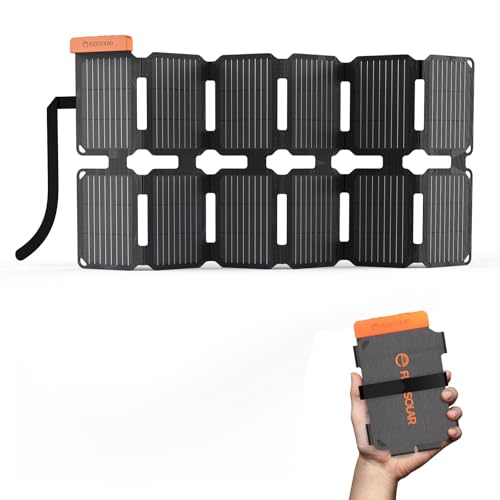
- 1.7 lb and folds to 7.7 × 5.1 inches
- USB-A, USB-C, and DC outputs
- 24% efficiency with IP67 weatherproofing
Best For: Hikers who want a lightweight, durable panel with extra output options
Ultra-Light Pick
BigBlue 25W Pocket-Size Solar Panel

- Only 0.84 lb and pocket-size folded
- USB-A and USB-C charging ports
- Up to 25.4% efficiency with IP68 protection
Best For: Ultralight backpackers focused on minimum weight and compact storage
Ultra-Light 40W Charger
FlexSolar 40W Foldable Solar Panel Charger

- 40W panel with USB-C, USB-A, and DC outputs
- Lightweight 1.76 lb design for backpacking
- 24% conversion rate with IP67 weather protection
Best For: Backpackers needing flexible charging in a compact panel
High-Output Camp Panel
LUMOPAL 60W Foldable Solar Panels
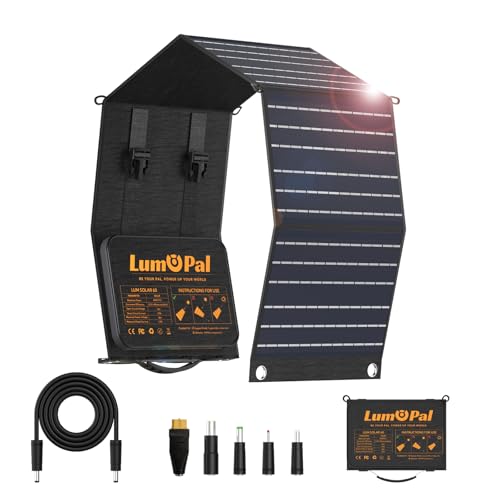
- 60W output with USB-C PD, USB-A QC3.0, and DC ports
- 23.5% efficient monocrystalline silicon build
- IP65 waterproof and compression resistant design
Best For: Backpackers needing the most charging capacity for larger devices
Ultra-Portable 28W Pick – BigBlue 28W Folding Solar Panel with Dual USB-C
If you want a foldable solar panel for backpacking that stays light without giving up useful output, the BigBlue 28W is a strong practical pick. It folds down small, weighs 1.5 lbs, and is built for direct charging of phones, power banks, GPS units, and other small gear in sunlight.
Best For: Backpackers who want a compact, lightweight charger for phones and small electronics.
Pros:
- 28W panel with 25.4% conversion efficiency for strong sun-powered charging.
- Dual USB-C plus one USB-A port for charging multiple devices.
- Very portable at 11 x 6 x 1.4 inches folded and 1.5 lbs.
- IP44 water resistance and durable polymer surface for outdoor use.
Cons:
- Does not store power, so it must be used in direct sunlight.
- USB junction box is not waterproof.
- Not suitable for laptops or large power stations.
Overall, this is a lightweight, easy-to-pack option for basic trail charging. It makes the most sense if you need simple solar power for small devices rather than a higher-capacity off-grid setup.
Weather-Ready 30W Choice – Anker SOLIX PS30 Foldable Solar Panel
The Anker SOLIX PS30 is a foldable solar panel for backpacking and hiking if you want a straightforward, weather-resistant charger from a trusted brand. Its 30W rating, dual-device charging, and compact foldable design make it a practical trail companion for everyday electronics.
Best For: Hikers and campers who want a simple, weather-resistant 30W panel for everyday devices.
Pros:
- 30W rated power for charging smartphones, tablets, cameras, and more.
- USB-A and USB-C ports support two-device charging.
- IP65 weather-resistant protection for outdoor use.
- Foldable and lightweight for easier transport and storage.
Cons:
- Heavier than some ultralight options at 2.2 lbs.
- No built-in battery storage.
- Best suited to small electronics rather than larger power needs.
In practice, the PS30 is a solid middle-ground choice: portable, weather-tolerant, and easy to use. It fits well if you want reliable solar charging without extra complexity.
High-Power Lightweight Pick – BigBlue 35W PD Fast-Charging Solar Panel
If you need a foldable solar panel for backpacking with more charging flexibility, the BigBlue 35W stands out for its higher output and fast-charging ports. It is compact, lightweight, and designed to keep charging more stable in real outdoor conditions, including partial shade.
Best For: Backpackers who want a lightweight 35W panel with faster charging options.
Pros:
- 35W maximum power with 25.4% conversion efficiency.
- USB-A QC 18W and USB-C PD 25W for faster charging.
- Dual parallel circuit design helps maintain output when one section is shaded.
- Very compact at 8.29 x 4.84 x 1.89 inches folded and 1.54 lbs.
Cons:
- Type-C1 is not compatible with Apple devices.
- Does not store electricity.
- USB junction box is not waterproof.
This is a smart option if charging speed and packability both matter. For hikers carrying multiple small devices, the combination of fast ports and shade-tolerant design is especially useful.
Durable Trail Panel – ELECOM NESTOUT 28W Foldable Solar Charger
The ELECOM NESTOUT is a foldable solar panel for backpacking that leans into durability and simple functionality. With dual USB-A ports, adjustable stands, and water-resistant ripstop nylon, it is aimed at users who want a rugged panel that is easy to position outdoors.
Best For: Backpackers who value rugged materials, adjustable positioning, and simple USB-A charging.
Pros:
- Up to 24% higher efficiency with SunPower MAXEON cells.
- Dual USB-A ports work with phones, tablets, and earbuds.
- Built-in adjustable stands help you aim for better sun exposure.
- Water-resistant ripstop nylon adds durability for outdoor use.
Cons:
- Only 14W maximum power is listed in the details.
- USB-A only, with no USB-C port.
- Heavier and bulkier than the lightest backpacking options.
For hikers who prioritize rugged construction and easy setup over raw wattage, this is a well-rounded choice. The current checker and hanging loops also make it convenient at camp.
Trail-Ready Power – SOLUPUP 30W Foldable Solar Charger
If you want a foldable solar panel for backpacking that balances portability and charging flexibility, the SOLUPUP 30W is built for exactly that kind of use. Its 23%+ conversion efficiency, dual USB outputs, and backpack-friendly folding design make it a practical pick for topping up phones and small power banks on the trail.
Best For: Backpackers who want a compact 30W panel for phones, power banks, and casual campsite charging.
Pros:
- 23%+ monocrystalline efficiency for stronger solar capture than many same-wattage panels
- USB-A and USB-C outputs can charge two small devices at once
- Weighs 2.4 lb and folds to 10.63 inches for backpack storage
- IPX5 waterproof and dustproof for outdoor use in changing weather
Cons:
- Max shared output is 15W, so it is aimed at smaller devices rather than larger electronics
- Actual output depends heavily on sunlight, angle, season, and cloud cover
- Heavier than the lightest options in this roundup
This is a straightforward all-around backpacking panel if you want a bit more wattage without giving up packability. The included carabiners and adjustable stand also make it easy to clip on and set up at camp.
Backpack Hauler – FlexSolar 36W Ultra-Portable Solar Panel
The FlexSolar 36W is a strong foldable solar panel for backpacking if you want a lightweight option with extra output headroom. It folds down very small, includes carabiners for easy attachment, and adds USB-A, USB-C, and DC outputs for charging a wider range of small gear.
Best For: Backpackers and hikers who want a compact 36W panel with flexible outputs and strong weather protection.
Pros:
- Folds to 7.7 × 5.1 inches and weighs just 1.7 lb
- USB-A, USB-C, and DC outputs support phones and other small DC devices
- 24% efficiency with MPPT technology for improved energy harvest, even in partial shade
- IP67-rated protection handles dust and water exposure
Cons:
- Designed for small devices, not high-demand electronics
- Performance still depends on sunlight conditions and placement
- More output options may be unnecessary if you only need a simple phone charger
For backpackers who want more versatility than a basic phone panel, this one stands out on both portability and durability. Its compact fold, included carrying hardware, and strong protection make it a solid trail companion.
Ultra-Light Pick – BigBlue 25W Pocket-Size Solar Panel
If your priority is keeping pack weight low, the BigBlue 25W is the most travel-friendly foldable solar panel for backpacking in this group. At just 0.84 lb and pocket-size when folded, it is easy to clip to a backpack or stash in a small pack while still offering dual USB outputs for basic charging.
Best For: Ultralight backpackers who want the smallest, lightest panel for phones and small accessories.
Pros:
- Extremely light at 0.84 lb and folds down to pocket-size dimensions
- USB-A and USB-C ports can charge two devices simultaneously
- Up to 25.4% conversion efficiency with N-type solar cells
- IP68 waterproof and dust resistant for wet or dusty conditions
Cons:
- 25W output is better suited to small electronics than larger gear
- Lower amperage than the 30W and 36W alternatives here
- Best results still require direct sunlight and no obstructions
This is the best option if shaving ounces matters more than maximizing wattage. It offers a strong mix of size, protection, and charging convenience for minimalist trips.
Ultra-Light 40W Charger – FlexSolar 40W Foldable Solar Panel Charger
If you want a foldable solar panel for backpacking that balances portability with meaningful output, this FlexSolar 40W model is built for that job. It packs USB-C, USB-A, and DC outputs into a lightweight frame, so you can top up phones, power banks, tablets, or even a small station when you have solid sunlight.
Best For: Backpackers who want a lighter panel with flexible charging ports for phones, power banks, tablets, and small stations.
Pros:
- 40W output with QC3.0 USB-A, PD USB-C, and 19V DC ports
- Very portable at 1.76 lb with a compact folded size
- 24% conversion rate helps maximize available sunlight
- IP67-rated dustproof/waterproof build with ETFE laminate
Cons:
- No built-in battery, so it only works when exposed to sunlight
- Performance drops significantly with shade or partial coverage
- Junction box is not fully waterproof and should be kept dry in heavy rain
This is a strong pick if you want a backpack-friendly solar charger with real versatility and weather resistance. It is especially appealing when you need more than basic phone charging but still want a compact panel.
Compact Trail Charger – FlexSolar 25W Portable Solar Panel Charger
For minimalist trips, this foldable solar panel for backpacking keeps things simple and compact. The FlexSolar 25W is designed to attach easily to a pack or tent, and its USB-A plus USB-C outputs make it a practical way to keep two small devices topped up on the trail.
Best For: Ultralight hikers and backpackers who want a compact, easy-to-carry charger for phones and small electronics.
Pros:
- Very compact folded size and only 1.2 lb
- USB-A and USB-C outputs can charge two devices at once
- MPPT technology is designed to improve energy harvest in partial shade
- IP67-rated protection for dust, spills, and heavy downpours
Cons:
- 25W output is best suited to small-device charging
- Plastic construction may feel less rugged than heavier-duty panels
- Lower power capacity than 40W or 60W options in this roundup
If portability matters more than raw output, this is one of the easiest panels to take backpacking. It is a smart choice for lighter charging needs and quick pack mounting.
High-Output Camp Panel – LUMOPAL 60W Foldable Solar Panels
If you need a foldable solar panel for backpacking that leans toward higher output, the LUMOPAL 60W stands out with stronger charging options and broad compatibility. It supports USB-C PD up to 60W, USB-A QC3.0, and DC output, making it useful for phones, tablets, laptops, and portable power stations when the rest of your kit can handle the size and weight.
Best For: Backpackers and campers who want the highest charging capacity here for bigger devices and power stations.
Pros:
- 60W maximum output with USB-C PD, USB-A QC3.0, and DC ports
- 23.5% conversion rate from monocrystalline silicon
- Folded design is compression resistant up to 176 lb
- IP65 waterproofing with ETFT-laminated, corrosion-resistant materials
Cons:
- Heavier at 3.42 lb than the 25W option
- Junction ports are not waterproof
- Bulkier folded size may be less ideal for very minimalist packs
This is the most capable option in the group for users who want more charging headroom. It makes the most sense when you need to support larger electronics or want extra power for off-grid trips.
How We Picked the Best Foldable Solar Panel for Backpacking
For this roundup, we prioritized packability, weight, real-world charging flexibility, and outdoor durability. A good Foldable Solar Panel for Backpacking should be easy to stow, simple to set up at camp, and capable of charging the devices backpackers actually use most.
We also looked at port selection, weather resistance, and whether the panel includes modern USB-C support or fast-charging outputs. Higher wattage can help, but only if the panel still makes sense to carry on a long route.
Quick Comparison
Lower-watt models are typically best for ultralight trips, emergency top-ups, or solo hikers with a phone and power bank. Mid-range panels often strike the best balance for most backpackers, offering better charging speed without a huge penalty in size or weight. Higher-watt options are more suitable when you need to charge larger batteries, multiple devices, or want more flexibility in cloudy conditions.
Key Buying Factors for a Foldable Solar Panel for Backpacking
Weight and Packed Size
Backpackers should treat weight as a first-order spec. A lighter panel is easier to carry, but make sure it still unfolds into a usable surface area once you reach camp.
Output and Charging Speed
Wattage matters, but it is not the whole story. Look for efficient panels with USB-C or fast-charging support if you want quicker top-offs for phones and power banks.
Portability and Setup
Panels that fold neatly, include attachment points, and deploy quickly are easier to use on the trail. If you plan to move camp often, simplicity matters as much as raw output.
Durability and Weather Resistance
Trail gear gets exposed to dust, moisture, and rough handling. Water-resistant construction and robust stitching or fabric can make a big difference in long-term reliability.
Device Compatibility
Check that the ports match your charging needs. USB-A is still common, but USB-C is increasingly important for modern phones, battery banks, and small electronics.
Who Should Buy Which Foldable Solar Panel for Backpacking?
Ultralight backpackers should lean toward the smallest and lightest panels, especially if their main goal is emergency charging. Weekend hikers and general campers will usually be happiest with a mid-sized model that offers a strong mix of portability and output. If you carry larger power banks, travel with multiple devices, or want more charging headroom, a higher-watt panel is the better fit.
For most buyers, the best choice is the panel that matches your route length, power demands, and acceptable carry weight. That balance matters more than chasing the highest wattage on paper.