Incline treadmills can make home walking workouts more challenging without requiring a faster pace. For beginners, the best models balance simple controls, stable handrails, manageable speed ranges, and convenient folding designs.
We selected 10 options with different incline levels, deck sizes, portability features, and support systems so you can find a treadmill that fits your space, fitness goals, and comfort level.
Best 10 Incline Treadmills for Beginners Picks for 2026
High-Incline Power Pick

- 0–16% auto incline with one-button control
- 350-pound capacity and 3.0 HP brushless motor
- Tool-free folding design with cushioning
Best For: Beginners wanting steep incline workouts and compact storage
Connected Training Choice

- 15% incline with quick adjustment buttons
- Wide 20" × 53" running surface
- 24 programs and SunnyFit app connectivity
Best For: Beginners seeking guided workouts and a roomy deck
Posture-Friendly Walking Pick
Acezoe 12% Incline Walking Pad
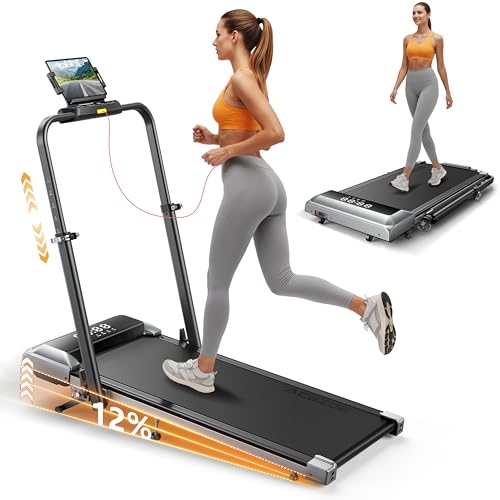
- Five-position adjustable handlebar
- Manual 1%, 6%, and 12% incline levels
- Cushioned belt with app connectivity
Best For: Walkers needing adjustable support and compact incline training
Versatile Folding Option
ACEZOE 15% Auto-Incline Treadmill

- 15% auto incline with nine levels
- 0.6–7.5 MPH speed range
- Foldable design with app and remote control
Best For: Small-space users wanting automatic incline and versatile speeds
Compact Starter Pick

- Manual incline support for simple intensity changes
- 12 programs plus countdown workout modes
- Folds compactly for small-space storage
Best For: Beginners focused on walking and light jogging
Steep Hill Training Pick

- Five manual incline levels up to 40%
- Extended handrails support taller users
- 350-pound capacity and reinforced base
Best For: Beginners progressing toward challenging incline walking
Automatic Incline Pick
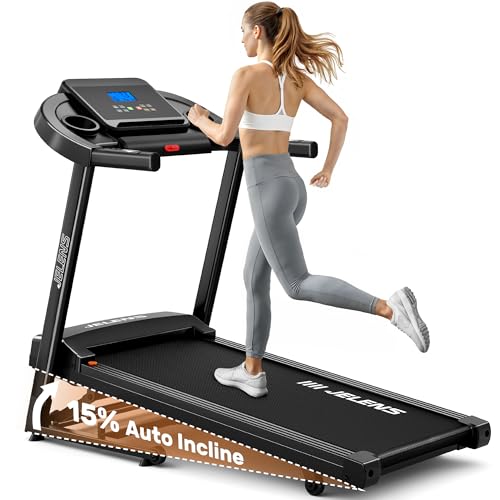
- Button-controlled incline adjusts through 15%
- 3HP motor reaches 7.5 mph
- Bluetooth app, pulse sensors, and LCD tracking
Best For: Beginners wanting convenient incline control and workout tracking
Best with Extra Features
WELLFIT Folding Treadmill with 10% Incline

- Manual incline up to 10%
- Handlebar controls and cushioned belt
- Folds for convenient small-space storage
Best For: Beginners and daily walkers needing a compact treadmill
Best Heavy-Duty Pick
WELLFIT Walking Pad with 12% Auto Incline

- Automatic incline from 0% to 12%
- 7.6 MPH maximum speed for progression
- Stable handlebar and shock-absorbing belt
Best For: Beginners wanting adjustable hill training without manual changes
Best Simple Pick
LONTEK 40% Incline Walking Pad

- Five manual incline levels up to 40%
- Extended handrails and reinforced support feet
- Cushioned belt with triple shock absorption
Best For: Controlled hill walking and hiking preparation
High-Incline Power Pick – 16% Auto-Incline Treadmill
For beginners comparing incline treadmills for beginners, this model offers straightforward one-button incline control, a compact folding design, and a speed range suited to walking through light running. Its 16% maximum incline can add substantial challenge as your fitness improves.
Best For: Home users who want a high incline, strong weight capacity, and easy storage in a compact space.
Pros:
- Offers 0–16% auto incline with 12 adjustable levels.
- Supports up to 350 pounds and uses a 3.0 HP brushless motor.
- Folds without tools and includes transport wheels for storage.
- Six-layer cushioning and a 38″ × 15″ belt help soften impact.
Cons:
- The 7.5 MPH top speed is less suited to fast running.
- The 38-inch belt length may feel limiting for users with long strides.
This is a practical option if incline progression and weight capacity matter more than maximum running speed. Its quiet motor and small footprint also make it appealing for apartments or home offices.
Connected Training Choice – Sunny Auto-Incline Treadmill
Among incline treadmills for beginners, this Sunny Health & Fitness model stands out for its fully assembled setup, wide running surface, and guided-workout features. The 15% incline and preset programs make it easy to begin gently and increase intensity over time.
Best For: Beginners who want a roomy deck, structured programs, and app-based workout options.
Pros:
- Arrives fully assembled and folds with a one-click design.
- Provides a spacious 20″ × 53″ running surface.
- Includes 15% auto incline, quick controls, and 24 workout programs.
- Supports SunnyFit app access, pulse sensors, USB charging, and device storage.
Cons:
- Its 300-pound capacity is lower than some heavier-duty options.
- The treadmill is less compact than walking-pad-style models.
This is a strong beginner-friendly choice for users who value guidance and comfort. The wide belt, shock absorption, and app ecosystem provide useful support while you build consistency.
Posture-Friendly Walking Pick – Acezoe 12% Incline Walking Pad
This Acezoe model is a useful choice for beginners seeking incline treadmills for beginners with a more adjustable walking setup. Its handlebar offers five height positions, while the manual incline levels let you start modestly before progressing to steeper uphill walking.
Best For: Walkers who prioritize adjustable handlebar height, compact use, and low-impact incline training.
Pros:
- Handlebar adjusts across five heights from 38.5 to 48.5 inches.
- Provides three manual incline levels: 1%, 6%, and 12%.
- Seven-layer cushioning and multiple absorbers help reduce impact.
- Supports up to 300 pounds and connects with fitness apps through Bluetooth.
Cons:
- Incline adjustment is manual rather than automatic.
- The listed speed information is inconsistent, while the supplied feature notes specify 0.6–6.2 MPH.
- It is better suited to walking and light jogging than faster running.
The adjustable handlebar is the main advantage for users who need a more comfortable upright posture. Choose it if walking-focused workouts and simple incline progression are more important than automated adjustments.
Versatile Folding Option – ACEZOE 15% Auto-Incline Treadmill
For shoppers exploring incline treadmills for beginners, this ACEZOE treadmill combines a 15% automatic incline with walking-pad-style storage. Its 0.6–7.5 MPH range covers walking, jogging, and light running, giving beginners room to progress without choosing a full-size gym machine.
Best For: Small-space users who want automatic incline, multiple workout modes, and easy relocation.
Pros:
- Offers 15% auto incline across nine adjustable levels.
- Supports speeds from 0.6 to 7.5 MPH for walking, jogging, and running.
- Includes an LED display, remote control, and ACEZOE app features.
- Folds nearly flat and includes transport wheels for storage.
Cons:
- The 300-pound capacity is lower than the highest-capacity model in this group.
- The 40.16″ × 15.75″ belt is narrower and shorter than the Sunny model’s deck.
- It may not suit users seeking high-speed running workouts.
This model balances beginner-friendly controls with useful progression potential. Its auto incline and foldable frame make it especially practical when space is limited but you still want more than flat walking.
Compact Starter Pick – Folding Incline Walking Pad
For beginners comparing incline treadmills for beginners, this compact walking pad offers a straightforward way to add walking, light jogging, and manual incline work to a home routine. Its 0.6–6.2 mph speed range, preset programs, safety handrails, and foldable design suit smaller spaces.
Best For: Beginners who want an affordable, compact treadmill for walking and light jogging in apartments, bedrooms, or home offices.
Pros:
- Manual incline support feet add intensity without complicated controls.
- 12 preset programs and three countdown modes support varied workouts.
- Folds to 40.5 x 18 x 4.7 inches and includes transport wheels.
- Safety handrails, a five-layer belt, and cushioning support beginner comfort.
Cons:
- The manual incline requires physical adjustment rather than button control.
- The 35 x 14.4-inch belt is more suitable for walking and light jogging than long-stride running.
- The 480W motor and 220-pound weight capacity are modest compared with heavier-duty models.
This is a practical entry-level choice when storage space and simple controls matter most. Choose it for walking-focused workouts, but consider a wider belt or stronger motor for frequent running.
Steep Hill Training Pick – 40% Incline Treadmill
Among incline treadmills for beginners, this model stands out for its unusually steep 40% maximum incline and extended handrails. Five manual incline settings, a quiet 3HP brushless motor, and a 350-pound capacity give beginners room to progress from walking to hill-style training.
Best For: Beginners who want challenging incline walking, extra hand support, and a stable frame for progressive home workouts.
Pros:
- Five manual settings range from 0% to 40% for substantial hill simulation.
- 51-inch handrails provide added support and may suit taller users.
- Reinforced construction supports up to 350 pounds, with anti-shake pads for stability.
- Seven-layer cushioning, transport wheels, and a foldable frame add practicality.
Cons:
- Incline adjustment is manual, so changing levels requires stopping to reposition the feet.
- The 38.6 x 15.4-inch belt may feel limited for users wanting a broad running surface.
- A 40% incline and 15-inch deck height can be more demanding than many beginners need initially.
This treadmill is best approached gradually: start flat or at a lower setting, then build toward steeper sessions. Its strong support features make it appealing for hill training, but the extreme incline range may be unnecessary for basic walking.
Automatic Incline Pick – JELENS 15% Folding Treadmill
This JELENS model is a strong option for beginners seeking incline treadmills for beginners with easier workout adjustments. Its 0–15% automatic incline, 0.6–7.5 mph speed range, pulse sensors, Bluetooth app connection, and foldable frame combine convenience with room for progression.
Best For: Beginners who want button-controlled incline changes, guided app features, and a higher weight capacity for walking or running at home.
Pros:
- Automatic 15-level incline adjustment makes changing intensity convenient.
- The 3HP motor supports speeds up to 7.5 mph and users up to 330 pounds.
- Six-layer cushioning and a 15.75 x 43.31-inch belt provide support for walking and running.
- Bluetooth app connectivity, pulse sensors, and a multifunction LCD display add workout feedback.
Cons:
- The 79.8-pound machine is heavier than a basic walking pad and may be less convenient to relocate.
- The listed running area may still feel compact for users with a long stride or faster running pace.
- App and Bluetooth features may require additional setup before use.
For beginners who prefer automated adjustments, this offers a more guided experience than manual-incline alternatives. Its broader feature set and 330-pound capacity make it versatile, while its foldable design helps manage home storage.
Best with Extra Features – WELLFIT Folding Treadmill with 10% Incline
For shoppers comparing incline treadmills for beginners, this WELLFIT model offers a compact, straightforward starting point. Its manual incline reaches 10%, while the handlebar controls, cushioned belt, and low starting speed support comfortable walking and light jogging at home.
Best For: Beginners, seniors, and small-space users who want supported walking or light jogging with convenient controls.
Pros:
- Manual incline adjusts up to 10% for added walking challenge.
- Handlebar buttons reduce the need to bend over during workouts.
- Five-layer cushioned belt and 36-by-16-inch deck are designed to reduce impact.
- Folding frame, transport wheels, and app connectivity suit compact home setups.
Cons:
- The 6.2 MPH maximum speed is better suited to walking and light jogging than fast running.
- Its 36-inch deck is shorter than the belt on the other models in this roundup.
- The incline is manual rather than automatic.
This is a practical entry-level option when ease of use, cushioning, and storage matter more than advanced hill programming or higher running speeds.
Best Heavy-Duty Pick – WELLFIT Walking Pad with 12% Auto Incline
This WELLFIT stands out among incline treadmills for beginners because its 0%–12% incline adjusts automatically instead of requiring manual deck changes. The stable handlebar, 0.6–7.6 MPH speed range, wide belt, and multiple control methods make it suitable for gradually increasing workout difficulty.
Best For: Beginners who want automatic hill adjustments, extra balance support, and room to progress from walking to jogging.
Pros:
- Automatic incline adjusts from 0% to 12% during a workout.
- Stable handlebar provides added support for beginners and older users.
- 40-by-16-inch belt, shock absorbers, and seven-layer construction support comfortable use.
- Quiet brushless motor, folding design, and transport wheels work well in shared or compact spaces.
Cons:
- The 40-inch deck may feel limited for users seeking a longer running surface.
- It is a home-focused treadmill despite the listed home and commercial product grade.
With automatic incline and the highest speed range of the first two WELLFIT models, this is a balanced choice for beginners who want simple controls today and more challenging incline sessions later.
Best Simple Pick – LONTEK 40% Incline Walking Pad
The LONTEK offers unusually steep incline capability for shoppers considering incline treadmills for beginners, with five manual settings from 0% to 40%. Its reinforced support feet, extended handrails, cushioning system, and slower 0.6–6.2 MPH range make it more appropriate for controlled hill walking than speed-focused running.
Best For: Users who want challenging incline walking, hiking preparation, and substantial handrail support in a foldable home treadmill.
Pros:
- Five manual incline levels reach 40% for demanding hill-style workouts.
- Extended 51-inch handrails and reinforced support feet add stability on steep settings.
- Seven-layer belt, silicone absorbers, and side strips help reduce impact and vibration.
- Brushless motor operates under 45 dB, and the frame folds for storage.
Cons:
- Incline changes are manual and require selecting among five fixed levels.
- The 6.2 MPH maximum speed limits its usefulness for faster running.
- Its steepest setting and approximately 15-inch deck height may be more challenging than a typical beginner needs.
This is the specialist option in the group: a strong fit for incline-focused training, but beginners should start at lower settings before attempting the 30% or 40% levels.
How We Picked the Best Incline Treadmills for Beginners
We focused on the features that matter most when starting an incline-walking routine: straightforward controls, usable speed and incline ranges, stable handlebars, comfortable access to the walking belt, and practical storage. We also considered weight capacity, motor output, footprint, folding mechanisms, display visibility, pulse sensors, and whether the treadmill is better suited to walking, brisk walking, or light jogging.
Because these products vary considerably in size and design, a higher incline percentage does not automatically make one model better. Beginners often benefit more from predictable adjustment, a secure handrail, and a belt that provides enough room to walk naturally.
Quick Comparison
| Feature | What to look for | Why it matters |
|---|---|---|
| Incline range | About 10% to 15% for most beginners | Provides room to progress without making the workout overwhelming |
| Speed range | Walking speeds up to at least 6 mph | Supports easy walks, brisk walks, and some light jogging |
| Handlebar | Long, stable, and height-appropriate | Improves confidence and balance during incline use |
| Folding design | Compact fold and manageable transport | Useful when the treadmill must be stored after workouts |
| Weight capacity | Comfortably above the user’s body weight | Can improve stability and long-term durability |
Key Buying Factors for Incline Treadmills for Beginners
Choose a Manageable Incline
Most new users should begin with a flat or low incline and increase gradually. A treadmill offering roughly 10% to 15% incline gives you useful progression without requiring the extreme settings found on specialized hill-training models. Very steep 40% incline machines may suit experienced users, but they can be excessive for a first treadmill.
Check the Walking Surface and Stability
A compact walking pad saves space, but its shorter or narrower belt may feel restrictive for taller users or anyone taking long strides. Confirm the deck dimensions and place the treadmill on a level, non-slip surface. A sturdy frame and extended handlebar are especially valuable when the incline is raised.
Match the Motor and Speed to Your Routine
For regular walking, a motor rated around 2.5 to 3.0 HP is commonly positioned as a practical choice in this category, although ratings are not standardized across brands. If you plan to jog, prioritize a longer belt, higher top speed, and a frame designed for sustained use rather than choosing by motor number alone.
Consider Controls, Noise, and Storage
Look for clearly labeled speed and incline controls, a readable LED display, and a noise level appropriate for your home. Measure both the operating footprint and folded dimensions. Also check whether the treadmill arrives assembled and whether its weight makes moving it realistic.
Who Should Buy Which Incline Treadmills for Beginners?
Best for Small Rooms
Choose a folding walking pad with a compact profile and moderate incline range if storage is your priority. These models work well for walking while preserving floor space, but verify belt dimensions before buying.
Best for Confidence and Support
A treadmill with a full handlebar, pulse sensors, and simple auto-incline controls is a sensible option for beginners who want extra stability and easy workout feedback.
Best for Progression
If you expect to build toward tougher hill workouts, consider a model with a 15% incline or higher. Start conservatively, hold a consistent pace, and increase incline in small increments.
Best for Heavier Users
Prioritize a clearly stated weight capacity, a rigid frame, and a generously sized belt. Leave a safety margin above your body weight instead of choosing a treadmill at its maximum rating.
Whichever model you choose, begin with short sessions, keep the safety key attached, and avoid using the highest incline until you are comfortable with the treadmill’s controls and balance.