If you’re building a reliable indoor setup for tri training, the right trainer can make a big difference in consistency, power work, and race preparation.
This roundup of the best bike trainers for triathlons in 2026 focuses on stability, resistance feel, noise level, and compatibility so you can choose with confidence.
Best 10 Bike Trainers for Triathlons Picks for 2026
Premium Smart Trainer
Wahoo KICKR V6 Smart Indoor Trainer
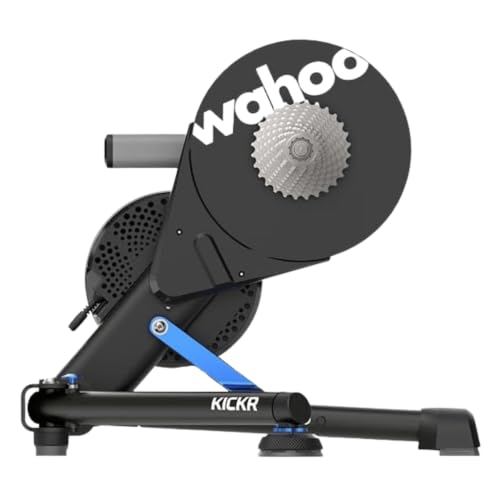
- WiFi connection for stable ride data transfer
- Over 2,200W resistance with +/- 1% accuracy
- AXIS feet and flywheel improve ride feel
Best For: Triathletes who want premium smart-trainer realism and precision
Portable Fluid Trainer
Alpcour Fluid Bike Trainer Stand

- Progressive fluid resistance increases with speed
- Near-silent design suits home indoor training
- Foldable frame and carry bag aid storage
Best For: Triathletes who want a simple, quiet, portable trainer
High-Power Smart Trainer
ThinkRider X2Max Smart Bike Trainer

- BLE and ANT+ support Zwift and similar apps
- Up to 2000W with ±2% power accuracy
- Simulates an 18% slope for realistic training
Best For: Triathletes who want smart features, high resistance, and app compatibility
Budget Magnetic Trainer
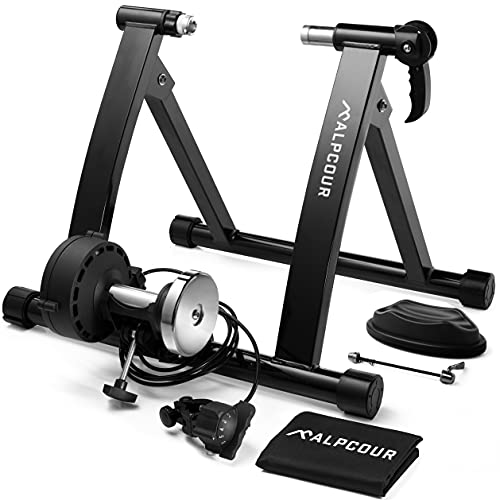
- 6 resistance settings for basic workout control
- Foldable frame with included carry bag
- Stainless steel build with anti-slip pads
Best For: Triathletes seeking an affordable, adjustable indoor trainer
Smart Trainer
Saris M2 Smart Indoor Electromagnetic Resistance Bike Trainer

- Electromagnetic resistance for consistent sessions
- Zwift certified with ANT+ FE-C and Bluetooth
- Wheel-on setup with one-month Rouvy access
Best For: Triathletes wanting a smart wheel-on trainer for structured indoor workouts
Budget Magnetic
Bike Trainer, Magnetic Bicycle Stationary Stand
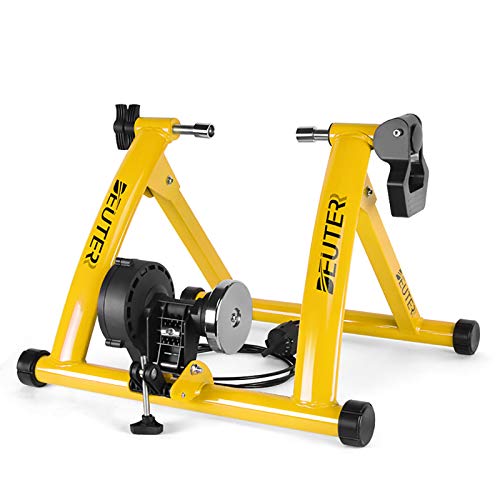
- Six resistance levels controlled from the handlebars
- Foldable pyramid frame supports up to 330 pounds
- Fits 26" to 29" wheels, including 700c
Best For: Triathletes seeking an affordable, stable trainer with simple resistance changes
Quiet Fluid
Saris Fluid2 Indoor Bike Trainer
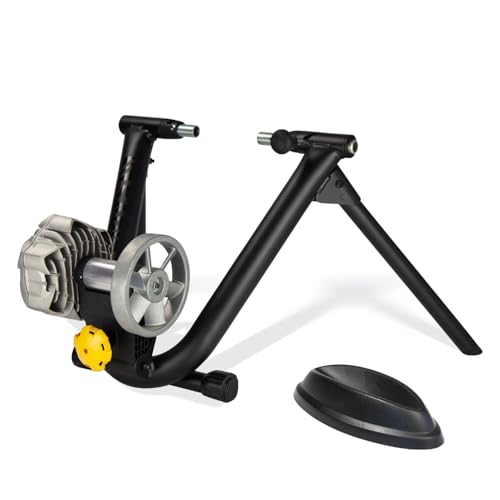
- Fluid resistance creates a road-like ride feel
- Quiet, smooth performance with precision-balanced flywheel
- Foldable wheel-on design for easy setup and storage
Best For: Triathletes wanting a quiet, realistic-feeling trainer for routine indoor training
Magnetic Trainer with 6 Resistance Levels
Sportneer Indoor Cycling Trainer Stand

- 6 magnetic resistance levels for varied indoor workouts
- Includes quick-release skewer and front wheel riser block
- Wide base with 5 anti-slip feet for added stability
Best For: Triathletes who want a stable, quiet trainer for steady indoor base work
Budget Magnetic Trainer for Simple Setup
Magnetic Flywheel Bike Trainer Stand
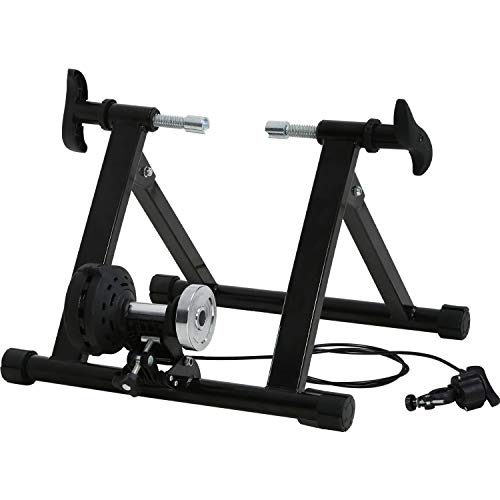
- Five resistance settings for basic workout variety
- Folds for easier storage and transport
- Carbon steel frame supports up to 300 pounds
Best For: Athletes who want an affordable trainer for straightforward indoor rides
Reliable Magnetic Trainer for Road and MTB
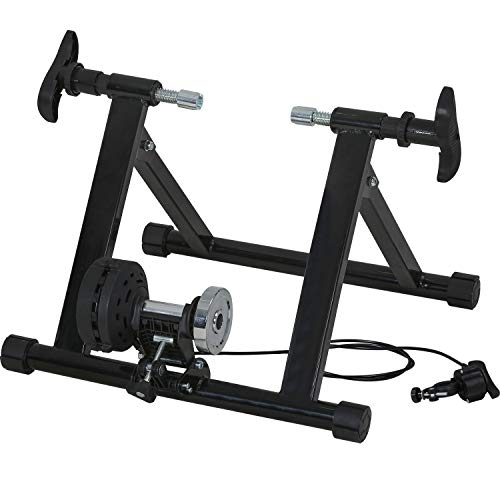
- Five magnetic resistance settings for indoor workouts
- Fits road and mountain bikes up to 700c
- Folds for storage and supports up to 300 pounds
Best For: Triathletes who want a versatile trainer for road and mountain bikes
Premium Smart Trainer – Wahoo KICKR V6 Smart Indoor Trainer
For triathletes who want a bike trainer for triathlons that feels close to outdoor riding, the Wahoo KICKR V6 brings high-end stability, accurate power, and a very responsive smart-training experience. Its WiFi connection, automatic calibration, and side-to-side AXIS feet make it a strong choice for structured indoor work and race-specific sessions.
Best For: Triathletes who want a premium smart trainer with precise power and a more natural ride feel.
Pros:
- WiFi connectivity helps keep ride data transmission stable and fast.
- Over 2,200 watts of resistance with +/- 1% power accuracy supports hard interval work.
- AXIS feet and high-inertia flywheel create a more road-like ride feel.
- Automatic calibration keeps power readings consistent without extra setup.
Cons:
- It is a heavy trainer at 22 kg, so it is less portable than simpler stands.
- Best suited to riders who will use smart features and need a premium setup.
Overall, this is the most advanced option in the group for triathletes who care about realistic feel and dependable training data. If you want a top-tier smart trainer for year-round triathlon prep, it stands out clearly.
Portable Fluid Trainer – Alpcour Fluid Bike Trainer Stand
If you want a bike trainer for triathlons that keeps setup simple while still giving a smooth indoor ride, the Alpcour Fluid Bike Trainer Stand is built for easy all-season training. Its fluid resistance increases as you pedal harder, and the foldable stainless steel frame makes it practical for riders who need storage or travel-friendly convenience.
Best For: Triathletes who want a compact fluid trainer with a realistic, progressively harder pedal stroke.
Pros:
- Fluid mechanism provides progressive resistance that rises as speed increases.
- Near-silent design helps keep indoor sessions quieter.
- Foldable frame and included bag make transport and storage easier.
- Front wheel riser block and anti-slip pads add stability.
Cons:
- It is not a smart trainer, so it does not offer connected training features.
- Resistance is based on the fluid system rather than app-controlled slope simulation.
This is a strong practical option for triathletes who value simplicity, quiet operation, and a compact footprint over high-tech training tools. It should fit well into a basic home-training setup.
High-Power Smart Trainer – ThinkRider X2Max Smart Bike Trainer
For triathletes comparing bike trainers for triathlons, the ThinkRider X2Max is a smart option that focuses on power, connected training, and realistic resistance changes. It supports BLE and ANT+ protocols, works with mainstream cycling software like Zwift, and can simulate an 18% slope for harder structured workouts.
Best For: Triathletes who want a budget-conscious smart trainer with app compatibility and strong resistance.
Pros:
- Supports BLE and ANT+ for broad compatibility with training software.
- Up to 2000W output and ±2% power accuracy suit intense workouts.
- Simulates an 18% slope for more realistic indoor rides.
- Quoted noise level of about 58dB at 30 km/h keeps sessions relatively quiet.
Cons:
- Cassette is not included, so setup may require an extra purchase.
- It weighs 35.2 pounds, so it is not the lightest smart trainer.
Overall, the X2Max delivers a lot of smart-trainer capability for riders who want connected training and strong resistance without moving to a top-end premium model. It is a compelling choice for serious indoor triathlon prep.
Budget Magnetic Trainer – Alpcour Bike Trainer Stand
For riders searching for bike trainers for triathlons on a simpler budget, the Alpcour Magnetic Bike Trainer Stand offers an easy way to turn a road or mountain bike into an indoor setup. Its 6 resistance settings, foldable frame, and noise-reduction design make it a practical choice for steady base miles and general conditioning.
Best For: Triathletes who want an affordable magnetic trainer with adjustable resistance.
Pros:
- Six resistance settings let you choose from easier to harder efforts.
- Magnetic flywheel system is designed to reduce noise and friction.
- Foldable frame and included bag support storage and travel.
- Stainless steel construction and anti-slip pads add stability.
Cons:
- Resistance is fixed rather than app-controlled or automatic.
- It is less advanced than smart trainers for structured virtual workouts.
This trainer makes sense if you want a straightforward indoor training solution without paying for connected features. It covers the basics well for off-season consistency and simple workout sessions.
Smart Trainer – Saris M2 Smart Indoor Electromagnetic Resistance Bike Trainer
Saris M2 Smart Indoor Bike Trainer, Compatible with Zwift App, Black, Made in the USA
Check Price On AmazonIf you want bike trainers for triathlons that can support structured indoor sessions, the Saris M2 is built around consistent resistance and app connectivity. Its wheel-on design keeps setup simple, while Zwift certification and dual ANT+ FE-C/Bluetooth support make it easy to plug into training apps for repeatable workouts.
Best For: Triathletes who want a smart, app-connected wheel-on trainer with measured resistance.
Pros:
- Electromagnetic resistance delivers controlled, consistent workouts.
- Zwift certified with dual ANT+ FE-C and Bluetooth connectivity.
- Wheel-on design avoids removing the rear wheel.
- Includes a one-month Rouvy subscription.
Cons:
- Noise is listed at 69 decibels at 20 mph, so it is not silent.
- Wheel-on setup is less direct than a wheel-off trainer.
The M2 is a practical pick if your triathlon training depends on repeatable indoor efforts and app-based workouts. It focuses on stable resistance and easy compatibility rather than extra complexity.
Budget Magnetic – Bike Trainer, Magnetic Bicycle Stationary Stand
For bike trainers for triathlons on a tighter budget, this magnetic stand covers the basics: adjustable resistance, broad bike fit, and a foldable frame. It is designed for home indoor riding when weather or traffic keeps you off the road, with handlebar resistance control for quick changes during sessions.
Best For: Triathletes who want an affordable, foldable trainer with simple resistance control.
Pros:
- Six resistance levels can be changed from the handlebars.
- Pyramid frame is designed for stability and supports up to 330 pounds.
- Fits 26″ to 29″ wheels, including 700c.
- Folding design makes storage and transport easier.
Cons:
- MTB tires can be loud on this style of trainer.
- Not as feature-rich as smart app-connected trainers.
This is a straightforward choice if you mainly need a stable indoor trainer for consistent off-season mileage. It gives you adjustable resistance and easy setup without adding smart-trainer complexity.
Quiet Fluid – Saris Fluid2 Indoor Bike Trainer
If quiet operation matters in your bike trainers for triathlons, the Saris Fluid2 leans into a smooth, road-like ride with fluid resistance and a precision-balanced flywheel. It is a wheel-on trainer with a foldable frame, making it a practical pick for athletes who want realistic training feel and simple storage.
Best For: Triathletes who want a quiet, road-like trainer for regular indoor base and interval work.
Pros:
- Fluid resistance increases as you pedal harder for a road-like feel.
- Large flywheel is designed to keep noise low and ride smooth.
- Foldable frame and wheel-on design make setup and storage easy.
- Works with Zwift and Rouvy when paired with a speed or cadence sensor.
Cons:
- Smart app use requires a separate speed or cadence sensor.
- It is still a wheel-on trainer rather than a direct-drive model.
The Fluid2 is a strong all-around option if you value realistic resistance and a quieter training space. It is especially appealing for triathletes who want dependable indoor sessions without a complicated setup.
Magnetic Trainer with 6 Resistance Levels – Sportneer Indoor Cycling Trainer Stand
If you want bike trainers for triathlons that make indoor base miles simple, the Sportneer trainer is a practical pick for road and mountain bikes with 26–28″ or 700C wheels. Its magnetic resistance, quick-release setup, and included front wheel riser block make it easy to turn your bike into a stable indoor training station.
Best For: Triathletes who want a stable, quiet magnetic trainer with easy resistance changes for steady indoor sessions.
Pros:
- 6 resistance levels let you simulate anything from flatter spins to harder climbs.
- Quick-release lever and included skewer make mounting and removal straightforward.
- Wide base, low center of gravity, and 5 anti-slip feet improve stability.
- Magnetic design is built for a smoother, quieter ride.
Cons:
- Noise can vary depending on tire material and tread.
- Thru-axle bikes need the non-standard version with adapter.
Overall, this Sportneer model fits well if you want a dependable indoor trainer for consistent triathlon conditioning without a complicated setup. It focuses on stability, adjustability, and convenience rather than fancy extras.
Budget Magnetic Trainer for Simple Setup – Magnetic Flywheel Bike Trainer Stand
For triathletes shopping bike trainers for triathlons on a budget, this magnetic trainer covers the basics: easy assembly, five resistance settings, and a foldable frame for storage. It is positioned as a simple indoor riding stand for road bikes when you want a straightforward way to keep training at home.
Best For: Athletes who want an affordable, no-fuss indoor trainer for basic endurance rides.
Pros:
- Assembly is described as taking about 15 minutes.
- Five resistance settings give you room to vary workout intensity.
- Foldable design makes it easier to store or carry.
- Carbon steel frame is rated to support up to 300 pounds.
Cons:
- Compatiblity details are narrower, with the listing focused on road bikes.
- Noise is not eliminated; higher resistance can still be louder.
This is a functional pick if your priority is getting on the trainer quickly and keeping training simple. It makes the most sense for riders who value convenience and basic resistance options over advanced features.
Reliable Magnetic Trainer for Road and MTB – FDW Indoor Bike Trainer Stand
If you need bike trainers for triathlons that can also handle occasional off-season mountain bike use, the FDW magnetic trainer is a flexible option. It offers five resistance settings, a foldable design, and compatibility with road and mountain bikes, making it a practical home-training tool.
Best For: Triathletes who want a versatile trainer that works for road and mountain bikes.
Pros:
- Five resistance settings let you scale effort from easy spinning to harder climbs.
- Compatible with road and mountain bikes, plus wheel sizes up to 700c.
- Folds for simpler storage and transport.
- Steel construction is rated to support up to 300 pounds.
Cons:
- The listing does not highlight a quick-release lever or included wheel riser block.
- Noise reduction is mentioned, but not to a specific ultra-quiet level.
As an all-around indoor trainer, the FDW gives you the basics triathletes usually need: stable support, adjustable resistance, and broad bike compatibility. It is a sensible choice if you want one trainer that can cover more than one bike type.
How We Picked These Bike Trainers for Triathlons
We prioritized trainers that support structured indoor workouts, realistic resistance, and stable performance across repeated sessions. For triathletes, that usually means a balance of accuracy, durability, easy setup, and compatibility with common training apps and bike types.
We also weighed practical factors like noise, portability, and whether the trainer makes it easier to complete threshold work, cadence drills, and long base rides without hassle.
Quick Comparison: What Matters Most
In this category, smart direct-drive trainers sit at the premium end with the best ride feel, tight app integration, and stronger data for pacing. Fluid and magnetic wheel-on trainers are typically more affordable and compact, making them attractive for athletes who mainly want steady indoor conditioning.
If your goal is race-specific tri prep, look for smooth resistance changes and a setup that allows consistent power output. If your priority is simple off-season mileage, a quieter wheel-on trainer may be enough.
Key Buying Factors for Bike Trainers for Triathlons
Resistance Type
Direct-drive and smart trainers generally deliver the most realistic feel and most useful workout control. Fluid trainers offer a smoother progression than basic magnetic models, while magnetic trainers are often the most budget-friendly.
Noise and Stability
Indoor training often happens early in the morning or in shared spaces, so low noise matters. A stable base reduces movement during intervals, standing efforts, and higher-cadence work.
App and Sensor Compatibility
If you train with Zwift or other indoor platforms, confirm ANT+ and Bluetooth support, especially for smart resistance control and power-based workouts. Triathletes who follow structured plans will benefit most from better connectivity.
Bike Fit and Tire Compatibility
Make sure the trainer matches your wheel size, axle type, and bike style. Road and triathlon bikes are usually straightforward, but clearance and compatibility still matter if you use multiple bikes.
Portability and Storage
Foldable frames and lighter wheel-on designs are helpful if you need to move the trainer often or store it between sessions. A heavier direct-drive unit may be less portable but more secure for intense training.
Who Should Buy Which Bike Trainers for Triathlons?
If you want the most complete indoor training experience, choose a smart direct-drive option. If you’re focused on dependable base miles and want to keep costs down, a fluid or magnetic wheel-on trainer is a smart fit. Athletes with limited space may prefer a foldable model, while data-driven triathletes who use virtual training platforms should lean toward smart connectivity and smoother resistance control.
For most buyers comparing Bike Trainers for Triathlons, the best choice comes down to how often you train, how much realism you want, and whether app-driven workouts are central to your plan.