The right insoles can improve how your running or training shoes feel by adding targeted arch support, cushioning, and stability where you need it most. This roundup compares 10 options designed for active users, from runners managing overpronation to athletes seeking better shock absorption.
Because foot shape, activity, and shoe fit vary, the best choice is not necessarily the most heavily cushioned model. Use the comparison and buying advice below to match an insole’s support level, profile, and construction to your training needs.
Best 10 Orthotic Insoles for Athletes Picks for 2026
Lightweight Cushioning Pick
Sof Sole Athlete Men's Insoles

- Heel-and-forefoot gel absorbs impact
- Lightweight foam cushions heel to toe
- Moisture control and ventilation help keep feet cool
Best For: Men wanting lightweight cushioning for athletic footwear
Maximum Motion-Control Pick
PowerStep Pulse Maxx Running Insoles
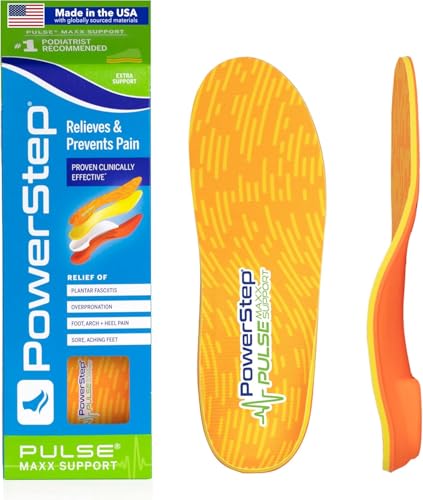
- Rigid shell supports overpronation correction
- Angled heel promotes alignment and stability
- Dual-layer cushioning absorbs running impact
Best For: Runners needing firm corrective support
Women's Everyday Athletic Pick
Sof Sole Women's Athlete Insoles

- Flexible neutral-arch design fits most foot types
- Heel-and-forefoot gel cushions active steps
- Moisture treatment supports cool, dry comfort
Best For: Women seeking versatile cushioning for active and casual shoes
Multi-Sport Stability Pick

- Responsive gel cushioning absorbs athletic impact
- Arch shell supports lateral stability for cutting
- Rugged, trim-to-fit design suits multiple sports
Best For: Men needing stability across running, court, and cross-training shoes
Maximum Stability Pick

- Angled heel post supports pronation control
- Firm, flexible design with deep heel cradle
- Thick cushioning; requires removable factory insole
Best For: Athletes needing maximum stability for overpronation and flat feet
Training Cushion Pick

- Full-length support for running and training
- Four-layer cushioning absorbs impact
- Deep heel cup and breathable foam
Best For: Runners wanting cushioned support in roomier athletic shoes
Everyday Running Pick
Dr. Scholl's Run Active Comfort

- Three-zone design helps reduce running shock
- Reinforced support for landing-to-push-off transition
- Trim-to-fit with odor-neutralizing technology
Best For: Women runners with low arches seeking everyday cushioning
Best Overall Support

- Semi-rigid arch support for moderate pronation
- Dual-layer cushioning with heel support
- No trimming required; made in the USA
Best For: Athletes needing structured support and plantar fasciitis relief
Best Shock Absorption

- Gel pads cushion impact during sports
- Deep heel cup helps secure the foot
- Designed for low arches and multiple sneakers
Best For: Active users prioritizing cushioning and heel stability
Best for Multidirectional Sports

- Flexible support for side-to-side movement
- Shock absorption for feet, knees, and back
- High-arch design for men’s athletic shoes
Best For: Men who need flexible support across multiple sports
Lightweight Cushioning Pick – Sof Sole Athlete Men's Insoles
Sof Sole Insoles Men's ATHLETE Performance Full-Length Gel Shoe Insert, Men's 11-12.5
Check Price On AmazonFor athletes seeking orthotic insoles for athletes with cushioning and moisture control, the Sof Sole Athlete combines heel-and-forefoot gel with lightweight foam. Its neutral arch design and athletic shape make it a practical option for running, walking, and sports footwear.
Best For: Men who want lightweight, full-length cushioning and moisture management for athletic shoes.
Pros:
- Gel in the heel and forefoot helps absorb impact.
- Foam provides heel-to-toe cushioning without adding much weight.
- Hydrologix moisture control and midfoot ventilation help keep feet dry and cool.
- Neutral arch design suits a range of arch types.
Cons:
- The neutral design may be less suitable for athletes seeking strong motion correction.
- The listed size is limited to men’s 11–12.5.
This is a versatile comfort-focused insert rather than a rigid corrective orthotic. Choose it when cushioning, ventilation, and a lighter feel are more important than maximum stability.
Maximum Motion-Control Pick – PowerStep Pulse Maxx Running Insoles
Among orthotic insoles for athletes, the PowerStep Pulse Maxx is designed for runners who need firmer support and overpronation correction. Its rigid shell, angled heel, and dual-layer cushioning focus on alignment, stability, and impact management during demanding activity.
Best For: Runners seeking maximum support and corrective stability for overpronation-related discomfort.
Pros:
- Rigid shell and angled heel provide stronger motion control and alignment support.
- Dual-layer cushioning helps absorb impact and reduce stress on the lower body.
- Designed specifically for running shoes and rigorous athletic activity.
- Size-specific, no-trim construction can be moved between shoes.
Cons:
- The firmer support may require a gradual break-in period.
- The listed size fits men’s 6–6.5 and women’s 8–8.5 only.
- Its corrective structure may feel less flexible than a comfort-focused insert.
This is the strongest choice in the group for athletes prioritizing motion control. It is especially targeted to runners whose discomfort is associated with overpronation, but new orthotic users should follow the suggested transition period.
Women's Everyday Athletic Pick – Sof Sole Women's Athlete Insoles
The Sof Sole Women’s Athlete is a flexible choice for women comparing orthotic insoles for athletes and everyday active footwear. Its neutral arch, heel-and-forefoot gel, and moisture-management treatment support walking, running, cross-training, and casual use.
Best For: Women wanting flexible cushioning for athletic and casual shoes.
Pros:
- Neutral arch design fits most foot types.
- Gel pads cushion the heel and forefoot.
- Hydrologix treatment helps manage moisture and keep feet cool and dry.
- Suitable for walking, running, cross-training, and casual use.
Cons:
- It is not listed as corrective support, so it may not meet needs requiring motion control.
- The listed size is women’s 8–11.
This insert emphasizes flexible comfort and broad use rather than intensive correction. It makes sense for active users who want one cushioned option that can move between athletic and casual shoes.
Multi-Sport Stability Pick – Dr. Scholl's Sport Insoles
For athletes looking for orthotic insoles for athletes across several sports, Dr. Scholl’s Sport Insoles pair shock absorption with an ActivPerform arch shell for lateral stability. The rugged design fits running shoes, court shoes, and cross-trainers and can be trimmed to fit.
Best For: Men participating in multiple sports who want shock absorption and stability for stopping and cutting.
Pros:
- Massaging Gel Advanced and responsive-wave cushioning help absorb shock.
- ActivPerform arch shell supports lateral stability during athletic movements.
- Rugged construction is designed for multiple sports and athletic activities.
- Pack includes two insoles and the design can be trimmed to fit.
Cons:
- The listed extra-high arch may not suit athletes who prefer lower or neutral support.
- Trimming is required for fit.
- The listed size is for men’s 8–14.
This is a practical multi-sport option when lateral stability matters as much as cushioning. Its extra-high arch and trim-to-fit construction make checking shoe compatibility and fit particularly important.
Maximum Stability Pick – PowerStep Pinnacle Maxx
For athletes seeking orthotic insoles for athletes that prioritize motion control, the PowerStep Pinnacle Maxx combines a firm-but-flexible design with an angled heel post. It is built for overpronation and flat feet, with dual-layer cushioning for added comfort.
Best For: Athletes who need maximum stability and support for overpronation, flat feet, or heel discomfort.
Pros:
- Angled heel post helps limit inward rolling and improve stability.
- Deep heel cradle supports motion control and heel comfort.
- Thick dual-layer cushioning provides support from heel to toe.
- No trimming is required, and the inserts are made in the USA.
Cons:
- The thick design requires shoes with removable factory insoles.
- Firm support may require an adjustment period.
Choose these when stability and pronation control matter more than a slim profile. Their heavy-duty construction is especially suited to supportive athletic footwear with enough interior room.
Training Cushion Pick – WalkHero Running Insoles
WalkHero is a practical option for athletes comparing orthotic insoles for athletes who want cushioning and full-length support for running, training, and active days. Its four-layer construction, flexible arch support, and deep heel cup are designed to improve comfort and stability during movement.
Best For: Runners and active users who want cushioned support for daily jogs, distance training, gym sessions, and outdoor sports.
Pros:
- Full-length support extends from the heel through the forefoot.
- Four-layer cushioning absorbs impact and helps reduce muscle fatigue.
- Deep heel cup helps secure the heel during turns and downhill running.
- Breathable foam helps manage sweat and odor.
Cons:
- The manufacturer recommends a gradual one- to two-week break-in period.
- The inserts can feel bulky in tighter shoes.
These insoles make the most sense for sneakers, running shoes, hiking shoes, and other roomier footwear. They offer a balanced mix of cushioning, arch support, and heel stability for training-focused use.
Everyday Running Pick – Dr. Scholl's Run Active Comfort
Dr. Scholl’s Run Active Comfort is a straightforward choice for athletes looking for orthotic insoles for athletes with low arches and a trim-to-fit design. Its three-zone heel-to-toe construction is intended to reduce shock while reinforced arch support assists the transition from landing to push-off.
Best For: Women runners who want cushioned, low-arch inserts for running and extended time on their feet.
Pros:
- Three-zone design helps reduce shock from heel to toe.
- Reinforced arch support aids weight transition during running.
- Designed to help address discomfort associated with runner’s knee, shin splints, and plantar fasciitis.
- Polygiene StayFresh technology helps neutralize odors.
Cons:
- They must be trimmed to fit the shoe.
- The low-arch profile may not suit users needing medium or high arch support.
This pair is a good fit for runners who prefer adaptable inserts and moderate, comfort-focused support. Check the shoe fit carefully after trimming to preserve the intended heel-to-toe positioning.
Best Overall Support – PowerStep Pinnacle Insoles
For athletes who need structured support as well as cushioning, the PowerStep Pinnacle is a strong option among orthotic insoles for athletes. Its semi-rigid arch-support shell, heel cushioning, and dual-layer construction are designed to help reduce foot stress and fatigue during active use.
Best For: Athletes with moderate pronation, plantar fasciitis concerns, or shoes with removable factory insoles.
Pros:
- Podiatrist-recommended design with a semi-rigid support shell.
- Dual-layer cushioning and heel support help reduce stress and fatigue.
- Fits athletic, walking, running, and work shoes without trimming.
- Made in the USA and backed by a 30-day money-back guarantee.
Cons:
- Designed for shoes where the original insole can be removed.
- Moderate support may not suit athletes seeking a soft, low-profile insert.
- Must be ordered by the appropriate shoe size.
The Pinnacle is the most structured choice in this group, making it a practical pick when arch stability and plantar fasciitis support matter more than maximum flexibility.
Best Shock Absorption – CRUVHEAL Sport Insoles
The CRUVHEAL Sport insoles focus on impact cushioning for active workouts. Among orthotic insoles for athletes, they stand out for gel pads, a deep heel cup, and a non-slip heel design intended for running, basketball, training, and other sneaker-based activities.
Best For: Athletes who want shock absorption and a secure fit for sneakers, basketball, running, tennis, or pickleball.
Pros:
- Strategically placed gel pads absorb impact during intense activity.
- Deep curved heel cup and non-slip gel pads help hold the insert in place.
- Versatile design works across several athletic shoe types.
- Includes a gradual 3–7 day break-in recommendation and one-year coverage.
Cons:
- Uses a low-arch design, which may not provide enough support for high arches.
- Requires a gradual adaptation period of two to five hours daily.
- Size should be checked carefully, especially if trimming is needed.
Choose the CRUVHEAL when impact reduction and a secure heel feel are priorities. Its low-arch profile makes it more targeted than a general high-support orthotic.
Best for Multidirectional Sports – Dr. Scholl’s Sport Insoles
Dr. Scholl’s Sport Insoles are designed for athletes who move in more than one direction. These orthotic insoles for athletes combine arch support with shock absorption and flexible side-to-side support for fitness classes and other athletic activities.
Best For: Men participating in fitness classes and multiple sports who want flexible support for lateral movement.
Pros:
- Flexible side-to-side support helps accommodate multidirectional movement.
- Shock absorption is designed to reduce stress on feet, knees, and lower back.
- High-arch profile provides corrective arch support.
- Suitable for multiple sports and athletic activities.
Cons:
- Designed specifically for men.
- High-arch support may feel unsuitable for athletes with low or neutral arches.
- The supplied details do not specify a trimming or break-in policy.
This is a sensible option for athletes who value flexible lateral support rather than a highly rigid correction. Confirm that the high-arch profile matches your foot before buying.
How We Picked the Best Orthotic Insoles for Athletes
We focused on insoles designed for running, court sports, gym training, and other high-impact activities. The selection considers arch support, heel stability, cushioning, shock absorption, trim-to-fit versatility, moisture management, and compatibility with athletic footwear. We also included options across support levels, from flexible sport inserts to firmer orthotics for overpronation and flat feet.
Product claims and intended uses were compared against practical buying considerations such as full-length coverage, heel construction, material durability, and whether an insole is better suited to everyday training or more demanding support needs.
Quick Comparison
| Best For | Look For |
|---|---|
| Running and road training | Lightweight cushioning, moisture control, and reliable arch support |
| Overpronation | Firm structure, a supportive arch, and a stable heel platform |
| Flat feet | Moderate-to-high support that fits without creating pressure |
| High-impact sports | Shock absorption under the heel and forefoot |
| Flexible shoe fit | Trim-to-fit designs and a low-to-moderate profile |
Key Buying Factors for Orthotic Insoles for Athletes
Support Level and Arch Shape
Choose support based on your foot mechanics and comfort, not marketing language alone. Moderate support suits many active users, while firm or maximum-support models may be more appropriate for overpronation or significant stability needs. An arch that feels aggressively high can cause discomfort, so introduce structured insoles gradually.
Cushioning and Impact Control
Gel, foam, and layered constructions can reduce the harsh feel of repeated impacts. Runners may prefer lighter cushioning that preserves ground feel, while basketball players and other athletes who jump or change direction often benefit from stronger heel and forefoot shock absorption.
Fit, Volume, and Durability
Check whether the insole replaces the shoe’s original footbed or sits on top of it. A thick insert can make the shoe feel tight across the upper, while a low-profile model may fit better in snug athletic shoes. Trim-to-fit designs offer flexibility, but trimming should follow the original footbed as a template. Replace worn inserts when cushioning collapses or support becomes uneven.
Who Should Buy Which Orthotic Insoles for Athletes?
Runners who want a performance-oriented insert should prioritize lightweight cushioning, moisture management, and a secure heel. Athletes with overpronation or flat feet should consider structured PowerStep-style orthotics or similarly firm designs, provided the arch height feels comfortable. Those mainly seeking impact relief may prefer gel or foam sport insoles with substantial heel cushioning. If several people will use the same style of shoe, a trim-to-fit option is often the easiest choice.
Persistent pain, numbness, swelling, or worsening symptoms should be evaluated by a qualified clinician. Insoles can improve comfort and alignment, but they are not a substitute for diagnosis or treatment.