The best emergency radios for hiking help you monitor severe weather, stay informed when cell service fails, and maintain essential power on remote trails. The right choice depends on whether you need alerts, device charging, group communication, or satellite messaging.
We compared these 10 options by emergency features, portability, power sources, communication range, and ease of use so you can choose dependable equipment for day hikes, overnight trips, and extended backcountry travel.
Best 10 Emergency Radios for Hiking Picks for 2026
Best All-Around Backup
FosPower NOAA Emergency Radio A1

- 2,000mAh phone-charging power bank
- Solar, hand-crank, and AAA power
- NOAA radio, lights, and SOS alarm
Best For: Hikers wanting one versatile emergency kit device
Best for Remote Communication

- Two-way satellite messaging and SOS
- TracBack, location sharing, and compass
- Up to 14 days in tracking mode
Best For: Remote hikers traveling beyond cell coverage
Best Weather Alert Features

- Automatic NOAA alert scanning
- Six charging options
- LCD, lights, SOS, and headphone jack
Best For: Campers and hikers focused on severe-weather warnings
Best for Group Communication
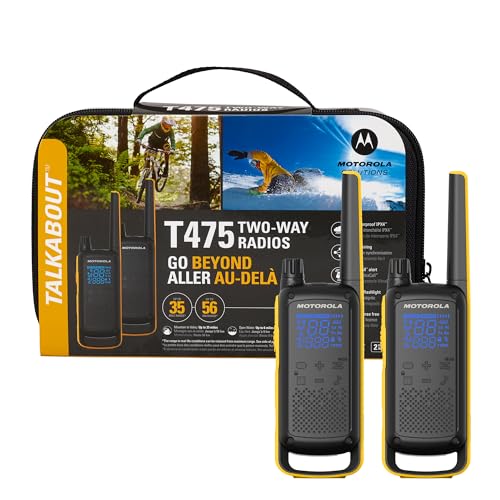
- Two-pack of FRS walkie-talkies
- 22 channels and 121 privacy codes
- NOAA alerts and rechargeable batteries
Best For: Hiking partners needing short-range contact
Best Battery Backup
Leaton 10000mAh Hand Crank Radio

- 10000mAh battery with emergency USB output
- IPX6 splash resistance and built-in compass
- Solar, hand-crank, and USB-C charging
Best For: Hikers needing phone backup power and multifunction emergency lighting
Best for Everyday Use
BAOFENG T18 Four-Pack Walkie Talkies

- Four rechargeable radios with headsets and belt clips
- 22 FRS channels plus NOAA weather reception
- VOX, flashlights, LCD screens, and USB-C charging
Best For: Hiking groups that need two-way communication
Best Traditional Emergency Radio
Midland ER310 Crank Weather Radio

- NOAA weather scan and alert with AM/FM reception
- Solar power plus six included AA batteries
- Flashlight, SOS function, USB, and dog whistle
Best For: Preparedness-minded hikers wanting NOAA alerts and emergency features
Compact Trail Communicator

- 0.5-pound compact design
- NOAA, AM, and FM reception
- Crank, solar, and battery power
Best For: Lightweight hiking and camping emergency kits
Signal and Rescue Specialist
Midland ER310PRO Weather Radio
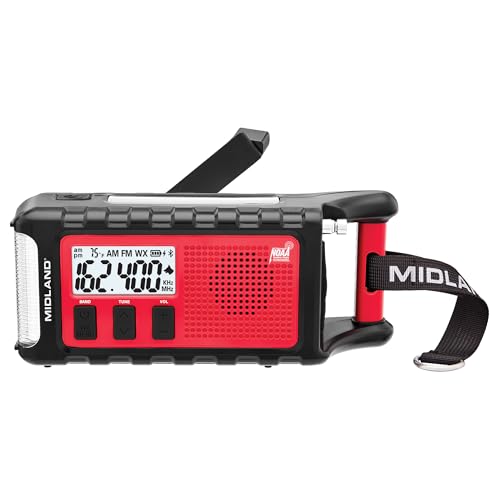
- Seven-channel NOAA weather scan
- 130-lumen light and SOS beacon
- Bluetooth and external-device charging
Best For: Longer trips and signaling-focused emergency kits
High-Capacity Trail Powerhouse

- Stated 12000mAh battery
- Large solar panel and hand crank
- Flashlight plus reading lamp
Best For: Multi-day camping and remote emergency use
Best All-Around Backup – FosPower NOAA Emergency Radio A1
For hikers building a practical emergency kit, the FosPower A1 combines NOAA, AM, and FM reception with several backup power options. Its power bank, lights, and SOS alarm make it a versatile choice among emergency radios for hiking, especially when keeping a phone available matters.
Best For: Hikers who want weather broadcasts, phone charging, and lighting in one compact radio.
Pros:
- 7,400mWh (2,000mAh) power bank can charge a phone or small tablet.
- Solar, hand-crank, and AAA-battery power options provide charging flexibility.
- Includes a 1W flashlight, four-LED reading light, NOAA access, and SOS alarm.
Cons:
- Requires four AAA batteries when rechargeable options are unavailable.
- At 310 g, it is not the lightest option for minimalist packers.
The FosPower is a well-rounded choice for day hikes, emergency preparedness, and trips where lighting and device charging are as important as radio reception.
Best for Remote Communication – Garmin inReach Mini 2
The Garmin inReach Mini 2 is a satellite communicator rather than a traditional broadcast radio, making it a specialized option for emergency radios for hiking. With an active satellite subscription, it supports two-way messaging, interactive SOS, location sharing, and navigation beyond cell coverage.
Best For: Remote hikers who need two-way communication and SOS capability outside cellular service.
Pros:
- Enables two-way messaging and interactive SOS globally with an active subscription.
- Offers TracBack routing, location sharing, and a digital compass.
- Compact, water-resistant design with up to 14 days of battery life in 10-minute tracking mode.
Cons:
- Requires an active satellite subscription for messaging, SOS, and location-sharing features.
- It does not provide AM, FM, or NOAA broadcast reception.
This is the strongest fit for serious backcountry travel where contacting rescuers or sharing your position is more important than listening to weather broadcasts.
Best Weather Alert Features – Raynic Emergency Radio
The Raynic emergency radio emphasizes automatic NOAA alerts, so hikers can monitor severe-weather warnings without continuously listening to a broadcast. It also provides AM, FM, shortwave, and NOAA reception, multiple charging methods, lighting, and a phone-charging USB connector.
Best For: Campers and hikers who prioritize automatic weather alerts and a readable digital display.
Pros:
- Automatically scans for NOAA weather alerts, including while in standby mode.
- Six charging options include rechargeable battery, AC, USB, hand crank, solar, and AAA batteries.
- Large LCD display, 3W flashlight, 2.5W reading lamp, SOS alarm, and headphone jack.
Cons:
- At about 1.2 lb and 6.8 by 3.7 by 2.9 inches, it may feel bulky for lightweight hiking.
- IPX3 water resistance is limited compared with more rugged weatherproof designs.
For base camps, car camping, and prepared hiking kits, the Raynic offers particularly strong alert-monitoring and charging versatility, though minimalist backpackers may prefer something smaller.
Best for Group Communication – Motorola Talkabout T475
Motorola Solutions Talkabout T475 Extreme Two-Way Radio Black W/Yellow Rechargeable Two Pack
Check Price On AmazonThe Motorola Talkabout T475 is a two-pack of FRS walkie-talkies, making it a different kind of option among emergency radios for hiking. It is designed for keeping hiking partners in contact, with 22 channels, 121 privacy codes, weather alerts, rechargeable batteries, and IPX4 water resistance.
Best For: Hiking partners or small groups who need short-range two-way communication on the trail.
Pros:
- Two radios support communication between hiking partners.
- Provides 22 channels and 121 privacy codes for channel selection.
- Includes NOAA weather radio and alerts, built-in flashlight, VibraCall, and rechargeable batteries.
Cons:
- It is not a satellite communicator and does not provide communication beyond radio range.
- Battery life is listed at up to 12 hours for the included NiMH batteries.
- IPX4 water resistance protects against splashes but is not full waterproofing.
The T475 is a sensible group-safety tool when everyone stays within radio range, but solo or remote hikers may need a device with satellite SOS capability instead.
Best Battery Backup – Leaton 10000mAh Hand Crank Radio
For hikers who want substantial backup power alongside weather information, the Leaton is a practical option among emergency radios for hiking. Its 10000mAh internal battery can provide approximately 1–1.5 iPhone 14 charges, while solar, hand-crank, and USB-C charging add flexibility away from the grid.
Best For: Hikers, campers, and emergency-kit owners who prioritize phone backup power, lighting, and weather-radio access.
Pros:
- Large 10000mAh battery with 5V/1A USB output for emergency charging.
- IPX6 water resistance helps handle splashes and spray during outdoor use.
- Includes NOAA, AM/FM, flashlight, reading lamp, SOS mode, and compass.
- Supports solar, hand-crank, and USB-C charging.
Cons:
- NOAA broadcasts require manual tuning and do not provide automatic or location-based alerts.
- IPX6 protection is for splash resistance, not immersion or heavy rain.
- At about 1.1 pounds, it is less minimalist than a basic hiking radio.
This model is a strong fit when emergency power and multifunction lighting matter more than ultralight carry. Just plan to monitor NOAA broadcasts manually and protect it from sustained downpours.
Best for Everyday Use – BAOFENG T18 Four-Pack Walkie Talkies
The BAOFENG T18 four-pack is a communication-focused choice among emergency radios for hiking. It combines 22 FRS channels, NOAA weather reception, rechargeable 1500mAh batteries, headsets, and hands-free VOX operation for hiking groups that need to stay in contact.
Best For: Hiking groups, families, and outdoor teams that need multiple two-way radios rather than a standalone broadcast receiver.
Pros:
- Four radios include headsets, belt clips, lanyards, and rechargeable batteries.
- Offers 22 FRS channels, channel scanning, dual PTT controls, and VOX.
- NOAA weather reception, flashlights, LCD screens, and low-battery alerts add utility.
- USB-C charging works with power banks, computers, cars, and wall USB outlets.
Cons:
- Not water resistant, so it requires protection in wet hiking conditions.
- Advertised range varies substantially with terrain and obstructions; hills, trees, and buildings reduce it.
- The package includes USB cables but no US wall plug.
This set makes the most sense when group coordination is the priority. Its NOAA feature adds weather awareness, but it is not a replacement for a dedicated emergency broadcast radio with multiple charging methods.
Best Traditional Emergency Radio – Midland ER310 Crank Weather Radio
The Midland ER310 is a straightforward weather and emergency radio for hikers who prefer a familiar AM/FM unit with multiple power options. It includes NOAA weather scan and alert functionality, a built-in flashlight, USB connectivity, and a listed ultrasonic dog whistle for added emergency preparedness.
Best For: Hikers and preparedness users seeking a conventional NOAA weather radio with emergency lighting and multiple power sources.
Pros:
- Includes NOAA weather scan and alert capability in addition to AM/FM reception.
- Multiple power sources include solar power and six included AA batteries.
- Built-in flashlight, SOS function, USB connectivity, and ultrasonic dog whistle.
- One-year limited warranty is included.
Cons:
- Listed as not water resistant, so it needs protection from rain and moisture.
- Its 16-ounce weight and larger listed dimensions may be less convenient for ultralight hikers.
- The supplied specifications identify AM/FM and do not list shortwave reception.
The ER310 is best suited to hikers who value NOAA alert functionality and emergency features over a highly compact design. Carry it in a protected pack compartment because the specifications do not provide water resistance.
Compact Trail Communicator – Lightweight NOAA Crank Radio
For hikers who want practical coverage without much pack weight, this compact option is one of the more portable emergency radios for hiking. It combines NOAA, AM, and FM reception with crank, solar, and rechargeable-battery power, plus a flashlight for low-light situations.
Best For: Day hikers, emergency kits, and campers who prioritize low weight and multiple backup power options.
Pros:
- Weighs just 0.5 pound and measures 5 x 1.8 x 2.4 inches.
- Receives NOAA, AM, and FM broadcasts with a retractable antenna.
- Offers hand-crank, solar, and rechargeable-battery power.
- Includes a 2000mAh battery, USB phone charging, and a 1W LED flashlight.
Cons:
- The 2000mAh battery is smaller than the capacities listed for the other radios here.
- It is described as water repellent rather than fully waterproof.
This RunningSnail model is a sensible lightweight choice when packability matters. Its basic communication, lighting, and charging functions cover common trail emergencies, although it may offer less reserve power than larger models.
Signal and Rescue Specialist – Midland ER310PRO Weather Radio
The Midland ER310PRO is a feature-rich pick among emergency radios for hiking, especially for groups that value weather monitoring and signaling tools. It adds NOAA scanning, Bluetooth streaming, a high-output flashlight, and a rescue siren to its hand-crank and solar charging options.
Best For: Extended outings, family emergency kits, and hikers who want dedicated signaling features alongside radio reception.
Pros:
- Automatically scans seven NOAA weather channels and locks onto the strongest signal.
- Provides AM, FM, and weather-band reception.
- Includes a 130-lumen CREE LED flashlight, Morse-code SOS beacon, and rescue dog siren.
- Supports Bluetooth streaming and USB charging for external devices, with up to 200 hours of radio-use battery life stated in the notes.
Cons:
- At 8.1 x 2.8 x 3.4 inches, it is larger than the compact RunningSnail model.
- The supplied notes do not specify a water-resistance rating.
Choose this Midland when rescue visibility and weather alerts are higher priorities than minimum size. Its larger body may take more room in a pack, but the siren, beacon, and weather scan add useful capability in uncertain conditions.
High-Capacity Trail Powerhouse – 12000mAh Solar Radio
Hikers planning for longer off-grid use may prefer this high-capacity model among emergency radios for hiking. It pairs NOAA, AM, and FM reception with a stated 12000mAh battery, a large solar panel, hand-crank charging, two lights, and an SOS alarm.
Best For: Multi-day camping, remote trips, and emergency backpacks where battery reserve and lighting flexibility matter.
Pros:
- Uses a stated 12000mAh lithium battery with solar, hand-crank, USB-C, and AAA-battery options.
- Offers NOAA, AM, and FM reception with a high-sensitivity signal chip and extended antenna.
- Includes a focused flashlight rated for a beam up to 260 feet and a soft reading lamp.
- Provides USB phone charging, an SOS alarm, and two brightness levels for both lights.
Cons:
- Measures 6.8 x 2.9 x 4.7 inches, so it is not the smallest option for ultralight packs.
- The product notes advise fully charging it before first use.
- Its battery is described as a nonstandard battery rather than a commonly replaceable format.
This radio is oriented toward endurance rather than minimalism. The large battery, broad charging choices, and separate task and reading lights make it compelling for longer trips, provided you have room for its larger form.
How We Picked These Emergency Radios for Hiking
We focused on features that matter when you are outdoors and away from reliable power or cell coverage. Each product was evaluated for weather information, emergency power options, portability, charging flexibility, and practical trail use. NOAA alert support, AM/FM reception, hand-crank and solar charging, battery capacity, flashlights, and phone-charging capability were key considerations for preparedness-focused radios.
We also included communication-focused options. Two-way radios can help hiking groups stay connected over short distances, while a satellite communicator such as the Garmin inReach Mini 2 is designed for messaging and emergency contact beyond cellular coverage. These devices serve different purposes and should not be treated as interchangeable.
Quick Comparison
| Need | Best-suited option type | What to prioritize |
|---|---|---|
| Weather alerts and basic preparedness | NOAA emergency radio | Clear reception, alert mode, flashlight, and backup charging |
| Charging a phone or GPS | High-capacity emergency radio | Battery capacity, USB output, and dependable cable compatibility |
| Group communication | FRS or two-way radio pair | Range claims, rechargeable batteries, channels, and weather reception |
| Remote messaging and SOS | Satellite communicator | Satellite coverage, subscription requirements, battery life, and message workflow |
Key Buying Factors for Emergency Radios for Hiking
Weather Reception and Alerts
NOAA compatibility is useful for receiving forecasts and severe-weather information in supported areas, but reception varies with terrain and location. Look for a dedicated alert function if you want warnings without continuously monitoring the radio. AM/FM or shortwave support can provide additional information when local broadcasts are available.
Power and Charging Options
Hand cranks provide a manual backup, while solar charging can help during longer trips but is typically slow and dependent on strong sunlight. A rechargeable battery is convenient for regular use; higher-capacity models are more useful for topping up a phone, but they may be heavier. Check whether the radio uses USB-C, micro-USB, or another connector before packing it.
Communication Range and Emergency Contact
Walkie-talkie range is affected by hills, trees, buildings, and weather, so advertised maximum distances are best viewed as ideal-case figures. For serious solo or remote travel, a satellite communicator offers a different level of capability, usually with a subscription and an unobstructed view of the sky. Always carry a backup plan rather than relying on one device.
Size, Durability, and Controls
Choose a radio you can operate quickly with cold or wet hands. A bright flashlight, headphone support, lockable controls, and a readable display can improve usability. For hiking, balance battery size against pack weight and protect electronics from rain with a waterproof pouch unless the device has an appropriate weather-resistance rating.
Who Should Buy Which Emergency Radios for Hiking?
Choose a compact NOAA emergency radio if your priority is weather awareness, light, and basic backup power on day hikes or camping trips. Pick a higher-capacity solar or hand-crank model if you expect to recharge a phone or other small device during outages or multi-day trips.
Hiking families and groups may prefer a two-way radio pair for coordinating nearby members, but confirm local regulations and test the radios before departure. Solo hikers, remote travelers, and anyone heading beyond cell coverage should consider a satellite communicator for two-way messaging and SOS capability, while keeping a weather radio or phone-based forecast source as a separate information backup.