When you’re miles from the trailhead, the right trauma kit can buy time before help arrives. For backpacking, that means compact, organized, and built for fast bleeding control.
We focused on kits that balance serious emergency tools with packability, so you can choose the right setup without carrying unnecessary bulk.
Best 10 Trauma Kit for Backpacking Picks for 2026
Ultralight Trail Coverage
Adventure Medical Ultralight/Watertight Kit .5

- Ultralight kit fits side pockets
- Covers wounds, meds, and blisters
- Waterproof DryFlex storage system
Best For: Solo hikers and small groups on short trips
Compact IFAK Response
IFAK Trauma Kit with Tourniquet

- Tourniquet, Israeli bandage, hemostatic gauze
- MOLLE-compatible compact carry bag
- Waterproof lining with quick-access design
Best For: Backpackers wanting a MOLLE-ready bleeding-control kit
All-Purpose Waterproof Carry
RHINO RESCUE EVA First Aid Kit Small

- 130-piece general first aid selection
- Water-resistant EVA shell
- Organized layout with quick-open zippers
Best For: Backpackers wanting broad first aid coverage in a compact case
Tactical Trauma Kit
Military Emergency Hemostasis Kit

- Tourniquet, Israeli bandage, and chest seal included
- MOLLE pouch with waterproof lining and quick-release setup
- 1.9 lbs with a compact 7.9" x 6" x 6" footprint
Best For: Backpackers who want a compact tactical trauma kit with bleeding-control gear
Mini Travel Kit
150 Piece Waterproof Hard Shell Medical Kit

- 150-piece kit in a compact 6.4" x 4.9" x 2.7" case
- Waterproof EVA shell with organized compartments
- Includes basics plus gloves, tweezers, scissors, and tourniquet
Best For: Backpackers wanting a tiny, lightweight kit for minor injuries
Lightweight Tactical IFAK
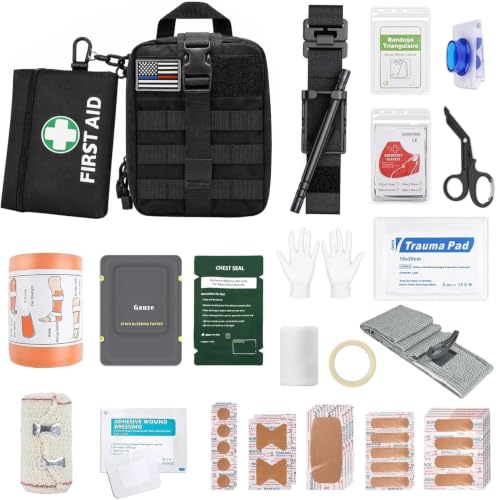
- Core trauma supplies: tourniquet, Israeli bandage, and hemostatic gauze
- Compact MOLLE bag with waterproof lining and quick-release panel
- Lightweight option for hiking, camping, and travel
Best For: Backpackers looking for a compact trauma kit with core supplies
Trauma-First Bleeding Control – Adventure Medical Kits Trauma Pak First Aid Kit
If you need a trauma kit for backpacking that prioritizes bleeding control, this compact Trauma Pak is built around the essentials. It pairs QuikClot gauze with a trauma pad and triangular bandage, making it a focused option for fast response in an emergency without adding much bulk to your pack.
Best For: Backpackers who want a compact bleeding-control kit for quick access in a pack, car, or emergency pouch.
Pros:
- Includes QuikClot gauze for clotting support and bleeding control
- Also comes with a trauma pad and triangular bandage
- Compact, lightweight, and designed for first aid kits and EDC pouches
- Waterproof, reusable bag helps protect contents in the field
Cons:
- Focused more on trauma response than broad first aid coverage
- One small kit may not suit larger groups or longer trips alone
For backpackers building a serious emergency layer, this kit stands out for its simple, bleeding-focused contents. It is a practical add-on when you want core trauma supplies in a very small footprint.
Ultralight Trail Coverage – Adventure Medical Ultralight/Watertight Kit .5
This trauma kit for backpacking is a better fit if you want a lightweight first aid kit with broad trail basics instead of a bleeding-only setup. It includes wound care, blister essentials, and common outdoor medications, all packed in a small waterproof DryFlex system that is easy to stash in a side pocket.
Best For: Solo hikers or small groups who want a lightweight, waterproof kit for common trail injuries and blister care.
Pros:
- Ultralight size fits easily in a pack side pocket
- Includes bandages, gauze, medications, and antiseptic supplies
- Die-cut moleskins help with friction blisters
- Waterproof inner bag and water-resistant outer bag add weather protection
Cons:
- Designed for minor injuries rather than major trauma response
- Capacity is limited to up to 2 people for up to 2 days
If your priority is staying light while covering the most common backcountry problems, this kit is easy to justify. It balances portability with useful day-hike and overnight essentials in a waterproof package.
Compact IFAK Response – IFAK Trauma Kit with Tourniquet
For a trauma kit for backpacking that leans toward serious bleeding control, this compact IFAK includes the core tools many people look for in an emergency setup. The kit is built around a tourniquet, Israeli bandage, and hemostatic gauze, and its MOLLE-compatible bag makes it easy to attach to a backpack or keep within reach.
Best For: Backpackers, hunters, and outdoor teams who want a compact bleeding-control kit with MOLLE carry options.
Pros:
- Includes tourniquet, Israeli bandage, and hemostatic gauze
- Compact MOLLE-compatible bag suits backpacks and go-bags
- 1000D nylon construction with waterproof lining
- Quick-release panel and double zipper improve access
Cons:
- Designed mainly around trauma tools, not broad first aid coverage
- Single-kit setup may be more specialized than some hikers need
This is the most tactical-feeling option in the group, especially if you want fast-deploying bleeding-control supplies. It makes sense when your backpacking loadout also needs vehicle, worksite, or MOLLE-ready carry flexibility.
All-Purpose Waterproof Carry – RHINO RESCUE EVA First Aid Kit Small
If you want a trauma kit for backpacking that also works as a broader emergency kit, this RHINO RESCUE option offers the most all-around supply count in the group. It includes 130 pieces for minor wounds, burns, sprains, blister prevention, and more, all inside a water-resistant EVA case that is easy to keep in a pack.
Best For: Backpackers who want a compact, waterproof first aid kit with broad general-use coverage.
Pros:
- 130-piece kit covers cuts, scrapes, burns, sprains, and blisters
- Water-resistant EVA material helps protect supplies
- Small size is suited to backpacks, luggage, and vehicle storage
- Double-way zippers and organized layout improve access
Cons:
- More general first aid than dedicated trauma response
- Not the most specialized choice if bleeding control is your top priority
This is a strong pick when you want one compact kit to handle a wide range of outdoor mishaps. It is especially useful for backpackers who value organization and waterproof storage over trauma-only specialization.
Tactical Trauma Kit – Military Emergency Hemostasis Kit
If you want a trauma kit for backpacking that leans heavily into bleeding control, this THRIAID IFAK is built around the essentials for serious injuries. It combines a tourniquet, Israeli bandage, chest seal, compressed gauze, splint, and other wound-care supplies in a compact MOLLE pouch, making it a practical grab-and-go option for outdoor emergencies.
Best For: Backpackers, hikers, and outdoor users who want a compact tactical kit with strong hemorrhage-control tools.
Pros:
- Includes core trauma items like an Israeli bandage, snap-on tourniquet, chest seal, and compressed gauze.
- 1200D nylon MOLLE pouch with waterproof lining, quick-release features, and double zippers.
- Compact and lightweight for its category at 1.9 lbs and 7.9″ x 6″ x 6″.
- Broad emergency supply list also adds CPR mask, blanket, burn gel, and basic wound-care items.
Cons:
- Bulkier and more tactical than a minimalist first aid kit.
- May be more kit than casual day hikers need.
- Focused on trauma care, so it is less streamlined for minor-only injuries.
Overall, this is a serious backpacking trauma kit for users who want more than bandages and antiseptic. Its strength is the way it concentrates high-priority bleeding-control tools into a durable pouch that is still manageable to carry outdoors.
Mini Travel Kit – 150 Piece Waterproof Hard Shell Medical Kit
This trauma kit for backpacking is better described as a compact general first aid option for lighter trips. It packs over 150 supplies into a small waterproof EVA hard shell case, so it is easy to clip onto a pack and keep available for everyday trail mishaps and travel emergencies.
Best For: Backpackers who want a small, lightweight first aid kit for minor injuries and easy carry.
Pros:
- Very compact at 6.4″ x 4.9″ x 2.7″ and only 0.73 lbs.
- Over 150 pieces for broad basic first aid coverage.
- Waterproof EVA hard shell case with organized inner compartments.
- Bonus carabiners make it easy to hang on a backpack.
Cons:
- Less trauma-focused than kits built around tourniquets and chest seals.
- Not as robust for severe bleeding or fracture care as larger IFAKs.
- Designed more for general emergencies than advanced backcountry use.
As a lightweight backpacking companion, this kit makes sense when space and simplicity matter most. It is strongest as a compact, organized first aid kit for routine outdoor cuts, scrapes, and small emergencies rather than high-acuity trauma response.
Backpacking IFAK – RHINO RESCUE Trauma Kit Pro
For a trauma kit for backpacking with a more advanced emergency profile, this RHINO RESCUE IFAK is built around TCCC-compliant, combat-proven supplies. It includes a CAT tourniquet, two chest seals, splint, sterile gauze, emergency blanket, and organized rip-away pouch design, giving it the kind of structure that makes sense when fast access matters.
Best For: Backpackers who want a professional-grade trauma kit with strong hemorrhage control and fracture support.
Pros:
- Includes a CAT tourniquet, two chest seals, compressed gauze, and emergency bandages.
- 36″ splint plus triangle and elastic bandages support fracture immobilization.
- Rip-away panel and organized interior help with quick access in emergencies.
- Backpack-friendly size and listed as recommended for backpacking.
Cons:
- More specialized and likely more than a casual hiker needs.
- Focused on trauma care, so it is not a broad all-purpose first aid kit.
- Professional-style setup may be overkill for simple day trips.
This is the most purpose-built trauma option in the group for backpacking users who prioritize serious emergency response. If you want a kit centered on bleeding control, chest injury tools, and limb support, it is the clearest fit.
Professional Trauma Response – 1STHOUR 82-Piece Emergency Medical Kit
If you want a trauma kit for backpacking that goes beyond basic bandages, this 82-piece kit is built around bleeding control and emergency response. It packs trauma-focused supplies like a tourniquet, Israeli bandage, chest seal, compressed gauze, and trauma shears into a tactical pouch that can ride in a backpack without taking up too much space.
Best For: Backpackers who want a more complete trauma-ready kit for serious bleeding emergencies and outdoor trips.
Pros:
- Includes trauma essentials such as a tourniquet, chest seal, compressed gauze, and Israeli bandage
- Designed specifically for serious emergencies, not just minor first aid
- Compact tactical pouch fits well in a backpack, RV, car, or range bag
- Useful for camping, outdoor trips, and other situations where fast response matters
Cons:
- Trauma-focused design may be more than you need for simple scrapes and blisters
- Best suited for users who understand or expect to learn bleeding-control basics
- Bulkier than a minimal ultralight first aid pouch
This is a strong pick if your priority is emergency preparedness rather than a lightweight convenience kit. For backpacking, it makes sense when you want real trauma supplies on hand and are willing to carry a slightly more capable pouch.
Compact MOLLE Ready – 78 Pack IFAK Trauma Kit
This trauma kit for backpacking is aimed at users who want compact bleeding-control gear in a portable MOLLE bag. It focuses on core trauma items like tourniquets, Israeli bandages, and hemostatic gauze, while keeping the package slim enough to attach to a backpack or stash in a go-bag.
Best For: Backpackers who want a slim, MOLLE-compatible trauma kit for outdoor and travel use.
Pros:
- Includes bleeding-control basics such as tourniquets, Israeli bandages, and hemostatic gauze
- Compact, lightweight design is easy to carry on a backpack or range bag
- 1000D nylon MOLLE bag with waterproof lining and quick-release panel
- Designed for camping, hiking, travel, vehicle kits, and home preparedness
Cons:
- Focused on trauma response, so it does not cover broader first aid needs in depth
- May feel minimal if you want a larger all-purpose medical kit
- Better for users who specifically want MOLLE attachment and grab-and-go access
For backpacking, this option stands out when portability and mounting flexibility matter as much as the trauma supplies themselves. It keeps the kit streamlined while still covering the core bleeding-control tools many hikers and travelers want available.
Lightweight Tactical IFAK – 66 Pack Trauma Kit
If you’re comparing a trauma kit for backpacking and want a compact option, this 66-piece IFAK keeps the focus on bleeding control essentials. It includes a QEN tourniquet, Israeli bandage, hemostatic gauze, and a MOLLE medical bag designed for easy carry and quick access on the trail or in camp.
Best For: Backpackers looking for a compact trauma kit with core bleeding-control supplies and a lightweight carry setup.
Pros:
- Includes key trauma items like a tourniquet, Israeli bandage, and hemostatic gauze
- Compact, lightweight MOLLE bag is easy to attach to a backpack or go-bag
- 1000D nylon bag includes waterproof lining, quick-release panel, and double zipper design
- Backed by a 3-month limited warranty on the included tourniquet
Cons:
- Smaller 66-piece package than some alternatives
- Trauma-first layout means it is not meant to replace a full general first aid kit
- Some buyers may prefer a larger kit for extended trips or group use
This kit makes sense if you want a streamlined trauma pouch that stays close to the basics. It offers the core bleeding-control tools in a field-ready bag, which is a practical fit for backpacking when space is limited.
How We Picked the Best Trauma Kit for Backpacking
For a Trauma Kit for Backpacking, weight and size matter, but so does real-world usefulness. We prioritized kits that can address major bleeding, work in a pack or hip belt pocket, and stay organized enough to use under stress. We also looked for dependable closures, durable pouches, and kit contents that make sense for backcountry self-rescue or helping a partner.
Quick Comparison
The best options here fall into two broad groups: minimalist trail kits and more advanced trauma-focused kits. Minimalist kits are better if you want the lightest load and already carry a separate first aid setup. More advanced kits are a better fit if you want tourniquet, pressure dressing, and wound-management supplies in one place.
Key Buying Factors for a Trauma Kit for Backpacking
Weight and Packability
Backpacking kits should fit easily in a pack, not dominate it. Look for low bulk, streamlined pouches, and layouts that let you grab critical items quickly.
Bleeding Control Supplies
The most important items are those that help control severe bleeding: tourniquet, pressure bandage, hemostatic dressing or gauze, and chest seals where appropriate. Not every hiker needs the largest kit, but every serious kit should cover bleeding first.
Organization and Access
In an emergency, a compact kit is only useful if you can find what you need fast. Internal elastic loops, labeled compartments, and easy-opening designs reduce fumbling.
Durability and Weather Resistance
Trail use exposes gear to abrasion, dust, and moisture. Water-resistant fabric, tough zippers, and a pouch that can handle being stuffed into a pack are worth paying for.
Skill Match
Choose a kit that matches your training. A more advanced Trauma Kit for Backpacking is only a good buy if you know how to use the components correctly. If you’re newer to emergency care, start with a simpler kit and add training before adding complexity.
Who Should Buy Which Trauma Kit for Backpacking?
Solo hikers and ultralight backpackers should lean toward compact, lightweight kits that cover the basics without adding much weight. Partner teams, remote hikers, and anyone traveling far from immediate help should consider a more complete trauma setup with tourniquet and pressure dressing. If you already carry a standard first aid kit, a dedicated trauma insert can be the smartest upgrade because it keeps high-priority items separate and easy to reach.
In short, the best Trauma Kit for Backpacking is the one you can carry consistently, access quickly, and use confidently when seconds matter.