Finding the best trail running shoes for ice means balancing grip, weather protection, comfort, and running-specific flexibility. The right choice depends on whether you need an integrated winter outsole or removable traction for changing conditions.
We selected 10 practical options for icy trails, snowy roads, and winter paths, including waterproof trail shoes, compact running cleats, and more aggressive traction systems for slippery terrain.
Best 10 Trail Running Shoes for Ice Picks for 2026
Waterproof Grip Pick

- GORE-TEX waterproof protection
- Aggressive lugs for soft snow and mud
- Quicklace secure-fit system
Best For: Wet, snowy, mixed-terrain trail runs
Winter Mountain Specialist
Arc'teryx Norvan 4 Nivalis GTX Women's

- Winter-ready mountain design
- Waterproof and breathable construction
- Traction-enhanced for mud and snow
Best For: Technical winter trails for women
All-Surface Trail Pick

- Contagrip traction for mixed surfaces
- Protective toe and heel caps
- Quicklace and Sensifit secure the foot
Best For: Variable wet, dry, and loose trails
Winter-Ready Men's Choice
Arc'teryx Norvan 4 Nivalis GTX Men's

- Waterproof, breathable winter build
- Compatible with traction devices
- Lightweight 290 g construction
Best For: Technical winter trails with possible ice
Best Overall Traction
Kahtoola MICROspikes Winter Traction

- 12 stainless-steel spikes per foot
- Flexible to -22°F (-30°C)
- Packable chains help limit snow buildup
Best For: Winter trail running and icy backcountry routes
Best Waterproof Shoe
ALTRA TIMP 6 GTX Trail Running Shoe

- GORE-TEX waterproof upper
- Vibram Megagrip rubber outsole
- APMA Seal of Acceptance
Best For: Wet-weather trail running with versatile grip
Best Low-Profile Option
Kahtoola NANOspikes Road Traction

- 10 tungsten carbide spikes per foot
- Designed for lightweight running shoes
- Low profile supports a natural foot strike
Best For: Icy roads, sidewalks, and hard-packed snow
Cold-Weather Confidence
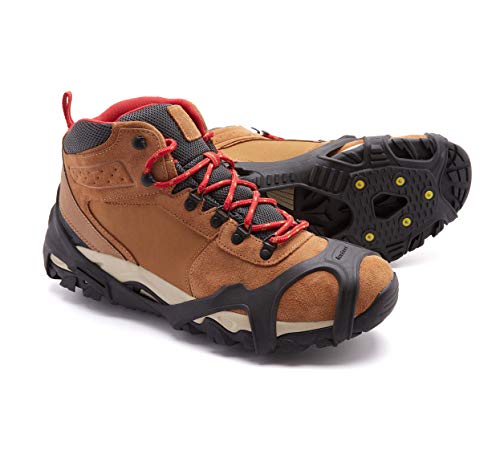
- Nine tungsten carbide spikes with snow tread
- StayON toe cap helps prevent shifting
- Reflective heel for low-light visibility
Best For: Winter runners seeking secure, reflective over-shoe traction
Runner-Focused Grip

- Designed to fit over running shoes
- Combines spikes and stainless-steel coils
- Provides 360-degree traction
Best For: Winter runners continuing training on snow and ice
Heavy-Duty Trail Traction
19-Spike Stainless Steel Cleats

- Nineteen stainless-steel spikes per foot
- Thick TPE frame rated to -45°C
- Adjustable strap and carry bag included
Best For: Mixed-terrain trail users needing rugged ice traction
Waterproof Grip Pick – Salomon Speedcross GTX
Salomon Men’s Speedcross GTX, Waterproof Trail Running Shoes - Sharkskin/Black/Lemon - 9 Medium
Check Price On AmazonFor trail running shoes for ice, the Salomon Speedcross GTX is a practical option when winter routes also include wet ground, mud, loose gravel, or soft snow. Its waterproof GORE-TEX upper and aggressive Contagrip TA lugs prioritize weather protection and traction across mixed trail conditions.
Best For: Runners who need waterproof protection, debris resistance, and confident grip on varied winter trails.
Pros:
- Waterproof, windproof, and breathable GORE-TEX membrane.
- Aggressive Contagrip TA lugs are designed for mud, wet ground, and soft snow.
- Sensifit construction and Quicklace provide a secure, adjustable fit.
- Anti-debris mesh and ripstop fabric help protect against trail debris and abrasion.
Cons:
- The notes emphasize soft snow and mixed terrain rather than dedicated ice-specific traction.
- Moderate cushioning may not suit runners seeking a highly cushioned ride.
This is a strong all-weather trail choice for wet, snowy routes, but runners facing frequent glare ice may want to verify whether the outsole meets their need for specialized ice traction.
Winter Mountain Specialist – Arc'teryx Norvan 4 Nivalis GTX Women's
The Arc’teryx Norvan 4 Nivalis GTX is built for winter mountain running, making it a focused choice among trail running shoes for ice when routes involve snow, mud, and technical terrain. It combines waterproofing, breathability, durability, and traction-enhanced construction in a low-top trail shoe.
Best For: Women running technical winter trails where weather protection and adaptable mountain performance matter.
Pros:
- Designed specifically for winter trail and technical mountain activities.
- Waterproof and breathable construction supports changing conditions.
- Traction-enhanced outsole is recommended for mud and snow.
- Moderate EVA cushioning balances protection with trail mobility.
Cons:
- The supplied details do not specify a dedicated ice-specific outsole compound or studs.
- Moderate cushioning may feel limited for runners wanting maximum underfoot softness.
Choose this model for winter mountain routes and snow-covered trails. For polished ice, confirm that its traction system matches your route and consider whether an external traction device is needed.
All-Surface Trail Pick – Salomon Speedcross Peak
Salomon Men’s Speedcross Peak Trail Running Shoes - Black/Black Forest/Rainy Day - 10 Medium
Check Price On AmazonThe Salomon Speedcross Peak is a versatile option for trail running shoes for ice when winter outings also cover wet, dry, hard, or loose surfaces. Its Contagrip rubber outsole, protective toe and heel caps, and secure Quicklace fit make it suited to mixed-terrain hiking and trail running.
Best For: Runners and hikers who want durable foot protection and adaptable traction across changing trail surfaces.
Pros:
- Contagrip rubber outsole is designed for wet, dry, hard, and loose surfaces.
- Aggressive lugs provide traction across mixed terrain.
- Heel and toe caps help protect against bumps, scratches, and impacts.
- Sensifit and Quicklace create a snug, adjustable foothold.
Cons:
- The notes do not identify specialized studs or dedicated ice-grip technology.
- Moderate cushioning may be less suitable for runners seeking a plush ride.
This model makes sense for general winter trail use and variable surfaces. If your route is primarily hard, polished ice, treat its all-terrain traction as a general-purpose solution rather than a guarantee of ice-specific grip.
Winter-Ready Men's Choice – Arc'teryx Norvan 4 Nivalis GTX Men's
The men’s Arc’teryx Norvan 4 Nivalis GTX is designed for high-output winter trail running and technical mountain activity. As trail running shoes for ice, it offers waterproof protection, traction-device compatibility, and a winter-ready build for routes that may combine snow, mud, and challenging terrain.
Best For: Men tackling technical winter trails who value waterproofing and compatibility with added traction equipment.
Pros:
- Winter-ready design for demanding mountain trail activities.
- Waterproof and breathable construction helps handle changing weather.
- Traction-device compatibility adds flexibility for icy or snow-covered routes.
- Lightweight 290 g construction with moderate EVA cushioning.
Cons:
- The supplied details do not specify that traction devices are included.
- Moderate cushioning may not provide the plush feel some runners prefer.
Its traction-device compatibility makes this one of the more adaptable choices for winter conditions, especially when ice is part of the route. Plan on pairing it with a suitable traction device if the trail includes slick, hard-packed ice.
Best Overall Traction – Kahtoola MICROspikes Winter Traction
Kahtoola MICROspikes Footwear Traction for Winter, Snow & Ice Trail Hiking - Black - Medium
Check Price On AmazonFor trail running shoes for ice, the Kahtoola MICROspikes are a dedicated traction add-on for runners who need aggressive grip on icy mountain trails and winter terrain. Their stainless-steel spikes and flexible elastomer harness are designed for cold-weather use, though shoes are not included.
Best For: Winter trail running, hiking, backpacking, and icy backcountry routes.
Pros:
- 12 heat-treated stainless-steel spikes per foot provide strong traction.
- Flexible TPE elastomer remains stretchy down to -22°F (-30°C).
- Chains help prevent snow buildup and the traction system packs compactly.
Cons:
- Designed for hiking shoes and boots as well as footwear, so fit should be checked carefully.
- Shoes are not included.
Choose the MICROspikes when dependable grip on uneven, icy trails matters more than the low-profile feel of road-running traction. The integrated toe bail and reinforced eyelets help support a secure fit during demanding winter outings.
Best Waterproof Shoe – ALTRA TIMP 6 GTX Trail Running Shoe
The ALTRA TIMP 6 GTX is a waterproof trail shoe option for runners comparing trail running shoes for ice. Its GORE-TEX upper helps keep moisture out, while the Vibram Megagrip outsole is built for grip on wet and dry surfaces; however, the supplied details do not specify dedicated ice spikes.
Best For: Wet-weather trail running where waterproofing and versatile outsole grip are priorities.
Pros:
- GORE-TEX Invisible Fit technology is waterproof, windproof, and breathable.
- Vibram Megagrip rubber is designed for wet and dry surface traction.
- Received the APMA Seal of Acceptance for promoting good foot health.
Cons:
- No dedicated metal spikes are listed for icy conditions.
- Low-top construction may provide less coverage than a winter boot.
The TIMP 6 GTX makes the most sense when wet trails and changing weather are your main concerns. For polished ice or especially slippery routes, consider pairing suitable footwear with a purpose-built traction device rather than relying on the shoe alone.
Best Low-Profile Option – Kahtoola NANOspikes Road Traction
Kahtoola NANOspikes Footwear Traction for ICY Winter Road Running & Walking - Charcoal/Red - Medium
Check Price On AmazonThe Kahtoola NANOspikes are a low-profile traction option for runners searching for trail running shoes for ice but primarily covering hard-packed snow, icy sidewalks, and city streets. Their tungsten carbide spikes are designed to improve grip without significantly changing gait or foot strike on lightweight running shoes.
Best For: Road running, walking, and compact icy surfaces with lightweight shoes.
Pros:
- 10 concave tungsten carbide spikes per foot target hard, slippery surfaces.
- Low-profile design is intended to preserve a natural gait and foot strike.
- Revised harness, heel tab, and toe bail support easier fitting and removal.
Cons:
- Best suited to roads, sidewalks, and hard-packed snow rather than rugged mountain trails.
- Shoes are not included.
Pick the NANOspikes when you want lightweight traction for icy commutes, road runs, or packed winter paths. Their compact design is less oriented toward deep snow and rugged trail conditions than the more aggressive MICROspikes.
Cold-Weather Confidence – ICETRAX V3 Tungsten Crampons
For trail running shoes for ice, the ICETRAX V3 adds nine tungsten carbide crampons and a snow-tread traction system over compatible footwear. Its secure toe cap, cold-resistant rubber construction, and reflective heel make it a practical choice for winter runs in slippery conditions.
Best For: Runners who want secure-fitting traction cleats with reflective details for icy morning or evening outings.
Pros:
- Nine tungsten carbide spikes plus snow tread provide traction on ice and snow.
- StayON toe cap helps keep the cleats positioned on most shoes and boots.
- Reflective heel panels improve visibility in low-light conditions.
- Rubber construction is designed to remain elastic in frigid temperatures.
Cons:
- The listed L/XL size fits men’s 9.5–13 and women’s 11 and up, limiting compatibility for smaller feet.
- The manufacturer warranty is listed as 30 days from purchase.
The ICETRAX V3 is a strong option when visibility, a secure over-shoe fit, and tungsten traction matter. Check sizing carefully before pairing it with your trail running shoes.
Runner-Focused Grip – Yaktrax Run Traction Cleats
Built specifically to fit over running shoes, the Yaktrax Run is a focused option for trail running shoes for ice. It combines 3 mm carbide-steel spikes with stainless-steel coils to provide traction in multiple directions while keeping the device lightweight.
Best For: Runners who want purpose-built, lightweight cleats for continuing winter training on snow and ice.
Pros:
- Combines carbide-steel spikes and stainless-steel coils for cold-surface traction.
- 360-degree traction supports stability during changes in direction.
- Formed-toe and over-foot straps help secure the running shoe.
- Reflective heel and side straps add visibility.
Cons:
- The listed Large size fits women’s 13–15 and men’s 11.5–13.5, so sizing options should be checked carefully.
- The coil-and-spike design is intended for snow and ice rather than general-purpose footwear use.
With a runner-specific frame and all-direction traction, the Yaktrax Run is especially suitable for winter training. Its broad size range is useful, but the correct size is essential for a stable fit.
Heavy-Duty Trail Traction – 19-Spike Stainless Steel Cleats
These 19-spike cleats offer a versatile approach to trail running shoes for ice, with stainless-steel spikes, a firm chain system, and a thick thermoplastic elastomer frame. An adjustable strap and included carry bag make them practical for changing conditions on trails, icy roads, and other slippery surfaces.
Best For: Trail users who need broad, durable traction for ice, angled terrain, wet grass, and mixed outdoor activities.
Pros:
- Nineteen stainless-steel spikes per foot provide substantial traction coverage.
- Thick TPE material is designed to perform in temperatures as low as -45°C.
- Adjustable strap supports fit and makes the cleats easier to put on and remove.
- Portable design includes a carry bag for compact storage.
Cons:
- The supplied details list the package as one pair but do not specify a detailed shoe-size range for the Large model.
- The heavier spike coverage may feel less running-specific than a dedicated running cleat design.
This model is a sensible choice for mixed-terrain users who prioritize spike count and durability. Confirm the Large sizing and consider the more rugged design if your main use is fast trail running.
How We Picked the Best Trail Running Shoes for Ice
We evaluated these picks around the conditions that make winter running difficult: glare ice, packed snow, slush, wet rock, cold temperatures, and rapidly changing surfaces. Priority went to dependable traction, secure fit, weather resistance, and designs that remain usable at a running pace.
We also considered how each option fits into a winter kit. Some are complete trail shoes with waterproof membranes and lugged outsoles, while others are removable traction devices that work over compatible running shoes. Because no single setup is ideal for every route, the list includes solutions for both technical trails and maintained roads.
Quick Comparison
- Best for wet, snowy trails: Waterproof trail shoes with aggressive lugs and a secure heel hold.
- Best for technical ice: Removable microspikes with longer, more aggressive points.
- Best for road running: Lightweight nano-traction or running-specific cleats that reduce bulk.
- Best for variable conditions: A waterproof shoe paired with removable traction you can take off when pavement appears.
- Best for budget flexibility: Basic ice cleats that fit over shoes or boots and provide straightforward grip.
Key Buying Factors for Trail Running Shoes for Ice
Traction Pattern and Spike Design
Look for deep rubber lugs when running on snow, mud, and wet trail. For hard ice, metal studs or spikes usually provide more reliable bite than rubber alone. Shorter studs are often smoother and lighter for roads, while microspikes offer better purchase on uneven, deeply frozen terrain.
Waterproofing and Warmth
A waterproof membrane helps keep slush and melting snow out, but it does not automatically make a shoe warm. Leave room for winter socks without allowing your foot to slide. Removable traction can be more versatile because you can choose insulation and waterproofing separately.
Fit, Stability, and Flexibility
Your heel should stay locked down, and your toes should have enough space to avoid pressure when descending. A flexible forefoot can feel natural while running, but technical routes may call for a firmer platform and stronger lateral support. Traction devices should fit snugly without shifting underfoot.
Weight and Surface Compatibility
Heavy spikes can become tiring on long runs and awkward on exposed pavement. Check whether the traction system is intended for trails, roads, or both, and remove it when the manufacturer advises. No ice cleat replaces careful footing on bare rock, stairs, or smooth indoor floors.
Who Should Buy Which Trail Running Shoes for Ice?
Choose a waterproof trail shoe if your routes regularly combine snow, slush, mud, and short icy sections. Pick lightweight running cleats for mostly paved routes where speed, flexibility, and easy storage matter. Select microspikes for steep or technical trails with sustained ice and uneven snow.
If conditions change throughout the run, a waterproof shoe plus removable traction is the most adaptable setup. For occasional winter walks or mixed household use, a simpler over-shoe cleat may be sufficient. Whichever option you choose, match the traction to your route, test the fit before a long outing, and carry a backup plan when weather or trail conditions can deteriorate quickly.