Running puts repeated demands on your calves, hamstrings, hips, and feet. A well-designed stretching strap can help you perform controlled mobility work without relying on flexibility or balance alone.
We compared 10 popular straps for runners, focusing on loop placement, adjustability, material, comfort, and versatility for warmups, cooldowns, and physical-therapy exercises.
Best 10 Stretching Strap for Runners Picks for 2026
Best Elastic Option
Therapist’s Choice Stretch Strap

- Elastic design supports contract-relax stretching
- Toe and large loops target feet and lower body
- Includes an instructional manual
Best For: Runners wanting a slightly yielding strap for lower-body flexibility
Best Established Non-Elastic Pick

- Firm nylon strap with ten durable loops
- Six-foot length suits full-body stretching
- Includes a 40-page booklet and video guide
Best For: Runners who want structured, controlled stretching and recovery work
Best Long Rehab Strap
Professional 86-Inch Stretching Strap
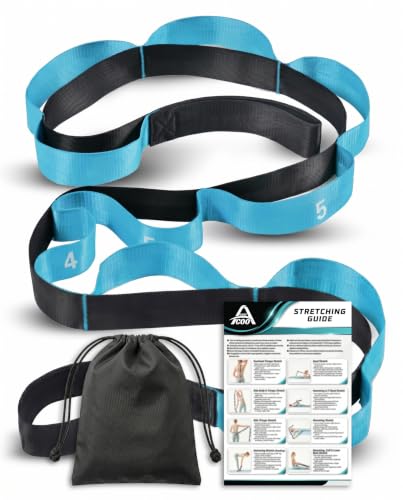
- 86-inch version has ten numbered loops
- Rigid nylon gives controlled, recoil-free tension
- Includes pouch and exercise guide with the professional version
Best For: Runners needing precise mobility work or a portable strap option
Best Everyday Mobility Strap

- Non-elastic design provides controlled tension
- Evenly spaced loops adjust stretch intensity
- Lightweight 75-inch strap suits gym and travel
Best For: Runners wanting portable daily mobility and recovery work
Adjustable Yoga Strap

- Secure adjustable metal D-ring loop
- Durable 8-foot polyester design
- Rolls up for easy transport
Best For: General post-run stretching and mobility work
Foot and Calf Stretcher
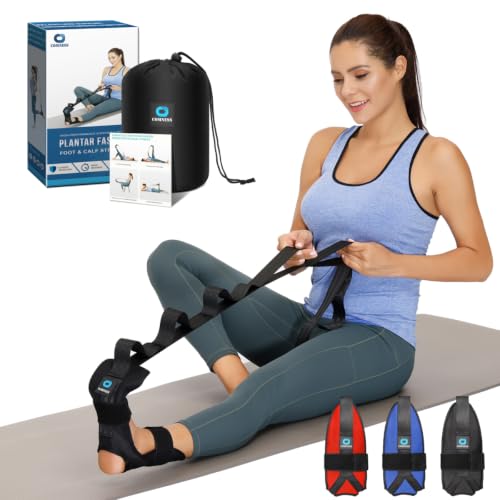
- Ergonomic foot cradle design
- Six loops for varied positions
- Includes pouch and instructions
Best For: Targeted foot, calf, and Achilles stretching
Looped Therapy Strap

- Ten numbered loops for positioning
- Comfortable neoprene handles
- Includes guide and carry bag
Best For: Repeatable hamstring and leg flexibility routines
Best for Controlled Recovery

- Non-elastic strap avoids rebound
- Multiple loops adjust stretch depth
- Useful for home mobility and leg assistance
Best For: Controlled recovery and daily mobility work
Best Soft-Grip Option

- Soft 100% cotton construction
- Adjustable double D-ring buckle
- Long 98-inch design for varied stretches
Best For: Comfort-focused stretching and versatile workouts
Best for Extra Loop Choices
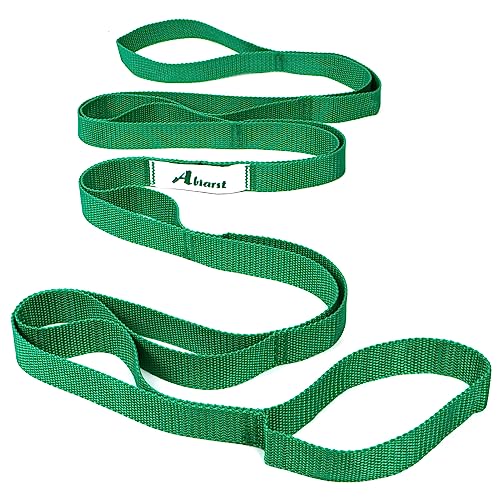
- Ten fixed loops offer positioning flexibility
- Non-elastic design supports steady holds
- Washable fabric suits regular use
Best For: Runners wanting many repeatable stretch positions
Best Elastic Option – Therapist’s Choice Stretch Strap
The Therapist’s Choice strap is a strong option if you want a stretching strap for runners with a little give. Its elastic design supports contract-relax and more comfortable static stretching, while its combination of large and toe loops helps target common lower-body areas.
Best For: Runners who want elastic assistance for calves, hamstrings, quads, hips, and foot-focused stretches.
Pros:
- Elastic construction supports contract-relax stretching and has slight give for static stretches.
- End toe loops can help target plantar fascia and heel-focused stretches.
- Large loops accommodate hamstring, quadriceps, hip, lower-back, and calf exercises.
- Includes a basic instructional manual and supports partner-free PNF-style stretching.
Cons:
- Contains latex, which may not suit users with latex sensitivity.
- At approximately 50 inches, it is shorter than several non-elastic options.
This is a practical pick for runners who prefer guided loop placement and a more forgiving elastic feel, especially when working on feet and lower-body flexibility.
Best Established Non-Elastic Pick – OPTP Stretch Out Strap
The OPTP Stretch Out Strap is a nylon stretching strap for runners who want firm, predictable control rather than elastic recoil. Its six-foot length, ten loops, and included exercise materials make it useful for warm-ups, cool-downs, mobility work, and recovery routines.
Best For: Runners seeking a durable, non-elastic strap with extensive guidance for legs, back, and full-body stretching.
Pros:
- Non-elastic nylon construction provides consistent tension and control.
- Ten durable loops allow multiple hand and foot positions.
- Six-foot length works for leg stretches, upper-body exercises, Pilates, yoga, and running routines.
- Includes a 40-page exercise booklet and video stretching guide.
Cons:
- Non-elastic construction does not provide the assisted give of an elastic strap.
- Its longer length may be less compact than shorter travel-oriented straps.
With its established design, USA-made construction, and substantial exercise guidance, this strap is a well-rounded choice for runners building a repeatable mobility routine.
Best Long Rehab Strap – Professional 86-Inch Stretching Strap
This long nylon stretching strap for runners is designed for precise, controlled positioning without elastic snap-back. The 86-inch version has ten numbered loops for tracking flexibility, while the product also offers a lighter 75-inch style for users who prioritize portability.
Best For: Runners who want a long, rigid strap for measured mobility work, rehabilitation, or dynamic warm-ups.
Pros:
- The 86-inch option provides ten numbered sections for consistent positioning and progress tracking.
- Non-elastic premium nylon offers stable resistance without recoil.
- The professional version includes a carry pouch and exercise guide.
- Available in a minimalist 75-inch style for lighter travel use.
Cons:
- The listed options differ in length, width, and features, so buyers must select the desired version carefully.
- The rigid, non-elastic feel may be less forgiving for users who prefer a yielding strap.
This is a flexible buying choice for runners who value either measured loop progression or a simpler travel format, with the professional version offering the most tracking and accessories.
Best Everyday Mobility Strap – Trideer Stretching Strap
The Trideer strap is a straightforward stretching strap for runners who want controlled mobility work at home, in the gym, or while traveling. Its non-elastic webbing and evenly spaced loops support adjustable hamstring, calf, IT band, hip, shoulder, and back stretches.
Best For: Runners wanting a compact everyday strap for warm-ups, cool-downs, flexibility training, or rehabilitation exercises.
Pros:
- Non-elastic construction avoids snap-back and helps maintain controlled tension.
- Evenly spaced loops make it easier to adjust stretch intensity as flexibility changes.
- Reinforced woven webbing is designed for repeated daily use.
- At 75 inches and 3.2 ounces, it is relatively easy to carry to the gym or while traveling.
Cons:
- It does not provide elastic assistance for users who prefer a stretching band with give.
- The supplied notes do not specify a printed loop-numbering system for progress tracking.
For runners seeking a simple, stable, and portable tool, the Trideer offers broad exercise versatility without the recoil associated with elastic bands.
Adjustable Yoga Strap – Premium D-Ring Stretch Band
If you want a straightforward stretching strap for runners, this Gaiam model offers an adjustable loop and an 8-foot length for reaching limbs, holding stretches, and working on flexibility. Its non-elastic polyester fabric is designed for repeated use and packs easily into a gym or yoga bag.
Best For: Runners who want a general-purpose strap for post-run stretching, yoga, Pilates, or mobility work.
Pros:
- Adjustable metal D-ring creates a secure loop.
- Eight-foot length helps with challenging stretches and extended reach.
- Durable polyester fabric is designed not to fray or break easily.
- Rolls up for convenient storage and transport.
Cons:
- Hand washing and flat drying are required.
- It provides a basic strap design rather than padded foot or hand support.
The secure buckle and flexible loop setup make this a versatile choice for runners who want one simple strap for regular flexibility sessions.
Foot and Calf Stretcher – Targeted Plantar Fascia Strap
This foot and calf stretcher is a targeted stretching strap for runners focused on the feet, ankles, calves, hamstrings, or plantar fascia. Its cradle design and six-loop webbing support multiple positions, while the included pouch makes it practical for home, gym, office, or travel use.
Best For: Runners seeking focused foot-and-calf stretching, including routines related to plantar fascia, Achilles tendon, or ankle mobility.
Pros:
- Ergonomic cradle design helps support the foot during stretching.
- Six rugged loops allow different stretching positions.
- Can be oriented for foot arch and quadriceps stretches.
- Includes an instruction manual and carrying pouch.
Cons:
- Its 60-inch length is shorter than some general-purpose stretching straps.
- The specialized foot cradle may be less versatile for whole-body stretching.
For runners who want more targeted lower-leg work than a standard yoga strap provides, the cradle and loop arrangement make this a focused option.
Looped Therapy Strap – Numbered Nylon Stretch Band
This looped stretching strap for runners uses numbered positions to make mobility routines easier to monitor and repeat. The 78-inch non-elastic nylon strap has 10 loops, neoprene handles, a carry bag, and a stretching guide for use in flexibility, Pilates, fitness, dance, or physical therapy routines.
Best For: Runners who prefer clearly marked loop positions for repeatable hamstring, leg, and general flexibility exercises.
Pros:
- Numbered loops help track hand and foot placement.
- Neoprene handles add comfort around the hands and feet.
- Non-elastic nylon offers stable resistance for controlled stretching.
- Includes a carry bag and beginner-friendly stretching guide.
Cons:
- The standard version is 78 inches long, not the longer 96-inch option.
- It is a one-piece strap, so it does not provide a padded foot cradle.
The numbered loops and included guide make this a practical choice for runners who want consistent positioning and a structured approach to post-run flexibility work.
Best for Controlled Recovery – Trideer Loop Stretching Strap
For runners looking for a stretching strap for runners that supports slow, measured mobility work, the Trideer uses multiple non-elastic loops instead of springy resistance. Its 75-inch length can help you control positioning for calves, hamstrings, hips, feet, and lower back stretches.
Best For: Home mobility routines, physical-therapy-style stretching, and runners who prefer steady holds without rebound.
Pros:
- Non-elastic design stays steady without sudden give.
- Multiple loops provide adjustable hand and foot positions.
- Can assist with leg lifting into bed or a car when flexibility is limited.
- Supports controlled work across calves, Achilles, hamstrings, hips, and lower back.
Cons:
- It is a mobility strap, not an elastic resistance band.
- Longer holds may be less comfortable for sensitive hands without gloves or socks.
This is a practical choice when consistency and gentle control matter more than added resistance. The loop layout also makes it easier to repeat similar positions and monitor mobility over time.
Best Soft-Grip Option – Cotton D-Ring Yoga Strap
This cotton strap is a flexible option for runners who want a stretching strap for runners that feels comfortable during repeated flexibility sessions. The 98-inch length, adjustable double D-ring buckle, and extra grip loop allow you to set the strap for different stretches and positions.
Best For: Runners who prioritize a soft grip and want one adjustable strap for stretching, balance work, Pilates, or physical therapy exercises.
Pros:
- 100% cotton construction is designed for a soft, comfortable grip.
- Double D-ring buckle allows length adjustment for different stretches.
- Welded D-rings are designed to resist slipping during use.
- Extra loop and 1.5-inch width provide additional hand control.
Cons:
- The buckle system requires adjustment rather than offering fixed loop positions.
- Its broader, softer design may be less specialized for runners seeking a compact recovery strap.
Choose this model if hand comfort and versatility are high priorities. Its long, adjustable format can accommodate a range of stretching positions, though it offers a different feel from a multi-loop strap.
Best for Extra Loop Choices – 10-Loop Stretching Strap
Runners comparing a stretching strap for runners may appreciate this 75-inch, non-elastic design for its 10 individual loops. The longer-than-standard loop spacing gives you several grip and foot-placement options for flexibility work, warmups, and post-exercise mobility.
Best For: Runners who want many fixed positions for calf, hamstring, hip, and general flexibility exercises.
Pros:
- Ten individual loops offer numerous positioning options.
- Non-elastic fabric supports steady, controlled stretching.
- Durable, washable fabric is described as tight-knit and skin-friendly.
- Suitable for stretching, Pilates, physical therapy, dance, and gymnastics exercises.
Cons:
- It does not provide elastic resistance or rebound.
- The many loops may be unnecessary for users who prefer a simple buckle strap.
This strap is a strong fit when repeatable hand and foot placements are more useful than adjustability through a buckle. Its washable fabric and broad exercise compatibility make it suitable for regular mobility sessions.
How We Picked the Best Stretching Strap for Runners
We focused on features that matter during regular running-related mobility work: secure hand placement, useful adjustment options, durable construction, and enough length for lower-body stretches. Loop straps can make it easier to maintain consistent positioning, while D-ring designs offer more flexibility in setting the strap length.
We also considered whether each style suits beginners, experienced athletes, or users following a physical-therapy routine. A good strap should support gradual progress without forcing a joint into an uncomfortable range of motion.
Quick Comparison
| Strap type | Best for | Main advantage |
|---|---|---|
| Multi-loop strap | Runners who want precise hand placement | Easy to adjust during stretches |
| D-ring yoga strap | General mobility and portability | Simple length adjustment |
| Foot and calf strap | Targeted foot, ankle, and calf work | More focused positioning |
| Therapy-oriented strap | Rehabilitation and assisted stretching | Supports controlled range-of-motion exercises |
Key Buying Factors for a Stretching Strap for Runners
Loop Design and Adjustability
Multiple loops provide ready-made grip points and can be helpful when stretching tight hamstrings or calves. A D-ring buckle lets you create a custom loop, but it may take slightly longer to reposition between exercises.
Length and Construction
Choose a strap long enough to reach your feet comfortably while keeping your shoulders relaxed. Non-elastic straps provide consistent leverage and are generally preferable for controlled stretching. Look for reinforced stitching and hardware that does not slip under moderate tension.
Comfort and Portability
Cotton and woven materials are typically comfortable against the skin and easy to pack in a gym bag. Narrow straps may cut into the hands during strong pulls, so wider webbing or well-spaced loops can improve comfort.
Intended Use
For everyday post-run mobility, a straightforward yoga-style strap may be enough. Runners managing plantar fascia, Achilles, calf, or hamstring limitations may prefer a design with dedicated foot positioning or several graduated loops. Use any rehabilitation-focused product according to guidance from a qualified professional.
Who Should Buy Which Stretching Strap for Runners?
Choose a multi-loop strap if you want fast, repeatable setups for calves, quads, hamstrings, and hips. It is often the most convenient option for runners who perform several stretches in one session.
Choose a D-ring yoga strap if you want a lightweight, versatile tool for stretching, Pilates, yoga, and travel. It is a practical choice when storage space and simplicity matter.
Choose a foot-and-calf stretcher if your routine centers on ankle mobility, plantar fascia care, or calf stretching. Its specialized shape may be less versatile but can provide better positioning for those movements.
Choose a therapy-oriented strap if you need controlled assistance during recovery exercises. Prioritize comfort, stable grip points, and the ability to progress gradually rather than maximum stretch intensity.