Choosing among stair climbers for seniors starts with one practical question: does the user need hands-on support, a powered seat, or a permanent lift? The right option can make stairs more manageable while matching the user’s strength, balance, home layout, and budget.
This roundup compares adjustable stair-assist canes, motorized stair chairs, and a DIY straight stair lift so you can narrow the choices by safety features, capacity, portability, and installation requirements.
Best 10 Stair Climbers for Seniors Picks for 2026
Best Permanent Stair Solution

- Self-installable straight stair lift
- 350-pound maximum capacity
- Safety seat and call-station features
Best For: Seniors needing seated access on a compatible straight staircase
Best Portable Cane Support
20-Level Stair Climbing Assist Cane
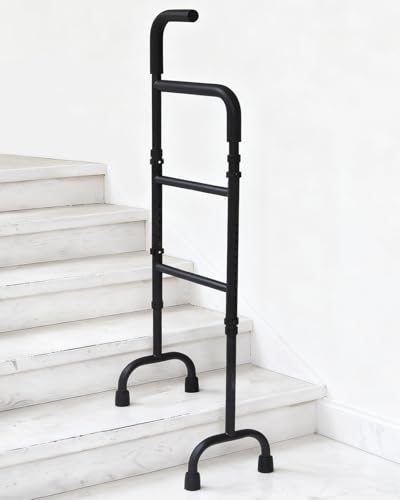
- Freestanding, no drilling required
- 20 adjustable height positions
- Carbon-steel quad base with anti-slip tips
Best For: Portable support at multiple indoor stair locations
Best Powered Caregiver Option
Foldable Electric Stair-Climbing Wheelchair

- Attendant-operated powered stair climbing
- 480-pound load capacity
- Folds for storage and transport
Best For: Caregivers supporting mobility-impaired users on stairs
Best Multi-Point Cane Grip
Stair Assist Cane with 8-Pad Design
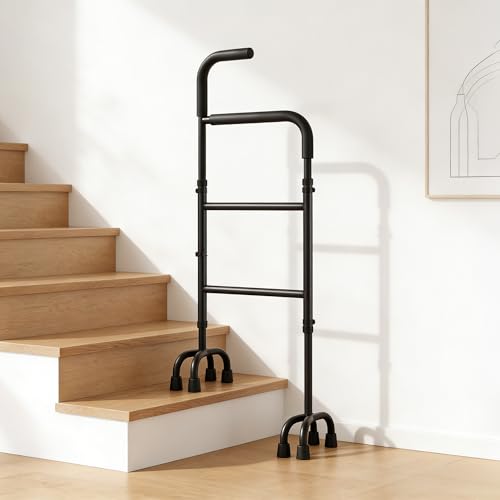
- 13 tool-free height adjustments
- Eight non-slip rubber foot pads
- 330-pound support capacity
Best For: Adjustable stair and flat-surface support
Best Adjustable Support
Stair Climbing Cane for Seniors

- Adjustable height and width
- 300-pound support capacity
- Wide anti-slip base
Best For: Users needing portable support on varied stairs
Best Height Range
20-Level Stair Climbing Assist Cane
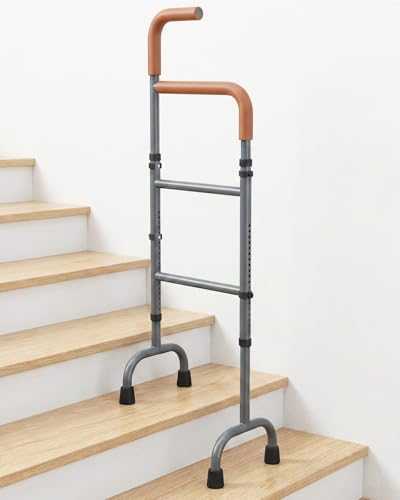
- 20 settings from 35–45 inches
- Four non-slip rubber feet
- Lightweight 4.4-pound design
Best For: Users needing flexible height adjustment
Best With Lighting

- Adjustable height and width
- Three-mode external light
- Lightweight aluminum frame
Best For: Users wanting portable support with added illumination
Best with Extra Features

- Dual handles for ascending and descending
- 20 height settings from 35–45 inches
- Wide V-shaped base with reinforced frame
Best For: Seniors and post-surgery users needing customizable stair support
Best Lightweight Metal Option

- Ten adjustable height settings
- Metal frame with anti-skid pads
- Includes screws and screwdriver
Best For: Users wanting a compact, adjustable metal stair aid
Best Multi-Grip Design
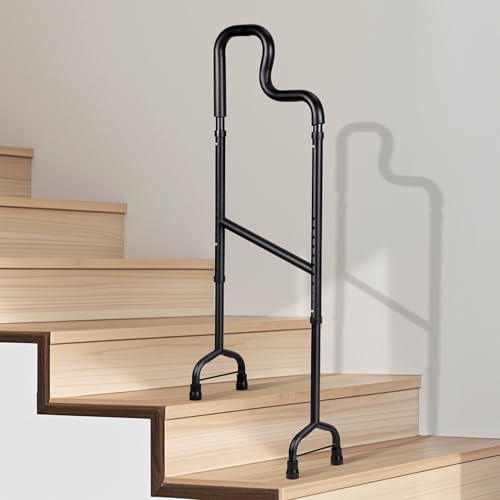
- Curved handle with three grip areas
- Four contact points across two steps
- Lightweight aluminum, no-drill design
Best For: Users needing flexible grips and portable stair support
Best Permanent Stair Solution – AmeriGlide Rave 2 Stair Lift
For shoppers comparing stair climbers for seniors, the AmeriGlide Rave 2 is a battery-powered straight stair lift designed for self-installation. It includes 15 feet of track and supports up to 350 pounds, making it a practical option for compatible straight staircases.
Best For: Seniors who need a seated, permanent mobility solution on a straight staircase.
Pros:
- Self-installable design with 15 feet of track included
- Supports up to 350 pounds
- Swivel seat, flip-up seat and armrests, footrest sensor, and wireless call stations
- Battery powered and made in the USA
Cons:
- Designed for straight staircases rather than curved stairs
- Requires installation and dedicated stair space
- Its listed 96-inch dimensions may require careful measuring before purchase
The Rave 2 is best suited to households seeking a conventional seated stair lift and willing to verify staircase compatibility and available space before installation.
Best Portable Cane Support – 20-Level Stair Climbing Assist Cane
This portable stair climbing assist cane is a lightweight alternative for seniors comparing stair climbers for seniors without permanent installation. Its freestanding carbon-steel frame has 20 height settings and a wide quad base for added support on stairs and other household surfaces.
Best For: Seniors taller than 5 feet who want portable assistance at different stair locations.
Pros:
- No wall drilling or permanent installation required
- 20 pin-lock height positions for stair use
- Wide four-foot base with rubberized anti-slip tips
- Soft EVA handles may reduce hand fatigue and arthritis discomfort
Cons:
- Must be fully assembled before use
- Users with severe mobility impairments need caregiver or professional assistance initially
- Recommended for use with a wall-mounted handrail for maximum stability
At 4.5 pounds, this cane is easy to reposition, but it should supplement—not replace—a secure handrail and appropriate supervision when needed.
Best Powered Caregiver Option – Foldable Electric Stair-Climbing Wheelchair
For households evaluating stair climbers for seniors with significant mobility limitations, this electric stair-climbing wheelchair is operated by an attendant. It avoids permanent renovation, folds for transport, and is rated to support up to 480 pounds.
Best For: Caregivers assisting mobility-impaired users across stairs at home, during hospital trips, or while traveling.
Pros:
- Motorized stair climbing reduces strenuous lifting and transfers
- 480-pound load capacity
- Three-speed control and LED battery display
- Foldable, portable design requires no installation
Cons:
- Designed for attendant operation rather than independent user control
- Its larger powered design may be less convenient than a cane for simple balance support
- Users must rely on battery power and proper harness use
This model prioritizes caregiver assistance and portability over a permanent stair lift, making it worth considering when renovation-free, powered stair transfers are the main requirement.
Best Multi-Point Cane Grip – Stair Assist Cane with 8-Pad Design
This adjustable stair assist cane offers eight cylindrical rubber foot pads and a carbon-steel frame for seniors comparing stair climbers for seniors. Its tool-free 13-level adjustment spans 28 to 36 inches, allowing use on stairs and flat surfaces.
Best For: Seniors and post-surgery users seeking adjustable support for stairs and short walks on level ground.
Pros:
- Tool-free adjustment across 13 height levels
- Eight rubber foot pads provide multi-point contact
- Carbon-steel construction supports up to 330 pounds
- Ergonomic soft-grip handle for a more comfortable hold
Cons:
- Screws must be fully tightened during assembly
- Requires testing on a flat surface before stair use
- Offers balance support rather than powered or seated stair transport
The eight-pad design and adjustable height make this a flexible basic aid, but users should follow the safety instructions and choose a separate solution if they cannot safely bear weight through a cane.
Best Adjustable Support – Stair Climbing Cane for Seniors
For shoppers comparing stair climbers for seniors, this adjustable stair assist cane is designed to provide support on indoor and outdoor steps as well as flat surfaces. Its height and width adjustments help accommodate different stair dimensions, while the wide base focuses on stability.
Best For: Seniors or post-surgery users who want a portable alternative to a fixed stair railing and need adjustable support for varied steps.
Pros:
- Adjustable height and width for different stairs and flat surfaces.
- Reinforced construction supports up to 300 pounds.
- Wide anti-slip foot pads and base help reduce wobbling.
- Padded ergonomic foam handle improves grip comfort.
Cons:
- Its 37.6-inch maximum height may not suit every user or stair setup.
- It is a support aid rather than a powered stair lift.
This model stands out for combining two-way adjustability with a broad base. Confirm the dimensions of your stairs and your preferred handle height before choosing it.
Best Height Range – 20-Level Stair Climbing Assist Cane
Among stair climbers for seniors, this carbon-steel assist cane is suited to shoppers who want many height settings. Its 20-level adjustment range covers 35 to 45 inches, and four rubber feet are designed to provide stability across wood, tile, and stone steps.
Best For: Users who need a lightweight, space-saving stair support with a broad range of height adjustments for standard or non-standard steps.
Pros:
- 20 height levels adjust from 35 to 45 inches without tools.
- Carbon-steel construction supports up to 300 pounds.
- Four non-slip feet provide a double-stability design.
- Weighs about 4.4 pounds and can stand upright for storage.
Cons:
- The supplied instructions caution users not to remove the white plastic plug in the smaller tube.
- Its narrow, slim design may require careful positioning on narrow or steep steps.
The standout feature is the unusually wide height range, paired with low weight and upright storage. Carefully follow the assembly and stability guidance before stair use.
Best With Lighting – Adjustable Stair Assist Cane
This stair assist cane is a practical option for shoppers evaluating stair climbers for seniors who want adjustable support plus an integrated lighting accessory. The aluminum frame adjusts in height and width, while widened foot pads and a foam handle are intended to improve stability and comfort.
Best For: Seniors and post-surgery users who want a lightweight, portable stair aid with adjustable sizing and extra illumination for indoor or outdoor use.
Pros:
- Height and width adjustments accommodate different steps and user heights.
- Lightweight aluminum construction weighs about 3.8 pounds.
- Widened anti-slip foot pads and foam handles support steadier use.
- Included external light offers three dimming modes.
Cons:
- The maximum height is 40 inches, which may not fit every user.
- The manufacturer advises testing stability on a flat surface before stair use.
- Users with limited strength or higher body weight should pay close attention to pressure points and body stability.
Lighting and a lightweight aluminum build make this model distinctive for dimmer settings and portability. Its safety precautions make a careful setup and stability check especially important.
Best with Extra Features – 20-Level Stair Assist Cane
For shoppers comparing stair climbers for seniors, this adjustable assist cane is designed specifically for moving up and down indoor or outdoor stairs. Its dual handles, wide V-shaped base, and reinforced frame provide portable support without requiring a permanent stair rail.
Best For: Seniors, people recovering from knee or hip replacement, and households needing adjustable support on multiple staircases.
Pros:
- Dual ergonomic handle positions support different postures when ascending or descending.
- 20 pin-lock height settings adjust from 35 to 45 inches.
- Wide V-shaped base and reinforced carbon-steel bracing help reduce slipping and side-to-side sway.
- Tool-free assembly and a two-year replacement period for damaged spare parts.
Cons:
- Designed for stair assistance rather than general-purpose walking on level ground.
- The carbon-steel construction may be less lightweight than an aluminum aid.
This is a strong option when adjustability and stair-specific stability matter most. The two-handle design is particularly useful for users who need different hand positions going up versus down.
Best Lightweight Metal Option – Half-Step Stair Climbing Cane
This half-step stair aid is a practical choice among stair climbers for seniors who want adjustable support for climbing, standing, and walking. Its metal construction, anti-skid pads, and compact design provide a portable helper for users with limited mobility.
Best For: Seniors and patients who need a height-adjustable balance aid for stairs and everyday standing or walking support.
Pros:
- Solid iron and stainless-steel construction is designed for durability.
- Ten height settings adjust from approximately 78 to 99 cm.
- Anti-skid pads and rubber protective sleeves help improve traction.
- Includes installation tools, two screw sets, and a screwdriver.
Cons:
- The pedal is small and may not suit every stair width.
- Installation requires tightening screws carefully to reduce base shaking.
- Users should regularly check that all parts remain securely locked.
Its adjustable range and included hardware make this a straightforward choice for users who want a metal stair helper. Check your stair dimensions carefully before purchasing, especially because the pedal design is compact.
Best Multi-Grip Design – Four-Point Stair Assist Cane
For shoppers seeking stair climbers for seniors with flexible hand positioning, this stair assist cane uses a continuous curved handle with high, middle, and low grip areas. Its two U-shaped bases provide four contact points across two stair treads, while independent leg adjustment helps accommodate step height differences.
Best For: Seniors and adults who want multiple grip positions, a lightweight frame, and freestanding support without drilling.
Pros:
- Continuous padded handle offers high, middle, and low grip positions.
- Four rubber foot pads create support across two stair treads.
- Legs adjust together for user height and independently for adjacent step differences.
- Lightweight aluminum frame requires no drilling or permanent installation.
Cons:
- Rubber foot traction is specified for clean, dry, level surfaces.
- Adjustment and placement may require matching both legs to the staircase.
- The notes do not provide a specific height range or weight capacity.
This model stands out for its open, lightweight design and unusually flexible grip layout. It is worth considering when users want more hand-position choices and a portable aid that can rest across two steps.
How We Picked These Stair Climbers for Seniors
We selected options across the main categories used for stair mobility: portable assist canes, powered stair-climbing chairs, and installed stair lifts. We considered adjustability, support points, handle and base design, stated weight capacity, portability, and whether the product is intended for straight staircases or individual steps. Because mobility needs vary significantly, this list emphasizes comparison rather than declaring one universal winner.
Always verify the manufacturer’s measurements, capacity, warranty, and safety instructions before purchase. A physical therapist, occupational therapist, or qualified installer can help determine whether a device is appropriate.
Quick Comparison
| Type | Best for | Main advantage | Important limitation |
|---|---|---|---|
| Adjustable stair-assist cane | Users who can stand and bear weight | Portable and relatively affordable | Requires balance, grip, and leg strength |
| Powered stair chair | Users needing powered transport | Reduces climbing effort | Heavier, costlier, and requires careful operation |
| Installed stair lift | Frequent use on a compatible staircase | Convenient seated access | Requires installation and a suitable stairway |
Key Buying Factors for Stair Climbers for Seniors
Mobility and Balance Requirements
Assist canes are designed for people who can still rise, step, and control their body weight. Look for multiple stabilizing feet, an anti-slip handle, and height or width adjustment. If standing on steps is unsafe or exhausting, consider a powered chair or installed lift instead.
Staircase Compatibility
Measure tread depth, riser height, stair width, landing space, and any turns. Straight stair lifts generally cannot be used on curved staircases without a different rail system. Portable devices may work on standard steps but still require enough room for safe positioning.
Capacity, Fit, and Control
Check the published weight rating, then account for clothing, shoes, and any carried items. Powered models should have understandable controls, dependable braking, secure seating, and a battery or charging system that suits the intended frequency of use.
Storage and Installation
Foldable chairs and canes are easier to store or transport, while a stair lift offers convenience but remains installed in place. Confirm whether assembly is genuinely DIY or whether professional installation is recommended.
Who Should Buy Which Stair Climbers for Seniors?
Choose an adjustable stair-assist cane if the user needs extra stability but can climb independently with support. Choose a powered stair-climbing chair when the user cannot safely manage repeated steps but still needs a transportable solution. Choose an installed stair lift when stairs are used daily, the staircase is compatible, and seated travel is the safest long-term arrangement.
If there is a history of falls, dizziness, significant weakness, or uncertainty about safe use, seek professional guidance before buying. The best stair climber is the one the user can operate consistently and safely—not simply the model with the highest capacity or lowest price.