Steep, off-camber snow demands more than a standard pair of snowshoes. For better climbing, edging, and control, you need secure traction, stable bindings, and a frame designed to bite when the grade gets serious.
This roundup covers the best snowshoes for steep terrain in 2026, with options for backcountry ascents, mountain travel, and lighter all-terrain use.
Best 10 Snowshoes for Steep Terrain Picks for 2026
Technical Alpine Choice
MSR Lightning Ascent for steep climbs
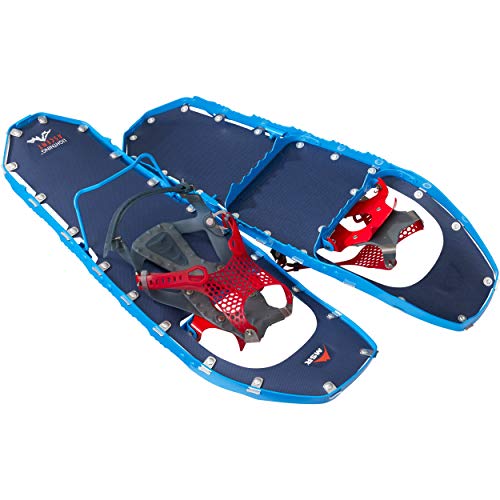
- Ultralight 4.33 lb pair
- 360-degree traction for traverses
- Heel lift bar aids steep ascents
Best For: Mountaineering and rugged steep terrain
Comfort-Focused Climber
Atlas Access with easy-fit climbing traction

- All-Trac Toe Crampon grips in all directions
- Heel lift helps on steep climbs
- Wrapp Swift binding adds comfort and ease
Best For: Hikers wanting traction plus comfort on steep slopes
Women's Steep-Terrain Specialist
MSR Women's Lightning Ascent for narrow strides

- 3.88 lb ultralight pair
- Tapered frame suits narrow strides
- Heel lift and crampons aid steep climbs
Best For: Women needing technical traction on steep mountain routes
Budget Mountain Set
G2 snowshoe set with poles and carry bag

- Includes trekking poles and tote bag
- Steel crampons improve grip on snow and ice
- Fast ratchet binding works in cold conditions
Best For: Value shoppers wanting a full mountain-terrain package
Steep-Terrain Traction Pick

- Steel teeth and Pivot crampons boost grip
- Ergo Televator helps on steep climbs
- Built for rugged hiking and trail breaking
Best For: Hikers needing durable traction and uphill support on alpine terrain
Backcountry Climbing Choice

- Steel rails and brake bars improve grip
- Televator heel lifts help on steep climbs
- Freeze-resistant Tri fit bindings suit cold use
Best For: Backcountry and mountaineering trips where steep-ascent traction matters most
Lightweight Steep-Terrain Option

- Steel crampons and traction rails add grip
- Paraglide binding fits many boot types
- Light 3 lb 10 oz build with add-on tails
Best For: Hikers wanting a lighter snowshoe for moderate climbs and general winter use
Alpine Climb Pick
MSR Revo Ascent Technical Snowshoes

- Edge-to-edge traction for steep slopes
- Secure Paragon bindings with glove-like feel
- Heel lift bar helps on hard ascents
Best For: Technical climbing and mountaineering on steep terrain
Trail-Balanced Pick
MSR Evo Explore Men's Snowshoes
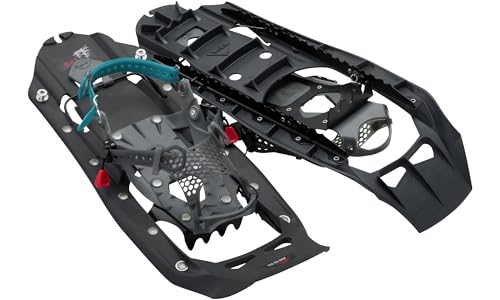
- Reliable traction from crampons and rails
- Heel risers ease steep climbs
- Comfort-focused Paradigm bindings
Best For: Men who want durable all-terrain performance on steep hikes
Women’s Trail Pick
MSR Evo Explore Women's Snowshoes

- Strong traction from crampons and rails
- Heel risers help on steep climbs
- Comfortable, glove-friendly binding system
Best For: Women wanting durable all-terrain snowshoes for steep winter hikes
Technical Alpine Choice – MSR Lightning Ascent for steep climbs
If you’re comparing snowshoes for steep terrain, the MSR Lightning Ascent is built for aggressive backcountry travel where traction and uphill efficiency matter most. Its ultralight build, 360-degree traction frame, steel crampons, and heel lift bar make it a strong fit for technical climbs and traverses.
Best For: Mountaineering, steep ascents, and rugged mountain terrain where secure grip is the priority.
Pros:
- Ultralight 4.33 lb pair helps reduce fatigue on long climbs.
- 360-degree Traction Frames provide edge-to-edge grip on traverses.
- Steel DTX crampons add serious bite on alpine steeps.
- Ergo Televator heel lift bar improves uphill efficiency.
Cons:
- 220-pound maximum load may be limiting for some users with heavier packs.
- Technical design is more specialized than casual trail snowshoes.
For steep, demanding routes, this model is clearly focused on control and traction rather than general recreation. If your priority is confident footing on steep climbs and exposed terrain, it stands out as one of the most purpose-built options here.
Comfort-Focused Climber – Atlas Access with easy-fit climbing traction
For shoppers looking at snowshoes for steep terrain but wanting a more comfort-oriented feel, the Atlas Access blends traction, support, and easy binding use. Its stiff Reactiv Frame, All-Trac Toe Crampon, and heel lift are designed to help when the slope gets steeper.
Best For: Hikers who want solid climbing traction with a comfortable, easy-to-use binding system.
Pros:
- All-Trac Toe Crampon adds traction in all directions.
- Heel Lift helps reduce fatigue on climbs and improves grip on steep ground.
- Wrapp Swift binding combines a technical fit with comfort and easy adjustment.
- Spring-loaded suspension keeps the snowshoe close underfoot for maneuvering.
Cons:
- Heavier-duty frame feel may be less ideal if you want the lightest option possible.
- Not as explicitly alpine-focused as the most aggressive technical models.
The Atlas Access is a practical middle ground if you want dependable uphill performance without sacrificing ease of use. It looks especially appealing for hikers who value traction on steep sections but still want a comfortable ride.
Women's Steep-Terrain Specialist – MSR Women's Lightning Ascent for narrow strides
If you need snowshoes for steep terrain in a women’s-specific fit, the MSR Women’s Lightning Ascent is designed for narrow strides and demanding mountain travel. It carries over the same technical traction, uphill aid, and secure binding concept as the men’s model, but in a lighter, tapered frame made for a narrower stance.
Best For: Women tackling steep ascents, traverses, and mountainous winter hikes.
Pros:
- Ultralight 3.88 lb pair helps keep effort down on long climbs.
- Tapered frame suits snowshoers with a narrow stride.
- 360-degree traction frame and steel DTX crampons provide strong alpine grip.
- Ergo Televator heel lift bar supports efficient steep ascents.
Cons:
- 180-pound maximum load is lower than some larger snowshoes.
- Specialized design is best suited to technical terrain rather than casual use.
This is a focused choice for women who want secure footing and efficient climbing on rugged routes. If steep traverses and hard-packed alpine conditions are on the agenda, the traction package is the main selling point.
Budget Mountain Set – G2 snowshoe set with poles and carry bag
For buyers seeking snowshoes for steep terrain with extra accessories, the G2 Mountain Terrain set includes snowshoes, trekking poles, and a tote bag. It uses a flexible pivot bar, sharp steel crampons, and a fast ratchet binding meant to work even in low temperatures.
Best For: Value-minded hikers who want a complete snowshoe-and-poles package for mountain terrain.
Pros:
- Includes trekking poles and a tote bag in the set.
- Steel crampons are designed for excellent grip on snow and ice.
- Fast ratchet binding is designed for easy use in cold conditions.
- Flexible pivot bar aims to feel more natural on flats and uphill travel.
Cons:
- Bulkier package design may be less specialized than top technical climbing models.
- Product details focus more on comfort and value than aggressive alpine performance.
This set is appealing if you want an all-in-one package rather than a stripped-down technical snowshoe. For steep terrain, the traction and binding features are useful, though the overall emphasis is more on convenience and versatility.
Steep-Terrain Traction Pick – MSR Revo Explore
If you want snowshoes for steep terrain that feel solid and confidence-inspiring, the MSR Revo Explore is built around traction and all-day control. Its ExoTract deck, steel perimeter teeth, Pivot crampons, and Ergo Televator heel lift are designed to help you bite into varied alpine snow while reducing fatigue on climbs.
Best For: Hikers and winter travelers who need dependable grip, floatation, and uphill efficiency on steeper routes.
Pros:
- Steel perimeter teeth and Pivot crampons provide edge-to-edge traction
- Ergo Televator heel lift helps reduce fatigue on steep ascents
- HyperLink binding offers an easy-entry, cushioned, centered fit
- Rugged build is suited to hiking, breaking trail, and extended winter trips
Cons:
- Maximum load is limited to 180 pounds
- Heavier than the lightest trail-focused options at 4.3 pounds
Overall, the Revo Explore is a strong fit if your priority is a tough, traction-forward snowshoe that stays composed when the route turns steeper and more technical.
Backcountry Climbing Choice – MSR Evo Ascent 22 Inch Pair
For snowshoes for steep terrain, the MSR Evo Ascent focuses on secure traction and climb-friendly efficiency. Its steel traction rails, molded brake bars, and Televator heel lifts are aimed at keeping you planted when the grade kicks up, while the Tri fit bindings are designed to stay glove-friendly in cold conditions.
Best For: Backcountry users and mountaineers who want stable traction and easier climbing on steep snow.
Pros:
- Steel traction rails and brake bars provide a secure grip
- Televator heel lifts reduce fatigue and improve traction on steeps
- Tri fit bindings are freeze-resistant and glove-friendly
- Modular flotation tails can add carrying capacity when needed
Cons:
- Flotation tails are sold separately
- Maximum recommended weight is 180 lbs without tails
This is the most climb-oriented option in the group, especially if you value dependable grip and an easy-to-use binding system for winter ascents.
Lightweight Steep-Terrain Option – MSR Evo Trail
MSR Evo Trail Snowshoes, 22 Inch Pair, Ranger | Why We Like The MSR Revo Trail 22 Snowshoe
Check Price On AmazonIf you want snowshoes for steep terrain without moving to a heavier backcountry build, the MSR Evo Trail offers a practical blend of traction and simplicity. Steel crampons and traction rails handle grip, while the injection-molded UniBody deck adds durability with enough flex for general winter travel.
Best For: Winter hikers who want a lighter, easy-to-use snowshoe with reliable traction on moderate climbs.
Pros:
- Steel crampons and traction rails deliver dependable grip
- Paraglide binding works with nearly any footwear, from hikers to snowboard boots
- Glove-friendly straps and buckle tabs make entry and exit easy
- Modular flotation tails can be added for deeper powder or heavier loads
Cons:
- No built-in heel lift is listed in the supplied notes
- Best suited to moderate climbing rather than the most technical steeps
The Evo Trail is a sensible pick if you want straightforward traction, broad boot compatibility, and a lighter feel for everyday winter hiking.
Alpine Climb Pick – MSR Revo Ascent Technical Snowshoes
MSR Revo Ascent Backcountry & Mountaineering Snowshoes with Paragon Bindings, 25 Inch Pair, Olive
Check Price On AmazonIf you want snowshoes for steep terrain, the MSR Revo Ascent is built for secure climbing and controlled movement on alpine slopes. Its edge-to-edge traction, one-piece steel crampons, and heel lift bar are all aimed at improving grip and uphill efficiency when the route gets steep.
Best For: Mountaineers and backcountry hikers who need rugged traction, secure boot hold, and dependable uphill performance on steep ascents.
Pros:
- Edge-to-edge traction from the ExoTract deck helps on traverses and steep slopes.
- One-piece steel crampons add bite when climbing icy or packed terrain.
- Paragon bindings wrap securely around boots for a glove-like fit.
- Ergo Televator heel lift bar helps reduce effort on steep ascents.
Cons:
- 220-pound maximum load may limit use for some users with heavier packs.
- Men’s binding fit is specific to sizes 6-14.
- At 4.67 pounds per pair, they are not the lightest option here.
For steep, technical terrain, this model focuses on security and traction more than all-around casual comfort. It is a strong choice if your winter routes include kickstepping, traverses, and sustained climbing.
Trail-Balanced Pick – MSR Evo Explore Men's Snowshoes
The MSR Evo Explore is a practical option if you need snowshoes for steep terrain without moving into a fully mountaineering-specific setup. It combines reliable traction, easy-to-use bindings, and glove-friendly heel risers to help with trail breaking, trekking, and steeper winter climbs.
Best For: Men looking for durable all-terrain snowshoes that balance traction, comfort, and easy uphill help on steep hikes.
Pros:
- Steel crampons and traction rails provide reliable grip.
- Televator heel risers help reduce fatigue on steep ground.
- Paradigm Bindings are designed for comfort and performance.
- Glove-friendly straps and buckle tabs make entry and exit simple.
Cons:
- 22-inch frame supports up to 180 pounds without extra MSR Evo Tails.
- Best suited to men’s shoe sizes 3-13.
- Less technical than the more mountaineering-focused Revo Ascent.
This is a versatile choice for hikers who want dependable performance on climbing sections but still need an everyday winter snowshoe. It offers a nice middle ground between comfort, traction, and durability.
Women’s Trail Pick – MSR Evo Explore Women's Snowshoes
MSR Evo Explore Lightweight Women's All Terrain Snowshoes | Why We Like The MSR Evo Explore Snowshoe
Check Price On AmazonThe MSR Evo Explore Women’s model brings the same steep-terrain-friendly features to a women’s fit. It is a solid pick for hiking, breaking trail, and trekking when you want dependable traction and easier climbs on winter routes.
Best For: Women seeking durable all-terrain snowshoes with easy uphill help and reliable grip on steep winter trails.
Pros:
- Steel crampons and traction rails deliver lasting grip.
- Televator heel risers help cut fatigue on steep terrain.
- Paradigm Bindings are built for comfort and performance.
- Glove-friendly straps and buckle tabs make setup straightforward.
Cons:
- 22-inch size supports up to 180 pounds without MSR Evo Tails.
- Designed for women’s shoe sizes 5-15.
- Less specialized for extreme alpine use than technical mountaineering models.
If you want snowshoes for steep terrain with an easy, all-terrain feel, this model is a practical fit. It emphasizes durability, traction, and convenience for winter hikers who still need dependable climbing support.
How We Picked the Best Snowshoes for Steep Terrain
We focused on models that prioritize traction, stability, and confidence on inclines. That means aggressive crampon systems, secure bindings, dependable flotation for variable snow, and designs that help reduce ankle and calf fatigue on long climbs.
We also considered versatility, weight, and fit options so there are choices for dedicated mountaineering use as well as more general mountain travel.
Quick Comparison
For the most demanding routes, choose a model with the strongest traction and most secure frame feel. If you want a more approachable option for mixed conditions, look for lighter all-terrain designs with enough bite for moderate pitches. Wider platforms can add flotation, while shorter, more technical models often feel easier to control on steep sidehills and hardpack.
Key Buying Factors for Snowshoes for Steep Terrain
Traction System
Front toe crampons, side rails, and heel traction matter most when the slope gets steep or icy. The more technical the route, the more important aggressive metal contact points become.
Binding Security
A stable binding should hold your boot firmly without pressure hotspots. On steep terrain, sloppy fit can waste energy and reduce control on side slopes or kick turns.
Frame Shape and Size
Narrower, more maneuverable frames can be easier to place on uneven ground. Larger decks provide more flotation in deeper snow, but they may feel less nimble on technical climbs.
Weight and Efficiency
Lighter snowshoes usually feel better on long ascents, but not if they sacrifice traction or durability. Balance weight savings against the demands of your terrain and pack load.
Use Case
Some Snowshoes for Steep Terrain are built for mountaineering and backcountry travel, while others are better for mixed trails, rolling hills, and occasional steeper sections. Match the model to how often you’ll be climbing aggressively.
Who Should Buy Which Snowshoes for Steep Terrain?
If you regularly tackle steep, icy, or technical routes, prioritize the most aggressive traction and most secure bindings. If your outings mix climbs with flatter approaches, a lighter all-terrain model can be a smarter everyday choice. For smaller users or those wanting a women-specific fit, look for sizing and deck shape that improve stride efficiency and control without excess bulk.
In short, the best choice depends on how steep your terrain is, how much snow you usually face, and how much stability you want when the trail turns upward.