When you leave cellular coverage, a satellite communicator can provide a vital connection for messaging, emergency assistance, and location sharing. The best models combine reliable satellite networks with practical GPS navigation and straightforward controls.
This roundup compares 10 notable options, from compact Garmin inReach devices to dedicated GPS navigators and feature-rich communicators. Consider your messaging needs, navigation preferences, subscription budget, and trip length before choosing.
Best 10 Satellite Communicators with Gps Picks for 2026
Best Compact Communicator

- Two-way global messaging and interactive SOS
- TracBack navigation and digital compass
- Up to 14 days of tracking-mode battery life
Best For: Lightweight off-grid communication and navigation
Best GPS-Only Navigator

- 2.2-inch sunlight-readable color display
- TopoActive maps with routable roads and trails
- Up to 25 hours on two AA batteries
Best For: Standalone outdoor GPS navigation
Best Flexible Messaging Network

- Messaging via satellite, cellular, or Wi-Fi
- Instant SOS with 24/7 emergency monitoring
- IP68 rating and 200+ hours in tracking mode
Best For: Group communication and remote travel preparedness
Best Mapping Communicator
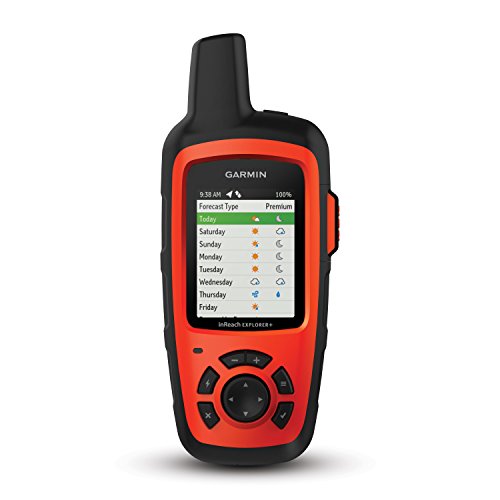
- Global Iridium two-way messaging and SOS
- Preloaded topo maps with onscreen GPS routing
- Built-in compass, altimeter, and accelerometer
Best For: Mapped navigation alongside satellite communication
Best Compact Messenger

- Two-way and group messaging globally
- GPS location sharing and interactive SOS
- Up to 28 days of battery life
Best For: Compact backcountry communication and extended trips
Best for Navigation
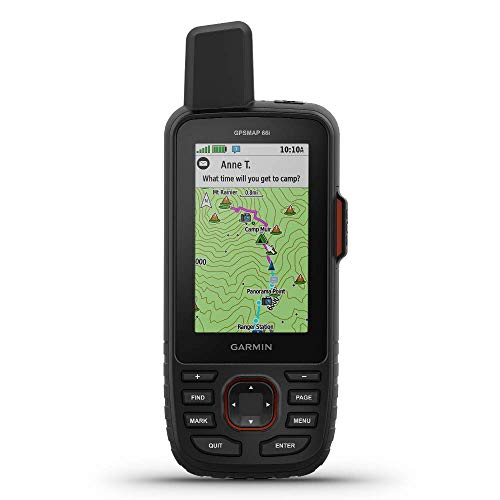
- 3-inch sunlight-readable color display
- TOPO maps and Birdseye imagery downloads
- Two-way messaging and interactive SOS
Best For: Map-focused hiking, geocaching, and route navigation
Best Long-Battery Option

- Photo, text, and voice messaging
- Up to 350 hours of tracking battery life
- Rugged IP67 color touchscreen design
Best For: Long outdoor trips requiring extended tracking and richer messaging
Best Bundle Value

- Two-way messaging and interactive SOS
- GPS with North America and topographical maps
- Includes lantern and extended protection plan
Best For: Hikers and campers seeking a compact GPS communicator bundle
Best for Rich Messaging

- Sends texts, photos, and 30-second voice messages
- Live GPS sharing and TracBack navigation
- Up to 25 days in 10-minute tracking mode
Best For: Adventurers who want multimedia messaging beyond cell coverage
Best Standalone Experience

- Color touchscreen with physical buttons
- Global Iridium messaging and interactive SOS
- Up to 350 hours in tracking mode
Best For: Backcountry travelers wanting rugged touchscreen navigation
Best Compact Communicator – Garmin inReach Mini 2
The Garmin inReach Mini 2 is a strong choice among satellite communicators with GPS for hikers and campers who want two-way messaging, navigation, and emergency support in a compact package. An active satellite subscription is required for satellite features.
Best For: Backpackers and outdoor travelers who prioritize low weight, global messaging, and long battery life.
Pros:
- Compact, lightweight design with two-way messaging and interactive SOS.
- GPS navigation includes TracBack routing and a digital compass.
- Up to 14 days of battery life in 10-minute tracking mode.
- Pairs with Garmin devices and the Garmin Explore app for planning and mapping.
Cons:
- Satellite messaging and location sharing require an active subscription.
- Its 1.27-inch monochrome display is compact rather than map-focused.
The Mini 2 balances portability and capability well. Choose it when reliable off-grid communication matters more than a large navigation screen.
Best GPS-Only Navigator – Garmin eTrex 22x
The Garmin eTrex 22x is a rugged handheld GPS navigator for buyers comparing satellite communicators with GPS but who primarily need mapping and route guidance. It does not provide satellite messaging or SOS features, so it is best viewed as a navigation-focused companion.
Best For: Hikers, cyclists, and outdoor users who want dependable GPS navigation without two-way satellite communication.
Pros:
- Sunlight-readable 2.2-inch color display with 240 x 320 resolution.
- Preloaded TopoActive maps include routable roads and trails.
- Supports GPS and GLONASS for tracking in challenging environments.
- Up to 25 hours of battery life with two AA batteries.
Cons:
- It does not offer satellite messaging, location sharing, or SOS.
- The display is not touchscreen-controlled.
The eTrex 22x is a practical, battery-swappable navigation unit. Select it for route finding and map storage, not for emergency communication beyond cell coverage.
Best Flexible Messaging Network – ZOLEO Satellite Communicator
The ZOLEO Satellite Communicator is one of the more flexible satellite communicators with GPS, using satellite, cellular, or Wi-Fi messaging through a paired smartphone. A service plan is required, while SOS and check-in features are designed for remote travel and preparedness.
Best For: Travelers, families, and work teams who want a dedicated messaging number and flexible connectivity across network types.
Pros:
- Sends messages over Iridium satellite, cellular, or Wi-Fi using the available network.
- Instant SOS connects to a 24/7 emergency monitoring center.
- GPS location sharing, check-ins, waypoints, and a dedicated SMS number.
- IP68-rated construction and more than 200 hours in tracking mode.
Cons:
- Requires a ZOLEO service plan for messaging and related services.
- Messaging and app controls depend on a paired Android or iOS smartphone.
ZOLEO stands out for combining satellite coverage with cellular and Wi-Fi messaging. It is a good fit when staying connected with a group is as important as emergency signaling.
Best Mapping Communicator – Garmin inReach Explorer+
The Garmin inReach Explorer+ combines two-way satellite messaging with GPS routing and built-in outdoor sensors. For shoppers seeking satellite communicators with GPS, it offers global Iridium coverage, preloaded topographic maps, and an onscreen navigation experience, though satellite features require a subscription.
Best For: Outdoor users who want a communicator with integrated topographic mapping and navigation tools.
Pros:
- Two-way text messaging through global Iridium satellite coverage.
- Interactive SOS connects with a 24/7 search-and-rescue monitoring center.
- Preloaded Topo maps, onscreen GPS routing, and a digital compass.
- Includes a barometric altimeter, accelerometer, Bluetooth, and IPX7 water rating.
Cons:
- Satellite messaging and SOS require a subscription.
- Battery life is up to 30 hours, shorter than some newer compact communicators.
The Explorer+ is suited to buyers who want communication and navigation in one handheld device. Its mapping and sensor set is more substantial than a basic messenger, but its battery runtime is more limited.
Best Compact Messenger – Garmin inReach Messenger
The Garmin inReach Messenger is a practical choice among satellite communicators with GPS for hikers and travelers who want global two-way texting, location sharing, and emergency support in a small, rugged device. It pairs with the Garmin Messenger app for group conversations and can use cellular or satellite connections where available.
Best For: Lightweight backcountry communication, group check-ins, and extended trips where battery life matters.
Pros:
- Supports two-way and group messaging through the Garmin Messenger app.
- Shares GPS location and provides interactive SOS access to Garmin’s 24/7-staffed coordination center.
- Offers up to 28 days of battery life in 10-minute tracking mode.
- Preset check-in messages do not count toward the allotted text messages.
Cons:
- An active satellite subscription is required for satellite messaging and safety features.
- Messaging features generally depend on pairing with a compatible smartphone.
- Satellite communication devices may be regulated or prohibited in some jurisdictions.
Choose this model if your priority is simple, connected messaging in a compact package rather than a large navigation display. Its long battery life and Garmin ecosystem support make it especially suitable for multi-day outdoor use.
Best for Navigation – Garmin GPSMAP 66i Renewed
The renewed Garmin GPSMAP 66i combines a handheld GPS navigator with satellite communication, making it one of the more navigation-focused satellite communicators with GPS. It includes a large color display, preloaded TOPO mapping, satellite imagery downloads, and two-way messaging over the global Iridium network.
Best For: Hikers, geocachers, and navigators who want detailed mapping alongside satellite messaging and SOS capability.
Pros:
- Large 3-inch sunlight-readable color display supports easier map viewing.
- Includes preloaded Garmin TOPO mapping and direct-to-device Birdseye satellite imagery downloads without an annual subscription.
- Supports two-way messaging and interactive SOS through the Iridium satellite network.
- Provides up to 35 hours of battery life in 10-minute tracking mode and up to 200 hours in Expedition mode.
Cons:
- Satellite texting and SOS features require a satellite subscription.
- This renewed unit includes a shorter 90-day limited warranty.
- The larger, navigation-oriented design may be less convenient than a compact messenger.
This is the stronger pick when route planning, waypoints, tracks, and map visibility are as important as communication. Because it is renewed, confirm the seller’s condition details and warranty expectations before buying.
Best Long-Battery Option – Garmin inReach Mini 3 Plus
The Garmin inReach Mini 3 Plus is a versatile option among satellite communicators with GPS, adding photo, text, and voice messaging to global satellite connectivity. Its color touchscreen, rugged IP67-rated design, tracking tools, and extended battery life suit demanding camping and hiking trips.
Best For: Adventurers who want rich messaging, long tracking endurance, and navigation features in a rugged handheld communicator.
Pros:
- Supports photo, text, and voice messages when paired with a compatible smartphone and the Garmin Messenger app.
- Provides interactive SOS with location coordinates through Garmin Response’s 24/7-staffed coordination center.
- Offers up to 350 hours of battery life with 10-minute tracking and up to 95 hours in performance messaging mode.
- Includes a scratch-resistant color touchscreen, IP67 water rating, weather forecasts, LiveTrack, and voice commands.
Cons:
- An active satellite subscription is required for satellite communication and SOS services.
- Photo messaging requires pairing with a compatible smartphone.
- Some jurisdictions regulate or prohibit satellite communication devices.
Pick the Mini 3 Plus if battery endurance and expanded messaging are more important than having a large map display. It is particularly compelling for long trips where tracking, weather information, and rugged construction add practical value.
Best Bundle Value – Garmin inReach Mini 2
The Garmin inReach Mini 2 is a compact choice for shoppers comparing satellite communicators with GPS for camping, hiking, and emergencies. It combines GPS navigation, two-way messaging, and interactive SOS functionality, while this bundle adds a lantern and extended protection coverage.
Best For: Hikers and campers who want a compact Garmin communicator with GPS and useful bundle extras.
Pros:
- Supports two-way messaging and interactive SOS alerts.
- Includes GPS navigation with North America and topographical map support.
- Long stated battery life of up to 336 hours.
- Bundle includes a lantern and two-year extended service protection.
Cons:
- The supplied notes do not specify whether a satellite subscription is included.
- Its 176 x 176-pixel display and button controls are more basic than newer touchscreen models.
This is a practical option if bundle value and long battery life matter more than having a modern color touchscreen. Verify the plan terms and included protection details before buying.
Best for Rich Messaging – Garmin inReach Messenger Plus
The Garmin inReach Messenger Plus expands the role of satellite communicators with GPS by adding photo and voice messaging alongside two-way text. It works with the Garmin Messenger app and can switch between Wi-Fi, cellular, and satellite connections when paired with a compatible smartphone.
Best For: Outdoor users who want to share photos, short voice messages, and location updates beyond cell coverage.
Pros:
- Supports text messages up to 1,600 characters, photos, and 30-second voice messages.
- Interactive SOS connects with Garmin Response, a 24/7-staffed coordination center.
- Offers live GPS location sharing and TracBack navigation.
- Battery supports up to 25 days in 10-minute tracking mode and can provide safety charging for a phone.
Cons:
- An active satellite subscription is required for satellite messaging and SOS.
- Many messaging and planning features depend on a compatible smartphone and Garmin apps.
- The 1.08-inch display is small for on-device viewing.
Choose this model if richer communication is more important than standalone navigation. Its long tracking endurance and app-based features make it especially appealing for connected adventurers.
Best Standalone Experience – Garmin inReach Mini 3
The Garmin inReach Mini 3 is a strong all-around pick among satellite communicators with GPS, pairing global Iridium coverage with a color touchscreen, navigation tools, weather reports, and interactive SOS. Its rugged IP67-rated design is suited to demanding outdoor conditions.
Best For: Hikers and backcountry travelers who want a durable communicator with a larger touchscreen and extended tracking battery life.
Pros:
- Supports two-way text messaging and interactive SOS through the Iridium network.
- Provides GPS, GLONASS, and Galileo positioning support.
- High-resolution color touchscreen works with physical buttons for glove use.
- Battery supports up to 350 hours in 10-minute tracking mode.
Cons:
- An active satellite subscription is required.
- Some navigation, tracking, and mapping features require a compatible smartphone and Garmin Explore app.
- The supplied notes do not specify detailed map coverage beyond North America.
This is the most feature-rich choice of the three for users who value on-device interaction, ruggedness, and exceptional tracking endurance. Confirm subscription availability in your region before purchase.
How We Picked the Best Satellite Communicators with Gps
We focused on devices that combine satellite connectivity with GPS or location-based navigation features. The selection covers compact communicators for hikers, dedicated handheld GPS units, models with mapping, and newer devices aimed at richer messaging. We also considered two-way communication, SOS functionality, tracking, battery expectations, screen usability, network capabilities, and overall suitability for remote travel.
Because satellite service depends on an active subscription and unobstructed access to the sky, hardware is only part of the decision. Before buying, verify the supported network, plan pricing, activation requirements, and coverage in the regions where you travel.
Quick Comparison
| Best For | Look For |
|---|---|
| Minimalist emergency and text communication | Compact design, two-way messaging, SOS, and location sharing |
| Navigation-first use | Large display, onboard maps, waypoint tools, and longer battery life |
| Frequent off-grid communication | Efficient messaging, reliable tracking, and a manageable subscription |
| Rich messaging and media features | Newer-generation hardware with expanded communication support |
| Value-oriented buying | Older or renewed models, provided battery condition and service support are acceptable |
Key Buying Factors for Satellite Communicators with Gps
Satellite Network and Coverage
Check whether the device uses a network that covers your destinations. Trees, steep terrain, buildings, and heavy weather can obstruct satellite signals, so reliable operation also depends on having a reasonably open view of the sky.
Messaging and SOS Functions
Two-way messaging is more useful than one-way alerts when you need to coordinate a pickup, confirm your status, or communicate with emergency contacts. Review message limits, delivery notifications, preset messages, and how SOS escalation works.
GPS and Mapping Capability
Some units provide basic coordinates and breadcrumb tracking, while others include detailed topographic maps, route planning, and a larger color display. Choose a full navigation device if you regularly follow routes without a phone.
Battery, Durability, and Controls
Compare claimed battery life in tracking and messaging modes rather than relying on standby figures alone. Water resistance, impact protection, glove-friendly controls, and screen readability can matter more than a small difference in weight.
Subscription and Ownership Cost
Calculate the first-year and ongoing cost of the service plan, including activation, tracking, weather, or additional messaging charges. A less expensive device may cost more over time if its plan is restrictive.
Who Should Buy Which Satellite Communicators with Gps?
Choose a compact communicator if your phone already handles most navigation and you primarily want SOS, check-ins, and two-way text messaging. Pick a dedicated GPS communicator with mapping when you want one rugged device for route navigation and off-grid contact. A newer feature-rich model is best for travelers who value expanded messaging tools and frequent communication, while a renewed or older unit can suit budget-conscious users who are comfortable checking battery health and warranty coverage.
For any of these Satellite Communicators with Gps, practice sending a message, acquiring a location, and triggering the device’s test or support functions before heading into remote terrain. Keep emergency contacts current, download maps in advance when supported, and carry backup power for longer trips.