The best running waist packs for marathons keep essentials secure without distracting you from your pace. The right option should hold your phone, fuel, keys, and identification comfortably while staying stable over many miles.
This roundup compares ten waist packs and hydration carriers across storage, bounce control, visibility, adjustability, and race-day practicality, so you can match the design to your training and marathon setup.
Best 10 Running Waist Packs for Marathons Picks for 2026
Best Waterproof Phone Belt

- Two pockets fit phones up to 7 inches
- Water-resistant, lightweight Lycra construction
- Reflective strips and adjustable 26–49-inch strap
Best For: Phone, key, and gel storage with a broad adjustable fit
Best Race-Ready Belt
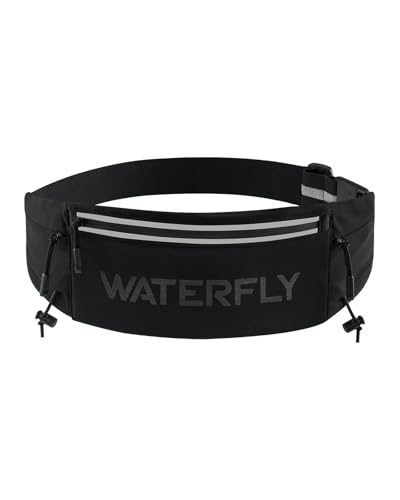
- Includes a clip for hole-punched race bibs
- Three pockets organize phone and small essentials
- Breathable mesh with reflective detailing
Best For: Marathon and triathlon race-day organization
Best Hydration Option
Reflective Running Vest with Soft Flask
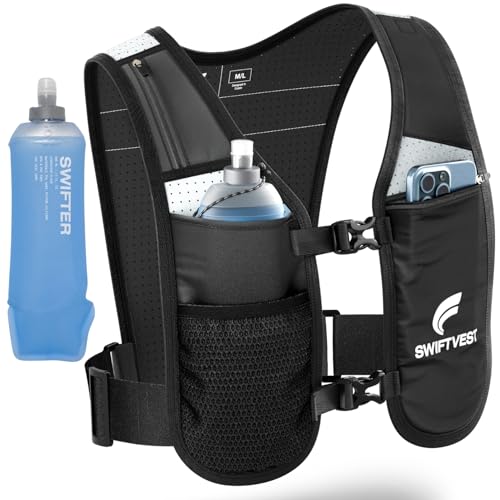
- Includes a 500 ml/17 oz soft flask
- Six pockets for phone, gels, keys, and hydration
- Reflective, adjustable, and designed to reduce chafing
Best For: Long runs requiring hydration and extensive storage
Best Slim Fit
No-Bounce Running Belt for All Phones
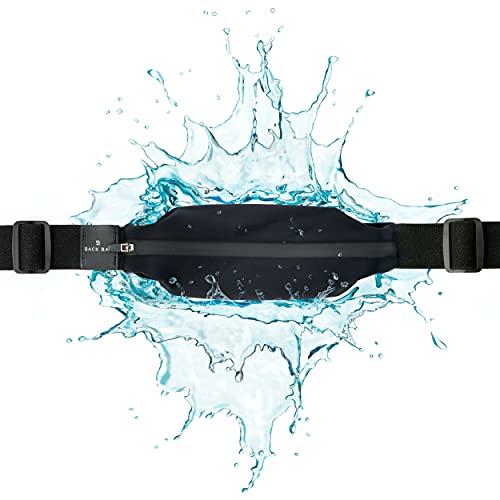
- Expandable pocket fits phones of different sizes
- Anti-slip material helps limit bounce
- Waterproof pocket with 27–49-inch adjustable fit
Best For: Minimalist phone-and-essentials carry on long runs
Best Lightweight Pick
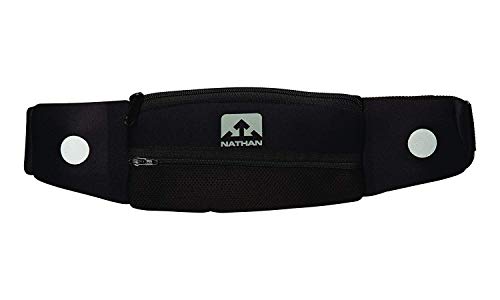
- Two zippered pockets for phone and small essentials
- Adjustable 26–44-inch waist fit
- Lightweight, reflective neoprene design
Best For: Minimalist runners carrying a phone and keys
Best for Everyday Use
AONIJIE Hydration Belt with Soft Flask

- Includes a 250ml soft water bottle
- Four-pocket layout supports organized storage
- Lightweight, quick-drying fabric with reflective branding
Best For: Runners needing compact hydration and phone storage
Best Secure Storage

- Separate compartments for phones and small valuables
- Adjustable elastic fit designed to stay secure
- Sweat and splash protection with reflective strips
Best For: Runners wanting organized storage without hydration
Best with Extra Features

- Three pockets for phone and essentials
- Breathable, sweat-wicking Spandex fabric
- Fits 27–48-inch waists with reflective detail
Best For: Lightweight everyday runs and race-day essentials
Best Heavy-Duty Pick
PYFK Running Belt with Bottles

- Includes two 10-ounce BPA-free bottles
- Fits 25–60-inch waists
- Reflective straps and bib clips included
Best For: Long runs where carrying water is essential
Best Low-Profile Design

- Expandable pocket for phones and small gear
- Fits waist sizes 25–47 inches
- Low-profile, bounce-free design
Best For: Minimalist runs with phone and small essentials
Best Waterproof Phone Belt – Two-Pocket Running Waist Pack
For runners comparing running waist packs for marathons, this lightweight two-pocket belt is a practical choice when you want phone storage, moisture resistance, and a low-profile fit. Its adjustable 26- to 49-inch strap accommodates a wide range of waists.
Best For: Runners who need secure phone, key, and gel storage with added visibility for early or late workouts.
Pros:
- Two pockets fit phones up to 7 inches along with keys and gels.
- Water-resistant Lycra construction helps protect belongings from sweat and moisture.
- Reflective strips are designed to improve visibility, and the lightweight design weighs 2.08 ounces.
- Adjustable, bounce-free fit with a 26- to 49-inch strap.
Cons:
- It offers only two pockets, so organization is more limited than with larger race belts.
- Water resistance is not the same as full submersion protection.
This belt covers the core marathon essentials without adding much bulk. Choose it when a broad size range and a phone-focused design matter more than carrying hydration or extensive gear.
Best Race-Ready Belt – WATERFLY Belt with Bib Clip
Among running waist packs for marathons, the WATERFLY stands out for combining three-pocket organization with a dedicated bib clip. The breathable mesh, water-resistant phone pocket, and elastic waist strap are aimed at keeping race essentials accessible during longer efforts.
Best For: Marathon and triathlon participants who want bib attachment, organized storage, and a snug fit for waists from 30 to 39 inches.
Pros:
- Three pockets separate a phone, earphones, gels, tissues, and keys.
- Included clip attaches hole-punched race bibs.
- Breathable, moisture-wicking mesh is designed for quick drying.
- Reflective strips, an anti-slip buckle, and an elastic band support race-day comfort and visibility.
Cons:
- The stated 30- to 39-inch waist range is narrower than many adjustable running belts.
- Hand wash care may be less convenient than machine-washable alternatives.
- The water-resistant phone pocket is not described as fully waterproof.
The bib clip gives this belt a clear advantage for organized races, while the three-pocket layout keeps small items separated. Verify the waist range before buying, especially if you prefer a looser or more adjustable fit.
Best Hydration Option – Reflective Running Vest with Soft Flask
For runners who need more than pocket storage, this hydration vest is a useful alternative to traditional running waist packs for marathons. It includes a 500 ml soft flask, six pockets, adjustable straps, and reflective details for longer training runs and races.
Best For: Runners who need hands-free hydration plus space for a phone, gels, keys, and other marathon accessories.
Pros:
- Six pockets provide substantially more organization than a slim waist belt.
- Includes a compressible 500 ml/17 oz soft flask.
- Waterproof front phone pouch fits smartphones up to 18 by 10 cm.
- Adjustable chest and side straps, breathable material, and neoprene padding are designed to reduce bounce and chafing.
Cons:
- A vest-style design provides less minimal coverage than a waist pack.
- The 500 ml capacity may be limited for runners who need substantial hydration over a marathon.
- Fit depends on selecting one of the available XS-S, M-L, or L-XL sizes and adjusting the straps.
This is the most capable option here for carrying hydration and multiple supplies, but it is also the largest style. Consider it when marathon-distance storage needs outweigh the simplicity of a compact belt.
Best Slim Fit – No-Bounce Running Belt for All Phones
This slim running belt is a strong pick for shoppers seeking running waist packs for marathons with minimal bulk. Its expandable pocket is designed for phones of different sizes, while the anti-slip material and adjustable 27- to 49-inch fit help keep the belt in place.
Best For: Runners who prioritize a low-profile, no-bounce phone belt for carrying core essentials during long runs.
Pros:
- Expandable pocket is designed to fit any phone size.
- RunGrip anti-slip material helps reduce bouncing and slipping.
- Adjustable waistband fits 27- to 49-inch waists.
- Waterproof pocket and slim profile protect the phone without adding much bulk.
Cons:
- The single-pocket design offers less organization than multi-pocket belts.
- It does not include a hydration bottle or race bib clip.
- Its minimalist capacity may be limiting when carrying several marathon supplies.
If your marathon carry list is mainly a phone, cards, keys, and a few gels, this belt keeps the setup simple. Choose a larger multi-pocket model or vest if you need more separation or hydration capacity.
Best Lightweight Pick – Nathan 5K Runner's Waist Pack
The Nathan 5K Runner’s Waist Pack is a streamlined choice for runners who want phone and key storage without much bulk. For running waist packs for marathons, its lightweight neoprene build, adjustable fit, reflective details, and two zippered pockets make it practical for carrying essentials during training or race day.
Best For: Runners who prioritize a lightweight, bounce-free phone and essentials belt.
Pros:
- Two external zippered pockets separate a phone from keys, cash, or other small items.
- Adjustable strap fits waists from 26 to 44 inches.
- Lightweight 3.6-ounce design with reflective material for low-visibility conditions.
- Designed to fit a wide range of phone brands and models.
Cons:
- It does not include a water bottle or dedicated hydration storage.
- The two-pocket layout may be limiting if you carry more than basic essentials.
- Hand washing is recommended.
This is a focused, minimalist waist pack rather than a hydration carrier. Choose it when secure phone storage and a low-profile fit matter more than carrying fluids or larger gear.
Best for Everyday Use – AONIJIE Hydration Belt with Soft Flask
The AONIJIE Hydration Belt adds a 250ml soft flask to a lightweight running waist pack, making it useful for runners who want fluids without moving to a larger vest. Among running waist packs for marathons, it stands out for its multiple pockets, soft quick-drying fabric, and adjustable bounce-free waistband.
Best For: Runners who want compact hydration plus storage for a phone and small valuables.
Pros:
- Includes a 250ml leak-proof soft water bottle.
- Three quick-access pockets plus a main pouch provide flexible organization.
- Fits phones up to 6.9 inches and includes space for keys, cards, cash, and earphones.
- Lightweight design weighs 60g without the bottle and includes reflective branding.
Cons:
- It is listed as not water resistant.
- The 250ml bottle offers limited capacity for longer events or warm conditions.
- Size selection is required, with different waist ranges for S/M, M/L, and L/XL.
This belt is a practical middle ground for shorter training sessions and runners who prefer a small flask over carrying no water. For a marathon, its capacity may be best suited to runners relying on course aid stations.
Best Secure Storage – Fitgriff Running Belt
The Fitgriff Running Belt focuses on keeping a phone and small valuables organized in a slim jogging pouch. For shoppers comparing running waist packs for marathons, it offers an adjustable elastic fit, separate storage areas, sweat and splash protection, and reflective strips for low-light visibility.
Best For: Runners who want separated phone and small-item storage with light weather protection.
Pros:
- Main storage accommodates almost all smartphone sizes, while a smaller compartment holds keys, cash, or cards.
- Infinitely adjustable elastic straps are designed to stay secure while running.
- Sweat and splash protection helps protect valuables during everyday workouts.
- Two reflector strips along the zipper improve visibility at dusk and night.
Cons:
- It is not fully waterproof, especially during heavy or prolonged rain.
- It does not include hydration storage.
- Buyers need to select the appropriate size using the waist measurement chart.
The Fitgriff is a sensible choice when organization and everyday protection matter more than carrying water. It works well for training runs and races with convenient hydration stations, but it is less suitable for runners needing a bottle or extensive cargo space.
Best with Extra Features – WATERFLY Running Belt
For runners comparing running waist packs for marathons, the WATERFLY Running Belt focuses on a lightweight, low-bulk fit with room for a phone and everyday race-day essentials. Its adjustable design fits 27–48-inch waists and includes reflective details for added visibility.
Best For: Runners who want a breathable, multi-pocket belt for phones, keys, cards, and small accessories.
Pros:
- Three pockets, including a main compartment sized for phones.
- Stretch Spandex fabric is lightweight, breathable, and sweat-wicking.
- Wide elastic band, slip-resistant buckle, and reflective logo help support a secure fit.
- Dedicated headphone port and water-resistant construction.
Cons:
- Hand-wash care is required.
- Does not include water bottles.
The WATERFLY is a practical choice when minimizing bounce and bulk matters more than carrying hydration. Its three-pocket layout also gives it more organization than a basic single-compartment running belt.
Best Heavy-Duty Pick – PYFK Running Belt with Bottles
Among running waist packs for marathons, the PYFK stands out by pairing storage with two included 10-ounce water bottles. It fits 25–60-inch waists, adds reflective straps and bib clips, and uses a grippy interior intended to reduce rubbing and bounce.
Best For: Runners who want belt-based hydration and space for a phone and small race essentials.
Pros:
- Includes two BPA-free 10-ounce pull-top water bottles.
- Large phone pocket accommodates phones up to 7 inches, though bulky cases may need removal.
- Adjustable fit covers 25–60-inch waists.
- Reflective straps, two bib clips, and silica gel grip add race-day practicality.
Cons:
- Its two-bottle setup may feel bulkier than a minimalist running belt.
- Bulky phone cases may not fit in the main pocket.
- Only two pockets are listed for organizing gear.
The PYFK is the most hydration-focused option in this group. It makes sense for long training runs or marathon preparation when carrying water is a priority, although runners seeking the smallest possible pack may prefer a simpler belt.
Best Low-Profile Design – SPIbelt Original Running Belt
For runners choosing running waist packs for marathons, the SPIbelt Original offers a streamlined, expandable pocket designed to hold a phone and small personal items without shifting. Its one-inch elastic band adjusts from 25–47 inches and is built for running, walking, hiking, and cycling.
Best For: Runners who prefer a compact, phone-focused waist pack with an expandable storage pocket.
Pros:
- Expandable pocket fits phones, keys, ID, cards, gels, and headphones.
- Designed to fit all phone models listed by the manufacturer.
- Soft one-inch elastic band and adjustable fit help reduce chafing and bounce.
- Low-profile design measures 8 by 2 by 4 inches.
Cons:
- It is not water resistant.
- Does not include water bottles or a dedicated headphone port.
- Its 25–47-inch waist range is narrower than the PYFK’s range.
The SPIbelt is a strong minimalist option for runners carrying essentials rather than hydration. Its expandable compartment provides useful flexibility, while the low-profile shape keeps the pack unobtrusive during movement.
How We Picked the Best Running Waist Packs for Marathons
We focused on the features that matter most during long-distance training and race day: secure fit, resistance to bouncing, phone compatibility, storage capacity, access to gels and keys, reflective details, and hydration options. We also considered whether each design suits lightweight racing, everyday jogging, or longer unsupported routes.
The selection includes slim belts for runners who carry only a phone and fuel, bib-compatible race belts, and larger hydration designs with bottles or soft flasks. Since body shape, clothing layers, and phone size vary, adjustability and pocket construction are especially important.
Quick Comparison
- Best for minimal carry: Slim running belts with room for a phone, cards, keys, and a few gels.
- Best for race organization: Models with a bib clip or dedicated compartments for fuel and essentials.
- Best for hydration: Bottle-carrying belts and the 500ml hydration vest for runners who need fluids close at hand.
- Best for visibility: Belts and vests with reflective panels or accents for early-morning and evening runs.
Key Buying Factors for Running Waist Packs for Marathons
Fit and Bounce Control
A marathon pack should sit firmly at your waist or torso without digging in. Look for a broad, adjustable strap and a secure closure. Test the pack at your intended running pace, since a comfortable walk-fit can still bounce when you accelerate.
Capacity and Phone Protection
Choose capacity based on what you actually carry. A compact belt is often better for a supported race, while longer training runs may require space for several gels, identification, keys, and a larger phone. Water-resistant or waterproof phone compartments add protection from sweat and light rain, but they may reduce touchscreen access.
Hydration and Access
Hydration belts and vests are useful when aid stations are widely spaced or when you want to control your own fueling schedule. Check bottle size, flask stability, refill convenience, and whether you can reach the container without stopping. Extra capacity can add weight, so avoid overpacking.
Visibility and Fabric
Reflective trim improves visibility in low light but does not replace lights or high-visibility clothing. Breathable, lightweight materials help reduce heat and moisture buildup, while smooth seams can minimize chafing during long efforts.
Who Should Buy Which Running Waist Packs for Marathons?
Choose a slim belt if you run with a phone, keys, cards, and a small amount of fuel. Choose a bib-clip race belt if fast access and organized race-day storage matter most. Choose a bottle belt if you need modest hydration without wearing a vest. Choose the larger hydration vest for long training sessions, trail routes, or runners carrying more fluids and accessories.
Before race day, load the pack exactly as you plan to use it and test it on at least one long run. Confirm that the phone fits, bottles stay secure, and the belt does not rub when worn over your usual clothing.