Cold-weather runs are easier to manage with a vest that adds core warmth without restricting your arms. The best running vests for winter balance insulation, weather protection, storage, and comfortable movement.
We compared 10 options across fleece-lined softshells, puffer vests, packable layers, pocket-rich designs, and reflective running gear to help you choose the right fit for your route and climate.
Best 10 Running Vests for Winter Picks for 2026
Best Hooded Protection
Women's Softshell Running Vest

- Fleece-lined, windproof, and waterproof design
- Removable hood with adjustable hem
- Five utility pockets, including media storage
Best For: Cold, windy runs and outdoor chores
Best Lightweight Midlayer
Women's Sorona Winter Running Vest

- Lightweight Sorona insulation
- Stretch side panels for easier movement
- Slim profile with four storage pockets
Best For: Cold runs requiring a streamlined midlayer
Best Everyday Value

- Quilted insulation for lightweight warmth
- Water-resistant shell with zip pockets
- Packs into the included carrying bag
Best For: Everyday cold-weather wear and light running
Top Visibility Pick

- Front and rear LEDs with reflective strips
- Three lighting modes and five color options
- Adjustable, rechargeable design
Best For: Nighttime runners and outdoor walkers
Warmth and Layering Pick

- Insulated and quilted for cold weather
- Water-resistant, windproof, and hooded
- Three pockets and self-stowing design
Best For: Cold-weather layering and outdoor activities
Utility Running Pick
Men's Windproof Softshell Vest

- Windproof and water-resistant softshell
- Four-way stretch with breathable mesh lining
- Six pockets and reflective piping
Best For: Mild-weather running and outdoor training
Storage and Visibility Pick
33,000ft Women's Lightweight Running Vest

- Six functional pockets for essentials
- Windproof, water-resistant, breathable softshell
- Reflective piping and flexible four-way stretch
Best For: Low-light runs, travel, hiking, and active layering
Cold-Weather Comfort Pick
baleaf Women's Lightweight Warm Puffer Vest
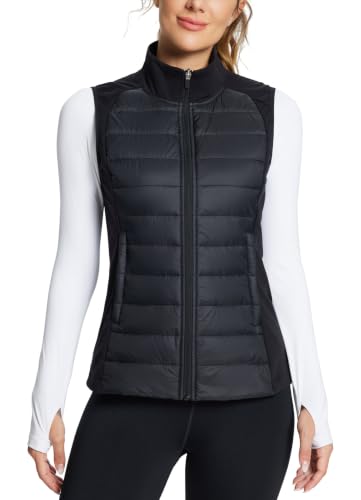
- Light cotton filling for 20–60°F conditions
- Soft, quiet collar and side panels
- Water-resistant nylon with zip pockets
Best For: Cold-weather runs and flexible layering
Best Hooded Protection – Women's Softshell Running Vest
For runners who need adaptable coverage, this hooded softshell is a practical choice among running vests for winter. Its fleece lining, wind- and water-resistant construction, removable hood, and stretch fabric suit chilly outdoor sessions.
Best For: Cold, windy runs and outdoor activities where weather protection and storage matter.
Pros:
- Fleece lining adds warmth without sleeves.
- Waterproof, breathable, windproof shell helps shield against changing weather.
- Five pockets, including a chest media pocket, provide useful storage.
- Removable hood and adjustable hem offer versatile coverage.
Cons:
- The relaxed fit may feel less streamlined than a fitted running layer.
- A hood can add bulk when not needed.
This is a versatile winter running vest for shoppers who prioritize protection and pockets over an ultraminimal race-day design. The removable hood makes it easier to adjust coverage as conditions change.
Best Packable Insulation – Men's Lightweight Puffer Vest
This insulated puffer is a strong layering option for running vests for winter, especially when packability matters. The lightweight design uses synthetic insulation, a wind- and water-resistant shell, and elastic edging to help retain warmth without restricting movement.
Best For: Trail running, travel, and cold-weather layering when you want a vest that packs down small.
Pros:
- Ultra-light synthetic insulation provides warmth with low bulk.
- Packs into its right-side zippered pocket for convenient transport.
- Five pockets accommodate a phone, wallet, gloves, and other essentials.
- Elastic hem and armholes support mobility and help seal out cold air.
Cons:
- Low stretch may feel less flexible than stretch softshell alternatives.
- The notes describe it as water resistant rather than fully waterproof.
Choose this vest when a compressible insulating layer is more important than maximum rain protection. It can work as a midlayer in freezing weather or an outer layer in milder cold.
Best Lightweight Midlayer – Women's Sorona Winter Running Vest
Designed with runners in mind, this fitted option stands out among running vests for winter for its low weight and stretch. DuPont Sorona insulation, a water-resistant shell, fleece lining, and stretch side panels provide warmth and mobility without a bulky feel.
Best For: Layering over activewear during cold runs when a close-fitting, flexible vest is preferred.
Pros:
- Lightweight 250-gram design helps reduce bulk.
- Sorona insulation is designed to retain warmth with less filling.
- Stretch side panels and elastic armholes support free movement.
- Four pockets include two zippered side pockets and two interior pockets.
Cons:
- The slim fit may require sizing up over thicker layers.
- Water-resistant protection is more limited than a fully waterproof shell.
This is a practical pick for runners who want a streamlined winter layer that can also work in fall and spring. Its fitted profile is especially suited to wearing over a long-sleeve top or under a heavier jacket.
Best Everyday Value – Women's Packable Puffer Vest
Amazon Essentials Women's Lightweight Water-Resistant Packable Puffer Vest Outerwear, -black, Small
Check Price On AmazonThis everyday puffer is a straightforward choice among running vests for winter when you want lightweight warmth and easy storage. Its quilted insulation, water-resistant shell, zip pockets, and included carrying bag make it useful for brisk walks, casual runs, and layering.
Best For: Everyday cold-weather wear and light running with convenient packability.
Pros:
- Quilted and insulated construction adds warmth without sleeves.
- Water-resistant nylon or polyester shell helps handle light moisture.
- Zip pockets provide secure storage for small essentials.
- Packs into the included carrying bag for on-the-go use.
Cons:
- The regular fit may not feel as athletic as a dedicated slim-fit vest.
- The supplied notes do not specify a hood or windproof rating.
This vest suits shoppers looking for a simple, packable layer rather than specialized technical running features. Its regular fit also leaves room for a long-sleeve shirt or sweater underneath.
Top Visibility Pick – LED Reflective Running Vest
If you need running vests for winter darkness, this LED reflective model prioritizes visibility rather than insulation. Front and rear lights, reflective strips, adjustable sizing, and multiple light modes make it useful for early-morning or evening runs, walks, and bike rides.
Best For: Nighttime runners, walkers, cyclists, and dog walkers who want high-visibility gear.
Pros:
- Front and rear LED lights plus reflective strips provide 360-degree visibility up to 1,000 feet in darkness.
- Offers steady, single-color flashing, and five-color RGB flashing modes.
- USB rechargeable design provides approximately 8–20 hours of runtime, depending on the mode.
- Adjustable fit accommodates a 25–45-inch waist and 14–24-inch shoulder-to-waist length.
Cons:
- It is a visibility vest, not an insulated winter layer.
- Requires charging before use and includes a Type-C charging cable.
Choose this vest when being seen is your main winter-running concern. For warmth, layer it over suitable cold-weather clothing.
Warmth and Layering Pick – Women's Hooded Puffer Vest
Among running vests for winter, this hooded puffer option is the better choice when warmth matters most. Its insulated, quilted construction, wind-resistant shell, and packable design suit layering for cold-weather runs and other outdoor activities.
Best For: Runners who want a warm, hooded mid-layer with storage and packability.
Pros:
- Polyester down-alternative insulation helps retain warmth in cold weather.
- Water-resistant shell, wind-blocking construction, hood, and elastic hem add weather protection.
- Three zippered pockets provide storage for a phone, gloves, wallet, keys, and other essentials.
- Self-stows into its inner pocket for convenient packing and travel.
Cons:
- The fitted, insulated design may feel bulkier than a lightweight running-specific vest.
- The fabric has no stretch, according to the supplied details.
- It is designed for women and does not include reflective features in the supplied notes.
This is a practical warmth-first option for cold, windy outings. Pair it with reflective accessories if you run in low-light conditions.
Utility Running Pick – Men's Windproof Softshell Vest
This lightweight men’s vest is a versatile choice among running vests for winter, especially for mild winter conditions. Its windproof softshell, breathable mesh lining, stretch fabric, reflective piping, and six pockets balance movement, weather protection, and storage.
Best For: Men’s trail runners and outdoor athletes who need stretch, light weather protection, and ample storage.
Pros:
- Windproof, water-resistant fabric helps protect against wind and light rain.
- Four-way stretch and mesh lining support movement and ventilation.
- Reflective contrast piping improves visibility when running in the dark.
- Six pockets, including a zippered back pocket and chest pocket, secure essentials.
Cons:
- Its listed climate suitability is mild weather, so it may need additional layers in severe cold.
- It has no hood or insulation listed in the supplied details.
- The fitted cut may require careful sizing over heavier layers.
Pick this vest for active winter training when flexibility and pocket space are more important than maximum insulation. Its reflective details are useful for low-light runs.
Extended Coverage Pick – baleaf Women's Long Puffer Running Vest
If you want running vests for winter that provide extra coverage, this long baleaf puffer vest reaches 29 inches over the hips. Its fleece lining, light insulation, stretch side panels, and water-resistant exterior make it a practical layer for mild winter conditions and everyday outdoor use.
Best For: Runners and walkers who prefer extended coverage, light warmth, and a polished fit for temperatures around 50–63°F.
Pros:
- 29-inch length helps block chilly wind around the hips.
- Fleece lining, light insulation, and water-resistant fabric suit mild cold and drizzly weather.
- Two zippered hand pockets and two inner pockets provide useful storage.
- Stretch side panels and elasticized cuffs support comfortable movement.
Cons:
- The light insulation is intended for mild weather rather than the coldest winter conditions.
- The extended length may feel less streamlined than a standard running vest.
This is a strong choice when coverage and everyday versatility matter more than an ultralight race-focused design. The longer silhouette works for running, hiking, commuting, and casual layering.
Storage and Visibility Pick – 33,000ft Women's Lightweight Running Vest
Among running vests for winter, this 33,000ft softshell model stands out for lightweight weather protection and storage. Its windproof, water-resistant, breathable fabric has four-way stretch, while reflective contrast piping and six pockets support outdoor runs and active travel.
Best For: Runners who need multiple pockets, flexible movement, and reflective details for low-light outdoor activities.
Pros:
- Windproof, water-resistant, breathable fabric helps handle light rain and wind.
- Four-way stretch, elastic cuffs, a drawcord hem, and a wind guard support mobility and coverage.
- Six pockets include a zip back pocket and chest pocket for organizing essentials.
- Reflective contrast piping improves visibility when running in the dark.
Cons:
- The lightweight, unlined construction offers less insulation than a puffer vest.
- The loose fit may be less close-fitting for performance-oriented runners.
This vest is best suited to runners who prioritize organization and freedom of movement over maximum warmth. It can also transition easily to hiking, cycling, golf, travel, and other outdoor activities.
Cold-Weather Comfort Pick – baleaf Women's Lightweight Warm Puffer Vest
For running vests for winter with lightweight insulation, this baleaf puffer vest combines cotton filling with soft fleece-like panels at the collar and sides. The nylon front and back resist water from morning dew, while the flexible construction works over or under other layers.
Best For: Runners and outdoor users seeking a soft, warm layering piece for approximately 20–60°F conditions.
Pros:
- Light cotton filling provides warmth without a heavy feel.
- Soft collar and side panels are designed to reduce irritation and noise.
- Water-resistant nylon helps protect against morning dew.
- Two zippered pockets help secure valuables during outdoor activities.
Cons:
- It has fewer pockets than the six-pocket 33,000ft option.
- The water-resistant design is intended for dew and light moisture, not heavy rain.
This is a practical insulated layer for cold-weather runs, hiking, camping, and casual wear. Its layering flexibility makes it useful when temperatures fluctuate or when an additional outer coat may be needed.
How We Picked the Best Running Vests for Winter
We focused on the features that matter most during cold-weather runs: insulation, wind resistance, water resistance, mobility, packability, storage, visibility, and fit. The selection includes slim athletic styles, longer puffer designs, hooded options, golf-inspired outerwear, and a light-up reflective vest for low-light conditions.
Because winter conditions vary, no single vest is ideal for every runner. A lightly insulated layer may work over a long-sleeve shirt in cool weather, while a fleece-lined or puffy vest is better for freezing temperatures. We also considered whether each design could function as part of a layering system rather than treating maximum warmth as the only goal.
Quick Comparison
- Best for versatile warmth: Fleece-lined softshell and hooded running vests.
- Best for packability: Lightweight down-alternative or puffer styles that compress for travel.
- Best for storage: The 6-pocket running vest, especially for phones, keys, and small essentials.
- Best for visibility: The LED reflective vest for dawn, dusk, or nighttime routes.
- Best for longer coverage: A long puffer vest that protects more of the torso and hips.
Key Buying Factors for Running Vests for Winter
Insulation and Layering
Choose fleece lining or synthetic insulation when you need dependable warmth in cold, dry conditions. A thinner vest is more versatile for high-output runs and can be layered over a base layer or under a shell. If you run hot, avoid overly bulky insulation that may trap too much heat.
Weather Protection
Wind-resistant fabric can make a major difference on exposed roads and trails. Water-resistant materials are useful for light drizzle or snow, but they are not a substitute for a waterproof shell in sustained rain. A hood can add protection, although it may affect peripheral hearing and visibility.
Fit and Mobility
Look for a close but nonrestrictive fit around the chest and armholes. The hem should stay in place while you move, and the arm openings should allow a full running swing. Longer cuts provide more coverage, while slimmer cuts usually layer more easily.
Pockets and Visibility
Secure zip pockets are important for phones, cards, keys, and nutrition. Reflective details improve visibility, but runners on unlit roads may benefit from dedicated LED lighting and should still use a headlamp or other active light when appropriate.
Who Should Buy Which Running Vests for Winter?
Choose a fleece-lined or hooded vest if you want cozy coverage for cold morning runs and prefer a soft interior. Choose a lightweight packable puffer if you travel, layer frequently, or need a vest that stores easily in a bag.
Choose a windproof style for breezy routes, golf-course paths, or transitional winter weather. Choose a long puffer vest if extra lower-torso coverage is a priority. Choose the pocket-rich option if you carry more than a phone and key. Finally, choose the LED reflective vest if visibility is your main concern during early-morning or evening runs.