Uneven sidewalks, park paths, and driveway seams can make a short walk feel like an obstacle course. A rollator with larger wheels may roll more smoothly over these surfaces while offering a seat when it is time to rest.
Our 10 picks span 8-, 10-, and 12-inch wheels, including models with pneumatic tires. The right choice depends on where you walk, how the handles fit, and whether you need to lift or store the frame.
Best 10 Rollator Walker with Large Wheels Picks for 2026
Best for Taller Users

- 12-inch front, 10-inch rear air-free tires
- Handles adjust from 36 to 42 inches
- 21.8 pounds; supports up to 300 pounds
Best For: Taller users seeking puncture-proof outdoor wheels
Best for Brake-Cable Management

- 12-inch front and 10-inch rear rubber wheels
- Built-in cables and dual-action brakes
- 20.3 pounds; 33.5–37.4-inch handles
Best For: Outdoor walkers who prefer enclosed brake cables
Best for Cushioned Rolling
Helavo Pneumatic-Tire Rollator
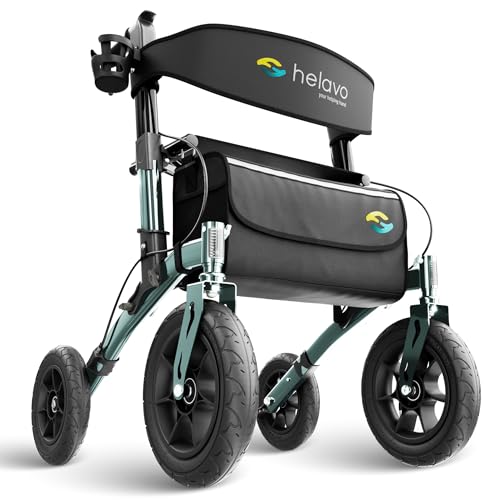
- Air-filled 12-inch front, 10-inch rear tires
- 31.9–37-inch adjustable handles
- Folds to a stated 10.6-inch width
Best For: Walkers seeking a more cushioned ride outdoors
Best Lightweight Pick

- 19.2 pounds; supports up to 300 pounds
- 12-inch front, 10-inch rear rubber wheels
- Quick-fold frame with integrated brake cables
Best For: Buyers prioritizing lower carry weight and large wheels
Best Matching Wheels
MAXWALK 10-Inch All-Terrain Rollator

- 10-inch rubber wheels front and rear
- Foldable aluminum frame; 300-pound capacity
- Seat, backrest, and accessory holders
Best For: Mixed-surface use with equally sized large wheels
Largest Front Wheels
MAXWALK 12-Inch Front-Wheel Rollator

- 12-inch front, 10-inch rear rubber wheels
- Padded seat and backrest
- 20.3 pounds; 300-pound capacity
Best For: Outdoor outings where larger front wheels are a priority
Lightest Listed Option
RollisRoll 10-Inch Front-Wheel Rollator

- 10-inch front and 8-inch rear wheels
- Listed weight of 18.1 pounds
- Quick-fold frame; 300-pound capacity
Best For: A lighter listed weight with large front wheels
Best for Outdoor Errands
MAXWALK 12-Inch All-Terrain Rollator

- 12-inch front and 10-inch rear rubber wheels
- Padded seat and built-in brake cables
- Cup holder, cane holder, and storage pouch
Best For: Mixed-surface outings with occasional seated breaks
Best for Visibility
RollisRoll 12-Inch Wheel Rollator

- 12-inch front and 10-inch rear wheels
- Reflective strips on wheels and bag
- Integrated brake cables and folding frame
Best For: Outdoor routes where added low-light visibility matters
Best for Adjustable Seating
VOCIC Z21 8-Inch Wheel Rollator

- 8-inch puncture-proof tires
- Seat adjusts from 20 to 22 inches
- Capacity claims conflict; verify before buying
Best For: Users seeking adjustable seat height and a cushioned rest stop
Best for Taller Users – VOCIC Z57 Outdoor Rollator
The VOCIC Z57 is a rollator walker with large wheels built around 12-inch front and 10-inch rear air-free tires. Its 36–42-inch handle range is worth considering if you need a taller pushing position.
Best For: Taller users who want puncture-proof tires and a supportive seat for outdoor walks.
Pros:
- Air-free tires eliminate the need to inflate them.
- Seven handle-height settings span 36–42 inches.
- 18-inch-wide waterproof seat, padded backrest, and detachable storage bag.
Cons:
- At 21.8 pounds, it is the heaviest of these four models.
- Its 22.8-inch width may still require checking narrow doorways.
The 300-pound-rated aluminum frame, locking brakes, and reflective details round out a practical outdoor setup. Choose it for tire convenience and the taller handle range rather than minimum carrying weight.
Best for Brake-Cable Management – MAXWALK 12-Inch Rollator
The MAXWALK is a rollator walker with large wheels featuring 12-inch front and 10-inch rear rubber tires for surfaces such as gravel, grass, and concrete. Its built-in brake cables keep them out of the way while walking.
Best For: Buyers who want large outdoor wheels, enclosed brake cables, and a folding seat-equipped frame.
Pros:
- Dual brakes allow speed control and locking for seated breaks.
- 20.3-pound aluminum frame supports up to 300 pounds.
- Includes a padded seat and backrest, storage pouch, cup holder, and cane holder.
Cons:
- Handle adjustment is limited to 33.5–37.4 inches; check your preferred grip height.
- At 24 inches wide when open, it needs adequate clearance.
The seat-pull folding mechanism makes it straightforward to prepare for transport. Compared with the VOCIC, it offers a lower handle range, so fit should guide the choice.
Best for Cushioned Rolling – Helavo Pneumatic-Tire Rollator
If ride cushioning matters most, this rollator walker with large wheels uses air-filled 12-inch front and 10-inch rear tires. The pneumatic setup is designed to soften vibration on gravel, grass, dirt trails, and uneven sidewalks.
Best For: Walkers who prioritize a smoother feel over the inflation-free convenience of solid tires.
Pros:
- Air-filled tires provide shock absorption on rough surfaces.
- Handles adjust from 31.9 to 37 inches.
- Folds to a stated 10.6-inch width for storage or transport.
Cons:
- Pneumatic tires need air-pressure attention, unlike air-free tires.
- The 25.9-inch open width is the widest of these four models.
Its 300-pound capacity and folding frame make it a viable outdoor option, but measure entrances and storage space first. Pick this model when tire cushioning is the deciding feature.
Best Lightweight Pick – RollisRoll 12-Inch Rollator
At a stated 19.2 pounds, the RollisRoll is the lightest rollator walker with large wheels in this group. It pairs 12-inch front and 10-inch rear rubber wheels with a folding aluminum frame and integrated brake cables.
Best For: Buyers who want a lighter large-wheel rollator with a seat and everyday carry accessories.
Pros:
- 19.2-pound frame is rated to support up to 300 pounds.
- Built-in brake cables and brakes with speed-control and locking functions.
- Includes a soft seat, backrest, storage bag, cup holder, and walking-stick holder.
Cons:
- Handle settings run from 32.6 to 37 inches, so taller users should check the fit.
- Its 23.8-inch width should be checked against tight passages.
The stated three-second fold and reflective strips add convenience for transport and visibility. Its main advantage here is lower listed weight without giving up the 12-inch front wheels.
Best Matching Wheels – MAXWALK 10-Inch All-Terrain Rollator
If you want a rollator walker with large wheels at both ends, this MAXWALK has 10-inch rubber front and rear wheels. Its foldable aluminum frame includes a seat for breaks during longer outings.
Best For: Shoppers who prefer equally sized large wheels for mixed indoor and outdoor surfaces.
Pros:
- 10-inch rubber wheels front and back are designed for surfaces including gravel, grass, and concrete.
- Built-in brake cables and locking hand brakes keep cables tucked away and secure the walker before sitting.
- Includes a backrest, storage pouch, and removable cup and cane holders.
Cons:
- The stated 22.2-inch seat height may not suit everyone.
- Product weight is reported inconsistently in the supplied specifications: 17 pounds in the details and 19.7 pounds in the dimensions list.
Its matching 10-inch wheels are the key distinction here. Check the seat height and confirm the assembled weight if lifting the walker into a vehicle matters.
Largest Front Wheels – MAXWALK 12-Inch Front-Wheel Rollator
For buyers comparing a rollator walker with large wheels for outdoor paths, this MAXWALK pairs 12-inch rubber front wheels with 10-inch rear wheels. It also has a padded seat and backrest for rest stops.
Best For: Users who prioritize larger front wheels for outings across gravel, lawns, and pavement.
Pros:
- 12-inch front and 10-inch rear rubber wheels are intended for mixed terrain.
- Built-in brake cables, speed-control brakes, and a parking lock support controlled use and seated breaks.
- Five handle-height settings from 33.5 to 37.4 inches; folds using a pull cord at the seat.
Cons:
- At a stated 20.3 pounds, it is heavier than the other two models in this roundup.
- Its listed folded dimensions are 11 by 30.7 inches plus handle height, so check your storage space.
Choose this one if front-wheel diameter is your main priority. The trade-off is a bit more weight to lift or transport.
Lightest Listed Option – RollisRoll 10-Inch Front-Wheel Rollator
This rollator walker with large wheels uses 10-inch rubber front wheels and 8-inch rear wheels. At a listed 18.1 pounds, the RollisRoll is the lightest of these three models while still including a seat and foldable frame.
Best For: Buyers who want large front wheels and a somewhat lighter walker to fold and transport.
Pros:
- 10-inch front wheels are designed to roll over uneven outdoor surfaces, including gravel and grass.
- Reinforced aluminum frame supports up to 300 pounds and has a quick-fold design.
- Built-in brake cables, reflective strips, and a storage bag add practical everyday features.
Cons:
- Rear wheels are 8 inches, smaller than those on both MAXWALK models here.
- The listed 24.4-inch width should be checked against tight doorways before purchase.
It balances a lower listed weight with sizable front wheels, but buyers wanting large wheels at both ends should look at the MAXWALK options.
Best for Outdoor Errands – MAXWALK 12-Inch All-Terrain Rollator
If you need a rollator walker with large wheels for mixed outdoor surfaces, the MAXWALK pairs 12-inch front rubber wheels with 10-inch rear wheels. Its folding aluminum frame includes a padded seat for breaks along the way.
Best For: Shoppers who want larger wheels, a seat, and holders for everyday outings.
Pros:
- Rubber wheels are designed for gravel, grass, concrete, and other uneven surfaces.
- Built-in brake cables reduce exposed-cable clutter; brakes provide speed control and a parking lock.
- Includes a storage pouch and removable cup and cane holders.
Cons:
- At 20.3 pounds, it may take effort to lift into a vehicle.
- The 22.2-inch seat height is fixed, so check that it suits the user.
Its 33.5–37.4-inch handle range and 300-pound stated capacity are worth checking against the user’s needs. The pull-cord fold helps with storage, while the larger wheels make this a practical choice when routes extend beyond smooth floors.
Best for Visibility – RollisRoll 12-Inch Wheel Rollator
This rollator walker with large wheels combines 12-inch front and 10-inch rear rubber wheels with reflective strips on the front wheels and storage bag. The RollisRoll also has a seat, backrest, and integrated brake cables.
Best For: Users who want large outdoor-oriented wheels and added visibility in low light.
Pros:
- Rubber wheels are designed for uneven ground, gravel, concrete, and grass.
- Reflective strips add visibility, while the integrated cables avoid loose exterior brake lines.
- Folds for storage and includes cup, walking-stick, and storage-bag accessories.
Cons:
- At approximately 20.5 pounds, it still requires lifting for transport.
- Its 33–37-inch handle range may not suit users outside the stated 5-foot to 6-foot-4-inch fit range.
The stated 300-pound capacity and 24.4-inch overall width help narrow the fit decision. Reflective details are useful, but they do not replace caution or other visibility measures in low light.
Best for Adjustable Seating – VOCIC Z21 8-Inch Wheel Rollator
For buyers seeking a rollator walker with large wheels but needing an adjustable seat, the VOCIC Z21 offers 8-inch puncture-proof tires and three seat-height settings. Its wheels are smaller than the 12-inch-front options here, but larger than the common 6-inch wheels described in its product notes.
Best For: Users who prioritize seat-height adjustment and a cushioned place to rest.
Pros:
- Seat adjusts from 20 to 22 inches; handles adjust from 31.5 to 36.6 inches.
- Includes a 1.6-inch-thick waterproof seat cushion and widened breathable backrest.
- Puncture-proof tires, swiveling front wheels, and a three-mode braking system support varied routes.
Cons:
- Its 8-inch wheels are smaller than the 12-inch front wheels on the other picks.
- The supplied notes conflict on capacity: one states 350 pounds, while the details list 330 pounds; confirm the rated limit before buying.
At about 22 pounds, the Z21 folds for car-trunk storage but still needs to be lifted. Its adjustable sitting height is the standout feature; verify the weight rating with the seller before relying on it.
How We Picked the Best Rollator Walker with Large Wheels
We organized this roundup around the details that matter most when comparing a Rollator Walker with Large Wheels: wheel size and tire type, outdoor usability, seat and backrest design, folding practicality, and the need for a secure, comfortable fit. The selected models include 8-, 10-, and 12-inch wheels, so “large” does not mean the same thing for every pick. Product listings are a starting point, not a substitute for checking current dimensions, weight limits, and instructions before buying.
Quick Comparison: Which Wheel Size Fits Your Route?
12-inch wheels: A sensible first look for frequent trips over rough pavement, sidewalk joints, or maintained paths. Larger wheels generally negotiate small obstacles more easily, though the frame may take more room to turn or store.
10-inch wheels: A middle ground for buyers who want outdoor capability without automatically choosing the largest option. Compare folded size and overall weight if the rollator will travel in a car.
8-inch wheels: Worth considering when indoor maneuvering and storage matter as much as outdoor walks. Check whether the wheel and tire design suits the specific surfaces you use.
Pneumatic versus solid tires: Air-filled tires can soften bumps but need pressure checks and can puncture. Solid tires avoid inflation and flats, although the ride may feel firmer. Verify the tire type for the exact model and variant.
Key Buying Factors for a Rollator Walker with Large Wheels
Fit, Capacity, and Seat
Check the handle-height range against your height and the manufacturer’s fitting guidance; a poor fit can encourage an awkward posture. Confirm the stated weight capacity and usable seat width rather than judging by the frame’s appearance. If you expect to sit often, look closely at the seat height, backrest, and instructions for engaging the parking brakes before sitting.
Brakes and Handling
Test whether the brake levers are comfortable for your hands and whether both running brakes and parking brakes work as intended. On slopes, loose gravel, or wet ground, traction and control matter more than wheel diameter alone. No rollator is a substitute for checking the manufacturer’s terrain limits.
Folding and Transport
Measure doorways, storage spaces, and your vehicle opening. Compare the rollator’s overall weight with what you or a caregiver can safely lift, and check whether it stands or locks when folded. A roomy outdoor frame is less useful if it cannot make the trips you bought it for.
Who Should Buy Which Rollator Walker with Large Wheels?
Choose a 12-inch-wheel model if outdoor routes are your main priority and you have room to store it. Consider the pneumatic-tire option if ride cushioning matters and you are comfortable maintaining tire pressure. Start with a 10-inch model if you balance outdoor walks with regular transport; consider the 8-inch option if tighter spaces are a daily concern. Whatever the wheel size, prioritize a secure fit and brakes you can operate confidently. If you are unsure what level of walking support is appropriate, ask a clinician or mobility specialist before purchasing.