The right field monitor can make focusing, framing, and exposure decisions much easier than relying on a camera’s built-in display. This roundup compares 10 models across screen size, brightness, HDMI support, touch controls, LUT capabilities, and portability.
Whether you shoot outdoors, build a compact DSLR rig, or need a larger display for critical focus, use the guide below to narrow your options by workflow and budget.
Best 10 Field Monitors Picks for 2026
Sunlight-Ready Pick
NEEWER F700 7-inch Field Monitor

- 2000-nit touchscreen with auto backlight control
- 4K HDMI loop-through and extensive monitoring tools
- Supports custom LUTs and NP-F, DC, or USB-C power
Best For: Outdoor filmmakers needing a large, highly visible monitoring screen
Camera-Control Pick
VILTROX DC-550 Pro II 5.5-inch Monitor

- 1400-nit Full HD touchscreen
- Controls select Canon, Sony, and Nikon cameras
- 4K 60Hz HDMI with rotation and monitoring tools
Best For: Solo shooters using one of the listed compatible cameras
Compact Production Pick
FEELWORLD F5 Prox 5.5-inch Monitor

- 1600-nit screen for outdoor monitoring
- Includes focus, exposure, and LUT preview tools
- Mounts on cameras, gimbals, cages, and tripods
Best For: Creators wanting a straightforward bright monitor for small rigs
Quiet Set Pick
GODOX GM6S Pro 5.5-inch Monitor

- 2000-nit screen with 170-degree viewing angle
- Fanless aluminum body for silent operation
- 4K loop-out, custom LUTs, and anamorphic correction
Best For: Professional crews needing bright, quiet, cinema-oriented monitoring
Bright Outdoor Pick

- 2800-nit touchscreen for bright conditions
- 4K HDMI loop-through and 3D LUT support
- NP-F, DC, and USB-C power options
Best For: Outdoor filmmakers needing high visibility and extensive monitoring tools
Compact Bundle Pick
FEELWORLD S55 V3 6-Inch Monitor
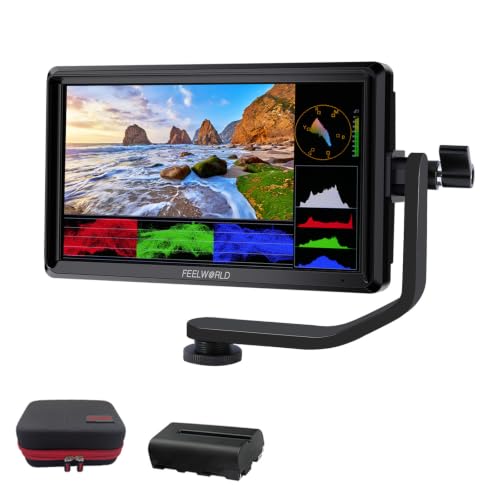
- Lightweight 6-inch Full HD display
- 4K HDMI input and loop-out
- Includes battery, case, sunshade, and tilt arm
Best For: Portable DSLR, mirrorless, handheld, and gimbal rigs
Touchscreen Control Pick

- 2000-nit touchscreen for daylight viewing
- 4K 60Hz HDMI loop-out and custom 3D LUTs
- NP-F, DC, and USB-C power support
Best For: Filmmakers wanting compact touchscreen control and LUT preview tools
Best Budget Starter
FEELWORLD FW759 Pro 7-Inch Field Monitor

- Large 7-inch IPS display for easier framing
- Includes core exposure and focus tools
- Lightweight kit with two batteries and sunshade
Best For: Beginners and mobile video creators
Best Daylight Visibility
VILTROX DC-550 Pro II Field Monitor

- 1200-nit touchscreen for bright shooting conditions
- 4K HDMI input and output with Full HD display
- Advanced waveform, LUT, HDR, and focus tools
Best For: Outdoor production and advanced monitoring
Best High-Brightness Compact Pick
FEELWORLD F5 PROX Field Monitor
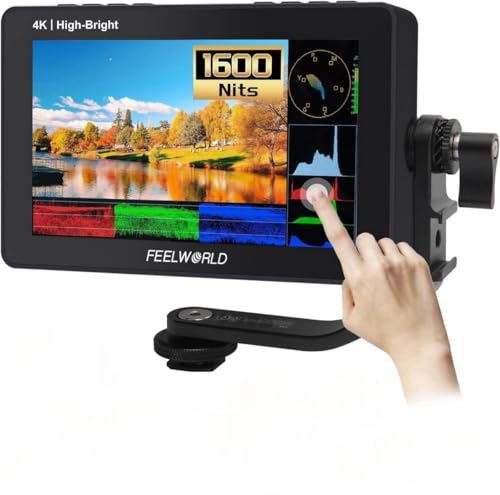
- Very bright 1600-nit 5.5-inch screen
- Touch, button, and shortcut-key controls
- Flexible mounting and multi-source power support
Best For: Portable outdoor camera rigs
Sunlight-Ready Pick – NEEWER F700 7-inch Field Monitor
For outdoor video work, the NEEWER F700 is one of the most visibility-focused field monitors in this roundup. Its 7-inch 2000-nit touchscreen, ambient light sensor, and 4K HDMI loop-through make it a practical choice when you need a large, readable monitoring display on location.
Best For: Filmmakers and camera operators who prioritize a large, bright screen and advanced monitoring tools for outdoor shoots.
Pros:
- 2000-nit IPS touchscreen with automatic brightness adjustment
- 4K HDMI loop input and output with headphone monitoring
- Extensive tools including waveform, vectorscope, false color, zebras, and histogram
- Supports up to 60 custom 3D LUT files and multiple power options
Cons:
- NP-F battery and DC cable are not included
- Built-in cooling fans may be audible in quiet recording environments
The F700 stands out among field monitors for its combination of screen size, brightness, connectivity, and professional exposure tools. It is especially compelling for outdoor productions, though its fan system and additional power-accessory needs are worth considering.
Camera-Control Pick – VILTROX DC-550 Pro II 5.5-inch Monitor
The VILTROX DC-550 Pro II adds camera-control features to the usual field monitors toolkit. Its 1400-nit touchscreen, 4K at 60Hz transmission, and wired or Wi-Fi camera connection can streamline solo shooting when used with supported Canon, Sony, or Nikon models.
Best For: Solo creators who want an external monitor that can also adjust compatible camera settings and support horizontal or vertical shooting.
Pros:
- 1400-nit 5.5-inch Full HD touchscreen for outdoor viewing
- USB-C or Wi-Fi camera control on listed compatible models
- 4K 60Hz HDMI input and output with claimed zero image delay
- Supports waveform, vectorscope, custom 3D LUTs, onion skin, and automatic rotation
Cons:
- Camera-control compatibility is limited to specified models
- Power accessories or included battery details are not fully specified in the supplied notes
This monitor is more feature-rich than a basic framing display, particularly for one-person productions and vertical-content workflows. Confirm camera compatibility before buying, since the control functions are not presented as universal.
Compact Production Pick – FEELWORLD F5 Prox 5.5-inch Monitor
The FEELWORLD F5 Prox is a compact option for creators who want a brighter, larger view than a camera’s built-in display without adding a bulky monitor to the rig. Its 1600-nit screen and built-in focus and exposure aids make it useful for both outdoor filming and controlled production setups.
Best For: Photographers, vloggers, videographers, and filmmakers who need a lightweight external display for focus, exposure, and framing.
Pros:
- 1600-nit display designed for outdoor visibility
- Focus peaking, waveform, histogram, false color, and LUT preview
- Works with DSLR, mirrorless, and cinema cameras
- Mounts to rigs, cages, gimbals, tripods, and handheld setups
Cons:
- The supplied notes do not specify HDMI resolution, loop-through, or power options
- Listed package weight is relatively substantial for a compact 5.5-inch monitor
The F5 Prox keeps the feature set focused on the essentials: visibility, focus, exposure, and flexible mounting. It is a sensible choice when you do not need the more specialized camera-control or loop-through functions offered by some competing field monitors.
Quiet Set Pick – GODOX GM6S Pro 5.5-inch Monitor
The GODOX GM6S Pro is a strong option for productions where brightness, quiet operation, and color control all matter. It combines a sustained 2000-nit IPS touchscreen with 4K HDMI loop-out, a fanless aluminum body, custom LUT support, and anamorphic correction for more specialized monitoring.
Best For: Professional video crews and filmmakers who need bright, silent monitoring with color-management and anamorphic-display features.
Pros:
- 2000-nit screen with a 170-degree viewing angle
- Lossless 4K HDMI input and loop-out
- Fanless CNC aluminum body for silent operation and heat dissipation
- Supports custom LUTs, screenshots with overlays, and anamorphic correction
Cons:
- NP-F batteries, DC power, and USB-C power accessories are not included
- Listed item weight is 2 kg, which may be heavy for lightweight rigs
Among these field monitors, the GM6S Pro is particularly distinctive for its silent fanless design and cinema-oriented tools. Its weight may make it better suited to sturdier support or studio-style rigs than minimalist handheld setups.
Bright Outdoor Pick – VILTROX DC-A1 7-Inch Monitor
For bright outdoor production, the VILTROX DC-A1 is one of the more visibility-focused field monitors. Its 2800-nit touchscreen, included sunshade, and professional exposure and focus tools make it practical for daylight shooting, while HDMI loop-through supports a second display or recorder.
Best For: Outdoor filmmakers who need a highly visible touchscreen and flexible power options.
Pros:
- Very bright 2800-nit, 7-inch 1920×1080 IPS touchscreen with a 170-degree viewing angle.
- Supports 4K 60Hz HDMI input and loop-through output.
- Includes waveform, vectorscope, histogram, false color, focus peaking, zebras, audio monitoring, and custom 3D LUT support.
- Works with NP-F batteries, DC 10–18V input, or USB-C power, and includes an NP-F550 battery.
Cons:
- The larger 7-inch format may be less convenient on compact handheld rigs.
- The built-in cooling fan adds another moving component, even though it is designed for low-noise operation.
The DC-A1 is a strong choice when daylight readability and monitoring features matter more than minimizing rig size. Its sunshade, cooling system, and multiple power methods also suit longer location shoots.
Compact Bundle Pick – FEELWORLD S55 V3 6-Inch Monitor
The FEELWORLD S55 V3 is a compact field monitor bundle aimed at camera operators who want a ready-to-use setup. It combines a 6-inch Full HD display with 4K HDMI input and loop-out, useful monitoring tools, dual battery compatibility, and accessories including a case, sunshade, tilt arm, and battery.
Best For: Handheld, gimbal, and DSLR or mirrorless setups that benefit from a lightweight accessory bundle.
Pros:
- Compact 6-inch 1920×1080 display with a 160-degree viewing angle and 1000:1 contrast ratio.
- Supports 4K HDMI formats and loop-out for sending the signal to another monitor.
- Includes histogram, focus peaking, false color, zebra, zoom, and image-flip tools.
- Comes with an NP-F battery, carry case, sunshade, tilt arm, cables, and charging cable.
Cons:
- Its 500 cd/m² brightness is lower than the brighter VILTROX options in this roundup.
- The 8.4V camera power output requires a separate dummy battery or coupler.
With its included accessories and flexible NP-F or LP-E6 battery support, the S55 V3 is convenient for buyers assembling a portable monitoring kit. It is especially appealing when a tilt arm and protective case are more valuable than maximum outdoor brightness.
Touchscreen Control Pick – VILTROX DC-X2 6-Inch Monitor
The VILTROX DC-X2 balances a compact 6-inch design with a bright 2000-nit touchscreen and a broad set of video-assist tools. It provides 4K 60Hz HDMI input and loop-out, custom 3D LUT support, programmable controls, and several power methods for studio or location work.
Best For: Shooters who want touchscreen operation, custom LUT previews, and strong daylight visibility in a smaller monitor.
Pros:
- 2000-nit 6-inch IPS touchscreen with 1920×1080 resolution and a 160-degree viewing angle.
- Supports 4K 60Hz HDMI input and loop-out for simultaneous monitoring.
- Offers custom 3D LUT storage plus focus peaking, zebras, image enlargement, and waveform tools.
- Accepts NP-F batteries, 12–18V DC input, or USB-C power and includes an NP-F550 battery and sunshade.
Cons:
- The glossy screen finish may be less forgiving of reflections than a matte display.
- At 1.29 kg as listed, it may be relatively substantial for very lightweight camera rigs.
The DC-X2 is a versatile middle ground for field monitors: brighter than many compact models while retaining touchscreen control and LUT functionality. Its configurable buttons and multiple cooling paths further support extended shooting sessions.
Best Budget Starter – FEELWORLD FW759 Pro 7-Inch Field Monitor
The FEELWORLD FW759 Pro is a practical choice for creators who want a larger viewing surface than their camera’s built-in screen. This 7-inch field monitor combines a 1280×800 IPS display with essential exposure and focus tools, making it useful for interviews, tutorials, livestreams, and general video production.
Best For: Beginners, vloggers, and creators who want an affordable, lightweight monitor for DSLR, mirrorless, or camcorder rigs.
Pros:
- Large 7-inch IPS screen with 1280×800 resolution
- Includes histogram, zebra, focus assist, and false-color tools
- Lightweight 300g design suits handheld and gimbal setups
- Includes two F550 batteries, sunshade, cables, and mounting accessories
Cons:
- 400-nit brightness may be less suitable for very bright outdoor conditions than higher-brightness alternatives
- Offers HDMI connectivity through a single listed port
The FW759 Pro emphasizes screen size, portability, and beginner-friendly monitoring features. It is a solid fit when you want a straightforward field monitor with a generous display and a useful starter kit.
Best Daylight Visibility – VILTROX DC-550 Pro II Field Monitor
The VILTROX DC-550 Pro II stands out among field monitors for its 1200-nit high-brightness touchscreen and professional monitoring tools. Its 5.5-inch Full HD display supports 4K HDMI input and output, making it a versatile option for camera operators and directors who need a clear on-set view.
Best For: Outdoor shoots, video production, and users who want waveform, 3D LUT, HDR, and focus-assist features in a compact monitor.
Pros:
- 1200-nit screen is designed for daylight viewing
- Supports 4K HDMI signals with input and output for monitoring or pass-through
- Includes waveform, vector graph, histogram, false color, and focus-assist tools
- Offers NP-F battery, DC, and Type-C power options
Cons:
- Its 5.5-inch screen is smaller than some 7-inch field monitors
- Only one NP-F550 battery is included
The DC-550 Pro II is a feature-rich choice for filmmakers who need strong outdoor visibility and advanced image analysis. Its connectivity and 3D LUT support also make it well suited to more demanding production workflows.
Best High-Brightness Compact Pick – FEELWORLD F5 PROX Field Monitor
The FEELWORLD F5 PROX is a compact field monitor built around a 5.5-inch 1600-nit touchscreen. It offers touch and button controls, 3D LUT support, 4K HDMI input and output, and multiple mounting points, giving photographers and videographers flexibility when building camera or vertical-shooting rigs.
Best For: Shooters who prioritize daylight visibility, flexible mounting, and a compact monitor with multiple power options.
Pros:
- 1600-nit display is designed for daylight viewing
- Touchscreen, physical controls, and customizable F1-F3 keys provide flexible operation
- Four 1/4-inch mounting threads support varied rig configurations
- Supports NP-F, 12V DC, and 5V Type-C power, plus 8.4V DC output for a DSLR
Cons:
- 5.5-inch screen has a smaller viewing area than larger field monitors
- Listed viewing angle is 80 degrees
- Native resolution is Full HD rather than a 4K display
The F5 PROX is a strong option when brightness and mounting flexibility matter more than screen size. Its power versatility and DSLR power output add useful convenience for portable camera rigs.
How We Picked These Field Monitors
We selected these Field Monitors based on the features that matter most during real-world video production: screen visibility, resolution, HDMI compatibility, monitoring tools, physical controls, power options, and overall rig practicality. The lineup includes compact 5.5-inch displays, larger 6- and 7-inch models, and brighter screens intended for outdoor shooting.
We also considered useful production features such as touchscreens, 3D LUT support, false color, focus peaking, histograms, sun hoods, and flexible mounting. Specifications can vary by seller or bundle, so confirm the included battery, cable, case, and power accessories before buying.
Quick Comparison of the Best Field Monitors
- Best for bright outdoor work: Choose a high-nit model such as the VILTROX DC-A1 or NEEWER F700.
- Best compact option: A 5.5-inch monitor is easier to balance on smaller camera rigs and gimbals.
- Best for larger viewing: A 7-inch display gives more room for menus, scopes, and critical focus.
- Best for touchscreen control: Look for responsive touch access to zoom, LUTs, and monitoring tools.
- Best value consideration: Prioritize the features your camera and shooting environment actually require rather than maximum brightness alone.
Key Buying Factors for Field Monitors
Brightness and Outdoor Visibility
Brightness is measured in nits. Higher ratings generally make a screen easier to see in direct sunlight, although a sunshade, screen coating, and viewing angle also matter. For controlled interiors, a 400-nit display may be adequate; outdoor shooters should consider 1,200 nits or more.
Size, Resolution, and Rig Balance
A 5.5-inch monitor keeps a compact setup light, while a 7-inch screen is more comfortable for prolonged viewing and detailed focus checks. Full HD resolution is common and usually sufficient for camera monitoring, provided the monitor accepts your camera’s output format.
Inputs, Power, and Compatibility
Check whether your camera outputs micro-HDMI, mini-HDMI, or full-size HDMI, and budget for the correct cable. Confirm support for your camera’s resolution and frame rate, including 4K signals when needed. Battery compatibility, USB-C power, DC input, runtime, and cable placement can significantly affect usability on location.
Monitoring Tools and Build Features
Focus peaking, magnification, false color, zebras, waveform or histogram tools, and 3D LUT support can improve exposure and focusing accuracy. A touchscreen is convenient, but physical buttons may be preferable when wearing gloves or working quickly. A sturdy mount, included sun hood, and protective case can be just as valuable as advanced software.
Who Should Buy Which Field Monitors?
Outdoor filmmakers and event shooters should prioritize very high brightness, a sunshade, reliable power options, and a durable 7-inch or compact high-bright display. Solo creators and DSLR users may prefer a lightweight 5.5-inch touchscreen with focus and exposure tools. Gimbal operators should focus on weight, mounting position, and cable clearance before choosing a larger screen.
Studio and interview shooters can often save money with a moderately bright monitor if they value LUTs, scopes, and accurate framing more than sunlight readability. If multiple cameras or future upgrades are likely, choose a model with broad HDMI support and flexible power options rather than buying solely for today’s camera.