The best camera sliders make controlled movement easier, whether you are filming product videos, interviews, time-lapses, or cinematic B-roll. The right model can add production value without requiring a full motion-control rig.
We compared these 10 camera sliders by travel length, drive system, payload flexibility, control options, portability, and overall shooting versatility to help you find the best fit.
Best 10 Camera Sliders Picks for 2026
Best Motorized Long-Track Pick
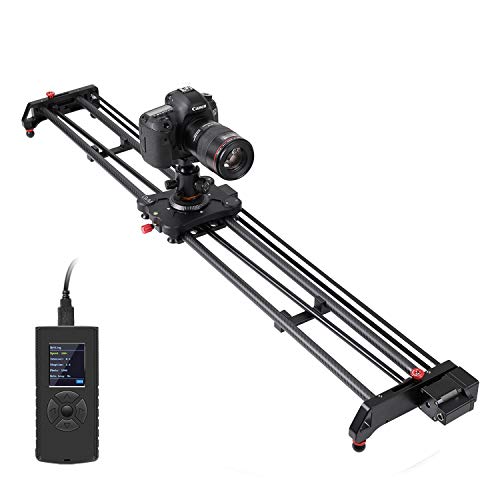
- 48-inch carbon-fiber track
- Programmable motion and looping
- Includes battery, cables, and bag
Best For: Long tracking shots and automated time-lapse work
Best Lightweight Manual Pick
Zecti 24-Inch Carbon-Fiber Slider

- Lightweight 1.4-pound design
- Four-way shooting flexibility
- Works with cameras and phones
Best For: Portable manual camera movement
Best App-Controlled Option
NEEWER ER1 31.5-Inch Motorized Slider

- App and optional remote control
- 4400mAh battery included
- Supports video and time lapse
Best For: App-controlled content creation and product videos
Best Pocket Tabletop Dolly

- Linear and circular movement
- Includes ball head and phone clamp
- Lightweight 7.76-ounce design
Best For: Tabletop shots with phones and compact cameras
Best for Advanced Multi-Axis Control
Shark Nano II Motorized Slider

- Eight programmable motion points
- AI face and object tracking
- Quiet brushless motor with USB-C PD charging
Best For: Complex tracking shots, product videos, and repeatable multi-axis moves
Best for Long-Distance Camera Moves

- 47.2-inch motorized travel range
- 11-pound horizontal load capacity
- Includes 4400mAh NP-F750 battery
Best For: Long tracking shots, product videos, and time-lapse photography
Best Compact Option for Phones and Pocket Cameras
iFootage PICO Compact Motorized Slider

- Compatible with Pocket cameras, action cameras, and phones
- Seven-hour battery life
- Lightweight 1.9-pound aluminum-alloy design
Best For: Portable smartphone, action-camera, and DJI Pocket camera shooting
Best Long-Reach Motorized Slider
GVM 48-Inch Carbon Fiber Slider

- Multiple programmable shooting modes
- App-controlled motorized movement
- Tripod-ready with adjustable legs
Best For: Long tracking shots, time-lapse work, and multi-angle setups
Best Compact Motorized Slider

- Compact 27-inch motorized design
- Supports time-lapse and round-trip shooting
- Adjustable feet and tripod mounting
Best For: Interviews, studio setups, and lighter camera rigs
Best Quiet Wireless Slider

- Silent motor for low-noise camera moves
- App control with optional remote support
- Includes 4400mAh NP-F750 battery
Best For: Quiet video production, tracking moves, and time-lapse shooting
Best Motorized Long-Track Pick – GVM 48-Inch Motorized Slider
For automated camera sliders, the GVM 48-inch model combines a long carbon-fiber track with programmable movement controls. You can set start and end points, speed, intervals, stop time, photo count, and automatic looping for time-lapse, panoramic, and tracking shots.
Best For: Filmmakers who need a long motorized slider for repeatable tracking and time-lapse work.
Pros:
- 48-inch/120cm carbon-fiber track with a 5kg maximum recommended load.
- Supports manual and motorized operation, with adjustable speed, interval, and stop settings.
- Includes a battery, charger, shutter-release cables, remote connection, and carrying bag.
- Multiple 1/4-inch and 3/8-inch mounting points support tripod setups.
Cons:
- At 11.8 pounds and 48 inches folded, it is less convenient for compact travel.
- It is not water resistant.
This is a strong choice when track length and automated repeatability matter more than portability. Adjustable feet and a quiet motor help it produce controlled movement for larger shooting setups.
Best Lightweight Manual Pick – Zecti 24-Inch Carbon-Fiber Slider
The Zecti is a compact manual option among camera sliders, using four precision bearings and a double carbon-fiber rail system for quiet movement. Its adjustable legs, rubber feet, bubble level, and multiple mounting holes make it suitable for tabletop or tripod-supported shots.
Best For: Travelers and creators who want a lightweight manual slider for cameras, phones, and action cameras.
Pros:
- Compact 24-inch/60cm design weighs about 1.4 pounds.
- Supports horizontal, vertical, diagonal, and sideways operation.
- Compatible with cameras, camcorders, phones, and action cameras.
- Includes adjustable legs, non-skid feet, a bubble level, carrying bag, and wrench.
Cons:
- Manual movement is not automated.
- The supplied note warns that overtightened screws can cause noise or rough movement.
- Its maximum recommended load is 4.4 pounds.
For a portable manual slider, the Zecti offers useful positioning flexibility without the weight or setup demands of a motorized track. Check the adjustment screws before use to help maintain smooth travel.
Best App-Controlled Option – NEEWER ER1 31.5-Inch Motorized Slider
The NEEWER ER1 adds app control to the camera sliders category, letting you manage manual, video, and time-lapse modes from a mobile device. Its silent stepper motor, carbon-fiber construction, and adjustable shooting angles suit product videos, creative tracking, and repeatable motion.
Best For: Content creators who want app-controlled motorized movement and flexible shooting modes.
Pros:
- App control supports speed, interval, and exposure adjustments.
- Includes a 4400mAh NP-F750 battery for extended operation.
- Supports horizontal loads up to 11 pounds and 45-degree tilting loads up to 5.5 pounds.
- Offers tracking, 120-degree panoramic, horizontal, and 45-degree tilt shooting options.
Cons:
- The optional 2.4G remote is not included.
- A charger is not included, according to the product highlight.
- Minor shake may occur during macro photography.
The ER1 is a feature-rich middle-ground choice for creators who want motorized control without a full-length 48-inch track. Its battery and app-based adjustments are especially useful for planned, repeatable shots.
Best Pocket Tabletop Dolly – NEEWER SD001 Camera Dolly
The NEEWER SD001 is a pocket-sized alternative to full camera sliders, using four adjustable wheels for straight or circular movement. Its rubber-ringed wheels, ball head, and included phone clamp make it useful for tabletop product shots, pans, and compact mobile-camera setups.
Best For: Smartphone, action-camera, and lightweight mirrorless tabletop shots.
Pros:
- Supports linear and circular movement by adjusting the wheels from -45 to +45 degrees.
- Soft rubber wheels move quietly across floors, tables, and slider surfaces.
- Includes a 360-degree rotating, 90-degree tilting ball head and phone clamp.
- Compact 3.9-inch design weighs about 7.76 ounces and supports up to 6.6 pounds.
Cons:
- It is not suitable for telephoto lenses.
- The product is a manual dolly rather than a motorized slider.
- An adapter may be required for some action cameras.
Choose the SD001 when portability and tabletop movement are more important than a long travel distance. Its circular motion and phone-friendly design give small-camera creators more framing options in a very compact package.
Best for Advanced Multi-Axis Control – Shark Nano II Motorized Slider
If you need camera sliders for complex, repeatable movements, the IFOOTAGE Shark Nano II combines motorized travel with multi-axis control and programmable paths. Its touchscreen and app controls make it suitable for detailed production work, while the carbon tube design is built for regular use.
Best For: Filmmakers creating tracking shots, product videos, panoramas, time-lapses, and other sequences that benefit from synchronized camera movement.
Pros:
- Supports up to eight customizable motion points through the touchscreen or Moco app.
- Works with DJI gimbals through the included RS Adapter for synchronized multi-axis movement.
- Offers AI face and object tracking, five shooting modes, and real-time stabilization.
- Uses a quiet brushless motor and supports 60W USB-C PD 3.0 charging.
Cons:
- Its advanced controls may be more than casual users need.
- A compatible DJI gimbal or additional battery grip may require extra equipment.
The Nano II is the most feature-rich option here for creators who want precise automation and multi-axis shooting. It is especially compelling when repeatability, tracking, and quiet operation matter more than keeping the setup minimal.
Best for Long-Distance Camera Moves – NEEWER ER1 47.2-Inch Slider
For creators comparing camera sliders with extended travel, the NEEWER ER1 provides a 47.2-inch carbon-fiber rail and motorized movement. App control, an included 4400mAh NP-F750 battery, and support for horizontal or 45-degree shooting give it flexibility for larger setups.
Best For: Content creators, photographers, and videographers who want long camera travel for video, product shots, panoramas, and time-lapse work.
Pros:
- Provides 47.2 inches of motorized travel for broad tracking movements.
- Supports app control, manual operation, video mode, and time-lapse settings.
- Includes a 4400mAh NP-F750 battery and uses a quiet stepper motor.
- Handles up to 11 pounds horizontally and supports 45-degree tilt shooting.
Cons:
- The charger is not included.
- Minor shake may occur during macro photography.
- The optional 2.4G remote control is not included.
The ER1 stands out when a longer rail is more important than compact portability. Its stated load capacity and multiple mounting threads make it a practical choice for larger camera setups, though macro users should account for the noted shake.
Best Compact Option for Phones and Pocket Cameras – iFootage PICO Compact Motorized Slider
If portability is a priority, the iFootage Shark Slider PICO is one of the more travel-friendly camera sliders in this group. Its 15.8-inch size, 1.9-pound weight, and direct compatibility with DJI Pocket cameras, action cameras, and smartphones make it easy to include in a mobile kit.
Best For: Mobile creators shooting with DJI Pocket cameras, action cameras, or smartphones who want quiet, automated motion in a compact setup.
Pros:
- Supports DJI Pocket 3/4 and Action 5/6, plus smartphones through USB-C, NFC, or Bluetooth.
- Offers up to eight programmable points with position, timing, and angle settings.
- Includes video, time-lapse, stop-motion, panorama, and multi-target modes.
- Provides a seven-hour battery and weighs just 1.9 pounds.
Cons:
- The 15.8-inch travel length is shorter than the NEEWER ER1’s 47.2-inch rail.
- Its listed 2.4-pound payload is aimed at lighter cameras and phones rather than large rigs.
The PICO is the clearest choice for portability and small-camera compatibility. It offers substantial automation in a backpack-friendly body, but users with heavier cameras or a need for long slider travel should consider a larger model.
Best Long-Reach Motorized Slider – GVM 48-Inch Carbon Fiber Slider
For creators who need extended camera movement, this 48-inch GVM is one of the more versatile camera sliders in the lineup. Its carbon-fiber rail supports tracking, panoramic, time-lapse, and video modes, while app control lets you adjust motion settings from an iOS or Android device.
Best For: Long tracking shots, time-lapse work, and multi-angle setups with compatible cameras or phones.
Pros:
- Offers tracking, panoramic, time-lapse, video, and auto-loop shooting modes.
- App control allows wireless adjustment of motion and shooting settings.
- Multiple 1/4-inch and 3/8-inch ports support tripod mounting and horizontal, vertical, or 45-degree shooting.
- Includes six shutter-release cables, an extension cable, adjustable legs, and a carry bag.
Cons:
- At 4 kg, it is relatively heavy for an outdoor camera slider.
- The listed battery life is approximately two hours.
- It is not water resistant.
The GVM 48-inch model is a strong choice when reach and programmable shooting options matter most. Its broad compatibility and mounting flexibility add value, though its weight and limited battery runtime may make transport and longer shoots less convenient.
Best Compact Motorized Slider – GVM 27-Inch Aluminum Slider
This 27-inch GVM offers a more compact approach to camera sliders for interviews, tabletop productions, and general DSLR work. Its aluminum-alloy rail supports time-lapse, video, and automatic round-trip shooting, with adjustable feet for leveling on a surface or tripod.
Best For: Interview photography, compact studio setups, and users who need a motorized slider for cameras, phones, or video equipment.
Pros:
- Supports time-lapse, video, and automatic round-trip shooting.
- Multiple 1/4-inch and 3/8-inch screw holes enable floor or tripod mounting.
- Adjustable non-slip feet make leveling easier.
- Supports horizontal, vertical, and 45-degree shooting, including slopes up to 70 degrees on a tripod.
Cons:
- Its 2.5 kg maximum load is lower than the larger models in this roundup.
- The aluminum construction weighs 2.36 kg, so it is not an ultralight option.
- The included wire controller may be less convenient than app-based control.
With its shorter rail and practical mounting options, this GVM is a sensible camera slider for smaller productions. It favors straightforward operation and portability over the longer travel distance and wireless app control offered by some alternatives.
Best Quiet Wireless Slider – NEEWER ER1 47.2-Inch Slider
The NEEWER ER1 combines a 47.2-inch carbon-fiber rail with wireless app control and a silent stepper motor. As camera sliders go, it is designed for smooth, quiet movement and offers manual, video, and time-lapse modes, making it suitable for productions where motor noise could be distracting.
Best For: Quiet video production, long tracking moves, and time-lapse shooting with cameras up to 11 pounds horizontally.
Pros:
- Silent stepper motor provides precise, low-noise movement.
- Supports app control, with optional 2.4G remote compatibility.
- Includes a 4400mAh NP-F750 battery and also supports USB-C power input.
- Handles up to 11 pounds horizontally and supports 45-degree tilt shooting.
Cons:
- The battery charger is not included.
- The optional RT-08 remote is not included.
- At 5.31 kg, it is the heaviest slider listed here.
The ER1 is appealing when quiet operation, wireless control, and substantial horizontal load capacity are priorities. Its included battery helps with field use, but the missing charger and considerable weight should be accounted for when planning a kit.
How We Picked These Camera Sliders
We focused on practical features that affect real-world shooting: usable travel, motorized or manual operation, camera-support compatibility, control methods, power options, and portability. Models with app control or programmable movement can support repeatable time-lapse and video shots, while manual sliders may be quicker to set up and easier to use without batteries.
We also considered the needs of different cameras and workflows, from lightweight phones and mirrorless bodies to larger DSLR setups. A slider is only useful when its rail, carriage, mounting hardware, and motor can work reliably with your equipment.
Quick Comparison
| Best For | What to Look For |
|---|---|
| Portable filming | Shorter travel, low weight, and quick setup |
| Cinematic B-roll | Smooth carriage movement and sturdy camera support |
| Time-lapse work | Motorized travel, interval controls, and repeatable motion |
| Long tracking shots | Approximately 40- to 48-inch travel and stable support |
| Phone or compact cameras | Lightweight carriage and included phone-mount accessories |
Key Buying Factors for Camera Sliders
Travel Length and Portability
Long rails provide more dramatic movement, but they are harder to transport and may require stronger support. Short sliders are better for desks, small studios, tabletop work, and quick location shoots.
Manual or Motorized Movement
Manual sliders are straightforward and often quieter for simple tracking shots. Motorized Camera Sliders add programmable speed, direction, time-lapse, and sometimes panoramic functions, but they require charging and may take longer to configure.
Payload and Stability
Check the manufacturer’s payload guidance with your camera, lens, battery, plate, and accessories included. A sturdy rail and secure carriage matter more than maximum length if you use a heavier DSLR or cinema-style setup.
Controls, Power, and Compatibility
App control is convenient for repeatable moves, while physical controls can be faster on set. Confirm battery capacity, charging requirements, mounting threads, and whether the included ball head or plate matches your camera. For time-lapse work, look for precise interval and speed adjustments.
Who Should Buy Which Camera Sliders?
Choose a compact slider if you primarily shoot tabletop scenes, social content, product demonstrations, or travel footage. Shorter models are easier to pack and generally quicker to position.
Choose a motorized mid-length model if you want repeatable B-roll, automated tracking, or time-lapse control without carrying a full-size rail. These are versatile choices for creators using mirrorless cameras and lightweight DSLRs.
Choose a 40- to 48-inch slider if smooth, extended camera movement is your priority. These models suit studio work, interviews, cinematic establishing shots, and larger setups, provided you have a stable tripod or support surface.
Choose a phone-friendly option if you are creating mobile-first content or want the lightest possible setup. Included clamps and simple controls can make these sliders more accessible for beginners.