A cable crossover machine can bring versatile strength training to a home gym without requiring a room full of separate equipment. The right setup lets you train your chest, back, shoulders, arms, legs, and core with adjustable resistance and multiple cable angles.
We selected 10 options ranging from space-saving wall-mounted stations to full functional trainers and Smith machine systems. Use the guide below to compare stability, adjustability, resistance, installation needs, and overall value before choosing.
Best 10 Cable Crossover Machine for Home Picks for 2026
Best Space-Saving Pick
Mikolo Wall Mount Cable Station
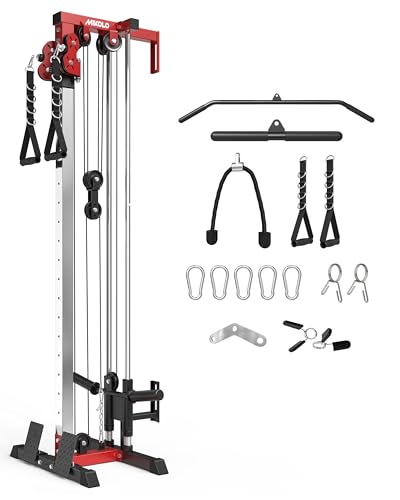
- Compact wall-mounted design
- 19 pulley height positions
- 400-pound maximum load
Best For: Small home gyms and garage corners
Best Full-Body Exercise Variety
Body-Solid Best Fitness Functional Trainer

- High and low swivel pulleys
- Broad full-body exercise selection
- 10-year frame warranty
Best For: Dedicated home or garage gyms
Best Compact Adjustable Station

- 17 pulley height positions
- 1:1 and 2:1 cable ratios
- About 3.28-square-foot footprint
Best For: Compact home or garage gyms with suitable walls
Best Heavy-Duty Weight-Stack Option
Body-Solid Powerline Cable Crossover

- Two 160-pound weight stacks
- Independent isolateral movement
- 476-pound freestanding frame
Best For: Permanent home gyms with ample floor space
Best All-in-One Pick
DONOW Smith Machine Cable Crossover

- Combines Smith machine, rack, cables, and pull-up station
- Includes dual 352-pound weight stacks
- Linear-bearing bar and enclosed stacks support smooth, tidy training
Best For: Complete home gyms and full-body strength training
Best for Everyday Use
GMWD Wall-Mounted Cable Machine

- Foldable wall-mounted design saves floor space
- 26 height positions and 13 arm-angle settings
- Switches between 2:1 and 1:1 cable ratios
Best For: Compact home gyms with suitable wall support
Best Compact Freestanding Pick

- Triangular frame occupies about 12.1 square feet
- 15 height adjustments for high- and low-pulley exercises
- Includes pull-up bars and core cable attachments
Best For: Small home gyms wanting a freestanding functional trainer
Best All-in-One Cage

- Combines Smith machine, rack, and cable crossover
- Includes extensive attachments and storage
- 1,850-lb maximum weight recommendation
Best For: Complete home gyms with space for a full cage system
Best Space-Saving Tower
WM2-V4 Wall Mount Cable Station

- Compact wall-mounted cable station
- 155-lb stack plus plate-loaded option
- 33 positions and selectable cable ratios
Best For: Small home gyms needing flexible cable workouts
Best Commercial-Style Trainer
Functional Trainer Cable Machine

- Dual 180-lb weight stacks
- 17 adjustable cable positions
- Heavy 11-gauge steel construction
Best For: Serious home training with dual-stack cable workouts
Best Space-Saving Pick – Mikolo Wall Mount Cable Station
If you need a cable crossover machine for home workouts but have limited floor space, the Mikolo wall-mounted station is built for compact gyms, garages, and corners. Its dual adjustable pulleys offer 19 height positions for unilateral or bilateral exercises, while included attachments support rows, pulldowns, presses, and triceps work.
Best For: Space-conscious home gym owners who want a versatile wall-mounted cable setup.
Pros:
- Compact 26.9-by-25.6-inch footprint with an 82-inch height.
- Dual pulleys provide 19 adjustable positions and rotating brackets.
- Includes a lat bar, cable bar, triceps rope, and plate sleeves.
- Supports up to 400 pounds and uses a 14-gauge steel frame.
Cons:
- Wall-mounted installation is required.
- Weight plates are not listed among the included components.
The Mikolo is a practical choice when space efficiency matters most. Its attachments and high stated load capacity make it adaptable, but buyers should plan for suitable wall installation and their own weight plates.
Best Full-Body Exercise Variety – Body-Solid Best Fitness Functional Trainer
The Body-Solid Best Fitness trainer is a substantial cable crossover machine for home or garage gyms, measuring about 113 inches wide. Its high and low pulleys swivel through more than 180 degrees, supporting a broad range of full-body movements from rows and pulldowns to flys, presses, and lower-body exercises.
Best For: Users prioritizing extensive exercise variety and smooth pulley movement over a compact footprint.
Pros:
- Supports a wide selection of upper- and lower-body cable exercises.
- High and low pulleys swivel through over 180 degrees.
- Uses sealed ball-bearing pulleys and nylon bushing technology.
- Includes a 10-year frame warranty and one-year parts warranty.
Cons:
- Its approximately 113-inch width requires substantial room.
- The supplied specifications list 133 pounds for tension and maximum recommendation.
- At 102 to 118 pounds, it is less substantial than a commercial weight-stack trainer.
This model suits buyers with a dedicated training area who want many exercise options from one machine. Measure the room carefully before purchasing, since its wide frame is the main trade-off for its versatility.
Best Compact Adjustable Station – GOIMU WM1 Cable Crossover
The GOIMU WM1 is a compact cable crossover machine for home or garage gyms, combining wall-mounted stability with 17 pulley height positions. Its adaptor lets users switch between 1:1 and 2:1 cable ratios, while the included bars, rope, and handles support exercises such as pulldowns, rows, flys, and arm work.
Best For: Buyers who want adjustable resistance ratios and multiple cable exercises in a small footprint.
Pros:
- Compact dimensions occupy roughly 3.28 square feet.
- Offers 17 height positions and dual independent pulleys.
- Switches between 1:1 and 2:1 cable ratios.
- Includes multiple attachments and a two-year warranty.
Cons:
- Installation is intended for concrete or masonry walls.
- Its 300-pound maximum recommendation is lower than the Mikolo’s stated capacity.
- Wall mounting may not suit renters or unsuitable wall structures.
The WM1 stands out for combining a small footprint with useful pulley adjustability and selectable cable ratios. Confirm that your wall can support the installation before choosing it for a home gym.
Best Heavy-Duty Weight-Stack Option – Body-Solid Powerline Cable Crossover
For shoppers wanting a substantial cable crossover machine for home use, the Body-Solid Powerline PFT100 provides dual independent weight stacks and true isolateral movement. It measures 42.3 by 62.6 by 83 inches, weighs 476 pounds, and is designed for high and low pulley exercises across the major muscle groups.
Best For: Dedicated home or commercial-style gyms with room for a freestanding, weight-stack machine.
Pros:
- Includes two 160-pound weight stacks.
- Independent stacks support isolateral training.
- Wide exercise selection includes cable crossovers, presses, rows, pulldowns, and kickbacks.
- Includes a 10-year frame warranty and one-year parts warranty.
Cons:
- Its 476-pound weight and large footprint make it difficult to move or place.
- The 1/2:1 weight ratio provides reduced resistance at the handles.
- Requires considerably more space than the wall-mounted alternatives.
The PFT100 is the most substantial option in this group and avoids the need to load separate plates. It is best suited to buyers with a permanent training area who value dual weight stacks and a heavy-duty frame.
Best All-in-One Pick – DONOW Smith Machine Cable Crossover
For shoppers seeking a cable crossover machine for home use that can anchor a complete strength-training setup, the DONOW combines a Smith machine, power rack, dual cable crossover, and pull-up station in one frame. Its selectorized 352-pound weight stacks and 2:1 cable ratio support smooth, adjustable resistance without loading plates between exercises.
Best For: Lifters who want a comprehensive home gym station with Smith-machine, rack, cable, and pull-up functionality.
Pros:
- Combines four major training stations in one unit.
- Dual enclosed weight stacks provide tidy, readily adjustable resistance.
- Linear-bearing Smith bar and 2-inch-by-2-inch steel frame support stable training.
- Includes multiple handles, a lat bar, bicep rope, and ankle strap.
Cons:
- Its 54.7-by-78.58-by-88-inch footprint requires substantial room.
- Ships in eight boxes, which may make delivery and assembly more involved.
This is the most feature-rich option of the three, but it is also the largest commitment in space and setup. Choose it when you want one central machine for varied full-body workouts rather than a dedicated cable station alone.
Best for Everyday Use – GMWD Wall-Mounted Cable Machine
The GMWD is a practical cable crossover machine for home gyms where floor space is limited. Its wall-mounted, foldable design measures 39 inches deep by 28.6 inches wide by 77 inches high when set up, while adjustable arms and switchable 2:1 or 1:1 cable ratios provide flexibility for different exercises and resistance preferences.
Best For: Apartment or compact home gyms that can support secure wall installation.
Pros:
- Folds flat against the wall when not in use.
- Offers 26 height positions and 13 arm-angle settings.
- Supports more than 100 listed exercise options, including flyes, pulldowns, curls, and woodchoppers.
- Includes mounting hardware for wood and concrete surfaces plus several attachments.
Cons:
- Requires a suitable wall and careful installation.
- Its 350-pound maximum weight recommendation is lower than the DONOW system’s stated capacity.
The GMWD stands out when storage and adjustability matter more than having a freestanding rack or Smith machine. Verify your wall structure and available height before buying, then take advantage of the fold-away design to preserve usable floor space.
Best Compact Freestanding Pick – CC01 Functional Trainer
The CC01 is a compact cable crossover machine for home training that combines high and low pulley work with pull-up capability. Its triangular frame creates a 64-inch front training area while occupying about 12.1 square feet, and 15 height adjustments accommodate movements such as rows, pulldowns, flyes, and triceps pushdowns.
Best For: Small home gyms that want a freestanding functional trainer with pull-up and low-pulley options.
Pros:
- Triangular design provides stability while keeping the stated footprint compact.
- 15 adjustment levels support seated rows, pulldowns, and crossover movements.
- Includes lat pulldown, low-row, triceps-rope, and cable-handle accessories.
- Uses 50-by-50-millimeter commercial steel tubing and PU-coated steel cables.
Cons:
- Assembly guidance recommends two to three people.
- The stated 210-pound cable-system capacity is less than the DONOW’s 352-pound weight stacks.
- At 81.89 inches high, it still requires adequate ceiling clearance.
This model balances a relatively small footprint with a broad range of cable and pull-up exercises. It is a strong middle ground for buyers who want a freestanding station without the larger Smith-machine setup, provided the room can accommodate its height and front training space.
Best All-in-One Cage – RitFit M1 Pro Smith Machine
The RitFit M1 Pro combines a Smith machine, power cage, and cable crossover system in a relatively compact home-gym footprint. With dual cables, numerous attachments, storage, and an 1,850-pound maximum weight recommendation, it suits buyers who want one expandable strength-training station rather than a standalone cable crossover machine for home.
Best For: Home lifters who want a comprehensive rack-and-cable setup with room for future upgrades.
Pros:
- Combines Smith machine, power cage, and dual cable crossover functions.
- Includes multiple attachments, including a lat pulldown bar, dip handles, landmine, and pulley handles.
- Offers built-in storage and an 1,850-pound maximum weight recommendation.
- Has a 36-month main-frame warranty and a 12-month accessories warranty.
Cons:
- At 360 pounds, it is a substantial installation and moving project.
- The 63-inch depth and 85.2-inch height require careful space planning.
- Ships in multiple packages that may arrive separately.
The M1 Pro is a strong choice when versatility matters more than minimalism. Its included ecosystem and upgrade path add value, but shoppers should confirm ceiling clearance and allow time for assembly.
Best Space-Saving Tower – WM2-V4 Wall Mount Cable Station
The WM2-V4 is a wall-mounted cable crossover machine for home designed for tight spaces. Its 24-by-33-inch claimed footprint, 33 adjustable height positions, and dual pulley system provide substantial exercise flexibility, while the 155-pound selectorized stack can be supplemented with weight plates.
Best For: Apartment, garage, and compact home gyms that need cable-training versatility without a large floor footprint.
Pros:
- Wall-mounted design helps conserve floor space.
- Includes a 155-pound selectorized weight stack plus plate-loading capability for 1- and 2-inch plates.
- Offers 33 adjustable positions and a 2:1-to-1:1 ratio adapter.
- Uses aluminum pulleys and 14-gauge commercial steel tubing.
Cons:
- Wall mounting requires an appropriate, secure installation surface.
- The one-year warranty is shorter than the coverage listed for some competing options.
- Its 350-pound maximum weight recommendation is lower than the RitFit model’s rating.
The WM2-V4 stands out for efficient use of space and convenient weight changes. It is especially practical for users who prefer a dedicated cable station, provided the wall can support a proper installation.
Best Commercial-Style Trainer – Functional Trainer Cable Machine
This commercial functional trainer delivers a dedicated cable crossover machine for home with dual 180-pound weight stacks, 17 adjustable cable positions, and a 2:1 resistance ratio. Its 11-gauge steel frame and aluminum pulleys make it a substantial option for households seeking full-body cable training in a compact configuration.
Best For: Serious home users who want dual-stack cable training, precise adjustments, and durable construction.
Pros:
- Provides dual 180-pound weight stacks for independent cable work.
- Offers 17 height positions and 10-pound stack increments for more precise loading.
- Uses rugged 11-gauge steel and aluminum pulleys for a durable, smooth setup.
- Includes D-handles, accessory options, and a mountable 15-exercise diagram.
Cons:
- At 855 pounds, it is difficult to reposition after installation.
- The 65-by-35-inch footprint may be too large for very small rooms.
- Its listed 2:1 ratio may provide less effective resistance per handle than a 1:1 setup.
This trainer is built for buyers prioritizing stability and repeatable cable workouts over portability. Its dual stacks and heavy frame make it a compelling long-term home-gym centerpiece, assuming the room and floor can accommodate it.
How We Picked the Best Cable Crossover Machine for Home
We focused on the features that matter most in a home training environment: pulley adjustability, frame stability, resistance capacity, attachment options, footprint, and installation requirements. The lineup includes wall-mounted cable stations, standalone functional trainers, cable crossover systems with weight stacks, and all-in-one power cages or Smith machines.
We also considered how each design supports practical training. A machine with many height positions can accommodate more exercises, while dual independent pulleys are useful for unilateral movements and balanced resistance. Home buyers should also check whether the listed price includes weight stacks, a bench, handles, a pull-up bar, or other accessories.
Quick Comparison
| Machine type | Best suited for | Main advantage | Potential drawback |
|---|---|---|---|
| Wall-mounted station | Small home gyms | Efficient use of floor space | Requires secure wall installation |
| Standalone functional trainer | Full cable-based workouts | Stable, versatile setup | Needs more room and assembly |
| Cable crossover with weight stacks | Convenient progressive training | Fast resistance changes | Usually costs more |
| Smith machine or power cage system | Complete home gyms | Combines barbell and cable exercises | Larger footprint and higher complexity |
Key Buying Factors for a Cable Crossover Machine for Home
Space and Installation
Measure ceiling height, wall width, and the clearance needed to move around the cables. Wall-mounted models save floor space but must be attached to suitable structural material. Freestanding units need a level surface and enough room for exercises that pull the handles away from the frame.
Adjustment Range and Pulley Design
Look for independent pulleys with plenty of vertical positions if you want to perform presses, rows, flyes, lateral raises, pulldowns, and low cable movements. Swivel arms can improve range of motion, while fixed pulleys may be simpler and more compact.
Resistance and Smooth Operation
Check whether resistance comes from weight plates, selectorized stacks, or another system. Weight stacks are convenient for quick adjustments, but plate-loaded systems may offer more flexibility at a lower initial cost. Read the specifications for actual stack weight and pulley ratio rather than assuming the advertised number equals the resistance at the handle.
Frame Stability and Safety
A sturdy frame, reinforced connections, smooth cable routing, and reliable locking hardware are essential. If the unit is tall, heavily loaded, or designed for pull-ups, anchoring it or choosing a model with a broad base can improve stability. Follow the manufacturer’s assembly and clearance instructions.
Who Should Buy Which Cable Crossover Machine for Home?
Choose a wall-mounted cable crossover if you have limited floor space and can install it securely. It is a practical choice for lifters who already own a bench, rack, or free weights.
A standalone functional trainer is better for users who want a dedicated cable-focused station with independent sides and a broad exercise range. Select a weight-stack model if convenience and fast resistance changes matter more than minimizing cost.
For a complete home gym, a Smith machine, power cage, or all-in-one system can combine cable work with guided barbell training and pull-ups. These systems make sense when you have sufficient room, a higher budget, and plans to replace several pieces of equipment with one larger station.