The right ankle brace can add confidence during cuts, jumps, and quick changes of direction without making your basketball shoes feel unnecessarily tight.
These 10 options cover lace-up stabilizers, rigid-support designs, slim low-profile braces, and compression sleeves for different injury histories and playing preferences.
Best 10 Ankle Brace for Basketball Picks for 2026
Maximum Support Pick
McDavid Lace-Up Figure 8 Ankle Brace
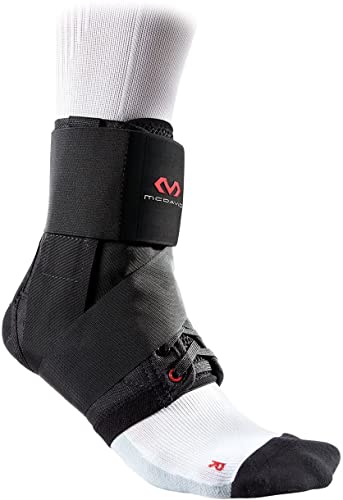
- Rigid side stabilizers help limit rolling.
- Adjustable lacing provides custom compression.
- Low-profile design fits inside athletic shoes.
Best For: Basketball players wanting structured, adjustable support
Trusted Stability Pick

- Figure 8 straps help control twisting.
- CoolFlex padding supports comfortable wear.
- Bilateral design fits either ankle.
Best For: Sports injury recovery and chronic ankle instability
Adjustable Flexibility Pick
Figure 8 Brace with Removable Splints
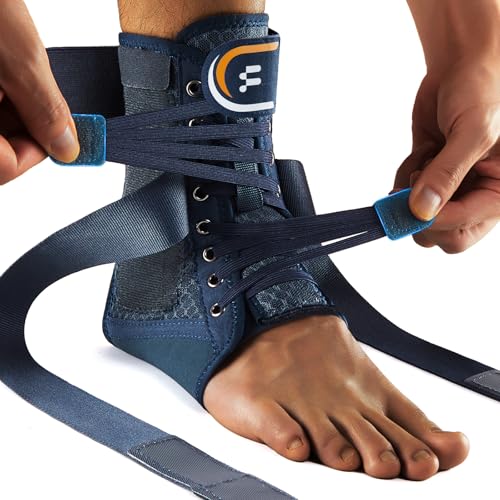
- Removable splints allow variable rigidity.
- Triple-lock straps support sprain recovery.
- Low-profile design fits athletic shoes.
Best For: Players wanting customizable support levels
Low-Profile Court Pick

- Lace-free rear entry simplifies fitting.
- Low-profile straps fit tight athletic shoes.
- Lightweight design suits youth athletes.
Best For: Players prioritizing minimal bulk and easy entry
Everyday Stability

- Low-profile support for mild-to-moderate discomfort
- Reinforced side stabilizers limit lateral motion
- Adjustable straps and breathable material
Best For: Everyday basketball and active use with mild ankle instability
Maximum Court Lockdown
ONDRIVE Basketball Ankle Brace
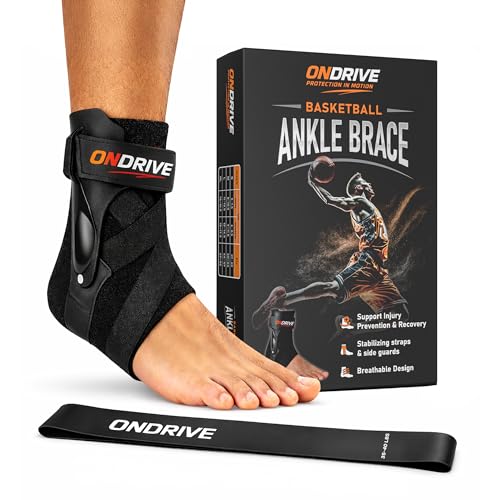
- Dual rigid stabilizers reinforce side-to-side movement
- X-pattern straps secure the brace during cuts and landings
- Three-layer fabric with perforated airflow panels
Best For: High-impact basketball and athletes wanting structured lateral support
Flexible Compression

- Compression sleeve with an adjustable support strap
- Breathable, sweat-absorbing fabric for active use
- Supports basketball, sprains, tendonitis, and foot discomfort
Best For: Flexible basketball support and compression-focused everyday wear
Best Overall
Reinforced Lace-Up Ankle Brace
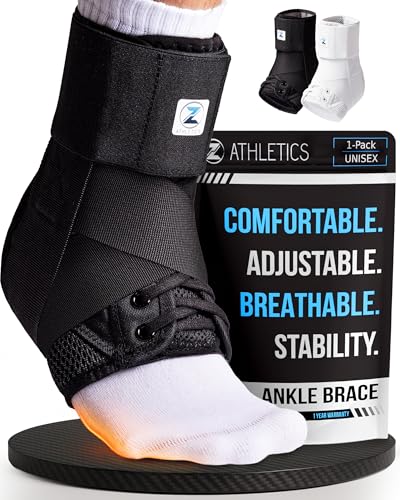
- Adjustable figure-8 lacing and side straps
- Slim enough for basketball shoes
- Breathable and fits either ankle
Best For: Players wanting firm, customizable ankle stabilization
Best Quick-Fit Support

- Fast hook-and-loop fastening
- Contoured pads support the ankle bones
- Thin, breathable design fits sports shoes
Best For: Players needing convenient support for mild sprains
Best Compression Sleeve

- Low-profile seamless 1.2 mm knit
- Two sleeves included for rotation
- Flexible compression fits inside most shoes
Best For: Everyday support, swelling management, and light activity
Maximum Support Pick – McDavid Lace-Up Figure 8 Ankle Brace
If you want an ankle brace for basketball that emphasizes structured support without excessive bulk, this McDavid model combines adjustable lacing, figure 8 strapping, and rigid side stabilizers. Its low-profile design is intended to fit comfortably inside athletic shoes.
Best For: Basketball players and other athletes seeking adjustable compression and strong protection against ankle rolling.
Pros:
- Figure 8 straps and side stabilizers provide substantial ankle support.
- Adjustable lacing allows a customized compression fit.
- Low-profile, breathable design suits basketball and other sports.
- Supports recovery and common tendon-support needs.
Cons:
- Lace-up adjustment may take longer than a slip-on brace.
- Hand-wash care may require extra maintenance.
This is a strong choice when stability is the priority. The adjustable fit and structured side support make it particularly practical for court sports and sprain recovery.
Trusted Stability Pick – Med Spec ASO Ankle Stabilizer
The Med Spec ASO is a practical ankle brace for basketball, volleyball, and other sports when you need dependable figure 8 stabilization in a shoe-friendly format. Its bilateral design can be adjusted for either the left or right ankle.
Best For: Athletes recovering from sprains, rolled ankles, ligament injuries, or chronic ankle instability.
Pros:
- Figure 8 straps help limit painful twisting.
- CoolFlex padding and nylon construction support comfortable wear.
- Fits inside most shoes while providing sports-focused stabilization.
- Works on either the left or right ankle.
Cons:
- The listed large size may not suit every wearer.
- Lace-up construction requires manual adjustment.
Choose this model if you value a proven, adaptable design for repeated sports use. Its bilateral fit and breathable padding add everyday practicality beyond the basketball court.
Adjustable Flexibility Pick – Figure 8 Brace with Removable Splints
This ankle brace for basketball offers a flexible support setup through a triple-lock design, cross straps, and removable side stabilizers. You can keep the splints installed for firmer protection or remove them when a less rigid feel is more appropriate.
Best For: Athletes who want to vary support levels during sprain recovery, workouts, and daily wear.
Pros:
- Removable side stabilizers let you customize rigidity.
- Figure 8 straps and top compression support a secure fit.
- Designed to stay in place during basketball and longer activity sessions.
- Breathable, low-profile construction fits most athletic shoes.
Cons:
- Hand-wash care adds maintenance.
- The medium size may require careful sizing.
This is the most adaptable option in the group. It suits players who need stronger court support during recovery but prefer the ability to reduce rigidity for everyday use.
Low-Profile Court Pick – McDavid Phantom Ankle Brace
For players prioritizing a streamlined fit, the McDavid Phantom is an ankle brace for basketball with a lace-free rear-entry design and non-slip straps. Its lightweight profile is intended for use with tight-fitting shoes and cleats.
Best For: Youth athletes and basketball players who want lightweight support with minimal bulk.
Pros:
- Rear-entry, lace-free design makes fitting convenient.
- Low-profile straps work with tight-fitting shoes.
- Lightweight polyester and nylon construction weighs just 0.05 kg.
- Designed for use on either the left or right ankle.
Cons:
- The listed XS/S size may not fit larger users.
- Hand-wash care is required.
- Its lightweight design may be less suited to those seeking maximum rigid support.
This brace is a sensible fit-focused choice when shoe space and weight matter. It favors convenience and mobility, making it especially appealing for younger players and tight athletic footwear.
Everyday Stability – BraceUP Ankle Brace
If you want an ankle brace for basketball that stays relatively low profile, the BraceUP model offers mild-to-moderate support for everyday activity, sprains, tendonitis, and general joint discomfort. Its side stabilizers and adjustable straps help limit lateral movement while allowing you to fine-tune compression.
Best For: Basketball players seeking lightweight, adjustable support for mild ankle instability and everyday wear.
Pros:
- Reinforced stabilizers on both sides help limit lateral motion.
- Adjustable side straps let you gradually increase compression.
- Breathable, lightweight construction is suitable for extended wear.
- Supports multiple uses, including sprains, foot pain, and tendonitis.
Cons:
- Not designed for rigid immobilization or post-surgery recovery.
- One-size design may provide less precise sizing than size-specific braces.
The BraceUP is a practical choice when you want more structure than a basic sleeve without moving to a rigid immobilizer. For severe injuries or recovery after surgery, use a brace specifically intended for those needs and follow professional guidance.
Maximum Court Lockdown – ONDRIVE Basketball Ankle Brace
For players who need a more structured ankle brace for basketball, the ONDRIVE uses dual rigid side stabilizers and an X-pattern strap system to reinforce the ankle during cuts, crossovers, landings, and drives. Its three-layer construction adds compression and airflow, but careful sizing is essential.
Best For: Basketball athletes who prioritize strong lateral support and a locked-in fit during high-impact movement.
Pros:
- Dual rigid stabilizers provide structured side-to-side reinforcement.
- Four crisscrossing straps help secure the brace over the foot.
- Three-layer construction combines compression, stability, and a smooth lining.
- Perforated panels promote airflow during intense play.
Cons:
- Requires careful measurement and sizing before purchase.
- Users between sizes or with wider feet are advised to size up.
- The structured design may feel less flexible than a soft compression sleeve.
The ONDRIVE is the most performance-focused option in this group, emphasizing lateral control for explosive basketball movements. Confirm the sizing chart and video guide first, since its snug stabilizer design depends heavily on proper fit.
Flexible Compression – Sleeve Stars Ankle Brace
The Sleeve Stars is an ankle brace for basketball built around flexible compression rather than rigid stabilization. Its pull-on sleeve and adjustable support strap provide customizable pressure for sports, daily activity, sprains, tendonitis, plantar fasciitis, and Achilles discomfort while preserving freedom of movement.
Best For: Basketball players who prefer a lightweight compression sleeve with an adjustable strap for flexible support.
Pros:
- Adjustable strap allows customized compression and a snug fit.
- Breathable, sweat-absorbing fabric supports comfortable active wear.
- Lightweight design weighs 2.4 ounces.
- Suitable for basketball and other sports, including running and volleyball.
Cons:
- Soft wrap construction may provide less lateral control than a rigid stabilizer.
- Requires measurement against the product sizing guidance for a tailored fit.
- Supplied configuration is a single brace with one strap.
This Sleeve Stars model makes sense for players who want compression and adjustability without the bulk of a rigid brace. It is better suited to flexible support and comfort than to high-level immobilization or maximum lateral restriction.
Best Overall – Reinforced Lace-Up Ankle Brace
If you want a supportive ankle brace for basketball that can also help with sprains, instability, or Achilles tendonitis, this lace-up design offers adjustable compression and side-strap stability. Its slim profile is intended to fit inside basketball shoes without adding much bulk.
Best For: Basketball players who want firm, customizable support for an injured or unstable ankle.
Pros:
- Figure-8 lacing and side straps help limit ankle rolling.
- Slim design fits inside basketball shoes and other footwear.
- Breathable air-mesh panels help manage heat and moisture.
- Fits either ankle and is hand-washable.
Cons:
- Lace-up adjustment takes longer than a simple slip-on sleeve.
- Hand washing and air drying are required.
- Firm stabilization may feel less flexible than a compression sleeve.
This is the strongest all-around option here for players prioritizing adjustable, injury-focused stabilization. It is more substantial than a sleeve, but the low-profile construction should work well with court shoes.
Best Quick-Fit Support – Slim-Fit Ankle Brace
This ankle brace for basketball is designed for fast application, using hook-and-loop fastening instead of traditional shoelaces. Two contoured pads and a non-stretch figure-8 system provide a snug wrap while the thin construction is intended to fit in sports shoes.
Best For: Active players who want quick, adjustable support for mild sprains or general ankle stability.
Pros:
- Hook-and-loop closure can be fastened quickly.
- Two auto-shaped pads contour around the ankle.
- Figure-8 straps provide 360-degree wrapping and anti-roll support.
- Laser-cut ventilation holes and a thin profile support shoe comfort.
Cons:
- Requires careful ankle measurement before ordering.
- Users with wide feet or swelling may need to size up.
- It is described primarily for light sprains rather than severe instability.
Choose this model if convenience matters during practices or games. Its fast closure and breathable, low-profile build make it practical, but sizing is especially important for a comfortable fit.
Best Compression Sleeve – Modvel Ankle Brace Socks
For a lightweight ankle brace for basketball, these slip-on compression sleeves provide flexible support without straps or laces. The seamless knit design is made to fit inside most shoes and comes as a two-piece set for regular wear, training, or recovery.
Best For: Basketball players who prefer low-profile compression for everyday support, swelling, or mild instability.
Pros:
- Seamless 1.2 mm knit has a low-profile feel inside shoes.
- 360-degree compression supports movement and may help with swelling and fatigue.
- Two sleeves provide a spare or allow frequent rotation.
- Ambidextrous design fits either foot and includes an anti-roll top band.
Cons:
- Slip-on sleeve provides less rigid stabilization than a lace-up brace.
- Compression fit depends on selecting the correct size.
- Care instructions call for flat air drying and avoiding heat.
This is the most comfortable, low-bulk choice for players who want compression rather than rigid ankle control. It suits daily activity and lighter support needs, but players recovering from a significant injury may prefer a structured brace.
How We Picked the Best Ankle Brace for Basketball
We focused on the features that matter most on the court: lateral stability, adjustability, range of motion, comfort during extended wear, and compatibility with basketball shoes. The selection includes braces with figure-eight straps, side stabilizers, removable splints, lace-free designs, and compression fabrics so players can match support to their needs.
We also considered sizing clarity, whether a brace is sold individually or as a pair, ease of putting it on, and how much bulk it may add inside a shoe. A brace should support the ankle without creating pressure points or restricting normal movement more than necessary.
Quick Comparison
| Brace type | Best for | Main advantage | Potential trade-off |
|---|---|---|---|
| Lace-up with stabilizers | Players wanting adjustable support | Secure, customizable fit | Can take longer to put on |
| Rigid or semi-rigid stabilizer | Higher-risk ankles and repeated sprains | Strong side-to-side control | More noticeable in a shoe |
| Low-profile lace-free brace | Players prioritizing mobility | Fast setup and reduced bulk | Usually less customizable |
| Compression sleeve | Mild support and swelling control | Lightweight, comfortable fit | Limited protection against rolling |
Key Buying Factors for an Ankle Brace for Basketball
Support Level
For a history of sprains or frequent ankle rolling, look for side stabilizers, figure-eight straps, or semi-rigid splints. Compression sleeves are better suited to mild soreness, swelling, or general awareness rather than major instability.
Fit and Sizing
Measure as directed by the manufacturer and compare the result with the product’s chart. A brace that is too loose may shift during play, while one that is too tight can cause numbness, rubbing, or restricted circulation. Try it with the basketball socks and shoes you actually use.
Bulk and Mobility
Low-profile models are easier to fit inside snug basketball shoes. More structured braces may provide stronger protection but require additional room. Test squatting, jumping, and lateral movement before wearing a new brace for a full game.
Adjustability and Maintenance
Lace-up and strap systems allow more precise tension changes, while sleeves are quicker to wear. Check cleaning instructions, especially if the brace uses rigid inserts, hook-and-loop closures, or moisture-sensitive materials.
Who Should Buy Which Ankle Brace for Basketball?
Choose a lace-up stabilizer if you want a balanced Ankle Brace for Basketball with adjustable compression and dependable lateral support. These are versatile for practices, games, and post-sprain return-to-play routines.
Choose a rigid or semi-rigid model if you have recurring instability or need the most substantial side-to-side control. Confirm that your shoe has enough interior space and follow guidance from a medical professional after a significant injury.
Choose a slim or lace-free brace if you dislike complicated setup or have limited room in your shoes. These designs can be practical for everyday court use when moderate support is sufficient.
Choose a compression sleeve for lightweight coverage, mild support, or swelling management. It is not a substitute for evaluation or rehabilitation when pain, bruising, weakness, or instability persists.
No brace can replace proper recovery, strengthening, and a suitable return-to-play plan. Stop using any model that causes increasing pain, numbness, or skin irritation, and seek professional advice for severe or ongoing symptoms.