Incline treadmills make it easier to add hill-style effort to indoor walks and runs without relying on outdoor weather or terrain. This roundup compares 10 options spanning compact walking pads, folding home treadmills, and full-size connected machines.
Consider incline range, belt dimensions, motor strength, user capacity, controls, and available space before choosing. The best model depends on whether you prioritize steep training, everyday walking, running comfort, or convenient storage.
Best 10 Incline Treadmills Picks for 2026
Best for Steep Hill Training

- Five manual incline settings reach 40%
- Extended 51-inch handrails for taller users
- Quiet, foldable design with 350-lb capacity
Best For: Steep incline walking and stair-simulation workouts
Best for Guided Smart Workouts
NordicTrack T Series Treadmill

- 10 MPH top speed for running workouts
- 0–10% digital incline range
- iFIT supports guided and automatic workouts
Best For: Connected home training and everyday running
Best for Cross-Training

- 24-inch swiveling Full HD touchscreen
- Up to 12.5 MPH with auto-incline
- Supports treadmill and 15+ off-tread workouts
Best For: Immersive classes and whole-household cross-training
Best Compact High-Capacity Pick

- Manual incline settings reach 18%
- 400-lb stated capacity with handlebar
- Folds compactly for small-space storage
Best For: Apartment workouts and portable incline walking
Best Value Incline Treadmill
15-Level Folding Home Treadmill

- 15 automatic incline levels with speeds up to 10 mph
- 18-inch-wide belt with multi-layer cushioning
- Folding frame, Bluetooth, and 36 programs
Best For: Versatile home incline workouts on a budget
Best Premium Incline Treadmill

- 12 mph speed with -3% decline to 12% incline
- Large 60-by-22-inch running deck
- 16-inch touchscreen with iFIT compatibility
Best For: Serious home runners and guided training households
Best High-Incline Walking Pad
40% Foldable Incline Treadmill

- Five manual incline levels up to 40%
- Quiet brushless motor with speeds up to 6.2 mph
- Folds compactly with extended handrails
Best For: Steep walking workouts and space-conscious homes
Best Overall Incline Treadmill
JELENS 15% Auto-Incline Treadmill
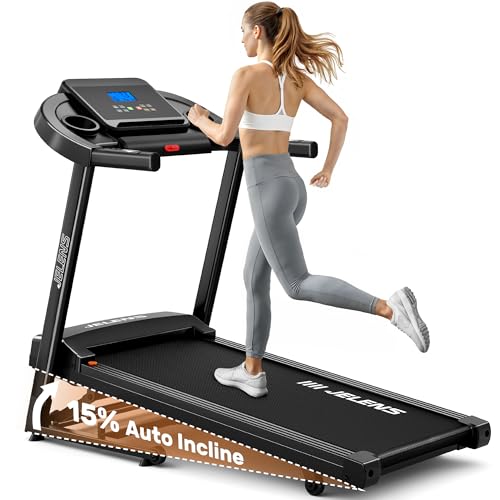
- 15 automatic incline levels
- 330-pound capacity with 7.5 MPH top speed
- Foldable design with app and pulse tracking
Best For: Home users wanting automated incline and versatile workout tracking
Best Compact Incline Treadmill
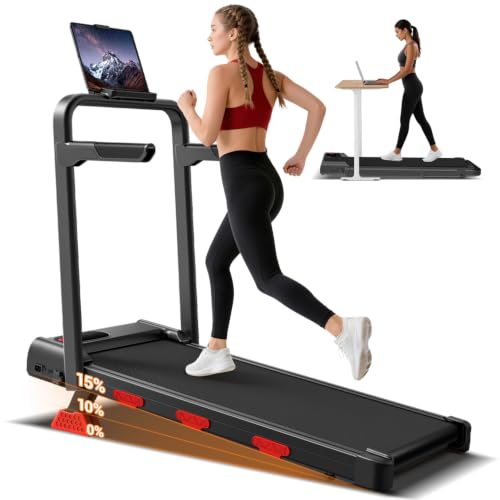
- Manual flat, 10%, and 15% incline positions
- 350-pound capacity and quiet brushless motor
- Slim profile for under-furniture storage
Best For: Small spaces and walking-focused home workouts
Best Budget Incline Walking Pad
Elseluck Manual-Incline Treadmill

- Manual incline for gentler uphill training
- Lightweight 39.2-pound portable design
- 0.6–3.8 MPH range with handles and remote
Best For: Beginners and desk walkers needing a compact, low-speed option
Best for Steep Hill Training – CURSOR 40% Incline Treadmill
For shoppers comparing incline treadmills, the CURSOR stands out with five manual incline settings up to 40%. Its elevated deck, extended handrails, and 350-pound capacity make it suited to challenging walking and climbing workouts at home.
Best For: Steep incline walking, stair-simulation workouts, and taller users who want extra handrail support.
Pros:
- Offers 0%, 10%, 20%, 30%, and 40% manual incline settings.
- Extended 51-inch handrails can support a more upright posture for taller users.
- Quiet 3HP brushless motor operates below 45dB, according to the supplied specifications.
- Foldable design, transport wheels, and layered cushioning support convenient home use.
Cons:
- Incline adjustments are manual rather than automatic.
- Its 6.2 MPH operating range in the product description is better suited to walking, climbing, and light jogging than fast running.
- The steepest setting raises the deck 15 inches, so ceiling clearance and balance should be considered.
The CURSOR is a specialized choice among incline treadmills, prioritizing steep elevation and stability over high-speed running. It is especially appealing if hill-style training and supportive handrails matter more than automated programming.
Best for Guided Smart Workouts – NordicTrack T Series Treadmill
The NordicTrack T Series is a practical option among incline treadmills for users who want a conventional running deck paired with connected training. It reaches 10 MPH, provides a 0–10% incline range, and folds for storage.
Best For: Home runners who want iFIT-guided workouts, automatic adjustments, and a full-size 55-by-20-inch deck.
Pros:
- Supports speeds up to 10 MPH for walking, jogging, and running.
- Offers a 0–10% incline range with digital quick controls.
- iFIT can automatically adjust speed and incline when paired with a required membership.
- KeyFlex cushioning and a folding frame support everyday comfort and storage.
Cons:
- Many connected features, including iFIT workouts and automatic adjustments, require an iFIT Train Membership.
- The 10% maximum incline is less aggressive than several specialized high-incline models.
- At 203 pounds, it is substantially heavier than compact walking-pad-style treadmills.
This NordicTrack is a strong fit if structured programming is central to your routine. Its moderate incline range and faster top speed make it more versatile for running than compact high-incline walking models.
Best for Cross-Training – Peloton Treadmill
The Peloton Treadmill brings incline treadmill training into a broader connected fitness setup. Its 24-inch swiveling touchscreen, speed and incline controls, and support for walking, running, hiking, and off-tread workouts make it a versatile premium option.
Best For: Households seeking immersive classes and a single machine for treadmill and cross-training sessions.
Pros:
- 24-inch Full HD swivel touchscreen supports multiple workout types beyond treadmill training.
- Auto-incline can follow instructor cues, while rotary controls allow quick manual changes.
- Reaches 12.5 MPH and provides 59 inches of running space.
- Personalized plans, recommendations, and workout metrics are available through the All-Access Membership.
Cons:
- Peloton All-Access Membership costs $49.99 per month for the listed content and applicable features.
- The treadmill weighs 258 pounds and has specific clearance and ceiling-height requirements.
- Wi-Fi is required, and the supplied warranty is limited to 12 months.
The Peloton is less about simple incline functionality and more about an integrated training experience. Choose it when interactive programming and cross-training flexibility justify the larger footprint, heavier build, and ongoing membership cost.
Best Compact High-Capacity Pick – LONTEK 18% Incline Treadmill
The LONTEK is a compact entry in the incline treadmills category, combining manual incline attachments with speeds up to 7.5 MPH. Its folding walking-pad format, 400-pound capacity, and three LED screens make it suitable for space-conscious home setups.
Best For: Small apartments, walking and climbing workouts, and users who value high stated weight capacity in a portable treadmill.
Pros:
- Manual incline settings include 0%, 10%, and 18% using the included attachments.
- Supports walking, climbing, jogging, and running at speeds from 0.6 to 7.5 MPH.
- Rated for up to 400 pounds and equipped with a handlebar for added support.
- Folds to approximately 44.3 by 21.8 by 4.1 inches and includes built-in wheels.
Cons:
- Incline changes are manual and require using attachments.
- The 15-by-37.5-inch belt is narrower and shorter than the decks on larger running treadmills.
- Three LED screens provide basic workout metrics rather than an immersive connected display.
The LONTEK offers a useful balance of incline capability and portability. It is a compelling choice for compact spaces, though users planning frequent long-stride running may prefer a larger deck.
Best Value Incline Treadmill – 15-Level Folding Home Treadmill
This incline treadmill is a practical choice for home users who want adjustable hill training without giving up a foldable design. It combines a 15-level automatic incline, speeds up to 10 mph, a wide 18-inch belt, Bluetooth connectivity, and 36 workout programs.
Best For: Home users seeking versatile incline workouts, cushioning, and a space-saving folding frame.
Pros:
- 15 automatic incline levels and speeds from 0.5 to 10 mph support varied workouts.
- 18-inch-wide, five-layer running belt provides a relatively roomy running surface.
- Foldable design and built-in cushioning help suit home use.
- Bluetooth, heart-rate monitoring, and 36 programs add workout variety.
Cons:
- The deck is 42.5 inches long, which may feel limiting for some taller runners.
- The listed maximum weight recommendation is 300 pounds.
- The product notes contain different folded-size measurements, so confirm storage dimensions before buying.
With automatic incline and a solid feature set at its size, this model is aimed at everyday home cardio rather than dedicated high-mileage training. Check the belt length and available storage space carefully if you plan to run regularly.
Best Premium Incline Treadmill – NordicTrack Commercial 1750
The NordicTrack Commercial 1750 is a full-size incline treadmill for runners who want a larger deck, faster top speed, and guided training features. Its 16-inch pivoting touchscreen supports iFIT workouts, while the machine offers speeds up to 12 mph and a -3% decline to 12% incline range.
Best For: Runners and households wanting a premium treadmill with interactive training and a spacious running deck.
Pros:
- 60-inch by 22-inch deck provides generous room for running.
- 12 mph top speed supports walking, jogging, and faster running.
- Incline and decline range adds terrain variety and muscle-targeting options.
- RunFlex cushioning, folding storage, and a 400-pound maximum weight recommendation broaden its home-use appeal.
Cons:
- Many smart features, including guided workouts and automatic adjustments, require an iFIT Pro Membership.
- At 265.7 pounds, it is substantially heavier than compact home treadmills.
- The 80-inch length and 36-inch width require considerable floor space.
This is the most capable option here for serious home running and structured training, particularly if you plan to use iFIT. Its large footprint, weight, and subscription-dependent features make it less suitable for shoppers seeking a simple or highly portable treadmill.
Best High-Incline Walking Pad – 40% Foldable Incline Treadmill
This high-incline walking pad stands out among incline treadmills for its 40% manual hill setting and compact folding design. Five incline positions, a 6.2 mph maximum speed, extended handrails, and a quiet brushless motor make it suited to walking-focused workouts and steep hill training at home.
Best For: Walkers, hikers, and apartment users who want steep manual incline training in a compact format.
Pros:
- Five manual incline levels range from flat to 40% for demanding hill workouts.
- Extended 51-inch handrails and a reinforced base add support during steep sessions.
- Quiet 3HP brushless motor operates at under 45dB according to the supplied notes.
- Folds to approximately 57.3 by 24.4 by 6.1 inches and includes transport wheels.
Cons:
- The 38.6-by-15.4-inch belt is narrower than the running decks on full-size treadmills.
- The 6.2 mph maximum speed is better suited to walking, jogging, and light running than fast running.
- Incline adjustment is manual rather than automatic.
Choose this model when steep elevation and easy storage matter more than a spacious running deck or high speed. Its handlebar support and compact footprint are especially useful for incline walking in apartments, bedrooms, or home offices.
Best Overall Incline Treadmill – JELENS 15% Auto-Incline Treadmill
For shoppers comparing incline treadmills, the JELENS stands out with electronically adjustable incline levels from 0% to 15%. Its 3.0HP motor, 330-pound capacity, foldable frame, and app connectivity make it a versatile option for walking, light running, and structured home workouts.
Best For: Home users who want automatic incline adjustment, workout tracking, and a higher weight capacity.
Pros:
- 15 automatic incline levels provide convenient uphill-training adjustments.
- Supports speeds from 0.6 to 7.5 MPH and users up to 330 pounds.
- Foldable design, transport wheels, Bluetooth app support, and pulse sensors add convenience.
- Six-layer shock-absorbing belt and quiet operation below 40 decibels support comfortable workouts.
Cons:
- The 43.31-inch belt may feel short for longer-stride runners.
- It requires a power outlet and weighs nearly 80 pounds.
The JELENS is the most feature-rich choice in this group, especially if automatic incline control matters. Its combination of speed range, capacity, app support, and folding storage makes it a strong all-around pick for home fitness.
Best Compact Incline Treadmill – LONTEK 15% Walking Pad
The LONTEK offers a space-conscious approach to incline treadmills, using manually adjustable positions rather than electronic controls. You can use it flat, at a 10% grade, or with the included pads for a 15% incline, while the slim frame stores under furniture or upright against a wall.
Best For: Apartment dwellers, home-office users, and walkers who prioritize portability and a high weight capacity.
Pros:
- Three incline configurations—flat, 10%, and 15%—can be changed by hand.
- Supports up to 350 pounds with a quiet brushless motor rated below 45 decibels.
- Compact 4.4-inch-high profile can fit under beds, sofas, or desks.
- LED display, device holder, cushioned belt, and side impact strips improve usability.
Cons:
- Incline adjustment is manual rather than automatic.
- The 6.2 MPH maximum speed is better suited to walking and light jogging than faster running.
Choose the LONTEK if convenient storage and carrying capacity are more important than automated programming. Its manual incline system keeps the design simple while still offering meaningful uphill walking options.
Best Budget Incline Walking Pad – Elseluck Manual-Incline Treadmill
This Elseluck walking pad is a straightforward option among incline treadmills for users who want a compact machine with a manually raised front section. Its 0.6–3.8 MPH speed range supports desk walking, gentle exercise, and active recovery, while built-in handles provide added balance.
Best For: Beginners, seniors, and home-office users seeking a lightweight walking pad with basic incline capability.
Pros:
- Manual incline helps increase workout intensity without raising walking speed.
- Lightweight 39.2-pound frame includes transport wheels for easy repositioning.
- Remote control and LED display track and adjust essential workout settings.
- Five-layer non-slip belt and shock absorption support steadier, more comfortable walking.
Cons:
- Its 3.8 MPH top speed is intended for walking rather than running.
- The supplied details list a 220-pound maximum capacity, despite the product notes also mentioning 265 pounds.
- Manual incline requires physically raising the front of the unit.
The Elseluck is best viewed as a compact walking solution rather than a full running treadmill. Its low weight, handles, remote, and gentle speed range make it practical for beginners and desk-based movement, but buyers should verify the current weight-capacity specification before ordering.
How We Picked These Incline Treadmills
We selected models that cover the main ways shoppers use Incline Treadmills at home: steady walking, brisk hill workouts, jogging, running, cross-training, and compact under-desk or apartment setups. The lineup includes machines with moderate automatic incline, steep incline settings, foldable designs, extended handles, wider decks, and higher stated weight capacities.
We also considered practical specifications that affect daily use, including belt size, motor output, display layout, controls, pulse sensors, connectivity, and storage requirements. Product specifications can vary by model and configuration, so confirm the exact version, dimensions, warranty, and delivery terms before buying.
Quick Comparison
| Best For | Look For | Typical Trade-Off |
|---|---|---|
| Walking and light hill work | Compact belt, simple controls, moderate incline | Less room for running strides |
| Steep incline training | High incline percentage and stable handrails | Usually larger and heavier |
| Regular running | Long, wide deck and stronger motor | Higher cost and space needs |
| Small rooms | Folding frame or walking-pad design | May have limited cushioning or controls |
| Connected workouts | Large display, app support, and guided classes | Possible subscription or internet requirements |
Key Buying Factors for Incline Treadmills
Incline Range and Adjustment
A 10% to 15% incline is suitable for many walking and hill workouts, while 18% to 40% settings are aimed at steeper conditioning. Check whether adjustment is automatic, manual, or controlled through preset buttons. At higher inclines, a secure rail and stable frame matter more than headline percentage alone.
Belt Size and Cushioning
Walkers can often use a shorter deck, but runners generally benefit from a longer and wider belt that allows a natural stride. Cushioning can reduce impact, although the feel varies by design. Leave clearance around the machine and verify the assembled dimensions, not just the folded size.
Motor, Capacity, and Stability
Frequent running and heavier users typically benefit from a stronger motor, a durable frame, and a generous stated weight capacity. Do not treat capacity as a target; staying comfortably below the limit can improve stability and longevity. Walking pads may be convenient but are not always intended for sustained high-speed running.
Controls, Safety, and Maintenance
Quick incline and speed buttons are useful during interval sessions. Look for an emergency stop mechanism, readable controls, handrails that suit your height, and a display that shows the metrics you actually use. Confirm lubrication instructions, noise expectations, warranty coverage, and whether assembly or moving assistance is available.
Who Should Buy Which Incline Treadmills?
Choose a compact walking pad if you mainly walk, have limited space, or need a machine that can be stored between sessions. Choose a folding treadmill with automatic incline for general home fitness and occasional jogging. Choose a full-size running treadmill if you train regularly, need a longer deck, or want better stability at speed. Choose a steep-incline model if hill intervals and low-speed, high-effort workouts are your priority. Choose a connected treadmill if guided classes, workout tracking, and interactive training will help you stay consistent.