A compact exercise bike can make consistent cardio easier when floor space, noise, or storage is limited. The 10 options in this roundup include folding upright bikes, versatile 3-in-1 and 5-in-1 designs, and app-connected models.
Use the comparison and buying advice below to match resistance range, riding position, weight capacity, and portability to your workout routine.
Best 10 Compact Exercise Bikes Picks for 2026
Best Space-Saving Pick
XTERRA FB150 Folding Exercise Bike
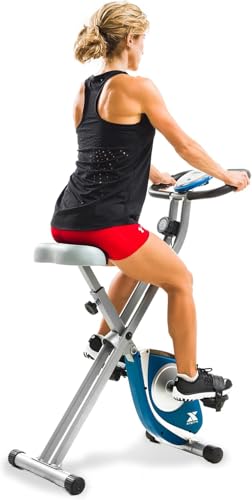
- Folds to an 18.1-by-18.1-inch footprint
- Eight levels of magnetic resistance
- 225-pound capacity with LCD workout tracking
Best For: Small homes and straightforward indoor cycling
Best Adjustable Family Option
ATIVAFIT 5-in-1 Foldable Exercise Bike
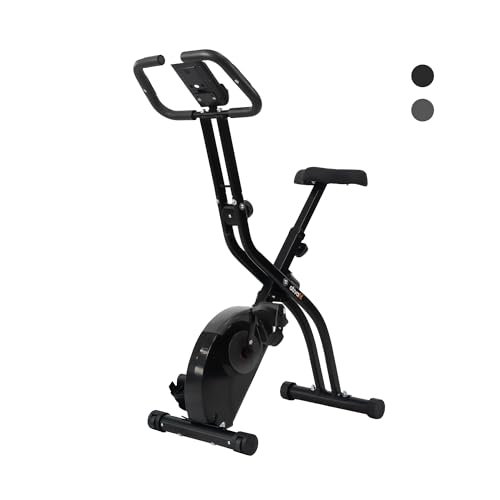
- Upright and recumbent riding positions
- Adjustable seat with 265-pound capacity
- Foldable frame, transport wheels, and phone holder
Best For: Shared home use and flexible low-noise workouts
Best for Comfort and Capacity

- 300-pound capacity with wide seat and XXL backrest
- Upright and recumbent configurations
- 16 resistance levels plus arm bands
Best For: Seniors and riders seeking extra back and seat support
Best Full-Body Value
pooboo Folding Magnetic X-Bike

- Upright and semi-recumbent riding modes
- Arm bands, bottle holder, and transport wheels
- 300-pound capacity with eight magnetic resistance levels
Best For: Compact full-body home workouts and flexible storage
Best Folding Capacity
GOIMU 5-in-1 Foldable Exercise Bike

- 16-level magnetic resistance
- 330-pound weight capacity
- Folds and includes transport wheels
Best For: Seniors and users wanting a supportive, space-saving bike
Best Connected Ride

- App support for MERACH, KINOMAP, and Zwift
- Quiet belt drive rated below 25 dB
- 100-level adjustable friction resistance
Best For: Connected training and adjustable indoor cycling
Best Value Folding Design

- Folding frame with transport wheels
- 16-level magnetic resistance
- Upright and semi-reclined positions
Best For: Home users wanting flexible, basic low-impact workouts
Best Lightweight Pick

- Lightweight 33-pound foldable design
- 16 magnetic resistance levels
- 70% pre-assembled setup
Best For: Small apartments and users prioritizing portability
Best High-Capacity Option

- Supports up to 350 pounds
- Three workout postures
- Quiet 16-level magnetic resistance
Best For: Larger users and versatile home workouts
Best Storage Features
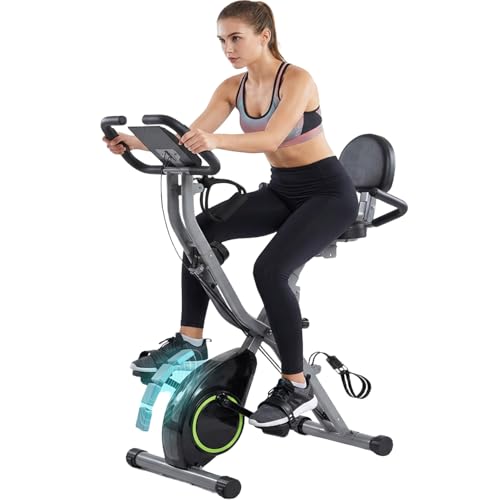
- Front rollers simplify movement
- 300-pound maximum capacity
- Near-silent 16-level resistance
Best For: Small spaces, offices, and shared households
Best Space-Saving Pick – XTERRA FB150 Folding Exercise Bike
For shoppers comparing compact exercise bikes, the XTERRA FB150 focuses on a simple folding design and straightforward magnetic resistance. Its X-frame folds to just 18.1 by 18.1 inches for storage, making it a practical choice for limited floor space.
Best For: Small homes, apartments, and riders who want a basic folding bike with easy manual adjustments.
Pros:
- Folds into a compact 18.1-by-18.1-inch footprint.
- Eight magnetic resistance levels adjust with a large manual dial.
- Padded seat and multi-position handlebars support a more comfortable fit.
- LCD display tracks speed, distance, time, calories, and pulse.
Cons:
- Its 225-pound weight capacity is lower than several alternatives.
- The console is a basic 2-by-1-inch LCD window.
- It does not include upper-body resistance bands.
The FB150 is a focused option when storage size and simple operation matter most. It offers useful workout tracking and eight resistance settings without adding the extra features or larger capacity found on some multifunction bikes.
Best Adjustable Family Option – ATIVAFIT 5-in-1 Foldable Exercise Bike
The ATIVAFIT is one of the more versatile compact exercise bikes for home use, combining foldable storage with an adjustable seat and upright or recumbent riding positions. Its magnetic system is designed for quiet workouts, while the transport wheels make repositioning easier.
Best For: Households that want a foldable bike with multiple riding positions, a higher 265-pound capacity, and a phone holder.
Pros:
- Foldable frame and transport wheels help with storage and moving.
- Adjustable seat supports a range of users and holds up to 265 pounds.
- Upright and recumbent positions add workout flexibility.
- Digital monitor displays distance, speed, time, and heart rate.
Cons:
- The supplied details list eight resistance levels, despite the product title referencing 16.
- Its listed dimensions and capacity should be checked against your available space and needs.
- It uses a corded-electric power source, according to the supplied specifications.
This ATIVAFIT model is a practical middle ground for buyers who want more adjustability than a basic folding bike provides. The quiet magnetic operation and compact storage design suit casual home cardio, especially when multiple users need different riding positions.
Best for Comfort and Capacity – YYFITT 3-in-1 Exercise Bike
The YYFITT stands out among compact exercise bikes for its wide seat, XXL backrest, and 300-pound capacity. Its foldable frame switches between upright and recumbent positions, while the luminous display can be easier to read in dim spaces.
Best For: Seniors, larger riders, and users prioritizing back support, a wider seat, and adjustable riding positions.
Pros:
- 300-pound maximum weight capacity is among the highest in this group.
- Wide seat and XXL adjustable backrest emphasize riding comfort.
- Sixteen magnetic resistance levels provide a broad intensity range.
- Arm resistance bands add an upper-body exercise option.
Cons:
- At 40 pounds, it is heavier than the simplest folding model.
- The 20-by-38-by-45-inch listed dimensions may require more setup space.
- The display and controls add complexity compared with a basic exercise bike.
Choose the YYFITT when comfort and support are more important than having the smallest possible folded bike. Its adjustable backpad, wider seat, high capacity, and 16 resistance levels make it especially adaptable for longer or lower-impact sessions.
Best Full-Body Value – pooboo Folding Magnetic X-Bike
The pooboo X-Bike is a versatile choice among compact exercise bikes, offering upright and semi-recumbent positions plus attachable arm resistance bands. Its folding frame, transport wheels, bottle holder, and 300-pound capacity make it well suited to practical home-gym use.
Best For: Users who want a compact bike that supports cardio, light upper-body work, hydration, and easy room-to-room movement.
Pros:
- Upright and semi-recumbent positions support different workout styles.
- Two arm resistance bands can be attached in three adjustable positions.
- 300-pound capacity and a triangular steel frame support a broad range of users.
- Folds for storage and includes transport wheels and a bottle holder.
Cons:
- Eight resistance levels offer less adjustment than the YYFITT model.
- The listed 27.17-inch depth may require more operating space than some folding bikes.
- The monitor requires two AAA batteries.
The pooboo is a strong all-around pick for buyers who want more than basic cycling without moving to a larger machine. It combines quiet magnetic resistance, multiple riding positions, upper-body bands, and convenient storage features in one home-focused design.
Best Folding Capacity – GOIMU 5-in-1 Foldable Exercise Bike
If you need compact exercise bikes for a small home gym, the GOIMU 5-in-1 stands out for its foldable X-bike design and broad adjustability. It offers 16 magnetic resistance levels, a supportive backrest, transport wheels, and a 330-pound capacity, making it a practical choice for varied low-impact workouts.
Best For: Seniors and home users who want a foldable bike with multiple workout modes, a backrest, and a higher weight capacity.
Pros:
- Folds for storage and includes transport wheels.
- Provides 16 levels of quiet magnetic resistance.
- Supports up to 330 pounds with a reinforced steel frame.
- Includes an adjustable seat, pedals, and calorie monitor.
Cons:
- At 50.6 pounds, it may be less convenient to carry than lighter folding models.
- The supplied details do not specify a connected app or advanced workout display.
Choose this GOIMU model when stability, comfort, and storage flexibility matter more than app-based training. Its backrest and magnetic resistance make it particularly suitable for steady indoor cardio.
Best Connected Ride – MERACH Magnetic Exercise Bike
Among compact exercise bikes, the MERACH is a strong fit for riders who want connected tracking in a traditional indoor-cycling format. Its belt drive is rated below 25 dB, while the app connection, adjustable seat and handlebars, and 300-pound capacity support structured home workouts.
Best For: Riders who want app-compatible metrics, quiet operation, and a more adjustable spin-bike setup for home training.
Pros:
- Connects with the MERACH app, KINOMAP, and Zwift, with Google Fit and Apple Health syncing.
- Offers 100 levels of friction resistance with infinite adjustment.
- Adjustable seat and handlebars accommodate users from 4’8" to 6’2".
- Includes a device holder, two bottle holders, transport wheels, and leveling knobs.
Cons:
- Its 40-by-22-inch footprint is less space-efficient than a folding X-bike.
- Friction resistance requires manual adjustment rather than preset magnetic levels.
The MERACH is the better match for users motivated by workout data and digital training compatibility. It is less focused on folding storage, but its quiet belt drive and fit adjustments make it versatile for regular rides.
Best Value Folding Design – 3-in-1 Compact Exercise Bike
This 3-in-1 model is one of the more straightforward compact exercise bikes for home use, combining a foldable frame with upright and semi-reclined riding positions. Its 16-level magnetic resistance, wide seat cushion, LCD monitor, and transport wheels cover the essentials without requiring a connected platform.
Best For: Home users seeking an affordable-style folding bike with flexible riding positions and basic workout tracking.
Pros:
- Folds for storage and rolls on transport wheels.
- Offers smooth, silent magnetic resistance with 16 levels.
- Wide 10-inch seat adjusts for users from 4’9" to 6’1".
- LCD tracks time, speed, distance, calories, and heart rate.
Cons:
- Its 265-pound capacity is lower than the other listed bikes.
- It lacks the supplied app connectivity of the MERACH model.
Consider this bike if storage convenience and riding-position flexibility are priorities. It provides useful on-bike metrics and a comfortable seat, though heavier users may prefer a higher-capacity option.
Best Lightweight Pick – 33LB Foldable Exercise Bike
For shoppers comparing compact exercise bikes for a small apartment or flexible home gym, this 33-pound foldable model emphasizes easy handling without giving up adjustable resistance. It arrives 70% assembled, supports up to 260 pounds, and includes an LCD monitor for basic workout tracking.
Best For: Apartment dwellers and users who want a lightweight, portable bike with straightforward setup and storage.
Pros:
- 16 magnetic resistance levels provide quiet, customizable workouts.
- Foldable 33-pound design is easier to move and store.
- 70% pre-assembled setup is designed to take less than an hour.
- Adjustable seat and stabilizer feet accommodate different users and uneven floors.
Cons:
- Its 260-pound capacity is lower than the heavier-duty options in this roundup.
- The listed height range is limited to approximately 5.0–6.1 feet.
This is a practical choice when portability matters most. Its steel frame, ergonomic seat, and 16-level magnetic resistance make it suitable for regular indoor cycling, while the lighter weight helps simplify storage between workouts.
Best High-Capacity Option – BARWING 5-in-1 Foldable Bike
This BARWING model is one of the more versatile compact exercise bikes for home use, combining upright, reclined, and folding workout positions with 16 magnetic resistance levels. Its reinforced steel frame supports up to 350 pounds, while the padded adjustable seat and backrest are designed for a broad range of users.
Best For: Larger users or households wanting multiple riding positions and added upper-body workout options.
Pros:
- 350-pound capacity offers the highest stated support in this selection.
- Three workout postures, eight seat-height adjustments, and two seat-angle adjustments improve versatility.
- 16-level magnetic resistance and a belt drive are designed for quiet operation under 20 dB.
- Arm and leg resistance bands support a more varied total-body workout.
Cons:
- Its extensive adjustment system may be more than users seeking a basic cycling workout need.
- The supplied notes do not specify the bike’s item weight or folded dimensions.
Choose this bike if stability, capacity, and riding-position flexibility are more important than minimalism. The reclined configuration, reinforced padded seat, and included resistance bands make it especially adaptable for shared household use.
Best Storage Features – 5-in-1 Foldable Exercise Bike
Designed for shoppers seeking compact exercise bikes with convenient storage, this foldable 5-in-1 model combines upright and folding functionality with front transport wheels. It offers 16 magnetic resistance levels, near-silent operation, and a 300-pound capacity, making it a capable option for small apartments or offices.
Best For: Users who want a foldable bike that is easy to move, store, and share among riders of different heights.
Pros:
- Foldable frame and front rollers support easier storage and transport.
- 16 magnetic resistance levels offer adjustable workout intensity.
- 300-pound capacity and an approximately 4’11″–6’6″ height range suit multiple users.
- 70% pre-assembled design, LCD display, and phone holder add convenience.
Cons:
- At 38 pounds, it is heavier than the 33-pound model in this roundup.
- The supplied dimensions describe the bike but do not provide a folded-size measurement.
This model balances capacity and convenience well. The rollers are useful when the bike must be moved after each session, while the quiet belt-and-magnetic system is appropriate for indoor workouts where noise matters.
How We Picked These Compact Exercise Bikes
We focused on practical features that matter in smaller homes: folded dimensions, transportability, resistance adjustment, riding comfort, stability, and setup flexibility. We also considered whether each bike supports upright, semi-recumbent, or recumbent-style riding; includes workout accessories; and offers useful tracking through an LCD, luminous display, or connected app.
Because product specifications can vary by configuration, confirm the current dimensions, maximum user weight, warranty, and included accessories before ordering. A compact design is only useful if the bike remains stable and comfortable during your intended workouts.
Quick Comparison
| Best for | Features to prioritize | Models in this roundup |
|---|---|---|
| Small apartments | Folding frame, transport wheels, quiet magnetic resistance | XTERRA, pooboo, lightweight 33-pound model |
| Multiple riding positions | 3-in-1 or 5-in-1 configuration, adjustable back support | ATIVAFIT, YYFITT, BARWING, 5-in-1 models |
| Higher user weight limits | Reinforced frame and clearly stated capacity | 330-, 350-, and 265-pound-capacity options |
| Connected training | App compatibility, device holder, reliable performance tracking | MERACH |
Key Buying Factors for Compact Exercise Bikes
Folded Size and Storage
Measure both the bike’s operating footprint and its folded footprint. Leave clearance around the pedals and handlebars, and check whether the folded unit can stand securely in a closet or against a wall. Transport wheels are especially helpful when you need to move the bike between rooms.
Resistance and Workout Control
Magnetic resistance is generally quieter and lower-maintenance than friction resistance. A model with 16 levels offers more adjustment than a basic tension knob, but the range and flywheel design still affect how challenging the ride feels. Look for smooth transitions if you plan interval workouts.
Comfort, Fit, and Stability
Check the seat height range, handlebar position, pedal straps, backrest, and crank spacing. Recumbent-style support can help users who prefer a more relaxed posture, while an upright position may suit shorter, more vigorous sessions. A higher weight capacity is useful only when paired with a stable frame and level floor.
Displays, Accessories, and Noise
Basic displays typically track time, speed, distance, and calories. Resistance bands can add upper-body work, while a phone holder makes guided workouts easier. If you live above neighbors or work nearby, prioritize quiet operation and avoid assuming that every “silent” claim means completely noiseless.
Who Should Buy Which Compact Exercise Bikes?
Choose a basic folding X-bike if you want affordable, low-impact cardio that can be stored after each session. Choose a 3-in-1 or 5-in-1 model if several household members need different riding positions or you want added resistance-band exercises. Choose a higher-capacity bike if its published weight limit provides an appropriate safety margin for the intended user. Choose an app-connected model if structured classes, workout data, and device integration will help you exercise more consistently.
Before buying, compare the assembled dimensions with your available space, verify user-fit adjustments, and prioritize the features you will use every week rather than the longest feature list.