Arm bikes with displays make low-impact exercise easier to monitor, whether you are recovering from an injury, exercising at a desk, or building a simple home routine. The models in this roundup range from compact pedal exercisers to full recumbent bikes with arm-crank features.
We compare their displays, resistance systems, stability, adjustability, portability, and overall usability so you can choose an arm-and-leg exerciser that fits your space, fitness level, and goals.
Best 10 Arm Bikes with Displays Picks for 2026
Compact Choice

- LCD tracks time, speed, distance, and calories
- Works for tabletop arms or seated legs
- Compact design with adjustable resistance
Best For: Beginners and small-space home or office use
Quiet Office Pick
Vaunn Foldable Arm and Leg Exerciser

- Large LCD with scan function
- Quiet magnetic motion for shared spaces
- 16 resistance levels and interchangeable pedals
Best For: Desk workers and low-impact home or therapy routines
Full-Body Upgrade
WFLGFT Recumbent Bike with Arm Exerciser
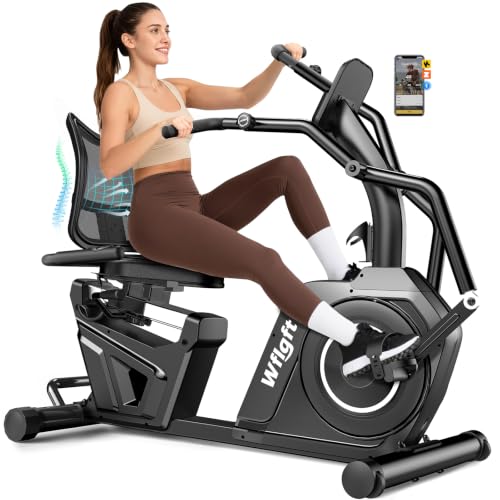
- Combines arm and leg movement
- LCD includes pulse tracking
- 450-pound capacity with 16 resistance levels
Best For: Home users seeking comfortable full-body exercise
Foldable Value
Compact LCD Arm and Leg Pedaler

- Foldable for convenient small-space storage
- LCD shows time, count, RPM, and calories
- Adjustable straps support arm or leg use
Best For: Desk users needing simple, storable low-impact exercise
Best Full-Body Pick
VANSWE Recumbent Elliptical Bike

- Arm-and-leg workout in one reclined machine
- 400-lb capacity with adjustable seat
- Back-lit display plus Bluetooth app support
Best For: Full-body, low-impact home workouts and senior-friendly exercise
Best Compact Rehab Option

- Eight resistance levels for rehab or strengthening
- LCD tracks time, reps, and intensity
- Suction-cup base and arm supports improve stability
Best For: Upper-body rehabilitation and low-impact arm training
Best Value Recumbent Pick
ECHANFIT Bike with Arm Exerciser

- Dual-action arm and leg workout
- Backlit LCD with pulse and core metrics
- 380-lb capacity, eight resistance levels, and bands
Best For: Quiet, low-impact full-body cardio at home
Best Portable Pick

- Clear LCD shows time, count, RPM, and calories
- Foldable, fully assembled, and weighs 5 pounds
- Adjustable resistance with non-slip stability features
Best For: Portable seated arm and leg workouts for seniors
Best for Gentle Full-Body Training

- Combines arm and leg movement while seated
- LCD tracks time, distance, counts, and calories
- Steel tubing and four feet support stability
Best For: Low-impact home exercise and rehabilitation routines
Most Adjustable Option
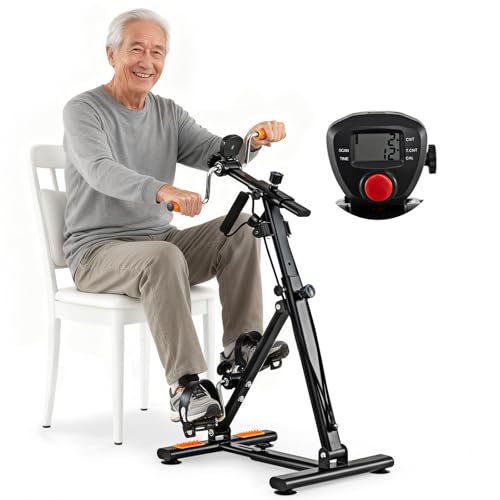
- Offers arm, leg, band, and foot-massage modes
- Five-level height and handle adjustments
- LCD tracks time, distance, calories, and counts
Best For: Customizable home workouts and rehabilitation exercise
Compact Choice – AGM Mini Arm and Leg Bike
If you want arm bikes with displays for light exercise at a desk or at home, this compact AGM pedal exerciser tracks time, speed, distance, and calories on its LCD screen. Use it on a tabletop for arm pedaling or on the floor for seated leg exercise, then adjust the resistance with the tension knob.
Best For: Beginners, older adults, and shoppers needing a portable arm-and-leg exerciser for small spaces.
Pros:
- Supports both tabletop arm workouts and seated leg exercise.
- LCD display shows time, speed, distance, and calories.
- Compact 7.09-inch height fits under desks and similar spaces.
- Adjustable straps and six resistance levels accommodate different users.
Cons:
- Maximum weight recommendation is 150 pounds.
- Battery-powered display requires a battery.
This is a straightforward, space-saving option when basic workout tracking matters more than advanced programming. Its modest size and adjustable resistance make it particularly practical for gentle, low-impact movement.
Quiet Office Pick – Vaunn Foldable Arm and Leg Exerciser
Among arm bikes with displays, the Vaunn stands out for quiet magnetic motion, a large LCD, and a broad range of resistance settings. Its handle makes it easier to move between a tabletop arm session and seated leg exercise, while the scan function cycles through workout data.
Best For: Office workers, home users, and people seeking low-impact exercise or physical-therapy support.
Pros:
- Large LCD displays speed, time, distance, and calories.
- Quiet magnetic motion is suitable for offices and shared spaces.
- Sixteen calibrated resistance levels provide incremental adjustment.
- Includes interchangeable pedals, adjustable straps, and a carry handle.
Cons:
- Its listed dimensions are larger than some mini pedal exercisers.
- The display requires one AAA battery, though one is included.
The Vaunn is a strong fit if quiet operation and more resistance control are priorities. Its stable flywheel and readable display make it more versatile than a bare-bones pedal unit, especially for regular seated workouts.
Full-Body Upgrade – WFLGFT Recumbent Bike with Arm Exerciser
If you want arm bikes with displays but need a more complete seated workout, this WFLGFT recumbent bike combines arm and leg movement with an LCD monitor and pulse tracking. It offers 16 magnetic resistance levels, an adjustable seat, and Bluetooth app support for structured home workouts.
Best For: Adults and seniors wanting a stable, comfortable full-body machine for home fitness or rehabilitation-oriented routines.
Pros:
- Combines synchronized arm and leg exercise in a recumbent design.
- LCD tracks time, distance, speed, calories, and pulse.
- Heavy-duty frame supports up to 450 pounds.
- Quiet magnetic operation, adjustable seating, and Bluetooth app support.
Cons:
- Its recumbent-bike format requires more space than a mini pedal exerciser.
- Assembly is required.
This is the most substantial option in the group and is better suited to a dedicated exercise area than an office desk. Choose it when comfort, stability, full-body movement, and heart-rate information outweigh portability.
Foldable Value – Compact LCD Arm and Leg Pedaler
This foldable option is a practical choice for shoppers comparing arm bikes with displays for home or office use. Its LCD monitor shows time, count, speed in RPM, and estimated calories, while adjustable straps and resistance support gentle arm or leg workouts.
Best For: Remote workers, students, seniors, and anyone who needs an easy-to-store seated exerciser.
Pros:
- LCD tracks time, count, speed RPM, and estimated calories.
- Foldable design stores under a desk, beside a sofa, or in a bedroom.
- Adjustable pedal straps can support both foot and hand use.
- Manual resistance adjustment allows relaxed or more active sessions.
Cons:
- The supplied notes do not specify the number of resistance levels.
- It does not list app connectivity or heart-rate tracking.
For limited spaces, this model offers the essential features without the footprint of a full stationary bike. Its foldability and simple display make it a sensible pick for adding light movement throughout the day.
Best Full-Body Pick – VANSWE Recumbent Elliptical Bike
If you want arm bikes with displays but also need lower-body cardio, the VANSWE combines a recumbent bike, elliptical-style pedals, and movable arm handles. Its back-lit monitor tracks key workout data, while the reclined position and magnetic resistance support comfortable, low-impact home exercise.
Best For: Seniors, larger users, rehab-focused routines, and shoppers wanting a full-body machine with Bluetooth app compatibility.
Pros:
- Works the arms and legs simultaneously with elliptical-style pedals and movable handles.
- 400-pound capacity, adjustable seat, and supported recumbent position accommodate a broad range of users.
- Back-lit display tracks time, speed, distance, calories, and heart rate; Bluetooth works with Kinomap and Zwift.
- Quiet eight-level magnetic resistance and 80% pre-assembly make it practical for home use.
Cons:
- Its recumbent design requires substantially more space than a compact tabletop arm bike.
- It is a larger, heavier investment than a portable upper-body trainer.
Choose this model when a display is only part of the goal and you want one machine for seated cardio plus upper-body movement. The high capacity, joint-friendly position, and app connectivity make it especially versatile for shared household use.
Best Compact Rehab Option – Magnetic Arm Exercise Bike
For shoppers specifically comparing arm bikes with displays, this portable magnetic trainer focuses on upper-body movement rather than cycling. Its LCD display records time, reps, and intensity, while eight resistance levels and 360-degree bidirectional rotation allow users to adjust the workout to their needs.
Best For: Physical therapy, stroke recovery, shoulder or hand rehabilitation, and seated daily arm exercise at home or in an office.
Pros:
- Eight magnetic resistance levels support gentle rehabilitation through progressive strengthening.
- 360-degree, bidirectional movement targets arm, wrist, and shoulder range of motion.
- Four suction cups, a widened base, and arm supports help keep the unit stable and comfortable.
- Compact, quiet design includes a phone holder and can be installed quickly.
Cons:
- The LCD tracks time, reps, and intensity but does not provide the broader metrics listed for full-size bikes.
- It is designed for upper-body training, so it does not provide leg cardio.
- Its 20-pound weight may be less convenient to move than a very small tabletop trainer.
This is the most targeted choice of the three for arm-focused recovery. The display provides basic feedback without complicating operation, and the stable base and adjustable resistance make it suitable for varied rehabilitation stages.
Best Value Recumbent Pick – ECHANFIT Bike with Arm Exerciser
The ECHANFIT is a practical option if you want arm bikes with displays in a full-size recumbent format. Its dual-action handles train the arms while you pedal, and the backlit LCD shows time, speed, distance, calories, odometer, and pulse for straightforward workout tracking.
Best For: Home users seeking low-impact full-body cardio, adjustable seating, and extra workout variety from included resistance bands.
Pros:
- Dual-action handles and pedals provide simultaneous upper- and lower-body exercise.
- Sliding seat fits users from 4’9″ to 6’3″, while the frame supports up to 380 pounds.
- Eight magnetic resistance levels and a belt drive deliver adjustable, quiet workouts.
- Backlit display includes pulse tracking, and the padded seat and backrest support longer sessions.
Cons:
- At 46.46 inches long and 62.2 pounds, it is not a compact portable arm bike.
- The display is battery powered, so batteries are part of ongoing operation.
- Its listed user-height range is narrower than some comparable recumbent models.
This model balances full-body training and readable workout feedback with a comfortable recumbent setup. It is a strong fit for home users who want a quiet machine, multiple metrics, and resistance bands for additional strength work.
Best Portable Pick – TABEKE Under Desk Bike
If you want arm bikes with displays that are easy to move between rooms, the TABEKE is a lightweight, foldable pedal exerciser with a clear LCD monitor. It arrives mostly assembled, uses a manual resistance knob, and can support seated arm or leg workouts at home or in an office.
Best For: Seniors and users who prioritize portability, simple operation, and low-impact seated exercise.
Pros:
- Large LCD tracks time, count, RPM, and calories, with an automatic scan function.
- Foldable 5-pound design is convenient to carry and store.
- Non-slip feet, pads, strips, and pedals help improve stability.
- Adjustable friction resistance supports gentle rehabilitation or more demanding training.
Cons:
- The display tracks basic workout metrics rather than advanced training data.
- Resistance is adjusted manually with a tension knob.
- Its compact design may be better suited to light seated workouts than intensive cycling.
The TABEKE stands out when storage space and ease of handling matter most. Its clear display and quiet, adjustable operation make it a practical option for casual arm or leg exercise while seated.
Best for Gentle Full-Body Training – Senior Pedal Exerciser
Among arm bikes with displays, this pedal exerciser is designed for users who want seated upper- and lower-limb movement with straightforward progress tracking. Its LCD cycles through time, distance, swing counts, total swing counts, and calories, while the low-impact design supports home exercise and recovery routines.
Best For: Seniors and users seeking gentle full-body movement, circulation-focused exercise, or rehabilitation support.
Pros:
- Supports synchronous arm-and-leg movement plus lateral lower-limb exercise.
- LCD monitor displays time, distance, swing counts, and calories.
- Thickened steel tubing and four corner feet provide a stable base.
- 264-pound maximum recommended user weight is listed in the product details.
Cons:
- At 15.4 pounds, it is less portable than a compact under-desk model.
- The supplied notes do not specify adjustable resistance levels.
- Its display data is oriented toward basic tracking rather than advanced metrics.
This model is a strong choice for users who value broad movement options and a sturdy frame over maximum portability. The included battery-powered LCD keeps essential workout information visible without requiring an electrical outlet.
Most Adjustable Option – GYMAX 4-in-1 Pedal Exerciser
If adjustability is a priority when comparing arm bikes with displays, the GYMAX offers a flexible home-exercise setup with arm and leg training modes. Its LCD monitor tracks time, distance, calories, count, and total count, while the frame provides multiple height and handle-length adjustments.
Best For: Users who want configurable positioning, multiple exercise modes, and magnetic resistance for home workouts or rehabilitation.
Pros:
- 4-in-1 design includes arm exercise, resistance-band work, leg exercise, and foot massage.
- Five height levels and five handle-length levels help accommodate different users.
- LCD displays time, distance, calories, count, and total count.
- Heavy-duty metal frame, triangular structure, and non-slip foot pads support stability.
Cons:
- At 15.5 pounds and 40.5 inches high, it is less compact than a typical under-desk pedal exerciser.
- Assembly instructions are included, so it is not presented as fully assembled.
- The supplied notes do not explain how the 99 resistance levels are selected.
The GYMAX is the most versatile choice in this group for users who need more than basic pedaling. Its adjustable structure and multiple modes can make it easier to tailor workouts, although the larger frame requires more space.
How We Picked the Best Arm Bikes with Displays
We selected these 10 models based on the features that matter most for seated upper- and lower-body exercise. Our comparison considers display functionality, resistance adjustment, frame stability, pedal and handle comfort, portability, storage, and suitability for home or office use.
We also included different designs because a compact mini pedal exerciser is not intended for the same user as a recumbent exercise bike with an integrated arm exerciser. Product descriptions and listed specifications were evaluated with attention to practical use, including physical therapy and senior-friendly workouts.
Quick Comparison
| Type | Best suited for | Typical advantages | Important considerations |
|---|---|---|---|
| Mini pedal exerciser | Desk workouts and light home exercise | Compact, portable, often foldable | May move on smooth floors; limited intensity |
| Arm therapy exerciser | Upper-body training and rehabilitation | Adjustable resistance and arm support | Usually targets the arms more than the legs |
| Recumbent bike with arm exerciser | Longer seated workouts and total-body training | More supportive seat and greater stability | Larger footprint and higher cost |
Key Buying Factors for Arm Bikes with Displays
Display Information
Most compact units use an LCD screen to show some combination of time, count, total count, distance, calories, or scan mode. A display is useful for setting a consistent workout, but readings are generally estimates rather than medical-grade measurements. Check whether the screen is easy to read from your seated position and whether the controls are simple to operate.
Resistance and Motion
Adjustable magnetic or friction resistance lets you begin gently and increase effort gradually. For rehabilitation, smooth low resistance is often more important than a high maximum setting. Recumbent models may offer a broader range for conditioning, while mini pedal machines are better suited to light or moderate sessions.
Stability and Fit
Look for wide feet, suction cups, a heavy base, or another anti-slip design. The machine should remain steady when you pedal with your arms or legs. Also check crank height, pedal size, handle shape, seat adjustment, and the user’s available range of motion. Anyone with mobility limitations should confirm that the setup allows safe mounting and dismounting.
Portability and Storage
Foldable mini exercisers are convenient for desks, apartments, and occasional use. Full recumbent bikes provide more support but need a permanent workout area. Consider the product’s weight and carrying handle before assuming it is easy to move.
Who Should Buy Which Arm Bikes with Displays?
Choose a compact mini bike if you need an affordable, space-saving option for seated arm and leg movement. An arm-focused therapy model is a better fit for upper-body training, adjustable resistance, or guided recovery exercises. Choose a recumbent bike with an arm exerciser if comfort, back support, stability, and longer total-body workouts are your priorities.
If you are buying for an older adult or someone in rehabilitation, prioritize low starting resistance, stable construction, comfortable pedals or handles, and easy-to-read controls. Consult a healthcare professional before using any exerciser for post-surgical recovery, pain management, or a diagnosed condition.