The best marathon hydration belt should carry enough fluid and fuel without bouncing, rubbing, or distracting you from your pace. The right design depends on your hydration needs, bottle preference, storage requirements, and fit.
We compared 10 popular running belts with features such as soft flasks, quick-flow bottles, stretch storage, phone compatibility, gel holders, and bounce-control designs to help you choose confidently.
Best 10 Running Hydration Belts for Marathons Picks for 2026
Flexible Phone-and-Fuel Pick

- Two-bottle, hands-free hydration
- Five pockets for phone and fuel
- Water-repellent neoprene with one-year warranty
Best For: Runners wanting storage and broad phone compatibility
Race-Ready Dual-Bottle Pick

- Two 10-ounce push-pull bottles
- Anti-slip fit for reduced bouncing
- Race-bib toggles and reflective tab
Best For: Marathon and triathlon race-day essentials
Proven No-Bounce Design
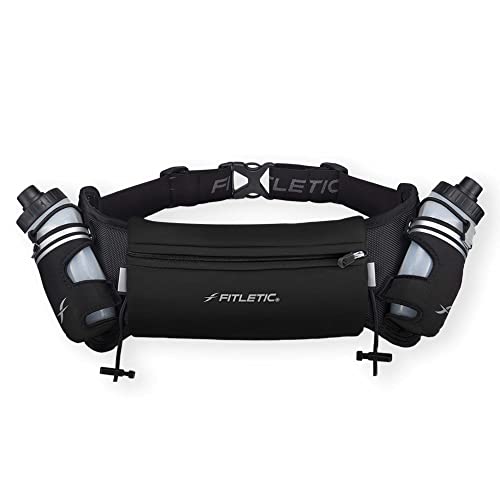
- Two quick-flow 8-ounce bottles
- Bounce-free contoured neoprene fit
- Gel holders, bib toggles, and reflective accents
Best For: Compact race-day hydration and fueling
Best Lightweight Pick
AONIJIE 250ml Hydration Running Belt

- 60g belt with included 250ml soft flask
- Multiple pockets fit phones and small valuables
- Adjustable, sweat-wicking, quick-drying waistband
Best For: Short runs and minimal-carry workouts
Best Dual-Bottle Option

- Two BPA-free 10-ounce bottles included
- No-bounce fit for 27- to 37-inch hips
- Touchscreen pocket and race-bib toggles
Best For: Road races and training runs needing 20 ounces
Best Storage-Focused Design
Nathan Trail Mix Plus 3.0 Belt

- Secure one-handed flask holster
- 0.5-liter storage capacity with expandable phone pocket
- No-bounce design with extra organization features
Best For: Longer runs carrying fuel, phone, and essentials
Fully Loaded Race-Day Pick

- 12-ounce Quick Flow bottle
- Four gel holders and bib toggles
- Organized phone-sized pocket
Best For: Race days requiring hydration plus gels and bib storage
High-Capacity Storage Value
Number-one Two-Bottle Running Belt

- Two 6.5-ounce BPA-free bottles
- Large zippered phone-friendly pouch
- 27- to 59-inch listed waist range
Best For: Runners wanting adjustable fit and organized storage
Minimalist Performance Pick
Nathan Peak 18oz Hydration Belt
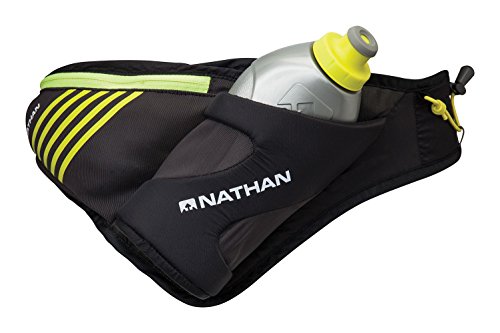
- 18-ounce Speed Draw Flask
- Angled holder for one-handed access
- Reflective trim and expandable pocket
Best For: Runners wanting streamlined hydration with quick bottle access
Flexible Phone-and-Fuel Pick – Q-RUN Hydration Running Belt
For runners comparing running hydration belts for marathons, the Q-RUN combines two-bottle hydration with a phone-friendly waist pouch. Its five-pocket design, water-repellent finish, and adjustable 25–33-inch fit make it a practical option for carrying essentials during training or race day.
Best For: Runners who want two-bottle hydration, extensive storage, and broad phone compatibility.
Pros:
- Includes hands-free bottle storage designed to minimize bouncing.
- Five pockets provide room for a phone, fuel, and other essentials.
- Water-repellent neoprene construction and a one-year warranty add practical reassurance.
Cons:
- The 25–33-inch stated waist range may not suit every runner.
- Hand washing is required for care.
The Q-RUN is a storage-forward choice for runners who prefer carrying multiple items and two bottles rather than using a minimalist belt. Check the fit carefully before ordering.
Minimalist Long-Run Pick – CamelBak Ultra Hydration Belt
The CamelBak Ultra is a lightweight option for runners evaluating running hydration belts for marathons without wanting a bulky pack. It includes a collapsible 17-ounce flask, a secure phone pocket, breathable 3D Micro Mesh, and 2.5 liters of cargo capacity for fuel and gear.
Best For: Runners seeking lightweight hydration with organized storage for longer efforts.
Pros:
- The collapsible 17-ounce Quick Stow flask reduces bulk when empty.
- 3D Micro Mesh supports airflow and cushioning to help limit chafing.
- Reflective details and integrated trekking-pole carry add useful outdoor versatility.
Cons:
- It includes one flask rather than multiple bottles.
- The 17-fluid-ounce capacity may be limited for runners who need frequent hydration between aid stations.
With its lightweight construction and generous cargo specification, the Ultra favors runners who prioritize comfort and gear organization. Its single-flask capacity is best matched to supported races or shorter refill intervals.
Race-Ready Dual-Bottle Pick – AiRunTech Hydration Belt
For marathon runners comparing running hydration belts for marathons, the AiRunTech provides two 10-ounce bottles, a large phone pocket, and race-focused features. Its adjustable 18–51.2-inch fit, anti-slip design, bib toggles, and reflective tab make it suitable for training and race-day essentials.
Best For: Marathon and triathlon runners who want dual-bottle hydration and race-bib support.
Pros:
- Two BPA-free 10-ounce bottles offer convenient push-pull drinking while moving.
- The anti-slip fit is designed to reduce bouncing, friction, and chafing.
- Includes race-bib toggles, a headphone hole, and a reflective tab.
Cons:
- The product is listed as not water resistant.
- Its two-pocket layout offers less compartmentalization than some larger belts.
- The bottles should be washed several times before first use according to the supplied guidance.
The AiRunTech stands out when race-day functionality matters as much as hydration. Its wide fit range and dual bottles are useful, but runners should protect contents from rain because the belt is not listed as water resistant.
Proven No-Bounce Design – Fitletic Hydra 16
The Fitletic Hydra 16 is built for runners looking at running hydration belts for marathons and wanting quick-access hydration without a bouncing fit. It pairs two 8-ounce bottles with a water-resistant phone pouch, gel holders, race-bib toggles, and reflective accents.
Best For: Runners who want compact dual-bottle hydration with dedicated race-day storage.
Pros:
- Two quick-flow 8-ounce bottles provide 16 total ounces of hydration.
- The contoured neoprene belt and hip holsters are designed for a bounce-free fit.
- Includes two gel holders, race-bib toggles, reflective accents, and a water-resistant phone pouch.
Cons:
- The listed S/M size fits 24–34-inch waists, limiting fit flexibility.
- Its single main pocket may offer less organization than multi-pocket designs.
- It has less total bottle capacity than some two-bottle belts.
The Hydra 16 is a focused race belt with useful fueling and visibility details. It is a strong fit for runners within the S/M size range who prefer quick access over maximum water capacity.
Best Lightweight Pick – AONIJIE 250ml Hydration Running Belt
For runners comparing running hydration belts for marathons, the AONIJIE offers a lightweight setup with a 250ml soft flask, multiple storage pockets, and an adjustable elastic waistband. At just 60g without the bottle, it is suited to shorter efforts or runners who prefer minimal carry weight.
Best For: Short training runs, gym workouts, cycling, and runners who want a compact hydration belt with phone storage.
Pros:
- Includes a 250ml leak-proof soft water bottle.
- Three quick-access pockets plus a main pouch fit a phone up to 6.9 inches and small valuables.
- Lightweight, sweat-wicking, quick-drying fabric and an adjustable waistband help reduce bounce.
- Reflective logo and trekking-pole loops add practical utility.
Cons:
- Its 250ml capacity may be limited for a full marathon or longer unsupported runs.
- The belt is not water resistant.
- Sizing varies by waist range, so runners should check the listed measurements carefully.
The AONIJIE is a sensible minimalist choice when low weight matters more than maximum hydration. For marathon-distance use, plan on access to additional fluids or course aid.
Best Dual-Bottle Option – Runtasty No.1 Hydration Belt
The Runtasty No.1 stands out among running hydration belts for marathons by carrying two BPA-free 10-ounce bottles for 20 ounces of total hydration. Its no-bounce hip fit, touchscreen-ready pocket, and race-bib toggles make it particularly practical for organized road races.
Best For: Road runners who want dual-bottle hydration, phone access while moving, and built-in race-day features.
Pros:
- Includes two BPA-free 10-ounce bottles for 20 ounces of capacity.
- No-bounce design fits hips from 27 to 37 inches.
- Tilt-up touchscreen-compatible pocket allows access to a phone without removing it.
- Stay-dry and waterproof storage features help protect essentials from sweat and spills.
Cons:
- The one-size fit is limited to the stated 27- to 37-inch range.
- Two bottles may feel bulkier than a minimalist single-flask belt.
- The supplied details do not specify the bottles’ insulation or marathon-specific total capacity beyond 20 ounces.
With balanced bottle placement and race-bib holders, this is a feature-rich option for runners who want more onboard hydration than a compact flask belt. Confirm the waist range before ordering.
Best Storage-Focused Design – Nathan Trail Mix Plus 3.0 Belt
For runners seeking running hydration belts for marathons with more structured storage, the Nathan Trail Mix Plus 3.0 combines a secure one-handed flask holster with a 0.5-liter storage capacity. Its expandable front pocket and no-bounce design make it useful for carrying a phone, gels, and other running essentials.
Best For: Training runs and races where secure flask access and extra storage for fuel are priorities.
Pros:
- Secure holster supports one-handed flask access.
- No-bounce construction helps keep the belt in place.
- Large expandable front zippered pocket fits most phones, with an additional exterior mesh pocket.
- Includes shock cords, tension locks, and elastic strap keepers for added organization.
Cons:
- At 10 ounces with the flask, it is heavier than the AONIJIE setup.
- The belt is not water resistant.
- Spot-clean or hand-wash care is less convenient than machine washing.
The Trail Mix Plus 3.0 is a strong choice when storage and accessible hydration matter as much as low weight. Its 0.5-liter capacity can support longer outings, though marathoners may still need course fluids.
Fully Loaded Race-Day Pick – Fitletic 12oz Hydration Belt
For runners comparing running hydration belts for marathons, the Fitletic Fully Loaded combines quick-access hydration with race-focused storage. Its 12-ounce bottle, gel holders, bib toggles, phone-sized pocket, and reflective accents make it a practical option for organized race days.
Best For: Marathoners who want integrated race-bib and gel storage alongside a single 12-ounce bottle.
Pros:
- Includes a contoured 12-ounce Quick Flow bottle with a leak-preventing cap.
- Large 8-by-4-inch pocket includes an organizer for a phone, ID, cards, keys, and essentials.
- Four energy-gel holders, bib toggles, and reflective accents support race-day use.
- Adjustable, sweat-wicking, water-resistant neoprene design is intended to reduce bounce.
Cons:
- Its 12-ounce capacity may be limited for runners who need more hydration between aid stations.
- The listed L/XL size fits 35 to 42 inches, so sizing should be checked carefully.
- Only one main pocket is listed.
Choose this belt when race organization matters as much as hydration. It is especially well equipped for carrying gels and a bib, though higher-mileage runners may need to plan additional fluids.
High-Capacity Storage Value – Number-one Two-Bottle Running Belt
Among running hydration belts for marathons, this Number-one waist pack emphasizes flexible fit and compartmentalized storage. It includes two 6.5-ounce BPA-free bottles, a large zippered pouch, and layered pockets for separating a phone from smaller essentials.
Best For: Runners who prefer two small bottles and generous storage in a broadly adjustable waist pack.
Pros:
- Includes two 6.5-ounce BPA-free water bottles for a combined 13 ounces.
- Large zippered storage compartment is designed to fit larger smartphones.
- Layered interior pockets help separate phones, keys, cards, money, and tissues.
- Adjustable, stretchable waistband fits listed waists from 27 to 59 inches.
Cons:
- The two bottles are smaller than many dedicated marathon hydration flasks.
- The product is listed as water resistant rather than fully waterproof.
- Its 0.26-kilogram listed weight is heavier than the lightest option in this roundup.
This belt is a sensible choice when storage and adjustability take priority. The two-bottle setup can suit short- to medium-distance running, while marathoners should consider their planned access to additional fluids.
Minimalist Performance Pick – Nathan Peak 18oz Hydration Belt
For runners seeking running hydration belts for marathons without a bulky design, the Nathan Peak focuses on streamlined access and a larger 18-ounce flask. Its angled holder supports one-handed bottle access, while the expandable stretch pocket keeps essentials close.
Best For: Runners who want an 18-ounce bottle, minimalist storage, and quick access during training or races.
Pros:
- Includes an 18-ounce Speed Draw Flask with a push/pull race cap.
- Angled insulated bottle holder is designed for one-handed access and reduced bouncing.
- Expandable zippered stretch pocket protects and stores essentials.
- Reflective detail and trim improve visibility in dim light.
Cons:
- The belt is listed as not water resistant.
- Its two-pocket design provides less stated storage organization than the larger waist pack option.
- Hand-wash-only care may be less convenient than machine-washable alternatives.
The Nathan Peak is the cleanest fit for runners who value a larger single flask and low-profile carry. Its 18-ounce capacity offers more hydration than the other listed options, but the non-water-resistant construction and limited storage should be considered.
How We Picked the Best Running Hydration Belts for Marathons
We focused on the features that matter most during long training runs and marathon racing: secure fit, usable capacity, bottle access, storage, comfort, and adjustability. The lineup includes minimalist belts for runners who need modest hydration, as well as roomier waist packs for phones, gels, keys, identification, and other race-day essentials.
We also considered bottle design and placement. Quick-flow bottles can be easier to use while moving, while soft flasks may pack down as they empty. Because comfort is highly personal, we included options with different layouts rather than treating one belt style as universally best.
Quick Comparison
- Best for minimalist carrying: Look for a slim belt with one small flask and a secure phone pocket.
- Best for longer unsupported stretches: Choose dual bottles or a higher-capacity flask system.
- Best for phones and fuel: Prioritize stretch storage, zipper security, and dedicated gel compartments.
- Best for race organization: Bib toggles and easy-access pockets can reduce clutter on race day.
- Best for technical routes: A stable, water-resistant design with a reliable closure is especially useful.
Key Buying Factors for Running Hydration Belts for Marathons
Capacity and Bottle Access
Estimate how much fluid you need between aid stations, then account for weather, pace, and sweat rate. A belt should let you drink without removing it or stopping. Two smaller bottles can distribute weight, while one larger flask may feel simpler and lighter.
Fit and Bounce Control
Measure your waist according to the manufacturer’s instructions and look for broad adjustability. The belt should sit securely around your hips or waist without being painfully tight. Test it with a full bottle, phone, and fuel; movement during an easy jog is a better indicator than a stationary fit check.
Storage and Weather Protection
Confirm that the phone pocket fits your exact device, including its case. Zippered or water-resistant compartments help protect essentials from sweat and light rain, while stretch pockets make gels easier to reach.
Weight and Material
Lightweight fabric reduces bulk, but durability and structure can improve stability. Soft, breathable materials are useful in warm conditions; reflective details can improve visibility during early or late runs.
Who Should Buy Which Running Hydration Belts for Marathons?
Choose a minimalist belt if you normally use aid stations and need only a small amount of water, a phone, and a few gels. Choose a dual-bottle model if you prefer balanced weight or want separate water and sports drink. Choose a larger stretch-waist pack if you carry extra nutrition, keys, identification, or a phone in a protective case. Runners who dislike rigid bottles may prefer soft flasks, while those who want quick access may favor firm bottles with easy-grip designs.
Before race day, fill the belt and practice with it on several long runs. Adjust bottle placement, test access to fuel, and confirm that the fit remains comfortable after hours of movement.