Choosing a bike computer with komoot support can make route following easier, whether you’re commuting, touring, or chasing long weekend miles.
Below, we focus on models that offer practical navigation, clear displays, and rider-friendly features so you can pick the best fit for your routes and budget.
Best 10 Bike Computers with Komoot Picks for 2026
Premium Navigation Pick
Garmin Edge 1050 Premium Cycling Computer

- 3.5-inch vivid touchscreen with course creation
- Road hazard alerts, messaging, and live location features
- ClimbPro, power guide, and coaching tools
Best For: Riders who want a premium navigation and training head unit
Budget Route-Import Option
iGPSPORT BSC500 GPS Bike Computer

- Imports routes from Komoot, Strava, and more
- 3.3-inch touchscreen with buttons and voice prompts
- Dual-band positioning with multi-satellite support
Best For: Riders who want easy route import and navigation on a budget
Wind-Aware Performance Pick
Wahoo ELEMNT ACE Cycling Computer

- 3.8-inch display with touch controls
- AirBoost and AirDrag metrics from pressure sensing
- Ready-To-Ride dashboard and Wahoo app sync
Best For: Performance-minded riders who want advanced ride feedback
Lightweight Climb Specialist
iGPSPORT BiNavi Air GPS Bike Computer

- Offline and online navigation with rerouting
- iClimb 3.0 climb previews and gradient data
- Ultra-light 77 g design with IPX7 protection
Best For: Climbing-focused riders who want lightweight navigation
Smart Navigation for Everyday Riding

- Imports Komoot routes automatically
- Turn-by-turn prompts with LEDs and audio
- 20-hour battery and ANT+ radar support
Best For: Compact navigation-focused riders who use Komoot
Budget-Friendly Mapping Pick
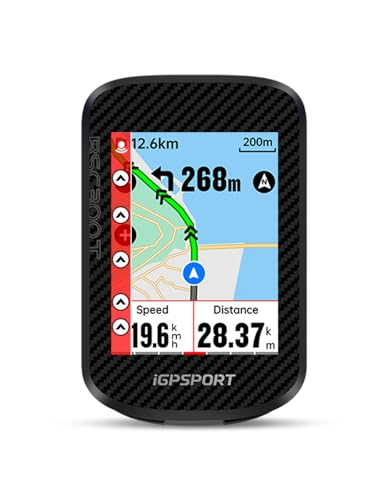
- Offline maps with route preview and turn prompts
- Shares ride data to Komoot via app
- 2.4-inch touchscreen with ANT+ and Bluetooth 5.0
Best For: Budget-conscious riders who want map navigation and Komoot sharing
Premium Explorer Choice

- Komoot route import with turn-by-turn navigation
- Dual-band GPS for tougher environments
- 2.8-inch display and 25-hour battery
Best For: Long-distance riders who want a larger screen and stronger GPS confidence
Compact Navigation Pick
iGPSPORT BSC200S GPS Bike Computer

- Imports routes from Komoot, Strava, and Ride with GPS
- One-touch navigation and back-to-start guidance
- 25-hour battery with a 2.4" color display
Best For: Riders who want an affordable GPS computer for Komoot routes and simple navigation.
Feature-Rich Route Guide
Magene C706 Smart GPS Bike Computer

- Map navigation with voice guidance in 13 languages
- Dual-band GNSS plus Freeride ClimbPro and live segments
- 3.3" touchscreen with Wi-Fi, Bluetooth, and offline planning
Best For: Cyclists who want a large touchscreen GPS computer with navigation and training tools.
Premium Performance Choice
Hammerhead Karoo Bike Computer

- Multi-band GNSS for accurate tracking
- Works with SRAM AXS, E-Bikes, and ANT+ lights
- Touchscreen and buttons with extended memory
Best For: Riders who want a premium GPS computer with accurate tracking and accessory compatibility.
Premium Navigation Pick – Garmin Edge 1050 Premium Cycling Computer
For riders comparing bike computers with komoot and wanting a premium all-in-one head unit, the Garmin Edge 1050 stands out for its large touchscreen, detailed mapping, and deep ride data. It’s built for cyclists who value on-device course creation, navigation prompts, hazard alerts, and smart features that make long rides and group rides easier to manage.
Best For: Riders who want a top-tier navigation and training computer with strong smart features.
Pros:
- Large 3.5-inch vivid color touchscreen with responsive course creation and map viewing.
- Supports road hazard alerts, live locations, in-ride messaging, and incident detection with a compatible smartphone.
- Built-in speaker adds audible workout and navigation prompts plus a bike bell.
- Offers advanced training tools like ClimbPro, power guide, and personalized coaching.
Cons:
- Premium features may be more than casual riders need.
- Full smart connectivity features depend on a compatible smartphone and app.
- Battery life varies by mode, with up to 20 hours in demanding use.
This is the most feature-rich option in the group, especially if you want premium navigation, structured training, and strong situational awareness in one device.
Budget Route-Import Option – iGPSPORT BSC500 GPS Bike Computer
If you’re shopping for bike computers with komoot support without jumping to a flagship price tier, the iGPSPORT BSC500 is a practical route-focused choice. It combines a 3.3-inch touchscreen with button controls, voice navigation, and route importing from third-party apps like Komoot and Strava for straightforward day-to-day riding.
Best For: Riders who want easy route import and navigation features at a more affordable level.
Pros:
- Supports route imports from Komoot, Strava, and other third-party apps.
- 3.3-inch touchscreen plus buttons makes it easy to operate.
- Voice navigation and turn reminders help reduce missed turns.
- Dual-band positioning and multi-satellite support improve navigation accuracy.
Cons:
- Smaller ecosystem and fewer premium smart features than high-end units.
- Training tools are present, but not as extensive as top-tier models.
- Display is good for visibility, but still smaller than flagship touchscreens.
The BSC500 is a sensible pick if your priority is importing routes and following them clearly, rather than paying extra for advanced premium extras.
Wind-Aware Performance Pick – Wahoo ELEMNT ACE Cycling Computer
The Wahoo ELEMNT ACE is a strong fit if you want a modern bike computer with komoot-friendly route use and a focus on performance feedback. Its large display, touch controls, and app-based setup make it easy to live with, while the pressure sensor adds a more advanced layer of ride data through real-time air resistance metrics.
Best For: Performance-minded riders who want detailed ride data and a smooth app-driven experience.
Pros:
- Large 3.8-inch display with press, pinch, and swipe control.
- Pressure sensor tracks real-time AirBoost and AirDrag metrics.
- Ready-To-Ride dashboard helps reduce setup time before rides.
- Syncs with the Wahoo app for ride personalization and control.
Cons:
- Battery life is listed at up to 30 hours, which is solid but not class-leading.
- Heavier than some compact bike computers at 208 g.
- Its standout features lean toward performance insights more than deep navigation extras.
If you care about ride feel, wind data, and a streamlined ecosystem, the ACE offers a very polished experience for serious cyclists.
Lightweight Climb Specialist – iGPSPORT BiNavi Air GPS Bike Computer
For riders looking at bike computers with komoot-style route importing and a lightweight cockpit setup, the iGPSPORT BiNavi Air is built around navigation and climbing. It supports route planning through the app, rerouting when you miss a turn, and climb-focused data that helps you manage effort on hilly routes or unfamiliar terrain.
Best For: Climbing-focused riders who want lightweight navigation with strong rerouting tools.
Pros:
- Supports offline and online navigation with fast turn-by-turn guidance.
- One-tap route planning and route transfer through the iGPSPORT app.
- iClimb 3.0 shows upcoming climb data like gradient, distance, and elevation.
- Very light at 77 g with an IPX7 waterproof rating.
Cons:
- 3.0-inch display is smaller than some competing navigation units.
- Route-import support is centered on the iGPSPORT app workflow.
- Advanced features may be more than basic riders need.
The BiNavi Air makes the most sense for riders who want a compact computer that still delivers serious navigation and climbing support.
Smart Navigation for Everyday Riding – Wahoo ELEMNT BOLT V3
If you want bike computers with komoot support that keep routing simple on the road, the Wahoo ELEMNT BOLT V3 is built around automatic turn-by-turn navigation and easy route syncing. It can import routes from Komoot, Strava, Ride With GPS, GPX, and TCX files, then give you on-device prompts so you can stay focused on riding instead of checking your phone.
Best For: Riders who want a compact GPS computer with straightforward Komoot route syncing and clear turn guidance.
Pros:
- Automatically downloads saved routes from Komoot and other connected services.
- Provides turn-by-turn prompts, plus top LEDs and audible cues for navigation.
- Offers on-demand route generation from the device or Companion App.
- Includes smart notifications, LiveTrack, and ANT+ radar integration.
Cons:
- Smaller 2.3-inch display than the ROAM model.
- Button-based control may feel less flexible than a touchscreen for some users.
For riders who mainly want dependable Komoot integration and a compact handlebar computer, the BOLT V3 covers the essentials well. Its route handling and ride alerts make it a practical choice for everyday training and navigation.
Budget-Friendly Mapping Pick – iGPSPORT BSC300T
Among bike computers with komoot compatibility, the iGPSPORT BSC300T stands out for riders who want offline mapping, route previews, and sharing without paying for a premium unit. It supports data analysis through the iGPSPORT app and can share rides to Komoot, while its navigation tools include off-course warnings and turn prompts for everyday riding.
Best For: Riders who want an affordable touchscreen bike computer with offline maps and Komoot sharing.
Pros:
- Supports route sharing to Komoot through the iGPSPORT app.
- Includes offline map download, route preview, and turn prompts.
- Has a 2.4-inch touchscreen plus 6-button control.
- Offers dual protocol connectivity with ANT+ and Bluetooth 5.0.
Cons:
- Type-C cable is not included in the box.
- Best suited to riders comfortable with app-based setup and file management.
The BSC300T is a sensible option if you want practical navigation features and Komoot sharing in a lightweight package. It is not the most advanced computer here, but it covers the core needs for mapped rides, training data, and group tracking.
Premium Explorer Choice – Wahoo ELEMNT ROAM V3
If you are comparing bike computers with komoot support for longer rides and tougher terrain, the Wahoo ELEMNT ROAM V3 is the most exploration-ready option in this group. It automatically imports routes from Komoot and other sources, offers turn-by-turn navigation, and adds dual-band GPS for more confident positioning in forests and dense city areas.
Best For: Riders who want a larger-screen GPS computer with Komoot route support and stronger navigation confidence.
Pros:
- Automatically imports routes from Komoot, Strava, Ride With GPS, GPX, and TCX files.
- Dual-band GPS is designed for better accuracy in obstructed environments.
- Offers on-demand route generation from the device or Companion App.
- 2.8-inch display and 25-hour battery life suit longer rides.
Cons:
- Larger and heavier than the BOLT V3.
- Likely more computer than casual riders need if they only want basic Komoot routing.
The ROAM V3 is the strongest fit for riders who value navigation reliability and a bigger display over compact size. It combines Komoot route handling with advanced GPS support, making it a better match for big-distance riding and unfamiliar routes.
Compact Navigation Pick – iGPSPORT BSC200S GPS Bike Computer
If you want bike computers with komoot support without spending on a full flagship unit, the iGPSPORT BSC200S is a practical route-first option. It can import third-party routes from Komoot, Strava, and Ride with GPS, and it adds one-touch navigation, back-to-start guidance, and ride-record navigation for simpler everyday use.
Best For: Riders who want an affordable GPS computer for Komoot routes and straightforward navigation features.
Pros:
- Supports route import from Komoot and other third-party platforms
- One-touch navigation plus back-to-start and ride-record navigation
- 2.4″ semi-transparent, semi-reflective color screen for sunlight visibility
- Long 25-hour battery life with USB-C charging
Cons:
- No touchscreen interface; button control only
- Smaller display than map-focused premium units
- USB-C cable is not included in the box
Overall, the BSC200S focuses on the essentials that matter most for guided rides: route import, readable data, and long battery life. It’s a sensible pick if you mainly want reliable Komoot navigation and basic smart cycling features rather than a large map display.
Feature-Rich Route Guide – Magene C706 Smart GPS Bike Computer
The Magene C706 is built for riders who want bike computers with komoot-style route planning alongside a fuller navigation and training experience. It offers map navigation with voice guidance, dual-band multi-satellite positioning, Freeride ClimbPro, and live segment support, so it goes well beyond basic turn prompts.
Best For: Cyclists who want a large touchscreen GPS computer with navigation, climbing tools, and ride data syncing.
Pros:
- Full map navigation with voice guidance in 13 languages
- Dual-band GNSS for precise positioning in cities and forests
- Freeride ClimbPro and Strava Live Segments for training focus
- Wi-Fi, Bluetooth, and offline route planning up to 1,000 km
Cons:
- Battery life is rated at 25 hours, not class-leading for ultra-long rides
- Premium feature set may be more than casual riders need
- Touchscreen focus may not appeal to riders who prefer button-only controls
For riders who want navigation plus training tools in one computer, the C706 stands out as the most feature-packed option here. It’s especially compelling if you value map detail, voice prompts, and climbing/segment features alongside route imports.
Premium Performance Choice – Hammerhead Karoo Bike Computer
The Hammerhead Karoo is a premium bike computer for riders who want polished controls, strong navigation hardware, and broad ecosystem support. It uses multi-band GNSS for accurate tracking, supports ANT+/BLE/GPS/GNSS connectivity, and pairs with SRAM AXS products, E-Bikes, and ANT+ lights for a more integrated cockpit.
Best For: Riders who want a high-end GPS computer with precise tracking and strong accessory compatibility.
Pros:
- Multi-band GNSS for precise tracking across mixed riding environments
- Seamless support for SRAM AXS products, E-Bikes, and ANT+ lights
- Touchscreen plus buttons for flexible control
- Extended battery life and memory for faster map rendering
Cons:
- 15-hour battery life is shorter than some competing computers
- Connectivity listed as USB rather than broader wireless sync options in the details
- Premium positioning may be unnecessary if you only need basic route loading
If you want a refined ride computer that prioritizes accuracy and integration, the Karoo is an easy premium contender. It makes the most sense for riders who will use its navigation quality and accessory ecosystem rather than just simple route following.
How We Picked the Best Bike Computers with Komoot
We prioritized Bike Computers with Komoot compatibility, reliable GPS performance, readable screens, and navigation tools that actually help on the road or trail. We also looked at battery life, mounting options, connectivity, and how well each unit suits different riding styles.
Because not every rider needs the same thing, this roundup favors variety: compact units for simple route following, larger touchscreen models for map-heavy navigation, and premium computers for riders who want advanced training and smart features.
Quick Comparison
In general, the main trade-offs are screen size, control style, and battery endurance. Smaller computers tend to be lighter and easier to live with, while larger touchscreens are better for map viewing and on-device route management. Premium models usually add better displays, faster interfaces, and richer training data.
If you mostly follow preloaded komoot routes, a midrange unit may be enough. If you regularly reroute mid-ride or ride unfamiliar roads, a larger screen and more responsive navigation interface can be worth the extra cost.
Key Buying Factors for Bike Computers with Komoot
Navigation Experience
Look for turn-by-turn directions, clear off-course alerts, and easy route import from komoot. If you ride in areas with lots of turns or intersections, a map view is more useful than breadcrumb-style navigation alone.
Screen Readability
Brightness, resolution, and touchscreen responsiveness matter a lot outdoors. Riders who spend time in glare or rain should consider how well the display remains usable in real conditions.
Battery Life
Long rides and multi-day tours demand strong battery endurance. Bigger screens and constant map use typically reduce runtime, so check the real-world battery claims if you plan to navigate for hours at a time.
Connectivity and Ecosystem
ANT+, Bluetooth, sensor support, and app syncing can influence how useful a computer feels day to day. If you already use heart rate monitors, power meters, or smart trainers, make sure the unit fits your setup.
Who Should Buy Which Bike Computers with Komoot?
Choose a premium model if you want the best display, the smoothest navigation, and advanced training tools. Pick a midrange computer if you mainly want dependable komoot route guidance without overspending. Go with a more compact or budget-friendly option if you need simple route following, basic ride data, and solid value.
For touring, gravel, and unfamiliar routes, prioritize a larger map display and longer battery life. For road riding and training, lighter computers with clean data screens may be the better everyday choice.